The Complete Residential Home Maintenance Guide for a Safer, Better Cared For Property
Consistent residential home maintenance helps preserve a home’s condition, supports safe operation of important systems, and allows owners to identify developing problems before they become more extensive. A house is a collection of interconnected components, including its roof, exterior walls, foundation, plumbing, electrical system, heating and cooling equipment, drainage, appliances, and safety devices. Each component has different inspection and service requirements. A practical maintenance strategy focuses on regular observation, manufacturer guidance, seasonal conditions, and timely professional assistance rather than waiting for something to fail.
What Is Residential Home Maintenance?
Residential home maintenance is the ongoing process of inspecting, cleaning, servicing, repairing, and protecting a house and its systems.
It includes simple homeowner tasks such as checking smoke alarms and cleaning appropriate surfaces, along with professional work involving HVAC equipment, roofing, electricity, plumbing, structural components, and other specialized systems.
The objective is preventive care. While maintenance cannot eliminate every unexpected failure, routine inspection can reveal conditions that deserve attention before they become more disruptive.
Why Residential Home Maintenance Matters
Homes are continuously exposed to moisture, temperature fluctuations, sunlight, wind, normal wear, and occupant use. Materials and mechanical components therefore change over time.
Routine maintenance can help homeowners:
• Identify water intrusion early
• Keep mechanical equipment operating correctly
• Maintain building components
• Detect potential safety concerns
• Reduce avoidable deterioration
• Plan future repairs and replacements
• Preserve a clean and functional property
Maintenance is also useful for budgeting because it provides visibility into the condition of expensive systems before replacement becomes urgent.
Preventive Maintenance Versus Emergency Repair
Preventive maintenance occurs before a significant failure. Emergency repair happens after something stops working or creates an immediate problem.
Cleaning debris from drainage systems is preventive care. Responding to interior water penetration during a storm is an emergency.
A good maintenance program cannot guarantee that emergencies will never happen, but it can address many predictable sources of deterioration.
9 Powerful Residential Home Maintenance Tips
Every property is different, so maintenance schedules should account for the building’s age, materials, equipment, climate, and manufacturer instructions. The following nine areas provide a strong framework.
1. Make Roof Inspections Part of Residential Home Maintenance
The roof helps protect the structure from precipitation and environmental exposure, making it an important component to monitor.
Homeowners can often perform basic observations safely from ground level. Look for visibly displaced or damaged roofing, debris accumulation, damaged flashing, deteriorated roof penetrations, or changes around chimneys.
Check the Roof After Severe Weather
High winds, hail, falling branches, and other weather events can damage roofing materials.
After significant weather, inspect the property from a safe location. Look for obvious changes such as missing materials, fallen tree limbs, displaced flashing, or interior moisture.
Avoid Unnecessary Roof Walking
Walking on a roof can create fall hazards and may damage certain materials. Steep slopes, wet surfaces, snow, ice, and fragile roofing increase the danger.
When close inspection is required, use an appropriately qualified roofing professional rather than taking unnecessary risks.
Watch Ceilings and Attics for Moisture
Roof problems are sometimes first detected indoors.
Stains, damp materials, peeling finishes, unusual odors, or visible moisture can indicate a leak or condensation problem. The source should be investigated rather than simply painting over the symptom.
2. Keep Gutters and Drainage Systems Working
Rainwater needs a controlled path away from the building.
Gutters and downspouts can become blocked by leaves, seeds, roofing debris, and other materials. Overflow can wet fascia, siding, landscaping, and areas near the foundation.
Inspect Gutters for Problems
Look for:
• Accumulated debris
• Loose sections
• Visible corrosion or damage
• Leaking connections
• Disconnected downspouts
• Poor drainage at discharge points
Cleaning frequency depends on surrounding trees, roof design, climate, and the type of gutter protection installed.
Direct Water Away From the Foundation
Downspouts should discharge in a way that prevents water from concentrating against foundation walls.
The appropriate drainage solution depends on site grading, soil, climate, drainage infrastructure, and local requirements.
Persistent water accumulation near a foundation deserves professional evaluation because it can indicate a broader site drainage issue.
3. Include HVAC Care in Residential Home Maintenance
Heating, ventilation, and air conditioning equipment contributes directly to comfort and, in many homes, humidity management.
Maintenance requirements vary by furnace, boiler, heat pump, central air conditioner, ductless system, or other equipment.
Check HVAC Filters
Dirty filters can restrict airflow. Check filters based on system requirements and household conditions, and clean or replace them according to manufacturer instructions.
The correct interval can vary with filter design, pets, indoor air conditions, occupancy, equipment use, and other factors.
Installing the highest rated filter available is not automatically beneficial. A filter must be compatible with the system’s airflow requirements.
Keep Outdoor Equipment Clear
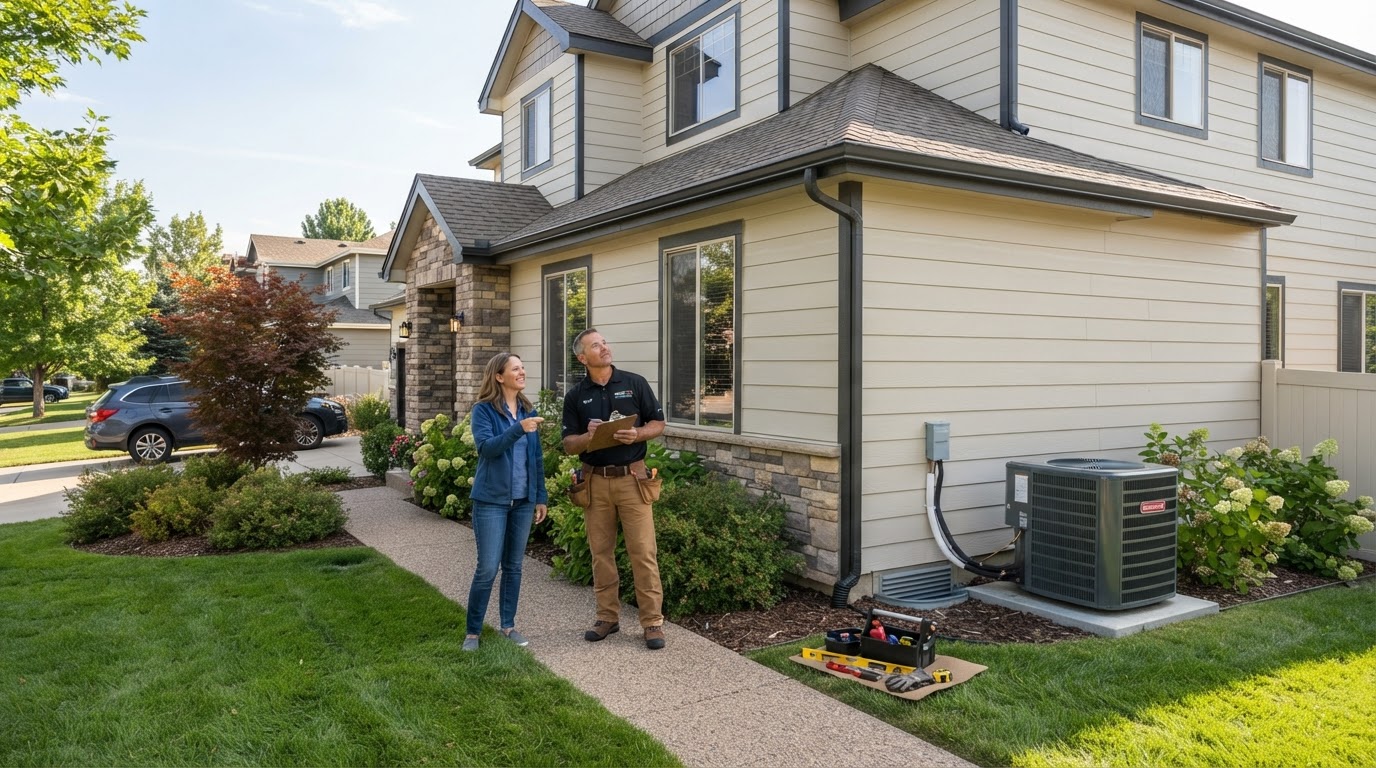
Outdoor heat pump and air conditioning equipment requires adequate airflow.
Keep leaves, vegetation, and stored items from obstructing the unit while maintaining the manufacturer specified clearances.
Do not enclose equipment with decorative structures unless the design preserves required airflow and service access.
Schedule Professional HVAC Service When Appropriate
Qualified HVAC technicians can inspect components homeowners generally should not service themselves.
Depending on the system, professional maintenance may address electrical components, combustion equipment, coils, condensate drainage, controls, airflow, or refrigerant system performance.
Follow the equipment manufacturer’s maintenance recommendations and applicable warranty conditions.
4. Monitor Plumbing and Water Systems
Small plumbing leaks can damage cabinets, flooring, drywall, insulation, framing, and personal belongings if they remain unnoticed.
Regular observation is especially valuable around fixtures, appliances, supply connections, and drains.
Look for Signs of Plumbing Leaks
Inspect accessible areas beneath sinks, around toilets, near water heaters, and around appliances that use water.
Potential warning signs include:
• Moisture or standing water
• Cabinet swelling
• Stains
• Damaged finishes
• Musty odors
• Unexpected sounds of running water
• Unexplained changes in water use
A higher water bill can have several causes, but unexplained increases are worth investigating.
Know the Main Water Shutoff Location
Household members should know where the main water shutoff is located and understand how it operates where appropriate.
Rapidly stopping water flow can reduce damage during some plumbing emergencies.
Do not force a valve that appears damaged or seized. A plumber can inspect or replace an unreliable shutoff.
Maintain Water Heaters According to Manufacturer Guidance
Water heater maintenance depends on equipment type and manufacturer instructions.
Tasks involving temperature and pressure relief devices, gas systems, combustion, electricity, or pressurized components can create significant hazards when handled incorrectly.
Use qualified professionals for work outside safe homeowner maintenance.
5. Inspect the Exterior Siding, Paint, and Sealants
Exterior walls are continuously exposed to rain, wind, sunlight, and temperature changes.
Residential home maintenance should include visual inspections of siding, trim, exterior coatings, and appropriate sealed joints.
Look for Exterior Deterioration
Check for:
• Peeling paint
• Loose cladding
• Cracks
• Swollen materials
• Corrosion
• Damaged trim
• Open joints
• Persistent staining
• Signs of moisture
Do not assume a cosmetic repair will resolve recurring deterioration. Water intrusion or material failure may need to be corrected first.
Examine Windows and Doors
Inspect exterior interfaces around windows and doors for visible damage.
Flashing and water resistive barriers behind the exterior finish are also important, although these components may not be visible during a routine homeowner inspection.
Repeated leakage around an opening deserves professional investigation rather than repeated surface caulking alone.
6. Make Electrical Safety a Residential Home Maintenance Priority
Electrical systems require particular caution. Homeowners can visually monitor accessible equipment, but repairs and alterations should comply with applicable electrical requirements.
Warning signs should never be ignored.
Recognize Potential Electrical Problems
Seek qualified assistance for conditions such as:
• Frequently tripping breakers
• Repeatedly blowing fuses
• Damaged outlets or switches
• Burning odors
• Unusual heat at electrical components
• Sparking
• Visible damaged wiring
• Electrical shocks or tingling
Stop using equipment when an electrical condition appears unsafe.
Avoid Overloading Electrical Circuits
Extension cords and power strips do not increase the capacity of a building’s electrical circuit.
If a home regularly needs numerous extension cords because permanent receptacles are insufficient, an electrician can evaluate whether electrical improvements are appropriate.
Extension cords should generally be used according to their listed purpose and manufacturer instructions.
Test Ground Fault Protection
Ground fault circuit interrupters are used in locations specified by applicable electrical codes to reduce shock hazards.
Homeowners can use built in test buttons according to manufacturer instructions. A device that does not test or reset correctly should be evaluated.
Electrical code requirements evolve, particularly in areas involving GFCI and AFCI protection, so current local requirements should guide upgrades.
7. Maintain Smoke and Carbon Monoxide Alarms
Working safety alarms are among the most important devices in a home.
The U.S. Consumer Product Safety Commission and the National Fire Protection Association provide safety guidance regarding smoke and carbon monoxide alarms. Placement, testing, replacement, and power requirements can also be governed by local regulations.
Test Alarms Regularly
Follow the manufacturer’s instructions for testing smoke alarms and carbon monoxide alarms.
Replace batteries where required and replace the entire alarm when it reaches the end of its manufacturer specified service life or fails testing.
Never disable an alarm simply because nuisance activation occurs. Determine and correct the cause while maintaining appropriate protection.
Keep Alarm Information Documented
Recording installation or replacement dates can make future maintenance easier.
Manufacturing dates are often marked on alarms. Check instructions for the specific device rather than assuming every alarm has the same service life.
8. Inspect Foundations, Basements, and Crawl Spaces
Foundation cracks and moisture can have many different causes. Some are minor, while others require professional assessment.
Homeowners should monitor visible conditions and note meaningful changes.
Look for Moisture Problems
Basements and crawl spaces may show warning signs such as:
• Standing water
• Damp materials
• Efflorescence
• Mold growth
• Musty odors
• Wood deterioration
• Pest activity
• Wet insulation
Moisture control may involve exterior drainage, plumbing, ventilation, air sealing, waterproofing, or other building specific measures.
Monitor Foundation Cracks
Not every crack means a house has structural failure. Concrete and masonry can develop cracks for multiple reasons.
Seek professional evaluation when cracks are changing noticeably, displacement is present, doors or windows begin binding unexpectedly, floors appear to shift, or other structural symptoms accompany cracking.
A structural engineer can provide an independent technical assessment when significant movement is suspected.
9. Use Seasonal Residential Home Maintenance Planning
Maintenance becomes easier when tasks are organized by season rather than handled randomly.
Climate should determine the exact schedule. A cold northern property and a hot humid southern property have different seasonal priorities.
Spring Residential Home Maintenance
Spring is a useful time to inspect for winter related deterioration.
Common tasks can include:
• Visually checking roofing
• Cleaning drainage systems when required
• Inspecting exterior walls
• Examining decks and steps
• Preparing cooling equipment
• Checking screens
• Evaluating exterior drainage
Spring also provides an opportunity to identify repairs before periods of heavier outdoor use.
Summer Maintenance
Summer can be appropriate for exterior cleaning, landscape management, painting, and other weather dependent work.
Keep vegetation from obstructing HVAC equipment and monitor irrigation so water is not repeatedly directed against the building.
Fall Maintenance
In colder regions, fall preparation often focuses on heating equipment, leaves, drainage, and winter readiness.
Check weatherstripping where appropriate, remove accumulating debris, and prepare exterior plumbing components according to climate and equipment requirements.
Winter Maintenance
Monitor the building for weather related problems, including unusual condensation, plumbing risks, heating issues, and snow or ice conditions where applicable.
Snow removal from roofs can present serious fall and structural hazards. Seek professional assistance when conditions require specialized roof work.
Residential Home Maintenance for Kitchens
Kitchens contain electrical equipment, plumbing, ventilation, appliances, and combustible materials, making routine care particularly important.
Clean appliances according to manufacturer instructions and inspect accessible water connections for visible problems.
Maintain Kitchen Ventilation
Range hoods can help capture cooking pollutants when correctly installed and used.
Clean or replace filters according to manufacturer instructions. If a hood exhausts outdoors, accessible exterior termination points should remain unobstructed.
Recirculating and externally vented systems perform differently, so homeowners should understand which type is installed.
Refrigerator Maintenance
Maintenance requirements vary by refrigerator design.
Some models allow accessible condenser areas to be cleaned, while others have different configurations. Follow manufacturer instructions before removing panels or attempting maintenance.
Bathroom Maintenance and Moisture Control
Bathrooms generate significant moisture from showers and bathing.
Effective ventilation and intact finishes help manage that moisture.
Inspect Caulk and Grout
Caulk and grout have different functions. Failed sealant at designated joints can allow water to reach areas where it should not go.
Replace appropriate sealant when it has separated, deteriorated, or developed gaps, using a product suitable for the application.
Use Bathroom Exhaust Fans Correctly
An appropriately installed exhaust fan can remove moisture from the bathroom.
Fans should discharge as intended by the system design rather than releasing humid air into an attic or other inappropriate enclosed space.
Persistent condensation or mold growth may indicate that ventilation, insulation, air leakage, or moisture sources need additional evaluation.
Doors and Windows in Residential Home Maintenance
Doors and windows influence comfort, security, weather resistance, and energy performance.
Inspect them for visible damage and operational problems.
Check Weatherstripping
Worn weatherstripping can contribute to air leakage.
Replacement products should match the door or window design so they create an effective seal without preventing normal operation.
Investigate Window Moisture
Condensation can occur for several reasons, including indoor humidity, outdoor temperature, glazing performance, and air movement.
Moisture trapped between panes in an insulated glass unit can indicate seal failure, which differs from condensation occurring on the room facing glass surface.
Correct diagnosis matters before choosing a repair.
Landscape Maintenance Around the House
Landscaping is part of property maintenance because vegetation and drainage can interact with the building.
Avoid allowing branches, vines, or shrubs to create persistent contact with exterior surfaces.
Watch Site Drainage
Observe where water travels during heavy rain when it is safe to do so.
Persistent ponding, erosion, or water collecting beside the building may indicate a drainage problem.
Large grading or drainage modifications can have consequences for neighboring properties and may be regulated locally, so professional advice may be appropriate.
Inspect Trees Near the Building
Dead, damaged, or structurally compromised branches can present hazards.
Tree risk can be complex to assess visually. A qualified arborist can evaluate concerning trees, particularly when large branches extend over structures or occupied areas.
How Much Should Residential Home Maintenance Cost?
There is no universal annual maintenance budget suitable for every household.
Costs vary according to the home’s age, size, condition, climate, construction materials, equipment, and the amount of work homeowners perform themselves.
A newly built house can have very different needs from a century old property.
Build a Property Specific Maintenance Budget
Instead of relying exclusively on a fixed percentage rule, identify major components and estimate when they may need service or replacement.
Include items such as:
• Roofing
• HVAC equipment
• Water heating
• Exterior coatings
• Appliances
• Plumbing
• Electrical systems
• Windows and doors
• Drainage systems
• Decks and exterior structures
Maintain a separate reserve for unexpected repairs because even a carefully maintained home can experience unforeseen failures.
DIY Versus Professional Residential Home Maintenance
Many routine observations and cleaning tasks are suitable for homeowners. Specialized work requires different skills, equipment, or licensing.
Understanding that boundary supports safer property care.
When to Call a Professional
Professional help is appropriate when a project involves:
• Major electrical work
• Regulated refrigerant handling
• Gas systems
• Significant structural concerns
• Complex roofing work
• Hazardous materials
• Major plumbing alterations
• Work at dangerous heights
• Specialized code requirements
Licensing requirements differ by jurisdiction, so verify applicable local rules.
Consider Hazardous Materials in Older Homes
Renovation and maintenance in older buildings can disturb hazardous materials.
In the United States, homes built before 1978 may contain lead based paint. Certain older building materials may also contain asbestos.
Do not sand, scrape, drill, demolish, or otherwise disturb suspected hazardous materials without understanding applicable safety requirements and obtaining appropriate professional guidance.
Create a Residential Home Maintenance Record
Documentation makes long term home ownership easier.
Keep records of inspections, service appointments, repairs, product information, warranties, permits, and replacement dates.
Useful Information to Save
Maintain information such as:
• Contractor invoices
• Equipment model and serial numbers
• Paint colors
• Roofing product information
• Appliance documentation
• Warranty records
• Permit records
• HVAC service history
• Major repair dates
• Photographs of completed work
Digital copies provide useful backup if paper records are misplaced.
Why Maintenance Records Matter
Records allow homeowners and contractors to understand what work was previously completed.
They can also simplify warranty claims and future planning. When equipment eventually needs replacement, service history provides useful context about recurring issues and prior repairs.
Frequently Asked Questions
What is residential home maintenance?
Residential home maintenance is the routine inspection, cleaning, servicing, and repair of a home’s structure, exterior, mechanical systems, safety devices, and other components.
How often should residential home maintenance be performed?
Maintenance occurs throughout the year. Exact intervals depend on the component, manufacturer instructions, property condition, climate, and seasonal exposure.
What residential home maintenance should be prioritized?
Safety devices, active water leaks, electrical problems, structural concerns, roofing damage, drainage problems, and malfunctioning mechanical equipment generally deserve prompt attention.
Can residential home maintenance prevent expensive repairs?
Preventive care can identify some problems early and reduce avoidable deterioration, but it cannot guarantee that major or unexpected repairs will never occur.
Which home maintenance jobs require professionals?
Electrical, gas, refrigerant, structural, hazardous material, complex roofing, and major plumbing work commonly require specialized skills and may be regulated locally.
How can I create a residential home maintenance schedule?
Organize tasks by building component and season, then add manufacturer specified service intervals and property specific needs. Record completed work and future inspection dates.
Conclusion
Effective residential home maintenance is a continuous process of observing conditions, addressing small problems, and servicing important systems according to reliable guidance. Prioritizing moisture control, roofing, HVAC equipment, plumbing, electrical safety, alarms, drainage, and the building exterior creates a practical foundation for responsible property care. A documented seasonal plan also makes maintenance easier to budget and helps homeowners know when a task requires qualified professional assistance.