Repiping Explained: When and How to Replace Aging Home Plumbing
Home repiping replaces extensive sections or all of an aging water distribution system when isolated repairs are no longer the most practical approach. Persistent leaks, corrosion, deteriorated materials, recurring pressure or flow problems, and major renovations can all lead homeowners to investigate a whole house plumbing replacement. The project is more complex than simply pulling new pipes through walls. Pipe material, sizing, water chemistry, routing, supports, valves, fixture connections, permits, pressure testing, wall access, and code requirements can all influence the finished system. Understanding those factors makes it easier to compare plumbing proposals and decide whether targeted repairs or broader replacement better fits the property.
What Is Repiping?
Repiping is the replacement of existing plumbing pipes with a new piping system. In residential projects, the term most commonly refers to domestic hot and cold water supply piping.
The scope can range from replacing pipes in one problematic section to replacing supply distribution throughout a house.
A whole house project may involve kitchens, bathrooms, laundry areas, water heaters, hose connections, fixture supplies, shutoff valves, and other water distribution components.
Does Repiping Include Drain Pipes?
Not automatically.
Water supply pipes and drain, waste, and vent systems perform different jobs. A proposal described as whole house repiping may cover only potable water lines unless drain work is explicitly listed.
Homeowners should confirm the project scope in writing.
Repiping Versus Plumbing Repair
A plumbing repair targets a particular failure, such as a leaking fitting or a damaged section of pipe.
Repiping is broader and becomes worth considering when deterioration is widespread or failures repeatedly occur throughout an aging system.
Neither approach is always better. The condition of the plumbing should determine the strategy.
7 Powerful Repiping Tips for a Reliable Plumbing System
A successful project requires decisions about diagnosis, materials, system design, access, compliance, and testing. These seven areas deserve particular attention.
1. Confirm Whether Repiping Is Really Necessary
Multiple plumbing problems can make replacement attractive, but diagnosis should come first.
One leak does not usually prove the entire water distribution system has failed.
Common Signs That Repiping May Be Worth Evaluating
A professional assessment may be useful when a property has:
• Repeated leaks in different locations
• Widespread visible pipe corrosion
• Recurring pinhole leaks
• Significant deterioration of existing piping
• Persistent discolored water associated with piping
• Inadequate flow at multiple fixtures
• Aging materials with known condition problems
• Extensive renovation requiring major plumbing changes
These symptoms can have several causes, so they should not be treated as automatic proof that every pipe needs replacement.
Investigate Low Water Pressure Correctly
People frequently attribute weak fixture flow to old pipes, but low pressure or low flow can result from many issues.
Possible causes include a partially closed valve, clogged fixture aerators, pressure regulator problems, municipal supply conditions, undersized piping, mineral accumulation, leaks, or other restrictions.
Diagnosis can prevent an unnecessary replacement project.
Look for the Source of Recurring Leaks
Repeated leaks can result from pipe deterioration, installation problems, excessive pressure, unsuitable materials, water chemistry, freeze damage, or other conditions.
Replacing pipes without understanding the cause may allow similar problems to affect the new system.
2. Choose the Right Repiping Material
Modern residential water distribution systems can use several approved materials depending on the jurisdiction and application.
Common options include copper and cross linked polyethylene, usually referred to as PEX. Other materials may also be permitted in specific applications.
Copper Repiping
Copper has a long history in residential plumbing and is available in different tube types and sizes.
Potential advantages include established installation practices, rigidity, and broad familiarity among plumbers.
However, copper is not immune to deterioration. Water chemistry, workmanship, velocity, environmental conditions, and other factors can influence performance.
PEX Repiping
PEX is flexible plastic tubing specifically manufactured for plumbing applications.
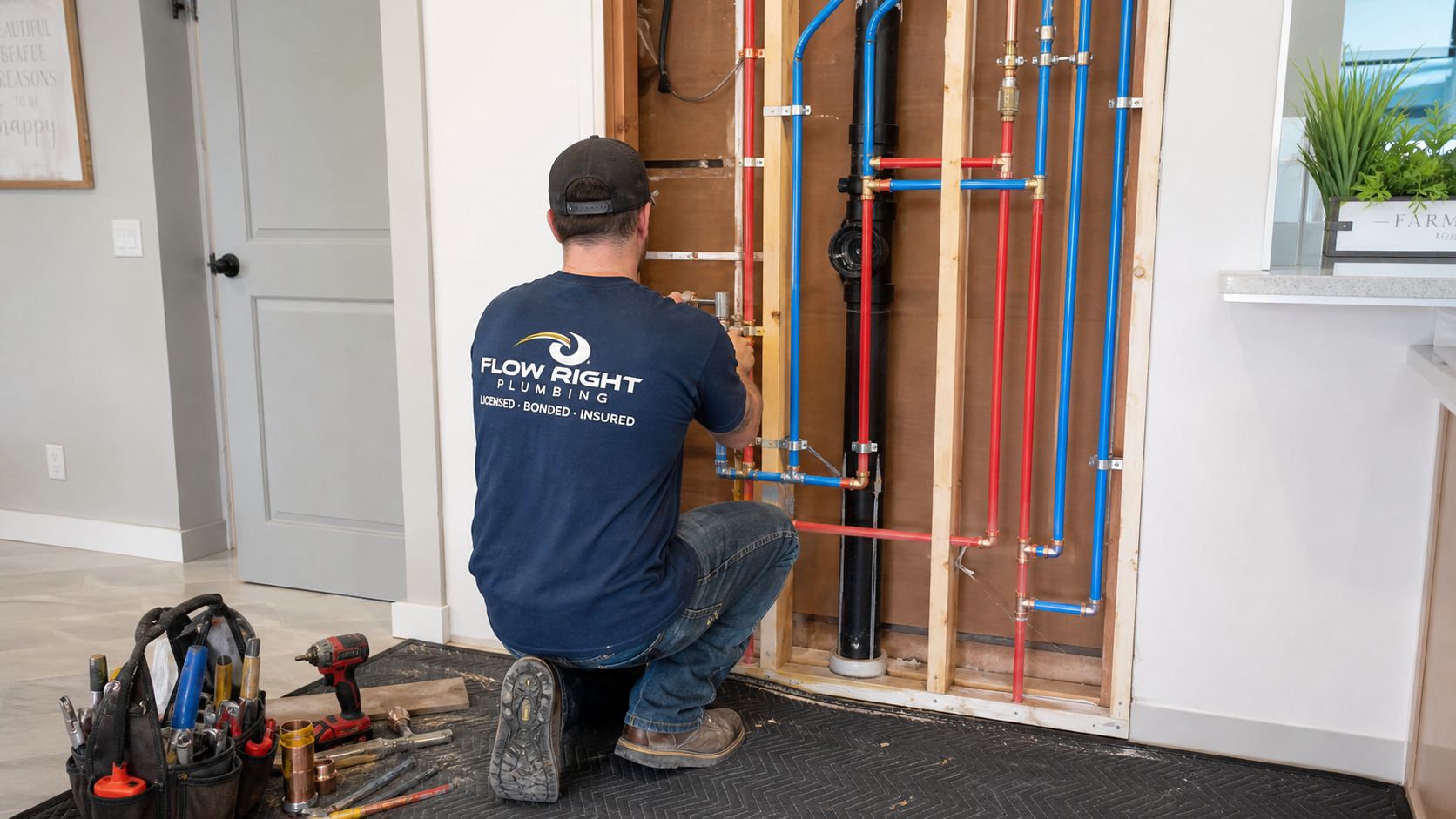
Its flexibility can reduce the number of fittings required in some layouts and may allow installers to route piping through areas that would be difficult for rigid materials.
PEX systems use manufacturer specified fittings and connection methods.
Which Repiping Material Is Best?
There is no universal winner.
The appropriate material depends on:
• Local plumbing code
• Water chemistry
• Building design
• Temperature conditions
• Installation location
• Contractor expertise
• Product availability
• Budget
• Manufacturer requirements
Ask plumbers why they recommend a particular material for the specific property rather than choosing based only on generalized online comparisons.
3. Design the Repiping System Before Installation
Replacing existing pipes does not require duplicating every aspect of the old layout.
A qualified plumber can evaluate pipe sizing and routing according to fixture demand, building configuration, plumbing code, and the selected piping system.
Trunk and Branch Plumbing
Traditional systems commonly use larger main distribution lines with smaller branches supplying individual fixtures or groups of fixtures.
This approach can work efficiently when designed correctly.
Manifold Plumbing
Some PEX systems use manifolds that distribute water through individual or grouped lines.
A manifold can make individual circuit control convenient in suitable designs, but it may require additional tubing and installation space.
Neither configuration is inherently correct for every building.
Size Pipes Correctly
Oversizing or undersizing should be avoided.
Pipe sizing involves more than counting bathrooms. Applicable design procedures can account for fixture demand, pressure, developed pipe length, elevation, pipe material, and other characteristics.
An experienced plumber should design the system according to applicable code and manufacturer requirements.
4. Understand Water Pressure Before Repiping
Water pressure is an important part of plumbing performance.
Excessive pressure can place unnecessary stress on valves, fixture connections, appliances, and other components.
Low pressure can create poor fixture performance.
Have Pressure Evaluated
A plumber can measure static and operating pressure and investigate abnormal readings.
Local plumbing requirements may call for pressure reducing equipment when supply pressure exceeds allowed limits.
Pressure and Flow Are Different
Pressure refers to force within the water system, while flow describes the volume of water moving over time.
A house can have adequate static pressure and still experience poor fixture flow because of restrictions or inadequate piping.
Understanding the distinction helps avoid incorrect diagnoses.
Check the Pressure Regulator
Homes equipped with a pressure reducing valve may develop symptoms when that device malfunctions.
If a regulator is present, its condition should be considered during system evaluation.
Replacing all supply piping will not correct a defective pressure regulator unless that problem is also addressed.
5. Plan Wall Access for Repiping
Water pipes often run behind drywall, ceilings, cabinets, floors, or other finished surfaces.
Installers therefore need a strategy for reaching existing connections and routing new lines while controlling damage.
How Much Wall Removal Is Required?
The answer depends on the building.
PEX flexibility can reduce access needs in some projects, but openings may still be required around fixture connections, framing obstacles, valves, and transitions.
Multi story homes and complex architectural layouts can require more invasive access.
Ask Who Repairs Walls
Plumbing proposals do not always include drywall, painting, tile, cabinetry, or other finish restoration.
Before signing a contract, determine:
• Who creates access openings
• Who closes them
• Whether texture matching is included
• Whether painting is included
• How tile or cabinetry will be handled
• Whether restoration is part of the quoted price
This avoids unexpected finishing expenses after the plumbing work is complete.
6. Use Qualified Professionals for Repiping
Whole house plumbing replacement affects the potable water system and can involve water heaters, framing penetrations, shutoffs, pressure controls, and code regulated connections.
Licensing requirements vary, but this work is commonly subject to plumbing regulations.
How to Choose a Repiping Contractor
Evaluate:
• Required plumbing license
• Appropriate insurance
• Experience with whole house projects
• Experience with the proposed pipe system
• Written estimates
• Permit responsibilities
• Warranty terms
• References
• Cleanup procedures
• Wall restoration scope
Verify licensing with the relevant state or local authority where applicable.
Compare Equivalent Proposals
A lower bid can reflect a different scope rather than a better price.
One contractor may include new fixture shutoffs, hose connections, drywall patching, permits, and insulation, while another excludes those items.
Compare each proposal component by component.
Ask for Product Details
The proposal should identify the piping product and connection system.
This helps homeowners research manufacturer specifications, approvals, and warranty requirements.
Avoid vague contracts that identify the installation only as “new plumbing.”
7. Test the New Repiping System Thoroughly
A plumbing replacement should be inspected and tested before access openings are permanently closed.
Testing helps identify leaks or connection problems while components remain accessible.
Pressure Testing
Required testing procedures vary by jurisdiction and plumbing system.
The plumber should perform applicable tests according to code, manufacturer requirements, and permit conditions.
Inspect Every Accessible Connection
After the system is placed into service, connections at fixtures, valves, appliances, water heaters, and other accessible locations should be checked.
Small leaks deserve immediate attention.
Flush New Water Lines
New piping may require flushing according to applicable procedures before normal use.
Flushing can remove construction debris and other material introduced during installation.
The contractor should follow product and local water system requirements.
What Happens During a Whole House Repiping Project?
Although every building is different, professional projects generally follow a planned sequence.
The first stage is evaluating the existing system and developing the scope.
Plumbing Inspection and Planning
The contractor identifies existing pipe materials, fixture locations, water service conditions, shutoffs, access points, and possible routes.
The plumber can then determine what will be replaced and whether additional components need attention.
Protecting the Property
Before opening walls, workers should protect nearby floors, furniture, and belongings as appropriate.
Plumbing contractors may coordinate access openings with drywall or restoration specialists.
Isolating the Water Supply
Water needs to be shut off while relevant connections are modified.
Ask how long the house is expected to be without water, particularly for larger projects.
Installing New Distribution Pipes
New lines are routed through planned locations and secured with appropriate supports.
Penetrations, bends, clearances, protection from physical damage, and connection methods should follow applicable requirements.
Connecting Fixtures
The system is connected to sinks, toilets, tubs, showers, water heaters, laundry appliances, exterior hose connections, and other specified fixtures.
Fixture stop valves may be replaced when included in the project scope.
Inspection and Restoration
Where permits require inspection, relevant work should remain accessible until approval.
After testing and required inspections, wall openings can be repaired and finishes restored.
How Much Does Repiping Cost?
There is no reliable single price for a whole house project.
Cost varies substantially by building size, plumbing layout, pipe material, accessibility, location, local labor costs, number of fixtures, permit requirements, and wall restoration.
Factors That Influence Repiping Cost
Major variables include:
• Number of plumbing fixtures
• Number of floors
• Pipe material
• Pipe routing
• Accessibility
• Existing plumbing configuration
• Fixture shutoff replacement
• Water pressure equipment
• Permit fees
• Local labor rates
• Drywall work
• Painting and finishing
• Tile or cabinet access
A site specific estimate is more useful than a generic price per square foot.
Ask for a Written Scope
The quote should specify what the price includes and excludes.
If wall restoration is separate, request an estimate for that work before evaluating the total budget.
A plumbing bid that appears less expensive can become more costly once necessary restoration is included.
How Long Does Repiping Take?
Project duration depends on house size, crew, number of fixtures, access difficulty, permit procedures, pipe material, and restoration requirements.
A straightforward accessible property may progress much faster than a multistory house with finished walls and difficult routing.
Water May Not Be Off for the Entire Project
Contractors can sometimes structure work so that the house is without water only during particular connection periods.
This depends on the project.
Ask about expected service interruptions when scheduling the work.
Restoration Can Extend the Timeline
Completing plumbing does not necessarily mean the entire project is finished.
Drywall drying, texture work, painting, tile work, or cabinetry repairs may add time after the pipes are operating.
Repiping an Older Home
Older houses can contain multiple generations of plumbing materials because previous owners may have performed partial repairs.
A professional inspection should identify the accessible components before the project is designed.
Galvanized Steel Water Pipes
Some older homes contain galvanized steel water supply piping.
Over time, internal corrosion and accumulation can contribute to restricted flow, discoloration, or leakage.
Actual condition varies, so inspection is preferable to judging a system solely by age.
Older Copper Systems
Copper itself does not mean a system is problem free.
Leaks can be related to local water characteristics, workmanship, pipe conditions, and other factors.
Recurring pinhole leaks deserve investigation into possible underlying causes before new materials are selected.
Mixed Plumbing Materials
Transitions between different materials require compatible, approved fittings and appropriate installation.
Dissimilar metals can present corrosion concerns in certain circumstances.
The plumber should use connection methods specified for the materials involved.
Repiping and Water Quality
Homeowners sometimes expect a new piping system to solve every water quality problem.
It will not.
Pipe deterioration can contribute to certain discoloration or taste concerns, but water quality can also be affected by the source water, water heater, treatment equipment, fixtures, or other plumbing.
Discolored Water Needs Diagnosis
Color can have different causes.
If discoloration occurs only in hot water, for example, the water heater may deserve investigation. If it occurs throughout the property, supply conditions or distribution piping may be relevant.
Testing and inspection can help identify the source.
Repiping Is Not Water Treatment
New water lines do not automatically remove hardness, chlorine, minerals, or contaminants present in the incoming water supply.
Where water quality is a concern, use appropriate testing from a qualified laboratory or guidance from the relevant water utility or health authority.
Repiping and Water Heaters
A major plumbing project creates an opportunity to inspect connections around the water heater.
It does not automatically mean the heater itself should be replaced.
Evaluate Existing Equipment
Consider condition, performance, installation, applicable safety components, and compatibility with the new plumbing configuration.
If the water heater also needs replacement, combining projects may sometimes simplify scheduling.
Hot Water Pipe Insulation
Pipe insulation can reduce heat loss from hot water distribution and may be required in specific locations under applicable energy or plumbing requirements.
The appropriate insulation depends on pipe size, location, climate, and local standards.
Repiping Permits and Inspections
Whole house plumbing replacement commonly requires permits in many jurisdictions, though exact requirements vary.
The local authority having jurisdiction determines what applies.
Why Plumbing Permits Matter
Permit review and inspection can address issues such as materials, pipe sizing, supports, valves, testing, protection, and other code requirements.
Homeowners should ask whether permitting is included in the contractor’s proposal.
Do Not Close Walls Before Required Inspection
Where inspection is required, covering the piping prematurely can make verification difficult and potentially require walls to be reopened.
Coordinate restoration with the plumbing contractor and inspection schedule.
Repiping and Building Safety
Creating access for new piping can introduce risks beyond plumbing.
Walls can contain electrical wiring, gas piping, ducts, structural components, and other utilities.
Protect Pipes From Fasteners
Where pipes pass near framing surfaces, protective plates may be required to reduce the chance of nails or screws damaging them later.
Applicable requirements depend on pipe placement and local code.
Fire and Draft Protection
Penetrations through certain building assemblies may need approved sealing or fireblocking.
The correct method depends on construction and code requirements.
Plumbing installation should preserve required building safety features.
Repiping and Freeze Protection
Water pipes located in vulnerable areas can freeze when exposed to sufficiently low temperatures.
Planning new routes can sometimes reduce exposure.
Keep Pipes in Protected Locations
Where practical, piping should be located in conditions appropriate for the climate and building design.
Exterior walls, crawl spaces, attics, and other areas can require special attention.
Insulation Alone Is Not a Universal Solution
Pipe insulation can reduce heat transfer but does not guarantee a water filled pipe will never freeze.
Air sealing, pipe placement, indoor heating, building insulation, and extreme weather all influence risk.
Local construction practices should guide freeze protection.
Repiping Mistakes to Avoid
Replacing pipes without first diagnosing system problems can produce unnecessary expense.
Another common mistake is choosing a contractor solely on total price without comparing scope.
Do Not Ignore Water Pressure
If excessive supply pressure contributed to previous failures, installing new piping without correcting pressure can leave the underlying stress unresolved.
Have pressure evaluated as part of project planning.
Avoid Unapproved Materials and Fittings
Plumbing components should be approved for their intended application and compatible with the selected system.
Mixing fittings and tools without following manufacturer requirements can compromise connections and potentially affect warranty coverage.
Do Not Forget Finish Restoration
A plumbing quote can seem complete until multiple walls need drywall, texture, primer, and paint.
Include restoration when budgeting the project from the beginning.
Is Repiping Worth It?
Repiping can make practical sense when a water distribution system experiences widespread deterioration or recurrent failures that make continued spot repairs increasingly disruptive.
Its value depends on the actual condition of the building.
Potential Benefits of Repiping
When appropriately designed and installed, a replacement system can:
• Address deteriorated supply piping
• Reduce leaks caused by failed old pipes
• Correct some flow restrictions
• Improve valve accessibility when included
• Modernize plumbing distribution
• Reduce dependence on repeated repairs to obsolete sections
Specific results depend on the cause of existing problems.
Repiping Does Not Guarantee Higher Property Value
A modernized plumbing system may be attractive to buyers, particularly when it replaces visibly deteriorated piping.
However, no fixed increase in resale value can be guaranteed.
Local housing conditions, project quality, documentation, and the rest of the property all influence market value.
Maintaining Plumbing After Repiping
New pipes still require responsible property maintenance.
Monitor visible connections and address leaks promptly.
Know Your Shutoff Valves
After installation, ask the plumber to identify the main shutoff and any new branch or fixture valves.
Household members should know where the primary shutoff is located for emergencies.
Keep Project Documentation
Retain:
• Plumbing contract
• Material specifications
• Permit records
• Inspection documents
• Warranty information
• Contractor contact details
• Photos taken before walls were closed
Photographs can be especially valuable because they document pipe routes hidden behind finished surfaces.
Frequently Asked Questions
What does repiping mean?
Repiping means replacing extensive sections or all of a building’s existing plumbing pipes, most commonly the domestic hot and cold water supply system.
How do I know whether my home needs repiping?
Repeated leaks, widespread corrosion, deteriorated pipes, or persistent systemwide flow problems can justify an evaluation. A plumber should diagnose the underlying cause before recommending replacement.
Is PEX or copper better for repiping?
Neither material is best in every situation. Building design, water chemistry, local codes, budget, installation conditions, and contractor experience should guide selection.
How much does whole house repiping cost?
Costs vary by house size, material, fixture count, accessibility, location, permits, and wall restoration. A detailed site specific plumbing estimate provides the most useful answer.
Does repiping require walls to be removed?
Wall and ceiling openings are often necessary, although the amount depends on pipe routes, building construction, and material. Ask whether finish restoration is included in the proposal.
Does repiping require a permit?
Many jurisdictions require permits for extensive plumbing replacement. Requirements vary, so confirm current rules with the local building department and licensed plumbing contractor.
Conclusion
Repiping can provide a comprehensive solution when residential water supply pipes have widespread deterioration, recurring leaks, or significant flow problems. A successful project depends on accurate diagnosis, proper pipe selection and sizing, pressure management, code compliant installation, thorough testing, and well planned wall restoration. Comparing detailed proposals from qualified plumbers helps ensure that a new piping system addresses the actual problems rather than simply replacing old materials without resolving their underlying causes.