Custom Furniture: How to Create Beautiful Pieces That Fit Your Home
custom furniture gives homeowners the freedom to choose dimensions, materials, storage, finishes and design details that suit a particular room instead of adapting the room around standard furniture sizes. A made to measure sofa can fit an awkward alcove, a bespoke dining table can accommodate a specific number of people, and fitted cabinetry can turn unused wall space into practical storage. The strongest designs combine appearance with comfort, durability and everyday function rather than focusing on style alone.
Ready made furniture remains a practical choice for many homes, but standard dimensions do not solve every interior challenge. Older houses may have uneven walls, apartments can have restricted floor plans and modern open spaces often need furniture that serves more than one function.
A tailored approach allows the furniture to respond to the architecture.
It can also give homeowners greater control over details such as timber species, upholstery, drawer configuration, seat depth, hardware and finish.
This guide explains how bespoke furniture works, what to consider before ordering and how to make design decisions that remain useful long after installation.
What Is Custom Furniture?
Custom furniture is designed or manufactured specifically for an individual client, room or application.
Unlike mass produced products made to predetermined sizes and finishes, a custom piece can be modified around the buyer’s requirements.
Examples include:
- Sofas
- Armchairs
- Dining tables
- Beds
- Wardrobes
- Bookcases
- Media units
- Desks
- Coffee tables
- Storage benches
- Kitchen cabinetry
- Built in shelving
The degree of personalisation can vary.
Some manufacturers begin with an existing model and allow customers to change dimensions, upholstery or finishes.
Others create a completely original piece from drawings.
Bespoke Furniture vs Made to Order Furniture
The terms are sometimes used interchangeably, but they can describe different levels of customisation.
Made to order furniture may offer a predefined collection with selectable options such as fabric, colour or size.
Bespoke furniture is typically created more specifically around the client’s brief.
A bespoke project might involve:
- Site measurements
- Original sketches
- Material selection
- Prototypes
- Specialist joinery
- Installation
Neither option is automatically better.
The right choice depends on how unusual the room or design requirement is.
7 Proven Ideas for Better Custom Furniture
A successful piece should fit the physical space, complement the interior and remain comfortable to use.
These seven considerations can help improve the design process.
1. Start With Accurate Measurements
Measurements are fundamental.
Even a beautiful piece can become unusable if it is several centimetres too large for the intended location.
Measure:
- Wall width
- Floor area
- Ceiling height
- Door openings
- Windows
- Skirting boards
- Radiators
- Electrical outlets
- Existing furniture
For built in furniture, wall irregularities should also be checked.
Measure the Delivery Route
A common mistake is measuring the final room but forgetting how the furniture will reach it.
Check:
- Front door width
- Hallways
- Staircases
- Lifts
- Tight corners
- Internal doors
Large sofas, tables and wardrobes may require removable components or assembly inside the room.
Discuss access with the maker before production begins.
Leave Space for Movement
Furniture needs breathing room.
A dining chair must be able to move away from the table.
Cupboard doors need space to open.
Drawers should not collide with adjacent furniture.
Good design considers the space around the object as carefully as the object itself.
2. Design Around How the Furniture Will Be Used
Appearance is important, but function should define the basic design.
Before selecting materials, consider who will use the furniture and how frequently.
A dining table used twice a year has different requirements from one used for meals, homework and remote work every day.
Questions to Ask Before Designing
Consider:
- How many people will use it?
- How often will it be used?
- Does it need storage?
- Will children use it?
- Are pets present?
- Does it need to move?
- Will technology be integrated?
- Is accessibility important?
These questions influence dimensions and material choices.
Comfort Should Be Personal
Custom seating is especially useful because body proportions and comfort preferences vary.
For a sofa or chair, consider:
- Seat height
- Seat depth
- Cushion firmness
- Back height
- Arm height
A deep sofa may suit relaxed lounging but feel uncomfortable for someone who prefers upright seating.
Build custom furniture Around Daily Habits
Furniture works best when it supports existing behaviour.
If shoes always accumulate near the entrance, a custom bench can include shoe storage.
If a dining area also functions as an office, drawers can conceal laptops and stationery after work.
If charging cables create clutter, cable management can be built into a desk or media unit.
Personalisation is most valuable when it solves a real problem.
3. Choose Materials for Beauty and Durability
Material selection affects appearance, maintenance, weight, cost and longevity.
A good maker should explain the advantages and limitations of available materials.
Solid Wood
Solid timber remains popular for tables, cabinets and shelving.
Common species include:
- Oak
- Walnut
- Ash
- Maple
- Beech
- Pine
Each species has a different grain pattern, colour and hardness.
Natural timber also changes slightly over time as it responds to light and the surrounding environment.
Engineered Wood
Quality engineered boards can be suitable for cabinetry and fitted furniture.
Examples include plywood, veneered board and other furniture grade panels.
These materials can provide dimensional stability and may allow efficient use of decorative veneers.
The quality varies considerably, so buyers should ask exactly what material will be used.
Metal
Steel, aluminium and other metals can provide structural strength or decorative contrast.
Metal is often combined with timber in:
- Tables
- Shelving
- Desks
- Console units
The finish can dramatically change the appearance, from industrial black steel to more refined brushed surfaces.
Upholstery
For sofas and chairs, upholstery should suit the household.
Consider:
- Abrasion resistance
- Texture
- Stain resistance
- Colour
- Cleaning requirements
- Pet suitability
A delicate pale fabric may be beautiful in a formal room but difficult in a busy family living space.
4. Use Custom Furniture to Solve Storage Problems
Storage is one of the strongest reasons to commission furniture.
Standard cabinets often leave unused gaps because they are designed around common dimensions rather than a specific room.
Custom storage can use:
- Alcoves
- Corners
- Full wall height
- Spaces beneath stairs
- Window areas
- Sloping ceilings
Built In Wardrobes
A fitted wardrobe can extend from floor to ceiling and make use of the entire available width.
Internal layouts can include:
- Hanging rails
- Shelves
- Drawers
- Shoe storage
- Accessory trays
Instead of adapting possessions to a standard wardrobe, the interior can be designed around what actually needs to be stored.
Media Furniture
Televisions, speakers, consoles, routers and cables can create visual clutter.
A custom media unit can incorporate ventilation, cable routes and closed storage while maintaining a clean appearance.
Window Seats
Unused space beneath a window can become seating with integrated drawers or lift up storage.
This is especially useful in bedrooms and small living rooms.
5. Match Proportions to the Room
Furniture should feel balanced within the architecture.
A huge sofa can overwhelm a compact lounge, while a tiny dining table may feel lost in a large open plan space.
Consider Visual Weight
Two pieces with identical dimensions can feel completely different.
A sofa with heavy arms and a low base looks larger than one with slim arms and visible legs.
A solid cabinet feels heavier than open shelving.
Visual weight matters when designing compact rooms.
Use Height Strategically
Tall furniture can make good use of vertical space.
However, it should not block important light or make the room feel enclosed.
A floor to ceiling bookcase can work beautifully on one wall while still allowing the rest of the room to remain open.
Custom furniture for Awkward Spaces
Custom design becomes particularly useful around:
- Sloping ceilings
- Bay windows
- Chimney breasts
- Irregular alcoves
- Narrow hallways
- Under stair spaces
These areas may be difficult to furnish using standard products.
A measured design can turn them into functional parts of the home.
6. Choose Finishes That Work With the Interior
Finishes determine how the final piece interacts with the surrounding room.
Instead of choosing a finish in isolation, compare it with:
- Flooring
- Wall colour
- Doors
- Existing furniture
- Metal fixtures
- Lighting
Natural Timber Finishes
Clear oils and similar finishes can allow the character of natural wood to remain visible.
The final colour depends on both the timber and finish.
Always review a physical sample when colour matching is important.
Painted Finishes
Painted cabinetry provides greater colour flexibility.
It can blend with walls or create a contrasting feature.
Neutral shades are versatile, while darker or stronger colours can turn furniture into a focal point.
Hardware
Handles, hinges and drawer systems are small components with a large effect on everyday use.
Possible finishes include:
- Black
- Brass
- Nickel
- Chrome
- Bronze
Hardware should complement both the furniture and nearby fixtures.
7. Review the Design Before Production Begins
Custom furniture is harder to return or exchange than standard retail furniture because it is made specifically for the buyer.
The design stage should therefore be thorough.
Ask for drawings showing:
- Overall dimensions
- Internal dimensions
- Door direction
- Drawer positions
- Material
- Finish
- Hardware
- Important clearances
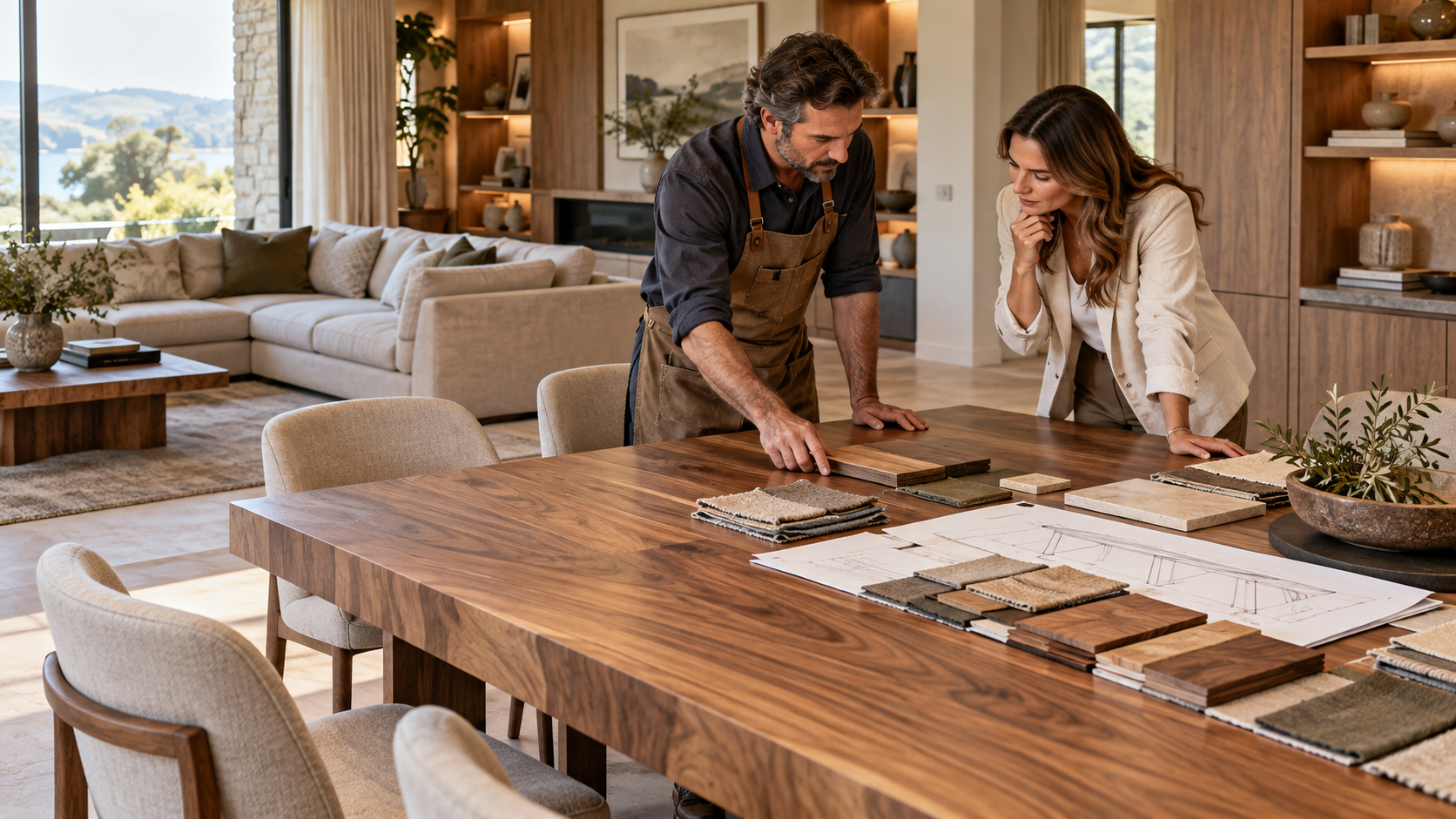
Use Samples
Small samples can prevent expensive misunderstandings.
Request samples of:
- Timber
- Veneer
- Fabric
- Paint
- Metal finish
Colours can look different under home lighting than they do on a computer screen.
Confirm What Is Included
A quotation should clearly explain whether the price includes:
- Design
- Materials
- Manufacturing
- Delivery
- Installation
- Hardware
- Finishing
- Tax where applicable
Clarifying the scope early reduces disagreements later.
Benefits of Custom Furniture
Bespoke pieces can provide several practical advantages.
Better Use of Space
Furniture can be designed around the exact dimensions of the room.
This is especially valuable in smaller homes.
Greater Design Control
Clients can influence:
- Size
- Shape
- Colour
- Material
- Storage
- Upholstery
This creates a stronger connection between the furniture and the interior.
Personalised Function
A standard desk might contain generic drawers.
A custom desk can include specific storage for monitors, computers, documents and cables.
Distinctive Appearance
A custom piece can give the room more character because it is not selected from the same catalogue as thousands of other interiors.
Custom Furniture for Small Homes
Compact homes benefit from furniture that performs multiple functions.
Good examples include:
- Storage beds
- Extendable dining tables
- Bench seating with drawers
- Wall mounted desks
- Slim shelving
- Corner cabinets
Reduce Wasted Gaps
Standard furniture often leaves narrow gaps against walls.
Made to measure pieces can eliminate these wasted areas.
A wardrobe designed for the exact wall can provide substantially more useful storage than a smaller freestanding unit.
Use Multifunctional Designs
A window seat can provide seating and storage.
A desk can fold away.
A coffee table can contain drawers.
Multifunctional design reduces the number of separate furniture pieces required.
Custom Furniture for Living Rooms
The living room often contains several large pieces that need to work together.
A custom project can coordinate:
- Sofa
- Media unit
- Shelving
- Coffee table
- Side tables
Made to Measure Sofas
A custom sofa can be designed to suit the room rather than choosing the closest standard length.
Buyers can also select seat depth, arm design, cushions and upholstery.
Built In Shelving
Wall shelving can frame architectural features, televisions or fireplaces.
Closed lower cupboards can hide practical items while open upper sections display books and décor.
Custom Furniture for Bedrooms
Bedrooms often benefit from tailored storage because wardrobes occupy substantial space.
Fitted Wardrobes
Full height wardrobes can maximise storage while creating a clean appearance.
Interior layouts can be personalised for different users.
Bespoke Beds
A custom bed can include:
- Drawers
- Lift up storage
- Integrated bedside units
- Headboard lighting
- Shelving
This can be particularly valuable in smaller bedrooms.
Custom Furniture for Dining Rooms
Dining furniture should be designed around both the room and the number of people using it.
Table Dimensions
Consider everyday seating first.
If larger groups visit occasionally, an extending table may be more practical than keeping an oversized table in the room permanently.
Table Shape
Common options include:
- Rectangular
- Round
- Oval
- Square
Round tables can improve conversation and movement in some layouts.
Rectangular tables often suit longer rooms and larger groups.
How Much Does Custom Furniture Cost?
There is no universal price.
Costs depend on:
- Dimensions
- Materials
- Design complexity
- Labour
- Upholstery
- Hardware
- Finish
- Installation
A simple made to measure shelf can be relatively modest, while a large fitted library or fully bespoke sofa may require a significantly larger budget.
Compare Like for Like
When reviewing quotations, check the specification rather than comparing only the final price.
One maker may quote solid wood while another proposes veneered board.
One may include installation while another charges separately.
Understanding these differences makes comparison more meaningful.
How Long Does Custom Furniture Take to Make?
Production time varies according to the maker, materials and complexity.
The process can include:
- Initial consultation
- Site measurement
- Design
- Material approval
- Manufacturing
- Finishing
- Delivery
- Installation
Custom work generally requires more planning than purchasing furniture directly from stock.
Discuss the expected schedule before paying a deposit, particularly when the furniture is required before an event or move.
Choosing a Custom Furniture Maker
Look for evidence of relevant experience.
Review completed work that resembles the type of piece you want.
Ask About Materials
The maker should be able to explain what materials will be used and why.
Review Craftsmanship
Look closely at:
- Joints
- Drawer alignment
- Edges
- Upholstery
- Finishing
- Hardware
Good workmanship is often visible in small details.
Discuss Aftercare
Ask what happens if the furniture requires adjustment after installation.
Built in pieces may need small alignment changes once installed in an existing property.
Common Custom Furniture Mistakes
Several mistakes can make a bespoke project less successful.
Prioritising Appearance Over Function
A beautiful object that is uncomfortable or difficult to use will become frustrating.
Forgetting Future Needs
Think about how the household might change.
Flexible shelving or adjustable storage can make furniture useful for longer.
Skipping Samples
Digital images are not reliable enough for precise colour and texture selection.
Ignoring Delivery Access
Large furniture may not fit through the building even when it fits perfectly in the room.
Making Every Feature Custom
Not every detail needs to be unusual.
Sometimes a simple design made to the correct dimensions delivers the best result.
Caring for Custom Furniture
Maintenance depends on the materials.
Wood
Use cleaning products recommended for the specific finish.
Protect surfaces from standing water and excessive heat.
Upholstery
Vacuum regularly and follow fabric care instructions.
Treat spills promptly using an appropriate method.
Painted Furniture
Clean gently to avoid scratching the finish.
Keep touch up information if the maker provides it.
Hardware
Hinges and drawer runners may occasionally require adjustment.
Address loose components before repeated movement causes further wear.
Frequently Asked Questions
What is custom furniture?
Custom furniture is designed or modified specifically for an individual space, user or requirement rather than being manufactured only in standard sizes and finishes.
Is custom furniture good for small spaces?
Yes. It can use alcoves, corners, vertical space and awkward areas more efficiently while combining functions such as seating and storage.
What materials are best for custom furniture?
The right material depends on the design and budget. Solid timber, quality engineered boards, metal, glass and upholstery fabrics can all be appropriate when specified correctly.
Is custom furniture more expensive than ready made furniture?
It can cost more because design, labour and materials are tailored to the project. Pricing varies significantly according to size, complexity and specification.
How should I measure for custom furniture?
Measure the installation area, surrounding clearances and the complete delivery route. Built in projects are often best measured by the maker before production.
How long does custom furniture last?
Lifespan depends on construction, materials, usage and maintenance. Well designed furniture made from suitable materials can remain functional for many years.
Conclusion
Custom furniture allows homeowners to create pieces that respond directly to their space, lifestyle and design preferences rather than working around fixed retail dimensions. Careful measurements, durable materials, practical storage and thoughtful proportions are more important than decoration alone. By reviewing drawings, samples and specifications before production, buyers can create furniture that looks considered, functions efficiently and remains useful as the home evolves.