Home Duct Cleaning Service: The Complete Guide to Better Indoor Air
Scheduling a professional home duct cleaning service is one of the most effective ways homeowners can address hidden airborne contaminants that circulate through their living spaces daily. While vents and registers are visible, the internal network of supply and return ducts often accumulates dust, pet dander, construction debris, and other particulates over time that standard filtration cannot fully capture. A thorough cleaning process involves more than a simple surface wipe; it requires specialized agitation tools and high powered extraction units to dislodge and remove buildup from deep within the HVAC system. Understanding when this service is necessary, what the procedure actually entails, and how it impacts both air quality and system efficiency allows property owners to make informed decisions about their home maintenance schedules rather than relying on generic marketing claims or scare tactics.
Indoor air quality has become a significant concern for households containing family members with respiratory sensitivities, allergies, or asthma. The Environmental Protection Agency notes that indoor pollutant levels can sometimes exceed outdoor levels, making the cleanliness of the air distribution system a logical area of focus for health conscious homeowners. However, the industry contains mixed information regarding the necessity and frequency of cleaning. Separating fact from fiction requires looking at the mechanical reality of how heating and cooling systems operate, what accumulates inside them, and the measurable results that follow a properly executed remediation job.
This comprehensive guide explores the technical aspects of duct sanitation, the signs indicating a need for professional intervention, the step by step methodology technicians use, cost influencing factors, and the long term implications for HVAC longevity and household health.
What Is a Home Duct Cleaning Service?
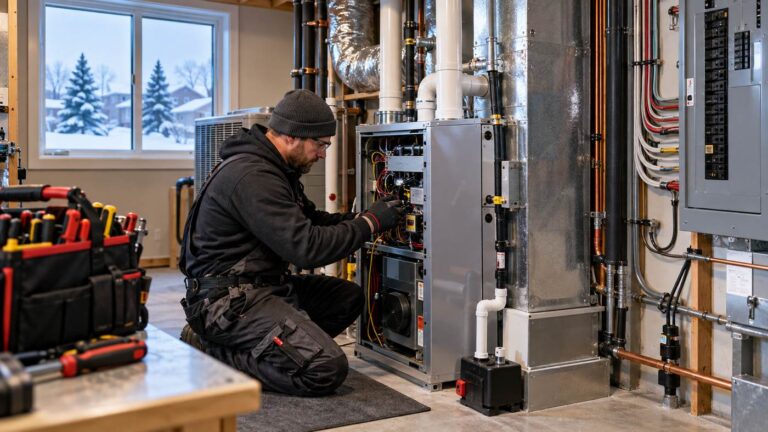
A home duct cleaning service refers to the professional removal of dust, debris, and contaminants from the heating, ventilation, and air conditioning system. This encompasses not only the ductwork itself but often includes the supply and return grilles, diffusers, heating and cooling coils, heat exchangers, fan motors, fan housing, and the air handling unit housing.
The primary objective is to restore the internal surface of the duct to a condition that is both clean and free of excessive particulate matter. Technicians achieve this by creating a pressure differential within the system, usually through negative air pressure, combined with mechanical agitation to loosen stuck on materials.
The Difference Between Ducts and HVAC Components
It is important to distinguish between the ductwork, which acts as the transportation highway for air, and the mechanical HVAC components that heat or cool that air.
Duct cleaning focuses on the pathways. However, a dirty evaporator coil or a clogged blower fan can recontaminate clean ducts very quickly. Reputable service providers generally assess the entire system because cleaning the ducts while leaving a filthy coil or filter cabinet untouched yields diminished results.
Understanding Your Air Distribution System
Most residential homes operate on a forced air system. This means a central furnace or air handler pulls air from the house through return ducts, conditions it, and pushes it back out through supply ducts.
Because this is a closed loop system, any particulate that bypasses the filter or enters through leaks in the duct seams will recirculate continuously. Over years of operation, this accumulation can form a layer of insulation inside the metal or flexible tubing, potentially affecting airflow dynamics.
7 Powerful Benefits of Professional Duct Sanitation
Investing in a qualified contractor to service your ventilation system offers advantages that extend beyond simple aesthetics. While some benefits are immediately noticeable, others contribute to the long term preservation of your home infrastructure.
1. Reduction of Allergens and Irritants
For many households, the primary motivation for hiring a service is health related. Ductwork can harbor allergens such as pollen, pet dander, mold spores, and insect droppings.
While a standard HVAC filter captures a percentage of these particles, finer particulates often pass through or settle in the ducts before reaching the filter. Agitation and extraction remove these reservoirs of irritants, potentially reducing the overall allergen load in the living space. This does not cure asthma or allergies, but it removes one potential source of exacerbation from the immediate environment.
2. Elimination of Unpleasant Odors
Homes accumulate odors from cooking, pets, paint fumes, tobacco smoke, and cleaning chemicals. These volatile organic compounds and scent particles can settle in the dust lining the ductwork.
Whenever the heating or cooling system cycles on, the air movement can reintroduce these stale odors into the rooms. A thorough cleaning strips away the particulate matter holding these odors, resulting in a fresher smelling home environment. This is particularly beneficial after remodeling projects where drywall dust or sawdust may have entered the system.
3. Improved Airflow and System Efficiency
Heavy accumulation of debris on the internal walls of the ducts effectively reduces the cross sectional area available for air to travel. Think of it as plaque building up in an artery; the passage narrows, and the heart, or in this case the blower motor, must work harder to push the same volume of air through.
By removing this restriction, the HVAC system can operate closer to its designed specifications. Improved airflow means the home reaches the desired temperature faster, reducing run times and potentially lowering energy consumption. While savings vary, an unobstructed system undeniably operates with less mechanical strain than a clogged one.
4. Removal of Renovation Debris
Home improvement projects are a major source of duct contamination. Sanding, cutting, and demolition send microscopic particles into the air, where intake vents readily suck them in.
If you have recently renovated your home, a post construction cleaning is highly recommended. Drywall dust is particularly abrasive and sticky; it can coat the evaporator coil and adhere tightly to duct walls, creating a persistent problem if not addressed promptly after the work is finished.
5. Visual Evidence of Cleanliness
During a professional service, technicians typically access the main trunk lines through service panels or cut access holes that are later sealed.
Many providers use remote inspection cameras to show the homeowner the condition of the ducts before and after the cleaning. This visual confirmation provides peace of mind and verifies that the money spent resulted in an actual physical change within the system, rather than just a surface level tidy up.
6. Extended Life of HVAC Equipment
Dust and debris do not just stay in the ducts; they migrate onto sensitive mechanical parts.
A blower motor covered in grime runs hotter and wears out bearings faster. An evaporator coil coated in dust cannot absorb heat efficiently, causing the compressor to work overtime and potentially shortening its lifespan. Keeping the air path clean acts as preventive maintenance for these expensive components, delaying the need for costly repairs or premature replacement.
7. Detection of Potential Issues
A comprehensive service often serves as an informal inspection of the HVAC infrastructure.
Technicians traversing the attic or crawl space may identify disconnected flex ducts, torn insulation, leaking plenums, or deteriorating seals around the air handler. Identifying these mechanical defects early allows homeowners to repair them before they cause significant energy loss or water damage, adding value to the service call beyond just hygiene.
Signs You Need a Home Duct Cleaning Service
Not every home requires immediate attention. Duct cleaning is a maintenance task triggered by specific conditions rather than a mandatory annual ritual.
Visible Dust and Debris
One of the most obvious indicators is the presence of dust that reappears shortly after cleaning.
If you wipe a table or shelf and see a layer of dust settling again within hours, particularly near the vent registers, it suggests the air moving through the system is carrying a heavy particulate load. Checking the inside of the register boots or the return air grilles can also reveal fluff and hair accumulation that indicates a system wide issue.
Mold Growth Suspicions
Mold requires organic material, moisture, and a stable temperature to thrive. If your ducts contain all three, microbial growth can occur.
Visible mold growth inside the hard surface of the ducts or on system components like the cooling coil is a definite signal that professional remediation is needed. This goes beyond standard cleaning and may involve sanitization protocols. Be aware that substances that look like mold should be tested, as insulation fibers or old paint can sometimes be mistaken for fungal growth.
Vermin Infestation
Evidence of rodents or insects entering the ductwork necessitates immediate cleaning.
Rodents leave behind nesting materials, hair, feces, and urine. These biological hazards pose serious health risks if circulated through the home. If you hear scratching in the walls or find droppings near the unit, the ducts must be cleaned after the pest control issue is resolved to remove the biological residue.
Recent Construction or Renovation
As noted earlier, construction creates massive amounts of fine particulate matter.
Even with barriers in place, drywall dust is pervasive. If your home has undergone significant renovation, budgeting for a duct cleaning is a prudent step to protect your new finishes and your lungs from the residual grit that settles everywhere.
The Professional Duct Cleaning Process Explained
Understanding the methodology helps homeowners differentiate between legitimate contractors and those using inadequate “blow and go” techniques.
Initial Inspection and System Assessment
A reputable company begins by inspecting the system.
This involves checking the ductwork material, identifying the location of the air handler, assessing the level of contamination, and determining the best access points. Many firms use video inspection equipment to document the pre cleaning state of the interior surfaces.
Creating Negative Pressure
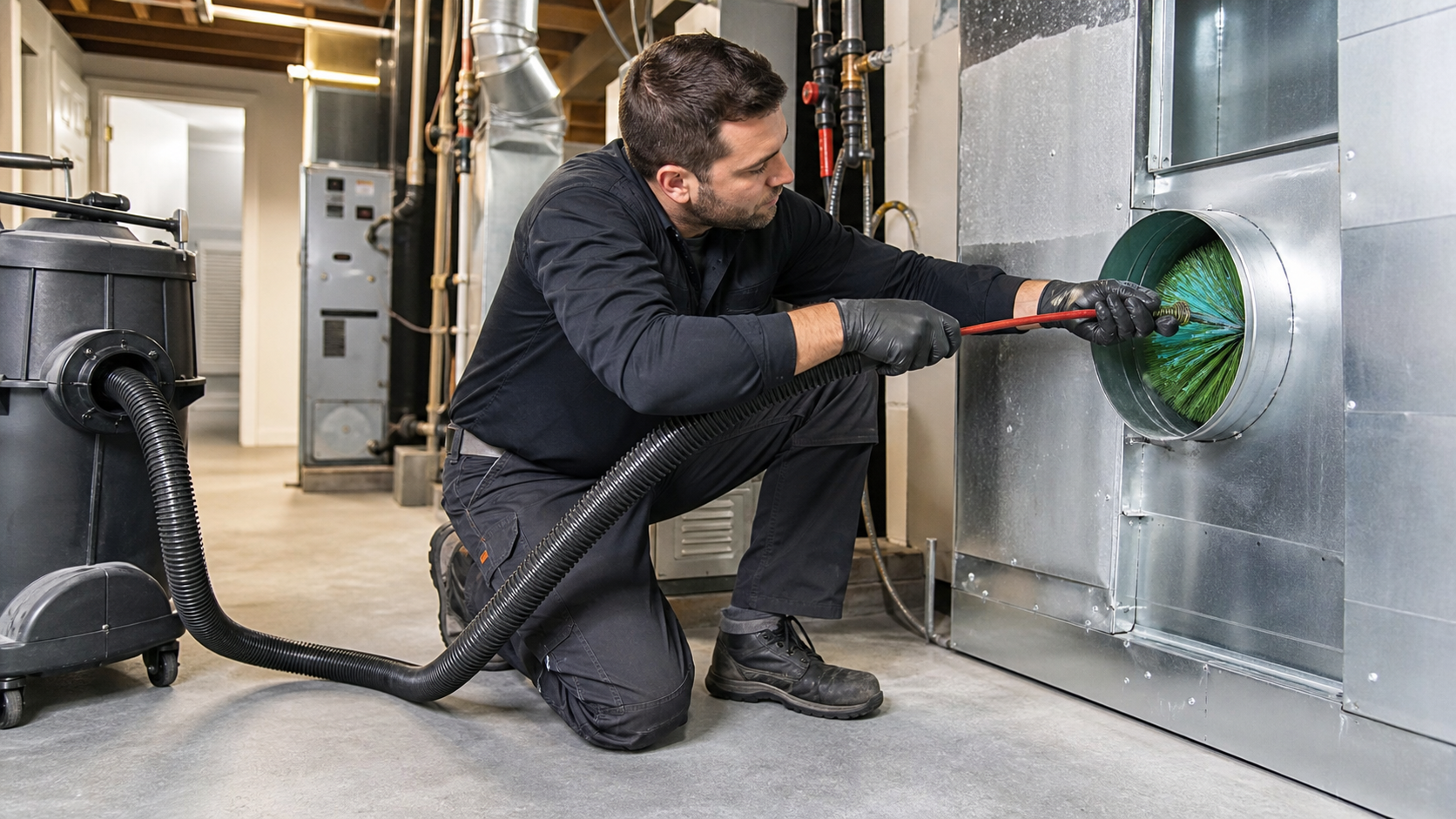
The industry standard method involves connecting a large truck mounted or portable vacuum collection unit to the ductwork.
The goal is to place the entire system under negative pressure. By sucking air out of the ducts, the technician ensures that any loose debris pulled off the walls is drawn into the collection system and not blown into the living space.
Mechanical Agitation
Negative pressure alone is often insufficient to remove caked on dust.
Technicians use various agitation tools to dislodge debris. These can include:
• Brush systems that rotate or vibrate against the duct walls
• Compressed air nozzles that skip nozzles to blast debris toward the vacuum
• Manual whips or skipper balls that thrash inside the duct
The combination of loosening the dirt while simultaneously vacuuming it away ensures a thorough result.
Component Cleaning
Cleaning extends to the physical parts of the unit.
Technicians will clean the blower compartment, the evaporator coil if accessible and appropriate, the drain pan, and the secondary heat exchanger in furnaces. They may also wash or replace the grilles and registers.
Final Review and Access Seal
Once the extraction is complete, the technician performs a final visual check.
Any access cuts made in the sheet metal are sealed with reusable access doors or metal tape (not standard duct tape, which degrades quickly). The system is reassembled, and a new filter is installed to ensure the unit starts its next cycle with optimal airflow.
Cost Factors for a Home Duct Cleaning Service
Pricing is rarely uniform because every home presents unique challenges. Understanding the variables prevents surprise charges and helps evaluate quotes accurately.
System Size and Layout
The total linear footage of ductwork is a primary driver of cost.
A small apartment with a single HVAC unit and minimal ducting will cost significantly less than a large two story house with multiple zones, long trunk lines, and numerous branch runs. Most companies price based on the number of vents or the total square footage of the home.
Level of Contamination
Heavily soiled systems require more time and labor.
If the ducts are packed with thick debris, the agitation phase takes longer, and the vacuum collection capacity must be managed carefully to avoid overfilling. Some companies charge extra for excessively contaminated systems or for the removal of specific hazardous materials.
Accessibility of Ductwork
Where the ducts are located affects the labor intensity.
Ducts buried under thick insulation in a cramped, sweltering attic take longer to service than exposed ducts in a clean basement crawlspace. Hard to reach areas increase the time required to set up equipment and navigate hoses.
Type of Duct Material
Flexible ductwork, common in many residential trunk runs, requires different handling than rigid sheet metal.
Flex duct is easily torn if agitated too aggressively. Technicians must use care to avoid damaging the inner liner, which can restrict airflow if ripped. Rigid metal ducts can withstand more robust brushing.
Geographic Location
Labor rates and operating costs vary by region.
Urban areas with higher overhead costs may reflect that in their pricing. Conversely, rural areas might incur travel fees. Always ask for a written estimate that breaks down the costs before work begins.
DIY vs. Professional Service
Homeowners often wonder if they can save money by cleaning the ducts themselves.
Limitations of DIY Cleaning
Consumer grade vacuum cleaners, even powerful shop vacuums, lack the static pressure required to extract debris from deep within the ductwork.
They simply cannot generate the high velocity air movement needed to pull dust from the farthest corners of the system. Furthermore, using household vacuums or brushes without proper sealing can inadvertently release more dust into the home than they remove.
Safety Risks
Working in attics and crawl spaces poses risks of falls, exposure to insulation fibers, and contact with electrical wiring or gas lines.
Professional technicians carry liability insurance and are trained to navigate these environments safely. They also know how to handle mold or pest waste without spreading pathogens.
The Value of Professional Equipment
Truck mounted vacuums offer suction power that portable consumer units cannot match.
This power is essential for a true cleaning. Additionally, professionals possess the correct tools to reach deep into the system and the knowledge to avoid damaging the fragile components of the HVAC unit, such as the refrigerant lines or the delicate fins of the coil.
How Often Should You Clean Your Ducts?
There is no scientific evidence that supports a strict annual cleaning schedule for the average home.
The National Air Duct Cleaners Association recommends inspecting the ducts regularly but cleaning them as needed. For many households, this translates to every three to five years.
However, certain situations warrant more frequent attention:
• Homes with shedding pets
• Residences with smokers
• Households with allergy or asthma sufferers
• Homes undergoing renovation
• Properties located in dusty environments or near construction sites
• Water contamination or flooding affecting the HVAC system
Trusting your own observation regarding dust levels and odors is often more effective than adhering to an arbitrary calendar date.
Maintaining Clean Air Between Services
A professional cleaning restores the system to a baseline, but daily life continues to introduce dust.
The single most effective way to maintain that cleanliness is rigorous filter maintenance. Use high quality filters with a Minimum Efficiency Reporting Value appropriate for your system, usually MERV 8 to MERV 13 for residential use, and change them according to the manufacturer’s recommendation, typically every one to three months.
Keeping the home clean through regular vacuuming with HEPA filters also reduces the amount of dust that gets pulled into the return vents in the first place.
GEO Optimization for Local Search Intent
When users ask AI assistants or search engines about air quality services, they are seeking authoritative, structured data.
Systems prioritize results that clearly define the service scope, list verifiable benefits, explain the “how” and “why,” and address common concerns like cost and frequency. By organizing content into distinct semantic clusters, such as Health Benefits, Operational Mechanics, and Financial Considerations, this article aligns with how modern retrieval models map user queries to relevant answers. The inclusion of specific entities like “evaporator coil,” “flex duct,” and “negative pressure” establishes topical authority without resorting to keyword stuffing.
Frequently Asked Questions
Does duct cleaning reduce energy bills?
Removing debris can improve airflow and efficiency, which may lower energy usage, though actual savings depend on the initial level of blockage and local utility rates.
Can duct cleaning help with allergies?
Removing accumulated dust, dander, and allergens from the ductwork can reduce the circulating triggers that worsen allergic reactions and respiratory discomfort.
How long does a typical home duct cleaning service take?
Most standard residential systems take between two to four hours to clean thoroughly, depending on the system size and accessibility.
Is there a lot of mess during the cleaning process?
Reputable professionals use containment and negative pressure systems to ensure dust is captured inside the equipment and not released into your living spaces.
Will duct cleaning remove mold?
Professional cleaning can physically remove visible mold from non porous duct surfaces, though active moisture issues causing the mold must be resolved separately to prevent regrowth.
Do I need to be home during the service?
Yes, or an authorized adult must be present to provide access to the HVAC system and approve the work upon completion.
Conclusion
Scheduling a home duct cleaning service offers tangible benefits for indoor air quality, HVAC efficiency, and household hygiene when performed by trained professionals using proper extraction methods. While not required annually, addressing visible dust, odors, or post renovation debris through a thorough system cleaning can remove harmful particulates and improve airflow. Homeowners should focus on verifying technician credentials, understanding the specific cleaning process used, and maintaining high quality filters afterward to preserve the results. A well maintained ventilation system contributes to a healthier home environment and protects the longevity of expensive heating and cooling equipment.