Sewer Repair: How to Diagnose Damage and Choose the Right Solution
Effective sewer repair begins with finding out why a drainage system is failing rather than assuming every backup requires complete pipe replacement. Blockages, root intrusion, displaced joints, corrosion, cracked piping, accumulated debris, pipe deformation, and other conditions can produce similar symptoms while requiring very different solutions. Modern diagnostic tools such as sewer cameras and locating equipment can provide valuable information before excavation begins, while trenchless technologies may reduce digging in suitable circumstances. Understanding warning signs, inspection methods, repair choices, costs, permits, and preventive maintenance helps property owners make informed decisions when problems develop in the building sewer or related drainage system.
What Is Sewer Repair?
Sewer repair is the process of correcting damage or functional problems in piping that carries wastewater from a building toward a public sewer, septic system, or another approved disposal point.
The exact terminology for private and public sections varies by jurisdiction. Property owners may be responsible for a building sewer or lateral extending from the building to a defined connection point, but that boundary should always be verified locally.
Sewer work can range from clearing an obstruction to replacing an extensively deteriorated underground pipe.
What Problems Can Sewer Repair Address?
Depending on the pipe and diagnosis, repairs can address:
• Cracked sewer pipes
• Broken pipe sections
• Root intrusion
• Failed or displaced joints
• Corrosion
• Certain deformed pipes
• Localized collapses
• Recurring blockages linked to pipe defects
• Improper connections
• Leaking underground piping
• Other verified structural problems
Not every slow drain is a sewer line failure.
Sewer Repair Versus Drain Cleaning
Drain cleaning removes obstructions or buildup that restrict wastewater flow.
Sewer repair changes, restores, lines, or replaces damaged piping.
A blocked pipe can sometimes be cleaned successfully without structural repair. Conversely, repeatedly cleaning a damaged line without correcting its underlying defect can allow backups to return.
Accurate diagnosis establishes which service is actually needed.
7 Powerful Sewer Repair Tips for a More Reliable System
Underground sewer work can be expensive and disruptive. These seven principles help property owners focus on diagnosis and appropriate repair rather than choosing a method before the problem is understood.
1. Confirm the Problem Before Sewer Repair
Several plumbing problems can mimic a damaged main sewer.
Determine which fixtures are affected and when symptoms occur.
Watch for Common Sewer Warning Signs
Potential signs include:
• Multiple drains backing up
• Wastewater appearing at lower fixtures
• Recurring main line blockages
• Unusual drain behavior
• Persistent sewer odors
• Gurgling associated with drainage problems
• Wastewater surfacing outdoors
• Repeated problems shortly after drain cleaning
One symptom alone does not identify the cause.
One Slow Drain May Be a Local Problem
When only one sink, shower, or tub drains slowly while every other fixture functions normally, the obstruction may be close to that fixture.
A main sewer issue becomes a stronger possibility when several fixtures are affected together.
Lower Fixtures Can Provide Early Warning
Wastewater can appear at a low shower, tub, floor drain, or toilet when a downstream building drain or sewer is blocked.
Stop unnecessary water use if operating fixtures causes wastewater to back up elsewhere.
Continuing to send water into a blocked system can increase property damage.
2. Use a Camera Inspection to Plan Sewer Repair
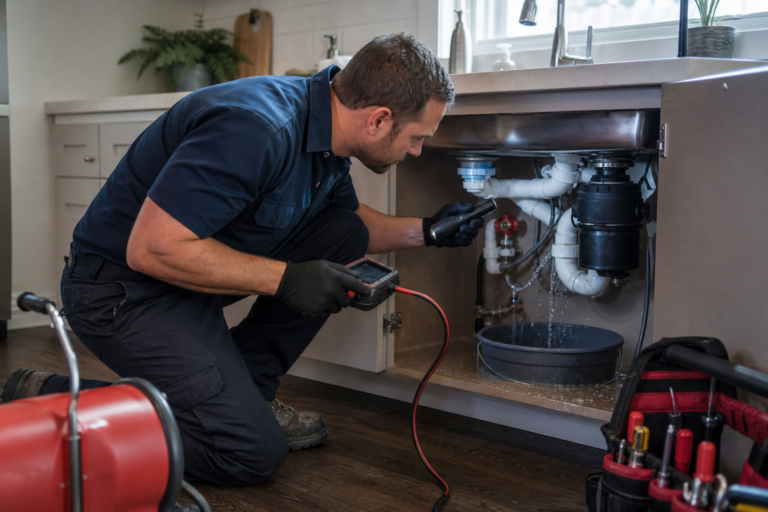
A sewer camera can provide useful visual information about accessible portions of drainage piping.
A flexible cable carries a camera through the pipe while a technician observes the interior.
What Can a Sewer Camera Show?
Depending on visibility and pipe conditions, video may reveal:
• Root intrusion
• Cracks
• Broken sections
• Displaced joints
• Corrosion or deterioration
• Accumulated debris
• Standing water
• Pipe deformation
• Foreign objects
• Changes in pipe material
The camera can also document conditions before and after certain services.
Clean the Pipe When Necessary
A heavily obstructed line may prevent the camera from traveling far enough to inspect the relevant area.
Cleaning may need to occur before a useful structural inspection can be completed.
A Camera Does Not Reveal Everything
A sewer camera shows surfaces visible inside the pipe. It does not directly reveal surrounding soil conditions, every exterior defect, or the precise structural significance of every imperfection.
Interpretation requires experience.
A small visible irregularity should not automatically be used to justify complete replacement without considering the overall condition and symptoms.
Locate the Camera Underground
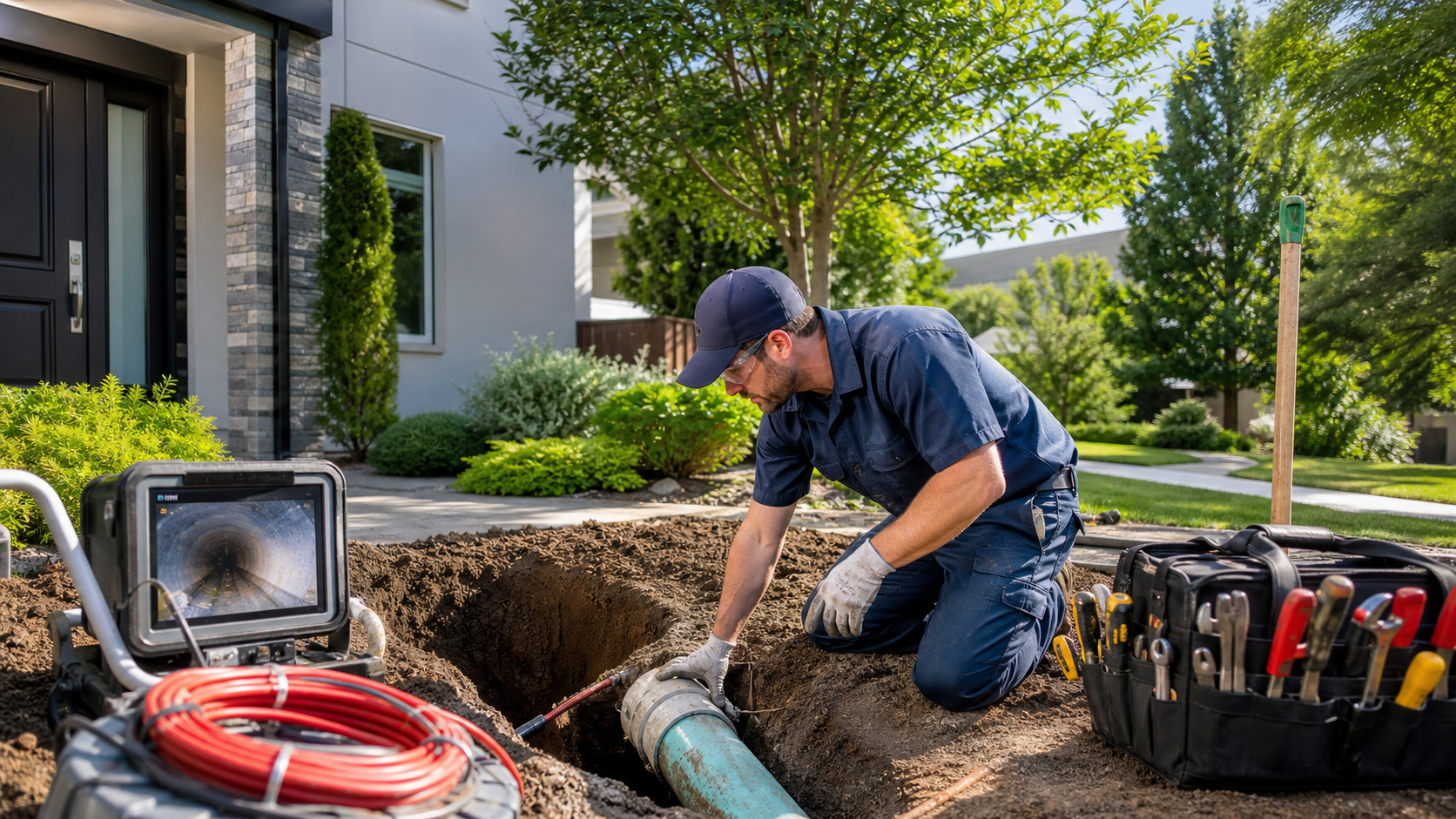
Professional equipment can often pair the camera with a transmitter that allows the technician to estimate its position and depth from above ground.
This information can help target excavation or plan a trenchless repair.
Locating accuracy depends on site conditions and equipment.
3. Match Sewer Repair Methods to the Actual Damage
There is no single repair method suitable for every sewer problem.
Pipe material, diameter, depth, length, condition, alignment, access, and surrounding property all influence the options.
Localized Excavation
Traditional excavation exposes the damaged pipe directly.
It can be particularly useful when the failure is concentrated in a specific accessible location.
Advantages of Direct Access
Excavation allows contractors to see the exterior pipe and surrounding conditions.
It may be appropriate for:
• Localized collapse
• Severely displaced connections
• Damaged fittings
• Certain bellied sections
• Changes in pipe configuration
• Situations unsuitable for lining
The amount of excavation depends on depth and location.
Full Sewer Replacement
Replacement may be appropriate when defects are widespread, the pipe has collapsed extensively, or the existing material and condition make continued repairs impractical.
The recommendation should be supported by inspection findings.
4. Evaluate Trenchless Sewer Repair Carefully
Trenchless technologies can reduce the need for continuous excavation across landscaping, driveways, and other surface features.
However, trenchless does not mean no digging, and not every damaged sewer qualifies.
Sewer Pipe Lining
Cured in place pipe lining places a resin based liner inside a suitable existing pipe and cures it to form a new interior pipe structure.
Access requirements and system details vary.
When Lining May Be Appropriate
Potential suitability depends on factors such as:
• Existing pipe condition
• Diameter
• Alignment
• Structural integrity
• Branch connections
• Cleaning feasibility
• Length of damaged pipe
• Local requirements
A severely collapsed pipe that no longer provides a suitable pathway may not be a candidate for conventional lining.
Pipe Bursting
Pipe bursting uses specialized equipment to break or displace an existing pipe while pulling replacement pipe through approximately the same route.
Entry and receiving excavations are generally required.
Pipe Bursting Is Not Universal
Utilities, soil, existing pipe material, nearby structures, connections, bends, and site access can affect feasibility.
An experienced contractor should evaluate these constraints before recommending the method.
5. Understand Tree Roots and Sewer Repair
Roots are frequently associated with older sewer problems, but the relationship deserves careful explanation.
Roots tend to exploit openings where moisture is accessible rather than simply drilling through every intact pipe they encounter.
How Roots Enter Sewer Lines
Potential entry points include:
• Deteriorated joints
• Cracks
• Failed connections
• Openings in damaged piping
Once roots enter a pipe, they can expand and collect waste material, contributing to recurrent blockages.
Root Cutting May Be Temporary
Mechanical root removal can restore flow without repairing the opening through which roots entered.
If the pipe defect remains, intrusion may return.
Repeated root cutting can therefore be maintenance rather than a permanent structural repair.
Do Trees Always Need Removal?
No.
Removing a tree is not automatically necessary to repair an underground sewer.
Pipe repair, replacement, or rerouting may address the problem depending on conditions.
When valuable trees are close to excavation, an arborist can advise on root protection and potential impacts.
6. Include Permits and Utilities in Sewer Repair Planning
Underground sewer work can involve excavation near water lines, electrical services, gas utilities, telecommunications, irrigation systems, or other buried infrastructure.
Excavation should never begin based only on assumptions about where those systems are located.
Locate Utilities Before Digging
In the United States, the 811 notification system coordinates marking of participating underground public utilities before excavation.
Applicable state procedures and notice periods should be followed.
Private Utilities May Need Separate Location
Private lines can include:
• Irrigation systems
• Landscape lighting
• Private electrical feeds
• Certain sewer sections
• Pool equipment lines
• Private gas lines
These systems may not all be identified through the public utility locating process.
Sewer Repair Permits
Many jurisdictions require permits for sewer replacement or significant repair.
Requirements can cover pipe materials, trenching, connections, testing, inspections, and restoration.
Confirm current requirements with the local authority.
7. Test and Document Sewer Repair Before Completion
A repaired sewer should be evaluated before excavations or access points are permanently closed where practical and required.
Testing methods depend on the project and local rules.
Post Repair Camera Inspection
A camera can sometimes document the condition of the repaired section and verify that accessible piping is open.
For lining projects, it can also help document the finished interior.
Required Inspections Come First
Where municipal inspection is required, do not backfill or conceal work before the authorized inspection stage.
Reopening an excavation because an inspection was missed creates unnecessary expense.
Keep Sewer Records
Retain:
• Camera videos
• Location information
• Repair invoices
• Permits
• Inspection records
• Pipe material information
• Warranty documents
• Photographs before backfilling
These records can help with future maintenance and property transactions.
Common Causes of Sewer Line Problems
Sewer failures rarely have one universal cause.
Age can provide useful context, but material and condition are more important.
Aging Pipe Materials
Older properties can contain clay, cast iron, Orangeburg, concrete, or other historical pipe materials depending on location and construction period.
Each material has different deterioration characteristics.
PVC and Modern Plastic Pipe
Modern plastic sewer piping can provide reliable drainage when correctly installed.
It is not immune to problems.
Improper bedding, poor slope, damaged joints, construction impact, or soil movement can still affect performance.
Soil Movement
Settlement, expansive soils, erosion, and construction activity can alter pipe alignment.
Movement can create low areas, separate joints, or place stress on piping.
Pipe Bellies
A belly is a low section where wastewater or solids may collect instead of draining freely.
Repair generally requires addressing the pipe grade rather than merely cleaning accumulated material.
The exact correction depends on location and cause.
Sewer Repair for Recurring Backups
Recurring backups warrant more investigation than a blockage that was clearly caused by one isolated event.
Ask what was found during each cleaning.
Repeated Blockages in the Same Location
If a cable or camera repeatedly encounters a problem at approximately the same distance, that can help localize the cause.
The next step may involve video inspection after cleaning.
Keep Drain Cleaning Records
Record the date, symptoms, cleaning method, and findings.
Repeated service history can reveal whether a pattern is developing.
Sewer Repair and Hydro Jetting
Hydro jetting uses pressurized water through specialized nozzles to clean suitable drain and sewer piping.
It can remove certain grease, sludge, roots, and buildup.
Is Hydro Jetting a Sewer Repair?
Not by itself.
Hydro jetting is primarily a cleaning process.
It can restore flow and prepare a pipe for inspection or lining, but it does not structurally reconstruct a cracked or collapsed pipe.
Pipe Condition Should Be Considered
Water pressure and nozzle selection should be appropriate for the existing piping.
A professional should consider pipe material and condition before using aggressive cleaning methods.
Sewer Repair and Septic Systems
Homes using septic systems have different downstream infrastructure from properties connected to municipal sewers.
A backup could involve the building sewer, septic tank, distribution system, or drain field.
Identify Where the Problem Exists
Repairing the pipe between the house and septic tank will not correct an overloaded or failing drain field.
A septic professional may need to evaluate the complete system.
Follow Local Health Requirements
Septic system work is commonly regulated by local or state health and environmental authorities.
Permits and approved contractors may be required.
Emergency Sewer Repair
A sewage backup creates contamination concerns in addition to inconvenience.
Avoid direct contact with wastewater.
What to Do During a Sewer Backup
When safe:
• Stop unnecessary water use
• Keep children and pets away
• Avoid contaminated areas
• Do not use fixtures that worsen the backup
• Contact an appropriate plumbing professional
• Consider professional cleanup when sewage enters occupied spaces
Electrical hazards must also be considered when wastewater reaches outlets, appliances, or electrical equipment.
Sewage Cleanup Is Different From Pipe Repair
Fixing the sewer prevents continued backup, but contaminated flooring, walls, furnishings, and other materials may still require restoration.
Porous materials can need removal depending on contamination and exposure.
How Much Does Sewer Repair Cost?
There is no reliable universal price.
A small excavated repair in accessible soil can differ dramatically from replacing a deep sewer beneath concrete, landscaping, or a public roadway.
Sewer Repair Cost Factors
Important variables include:
• Pipe length
• Pipe depth
• Pipe diameter
• Damage type
• Repair method
• Pipe material
• Excavation access
• Soil conditions
• Utility conflicts
• Landscaping
• Concrete or pavement
• Permits
• Traffic control
• Local labor costs
• Connection requirements
• Surface restoration
Diagnosis is generally necessary before meaningful pricing can be developed.
Compare Complete Proposals
Ask whether estimates include excavation, pipe, fittings, permits, inspections, backfill, compaction, concrete, landscaping, cleanup, and disposal.
A low plumbing quote may exclude expensive site restoration.
Traditional Sewer Repair Versus Trenchless Repair
Neither method is automatically cheaper or better.
Trenchless work can reduce surface disruption, but specialized equipment and materials can affect cost.
When Excavation Makes Sense
Open trench repair can be appropriate where direct access is easy or where grade and alignment must be corrected.
It also gives contractors direct access to surrounding soil and connections.
When Trenchless Repair Makes Sense
Trenchless methods can be attractive under established landscaping, driveways, or other expensive surface improvements when pipe conditions are suitable.
Ask for More Than One Option
When technically possible, request an explanation of both conventional and trenchless alternatives.
Compare expected scope, disruption, service life considerations, warranty, and total restoration costs.
Sewer Repair Under a Concrete Slab
Sewer problems beneath a building slab can require specialized locating and planning.
Randomly opening concrete should be avoided.
Locate the Defect First
Camera locating and other diagnostic methods can help identify the affected area and pipe depth.
The repair method depends on pipe layout and defect.
Consider Alternative Routing
In some circumstances, rerouting a line can be more practical than repeatedly opening finished portions of a building.
This requires design appropriate to drainage slope, venting, fixture connections, and code.
Sewer Repair Under Driveways
A sewer beneath concrete or asphalt introduces restoration cost and access concerns.
Trenchless methods may be worth evaluating.
Surface Restoration Matters
Cutting concrete can leave visible differences between old and new sections.
The contract should explain who restores the driveway and what portion will be replaced.
Protect Utilities
Driveways often contain or cross additional buried services.
Utility location is essential before excavation or boring begins.
Sewer Odors and Sewer Repair
A sewer smell does not necessarily indicate a broken underground sewer line.
Dry traps, failed seals, venting problems, fixture issues, or plumbing defects can produce odors.
Check Simple Causes First
A rarely used drain can lose its water trap seal through evaporation.
Restoring water to the trap may resolve an odor when evaporation is genuinely the cause.
Persistent Odors Need Investigation
Do not mask recurring sewage odors with fragrances.
A plumber can evaluate traps, seals, vents, drains, and other potential sources.
Sewer Repair and Homeowners Insurance
Insurance treatment depends on the policy and cause of loss.
Sewer line repair, service line coverage, and damage caused by a sewer backup can be treated differently.
Review the Actual Policy
Possible considerations include:
• Service line endorsements
• Sewer backup coverage
• Resulting interior damage
• Wear and deterioration exclusions
• Tree root related conditions
• Deductibles
Coverage varies among insurers and policies.
Document Conditions
Keep inspection videos, photographs, contractor reports, and repair invoices.
For a potential claim, contact the insurer promptly and follow policy requirements.
Buying a Home and Sewer Inspections
A sewer scope can be useful for some property purchases, especially where the drainage line’s condition is uncertain.
It is different from a standard visual home inspection.
What a Sewer Scope Can Identify
A camera may reveal accessible pipe condition, roots, obvious defects, standing water, and changes in pipe type.
The inspector should document limitations.
A Camera Inspection Is Not a Guarantee
Some areas can be inaccessible, obscured, or impossible to evaluate completely.
A normal inspection does not guarantee that a future blockage or failure cannot occur.
How to Choose a Sewer Repair Contractor
Underground drainage projects require diagnostic and excavation expertise.
Choose contractors based on qualifications and documented scope rather than urgency alone.
Questions to Ask
Consider asking:
• What caused the problem?
• Can I see the camera footage?
• Where is the defect located?
• How deep is the pipe?
• Is cleaning alone an option?
• Is localized repair possible?
• Is trenchless repair suitable?
• Which pipe material will be installed?
• Who obtains permits?
• Who restores landscaping or concrete?
• What warranty is provided?
Clear answers help homeowners compare competing recommendations.
Verify Licensing and Insurance
Plumbing and excavation licensing requirements differ by jurisdiction.
Check relevant credentials and insurance before approving significant work.
Preventing Future Sewer Repair Problems
Not every sewer failure can be prevented, but appropriate use and maintenance can reduce certain blockages.
Be Careful What Goes Down Drains
Avoid using plumbing systems to dispose of materials that can create blockages or damage drainage systems.
Food grease and inappropriate solid waste can contribute to problems.
Understand Flushable Product Claims
A product being marketed as flushable does not necessarily mean it behaves like toilet paper in a building sewer.
Local wastewater utilities commonly recommend limiting toilet disposal primarily to human waste and toilet paper.
Maintain Known Root Problems
If roots are entering an older line and structural repair is being deferred, a plumber may recommend an inspection or cleaning plan based on the actual pipe condition.
This is maintenance, not a cure for the opening that allows roots into the pipe.
Common Sewer Repair Mistakes
The most significant mistake is selecting a repair technique before the pipe has been properly evaluated.
Technology should follow diagnosis.
Repeatedly Cleaning a Broken Pipe
Drain cleaning can restore flow but will not reconstruct a collapsed section or correct severe pipe displacement.
Recurring problems deserve structural investigation.
Replacing a Sewer for One Minor Defect
The opposite mistake can also occur.
One localized defect does not automatically justify replacing every foot of piping.
Ask whether targeted repair is technically reasonable.
Ignoring Surface Restoration
Excavation can affect landscaping, irrigation, sidewalks, patios, or driveways.
Include restoration obligations in the contract.
Skipping Post Repair Documentation
Camera footage and photographs can document completed work before it is hidden underground.
Keep those records.
Frequently Asked Questions
What are the signs that sewer repair is needed?
Recurring backups, problems affecting several drains, wastewater at lower fixtures, repeated root intrusion, or camera confirmed pipe damage can justify sewer repair evaluation.
How much does sewer repair cost?
Cost depends on pipe depth, length, damage, material, excavation, trenchless technology, permits, access, and surface restoration. A camera inspection can help define the scope.
Is trenchless sewer repair better than excavation?
Not always. Lining or pipe bursting can reduce surface disruption when existing conditions are suitable, while excavation may be necessary for collapse, alignment, or grade problems.
Can tree roots be removed without sewer repair?
Roots can sometimes be mechanically removed to restore flow, but removal does not repair the pipe opening that allowed intrusion. Recurring roots can indicate a structural defect.
Does sewer repair require a permit?
Many jurisdictions require permits and inspections for significant sewer work. Requirements vary, so confirm them with the local authority and plumbing contractor.
Does homeowners insurance cover sewer repair?
Coverage depends on the policy, cause, and optional endorsements. Sewer line repair and interior damage from sewage backup may be treated differently by an insurer.
Conclusion
Successful sewer repair depends on diagnosing the pipe before selecting a repair method. Camera inspection, accurate locating, appropriate cleaning, and evaluation of pipe condition can help determine whether localized excavation, replacement, lining, or pipe bursting is suitable. By comparing complete proposals, checking permits and warranties, and documenting completed work, property owners can address sewer problems with less guesswork and a clearer understanding of long term maintenance needs.