Roof Repair Solutions: How to Fix Leaks, Damage, and Common Roofing Problems
Effective roof repair solutions begin with identifying how and where the roofing system has failed rather than covering the nearest visible area with sealant. A stain on a ceiling may originate from damaged shingles, flashing, a roof penetration, an ice related condition, or even condensation rather than a direct roof leak. Because water can travel along sheathing and framing before appearing indoors, accurate diagnosis is essential. The right repair should address the failure while remaining compatible with the existing roof covering, underlayment, flashing, drainage, and building assembly. This guide explains practical repair options, warning signs, costs, inspection methods, storm damage considerations, and when replacement may be more appropriate than another localized repair.
What Are Roof Repair Solutions?
Roof repair solutions are corrective measures used to restore damaged or malfunctioning portions of an existing roofing system.
They can range from replacing several missing shingles to rebuilding flashing around a chimney or repairing a damaged low slope membrane.
A sound repair should address the cause rather than merely hide visible symptoms.
What Can Roof Repair Solutions Address?
Depending on roof type and condition, repairs can address:
• Missing shingles
• Torn or displaced roofing
• Flashing defects
• Damaged pipe boots
• Certain skylight leaks
• Localized membrane damage
• Metal roof fastener issues
• Storm damage
• Valley problems
• Roof edge damage
• Limited deck deterioration
• Gutter related drainage problems
Some conditions require more extensive reconstruction.
Roof Repair Versus Roof Replacement
Roof repair retains most of the existing roof and targets specific defects.
Roof replacement renews a substantial portion or all of the roof covering and may address other system components simultaneously.
A repair is often reasonable when damage is localized and surrounding roofing remains serviceable.
Replacement becomes more worth considering when deterioration is widespread or repeated repairs no longer address the overall roof condition.
7 Powerful Roof Repair Solutions for Common Problems
There is no universal patch appropriate for every roof. The following seven repair categories illustrate how professional roofers can address common failures.
1. Roof Repair Solutions for Missing or Damaged Shingles
Asphalt shingles can be damaged by wind, impact, installation problems, foot traffic, ageing, or other factors.
Localized damage may sometimes be repaired without replacing the complete roof.
Replace Individual Shingles Correctly
A roofer can carefully remove damaged material and install compatible replacement shingles.
The repair should preserve surrounding roofing and maintain appropriate fastening and overlap.
Matching Existing Roofing
Color matching can be difficult because installed shingles weather with time.
Even an identical product from the same manufacturer may look different when placed next to older roofing.
Appearance Versus Function
A repair can be technically sound while remaining visible.
Homeowners should discuss cosmetic expectations before work begins, particularly when a highly visible roof slope is involved.
Lifted Shingles
Wind or installation conditions can leave shingles displaced or damaged.
Simply applying large quantities of adhesive beneath severely damaged material is not necessarily a suitable permanent repair.
A roofer should inspect the shingle and attachment.
2. Roof Repair Solutions for Flashing Problems
Flashing protects some of the most leak prone areas on a roof.
It directs water away from transitions where roof coverings meet walls, chimneys, valleys, skylights, and penetrations.
Common Flashing Locations
Important areas include:
• Chimneys
• Sidewalls
• Dormers
• Roof valleys
• Skylights
• Plumbing vents
• Roof to wall intersections
• Other penetrations
Poorly integrated flashing can allow water beneath otherwise serviceable roofing.
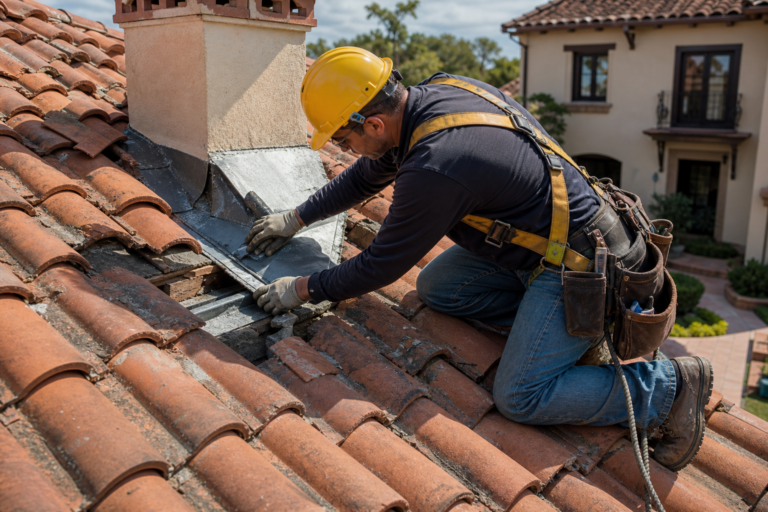
Chimney Flashing Repair
Chimney intersections often use several flashing components that work together.
A durable repair may require removal of surrounding roofing and reconstruction of the flashing rather than applying sealant over the surface.
Sealant Is Not a Substitute for Proper Flashing
Roof sealants have legitimate uses when specified within a roof system.
They should not be treated as permanent replacements for missing, incorrectly installed, or deteriorated flashing.
Repeatedly coating a leaking junction can conceal the actual defect.
3. Roof Repair Solutions for Roof Penetrations
Every opening through a roof creates a location requiring careful water management.
Examples include plumbing vents, exhausts, mechanical equipment, chimneys, solar attachments, and certain antenna installations.
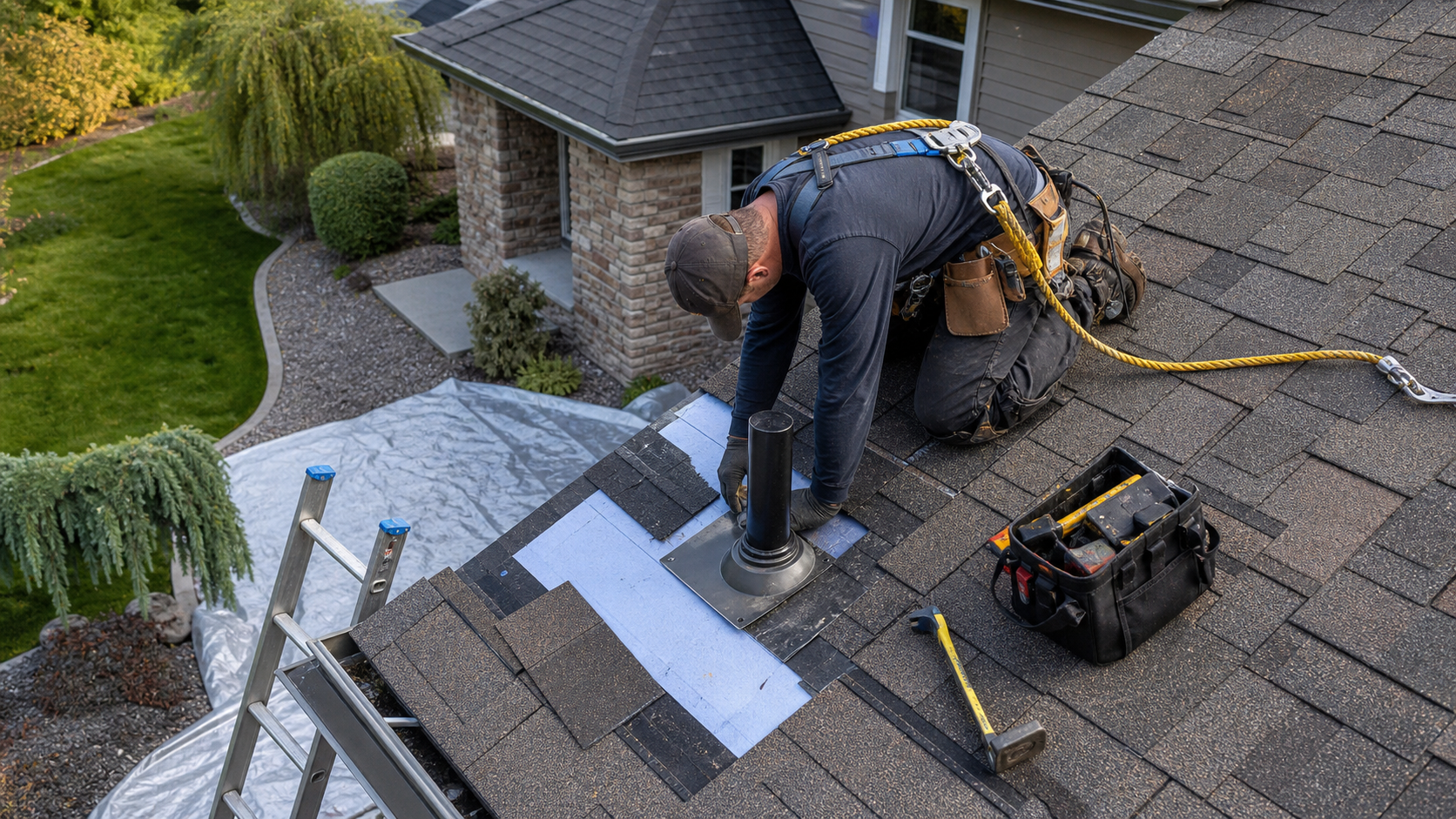
Plumbing Vent Boots
Some steep slope roofs use boots or flashing assemblies around plumbing vent pipes.
These components can deteriorate independently from surrounding shingles.
Replacing a failed boot can sometimes resolve a localized leak while leaving the majority of the roof untouched.
Mechanical Penetrations
Roof mounted equipment should have flashing or curbs designed for the roofing system.
Do Not Improvise Around Vents
Using generic caulk around every roof penetration can create short lived or inappropriate repairs.
The correct approach depends on roof material and penetration design.
4. Roof Repair Solutions for Skylight Leaks
Water near a skylight does not automatically prove the skylight itself has failed.
Several conditions can create similar symptoms.
Potential Skylight Leak Sources
Possible sources include:
• Flashing problems
• Surrounding roofing damage
• Skylight seals
• Condensation
• Drainage problems
• Roof conditions above the skylight
Accurate diagnosis should occur before replacing the complete unit.
Use Compatible Flashing
Many skylight manufacturers provide flashing kits designed for specific roof coverings and slopes.
Following those requirements can improve water management.
Consider Skylight Condition
An older or physically deteriorated skylight may warrant replacement during roof repair, particularly if its own components are failing.
The decision should reflect actual condition rather than age alone.
5. Roof Repair Solutions for Valleys
Roof valleys collect water from adjacent roof slopes and channel it toward lower roof areas.
Because substantial runoff travels through them, defects can lead to significant leakage.
Valley Problems Can Include
• Damaged roofing
• Improper installation
• Debris accumulation
• Corroded metal
• Displaced materials
• Failed previous repairs
• Ice related problems
Repair should reflect whether the valley is open, closed, woven, metal lined, or another system.
Keep Valleys Clear
Leaves and debris can retain moisture or interfere with drainage.
Cleaning should be performed safely without damaging roofing materials.
Do Not Drive Fasteners Into Vulnerable Areas Casually
Valley installation has product specific fastening requirements.
Unnecessary penetrations within critical water flow areas can create leak pathways.
6. Roof Repair Solutions for Storm Damage
Wind, hail, falling branches, and other severe weather can damage roofing.
Not every storm produces identical defects.
Wind Damage
Wind can:
• Remove shingles
• Lift roof coverings
• Damage roof edges
• Displace flashing
• Damage ridge materials
• Affect metal panels
• Move nearby branches onto roofing
A roof can experience damage without immediately leaking indoors.
Hail Damage
Hail effects depend on roof material, storm intensity, hail characteristics, wind, roof age, and other factors.
Cosmetic and Functional Damage Are Different
For some roofing materials, impact can alter appearance without immediately compromising water shedding performance.
Other impacts can create functional damage.
An experienced inspector should document actual conditions rather than assume every mark is a covered loss.
Falling Trees and Branches
Impact can damage roofing, decking, and structural framing.
Significant impacts may require structural assessment in addition to roofing repair.
7. Roof Repair Solutions for Drainage Problems
A roof needs an effective way to shed water.
Drainage defects can cause water to accumulate or flow into unintended areas.
Gutters and Downspouts
Where installed, gutters collect roof runoff and direct it toward downspouts.
Problems can include:
• Debris
• Sagging
• Disconnected sections
• Leaking joints
• Corrosion
• Improper discharge
Roof repair alone may not correct a gutter problem.
Low Slope Roof Drainage
Low slope systems may use internal drains, scuppers, gutters, or other drainage components.
Standing water can indicate drainage or slope concerns.
Correct the Cause of Ponding
Ponding can be associated with blocked drains, settlement, deck conditions, insulation configuration, or inadequate slope.
Simply applying another roof coating over standing water does not necessarily resolve the underlying issue.
How to Find a Roof Leak
Leak diagnosis can be more difficult than it appears.
The point where water drips inside can be distant from the location where it entered the roof.
Start Indoors
Inspect accessible attic areas when safe.
Look for:
• Water staining
• Damp decking
• Wet insulation
• Discolored framing
• Rusted fasteners
• Signs of dripping
• Evidence of condensation
Avoid stepping on ceiling drywall between framing members.
Trace Water Carefully
Water can follow rafters, trusses, pipes, sheathing, and other surfaces.
Use interior evidence to narrow the exterior search.
Consider Weather Patterns
When does the leak occur?
A problem during wind driven rain may have different causes from one associated with snow, ice, or ordinary rainfall.
Timing can provide useful diagnostic information.
Roof Repair Solutions for Asphalt Shingles
Asphalt shingles require repairs compatible with their layered, water shedding installation.
Fastener placement and overlap matter.
Shingle Replacement
Localized shingle replacement can be appropriate when surrounding materials remain in serviceable condition.
Care must be taken not to damage adjacent shingles during removal.
Exposed Nails
Improperly exposed fasteners can become leak points.
The correct repair depends on why the fastener is exposed and how the roof was constructed.
Granule Loss
Some granule loss occurs naturally as asphalt shingles weather.
Large areas of unusual deterioration or impact damage deserve closer evaluation.
Granules in gutters alone do not prove that immediate roof replacement is required.
Roof Repair Solutions for Metal Roofing
Metal roofs require system specific repair methods.
Standing seam and exposed fastener systems have different components and movement characteristics.
Exposed Fastener Roofs
Fasteners and sealing washers remain exposed to weather.
Inspection can identify loose, damaged, corroded, or otherwise problematic components.
Standing Seam Roofing
Standing seam systems rely on seams, clips, flashing, and carefully designed movement.
Thermal Movement Matters
Metal expands and contracts with temperature.
A repair that locks panels together incorrectly can interfere with intended movement.
Use contractors familiar with the actual metal roofing system.
Coating Damage
Scratches or damaged protective coatings can require manufacturer approved repair methods.
Generic paint may not provide equivalent compatibility.
Roof Repair Solutions for Tile Roofs
Clay and concrete tiles can crack or become displaced.
Tile roofing also relies on underlayment, flashing, and attachment beneath the visible surface.
Replace Damaged Tiles
Localized replacement may be appropriate when compatible tiles are available.
Walking incorrectly on a tile roof can break additional pieces.
Underlayment Problems
Water can sometimes enter even when the visible tile appears relatively intact if underlying components have deteriorated.
Use a Tile Roofing Specialist
Tile systems require different access and repair techniques from asphalt shingles.
An experienced contractor can minimize avoidable damage during inspection and repair.
Roof Repair Solutions for Slate Roofs
Natural slate is durable but can fracture or become displaced.
Repairs should preserve the surrounding slate wherever possible.
Replace Individual Slates
Specialized techniques allow damaged units to be replaced without dismantling the entire roof.
Flashing Condition
Metal flashing can deteriorate before the slate itself.
Avoid Inappropriate Roof Cement Repairs
Heavy surface applications of roofing cement can complicate future slate repairs and create an unattractive result.
Traditional and compatible repair methods are generally preferable.
Roof Repair Solutions for Flat and Low Slope Roofs
Low slope roofs can use materials such as single ply membranes, modified bitumen, built up roofing, or liquid applied systems.
Repair methods vary considerably.
Membrane Punctures
Punctures and tears can often be repaired using compatible materials when surrounding membrane is suitable.
Seam Problems
Some systems use heat welded, adhesive, or other seam technologies.
Match Repair Chemistry
A patch material should be compatible with the existing roof membrane.
An incompatible sealant or coating can fail to bond or interfere with later repairs.
Roof Repair Solutions for Roof Deck Damage
Roof deck deterioration can result from prolonged leakage or other moisture problems.
Damaged decking cannot always remain beneath a superficial patch.
Signs of Deck Problems
Possible indicators include:
• Soft areas
• Visible decay
• Sagging
• Delamination
• Water damage
• Failed fastener support
The condition may only become fully visible after roofing is removed.
Replace Unsound Decking
Localized deck replacement can be incorporated into a larger roof repair when structurally appropriate.
Address Moisture First
Installing new decking without correcting the source of water simply exposes the replacement material to the same problem.
Roof Repair Solutions and Attic Ventilation
Attic moisture can sometimes be mistakenly diagnosed as roof leakage.
Ventilation deserves consideration in applicable vented roof assemblies.
Condensation
Warm humid indoor air entering a cold attic can condense on roof sheathing under suitable conditions.
Potential contributing factors include air leakage, insulation, humidity, ventilation, and mechanical exhaust.
Bathroom and Kitchen Exhaust
Exhaust ducts should terminate according to applicable requirements rather than dumping moisture into inappropriate attic spaces.
More Ventilation Is Not Always Better
Vented and unvented roof assemblies use different building science strategies.
Adding roof vents without understanding the existing assembly can create problems.
Roof Repair Solutions for Ice Dams
Ice dams can form when snow melts on warmer roof areas and refreezes near colder eaves under suitable winter conditions.
Water can then back up beneath certain roof coverings.
Address Heat Loss
Long term strategies can involve evaluating:
• Attic air leakage
• Insulation
• Ventilation where appropriate
• Snow conditions
• Roof geometry
Simply removing ice does not correct the thermal conditions that contributed to formation.
Ice Removal Safety
Working on icy roofs is extremely dangerous.
Professional assistance is advisable.
Avoid Damaging Roofing
Chopping ice aggressively can damage shingles, gutters, and roof edges.
Use methods appropriate to the roof and situation.
Emergency Roof Repair Solutions
During active leakage, temporary measures may reduce additional damage until permanent work can be completed.
Safety is the priority.
Temporary Tarping
Professional roofers can install temporary coverings where appropriate.
Tarps need secure placement and should not create additional roof penetrations without proper planning.
Interior Water Control
Buckets or protective coverings can limit damage beneath a minor leak when conditions are safe.
Sagging Ceilings Can Be Dangerous
Water saturated drywall can collapse.
Keep people away from bulging or sagging ceiling areas and obtain appropriate assistance.
Roof Repair Solutions After a Tree Impact
A tree or heavy branch can damage more than the visible roofing material.
Framing and decking can also be affected.
Do Not Enter an Unstable Area
Large impacts can create structural hazards.
Emergency professionals, arborists, roofers, and structural engineers may all be involved depending on severity.
Temporary Weather Protection
After structural safety is assessed, temporary coverings can limit further rain entry until permanent repairs proceed.
How Much Do Roof Repair Solutions Cost?
There is no universal roof repair price.
A straightforward shingle replacement and a complex chimney flashing reconstruction have substantially different labor and material requirements.
Roof Repair Cost Factors
Pricing can depend on:
• Roof material
• Damage extent
• Roof slope
• Building height
• Accessibility
• Deck condition
• Flashing complexity
• Material availability
• Emergency service
• Local labor rates
• Permit requirements
• Interior damage
Obtain a site specific estimate.
Minimum Service Charges
Some contractors have minimum charges for travel, setup, safety equipment, and labor even when the physical repair is small.
Ask about diagnostic and service fees before scheduling.
DIY Roof Repair Solutions Versus Professional Repairs
Minor roofing work may appear straightforward, but roof access introduces significant fall risk.
Improper repairs can also make leaks harder to diagnose later.
Homeowner Inspection From the Ground
Homeowners can safely monitor many conditions using binoculars, zoom photography, or observations from suitable ground locations.
Professional Roof Access
Steep, wet, damaged, icy, tile, slate, or high roofs deserve particular caution.
Fall Risk Is Serious
Roof repair requires appropriate access and fall protection.
Saving a service charge is not worth risking a severe injury.
When Roof Repair Is Better Than Replacement
Localized repair can be practical when the majority of the roof remains functional.
Examples can include an isolated flashing problem or limited storm damage.
Repairability Depends on Material Availability
Older discontinued shingles or tiles can make matching and integration difficult.
Functional repairs may still be possible, but appearance can differ.
Evaluate Surrounding Material
A repair attached to severely deteriorated surrounding roofing may not provide meaningful long term value.
When Roof Replacement May Be Better
Replacement becomes more reasonable when failure is widespread or repeated problems indicate the entire roofing system is deteriorating.
Warning Signs
Consider broader evaluation for:
• Multiple recurring leaks
• Widespread roofing deterioration
• Extensive storm damage
• Significant underlayment failure
• Large areas of deck damage
• Repeated repairs across several slopes
• Obsolete or unsuitable roof systems
The recommendation should follow inspection.
Roof Repair Solutions and Homeowners Insurance
Insurance coverage depends on the cause of damage and policy language.
Storm damage and normal deterioration may receive different treatment.
Document Damage
When safe, photograph visible conditions before permanent repairs alter the evidence.
Ground based photography is preferable to unsafe roof access.
Contact the Insurer
Ask how emergency mitigation, inspections, and repair estimates should be documented.
Contractors Do Not Decide Coverage
Roofers can provide technical findings and pricing.
The insurer applies the policy and determines whether a loss is covered.
Choosing a Roof Repair Contractor
A qualified contractor should diagnose the leak and explain why the proposed repair addresses its source.
Be cautious with anyone who recommends a complete roof replacement without adequately examining a localized complaint.
Questions to Ask
Consider asking:
• Where is the failure?
• What caused it?
• Can it be repaired locally?
• What materials will be replaced?
• Will flashing be rebuilt?
• Is decking damaged?
• Are permits required?
• What warranty applies?
• Will photographs be provided?
• Is interior restoration included?
Specific answers are easier to compare than broad promises.
Roof Repair Warranties
Repair warranties vary widely.
A warranty can apply to workmanship, specific materials, or a narrowly defined repaired area.
Read the Scope
Ask:
• How long does coverage last?
• Which components are covered?
• Is a leak elsewhere excluded?
• Is labor included?
• Is the warranty transferable?
• What maintenance is required?
Written terms matter more than verbal promises.
Preventive Roof Maintenance
Maintenance cannot prevent every storm or material failure, but it can reveal developing concerns.
Inspect After Severe Weather
Ground observations can identify displaced materials, fallen branches, or damaged drainage components.
Manage Debris
Keep gutters and other drainage paths functioning where safely accessible.
Manage Trees
Qualified arborists can assess concerning branches above structures.
Do Not Pressure Wash Roofing Without Approval
Aggressive cleaning can damage some roof coverings.
Follow roofing manufacturer recommendations for moss, algae, or stain treatment.
Common Roof Repair Mistakes
Incorrect shortcuts can turn a minor leak into recurring damage.
Excessive Sealant
Applying sealant everywhere may temporarily change water flow without correcting defective flashing.
Layering Materials Without Diagnosis
Adding new roofing over damaged or wet underlying components conceals problems.
Ignoring the Attic
Interior inspection often provides valuable diagnostic evidence.
Repairing the Stain Instead of the Leak
Painting a ceiling does not address ongoing water entry.
Correct and dry the source before cosmetic restoration.
Frequently Asked Questions
What are the most common roof repair solutions?
Common solutions include replacing damaged shingles, rebuilding flashing, repairing roof penetrations, fixing membrane damage, correcting valleys, and replacing localized damaged decking.
How much do roof repair solutions cost?
Cost depends on roof material, height, slope, accessibility, damage, flashing, decking, labor, and location. A professional inspection provides the most useful pricing.
Can roof leaks be repaired without replacing the roof?
Yes, many localized leaks can be repaired when the surrounding roofing system remains serviceable. Accurate diagnosis determines whether repair is practical.
Are roof repair solutions covered by homeowners insurance?
Coverage depends on the policy and cause. Sudden storm damage can be treated differently from ordinary deterioration or maintenance related problems.
Can I use roof sealant as a permanent repair?
Sealant has legitimate uses in specific roofing details, but it should not substitute for proper flashing or replacement of failed roofing components.
When should roof repair solutions become roof replacement?
Replacement may become more practical when deterioration, leaks, storm damage, or underlying failure is widespread rather than limited to a repairable area.
Conclusion
Reliable roof repair solutions target the source of a roofing problem rather than covering visible symptoms. Shingles, flashing, penetrations, valleys, drainage, decking, and attic conditions all need to be considered because water can travel far from its entry point. A qualified inspection and a repair method compatible with the existing roof can extend serviceability, while widespread deterioration may justify comparing replacement instead of continuing repeated localized repairs.