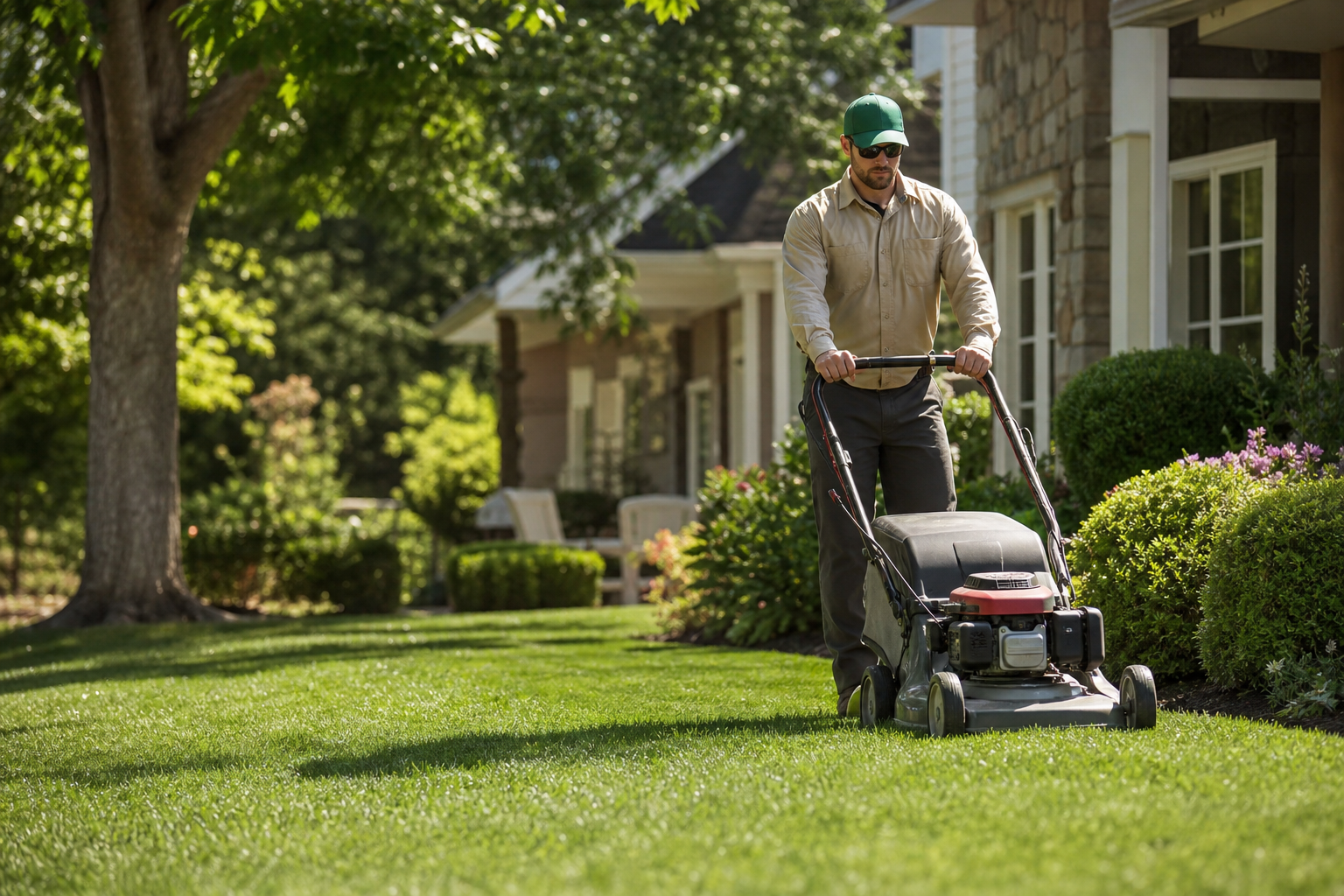
Lawn Care Services Guide: How Professional Lawn Maintenance Can Create Healthier Turf
Professional lawn care services can take much of the routine work and technical decision making out of maintaining residential or commercial turf. Depending on the provider, services may include mowing, fertilization, weed management, aeration, overseeding, pest assessment, soil testing, and seasonal maintenance. Effective lawn care is not simply about keeping grass short, however. Grass species, soil, climate, water availability, mowing practices, nutrient requirements, pests, and local environmental regulations all influence turf health and determine which treatments are appropriate.
What Are Lawn Care Services?
Lawn care services are professional maintenance and treatment services intended to manage turfgrass and, depending on the company, selected surrounding landscape areas.
The exact scope varies significantly between providers.
Some companies concentrate on mowing, edging, and cleanup. Others specialize in turf treatments such as fertilization, weed control, aeration, overseeding, and pest or disease management. Full service landscape businesses may combine lawn maintenance with pruning, irrigation, planting, and broader landscape management.
This distinction matters when comparing quotes.
A low priced mowing service should not be compared directly with a comprehensive annual turf program that includes specialized treatments.
Property owners should identify the results they want before choosing a provider.
9 Powerful Benefits of Professional Lawn Care Services
Hiring a lawn company does not guarantee a perfectly green, weed free lawn. Weather, soil conditions, irrigation, shade, pests, turf species, and previous maintenance can all affect results.
Professional care can nevertheless provide several practical advantages.
1. Consistent Lawn Mowing
Regular mowing does more than improve appearance.
Appropriate mowing supports turf management by maintaining grass at a suitable height and avoiding unnecessary stress.
Cutting grass excessively short can reduce leaf area and potentially weaken turf, while allowing it to become excessively long can create other management problems.
Recommended mowing heights differ by grass species.
A knowledgeable service should identify the turf type and adjust mowing practices accordingly instead of using one fixed height for every property.
2. More Appropriate Fertilization
Grass requires nutrients, but more fertilizer is not automatically better.
Applying unnecessary nitrogen or other nutrients can waste money, contribute to excessive growth, create turf problems, and increase the risk of nutrients entering waterways.
Professional lawn programs should consider grass species, growth stage, local conditions, and ideally soil information where appropriate.
Lawn Care Services and Soil Testing
Soil testing can provide useful information about characteristics such as pH and nutrient availability.
In the United States, university Cooperative Extension services frequently provide soil testing guidance and region specific turf recommendations.
Rather than applying products based solely on a standard calendar, test results can help identify which amendments are actually justified.
3. Targeted Weed Management
Weeds compete with turf for space, light, water, and nutrients.
However, weeds can also signal underlying lawn problems.
Compacted soil, bare areas, inappropriate mowing, excessive irrigation, poor drainage, or thin turf may make certain weeds more likely to become established.
A good lawn care approach therefore combines appropriate weed control with efforts to improve turf density and site conditions.
4. Professional Aeration When Needed
Soil compaction can restrict air and water movement and influence root development.
Core aeration mechanically removes small plugs from the soil and can be useful for compacted lawns or turf exposed to substantial traffic.
Not every lawn needs aeration on the same schedule.
Soil type, compaction, grass species, thatch, and use should guide whether treatment is appropriate.
5. Better Overseeding Decisions
Overseeding introduces grass seed into an established or thinning lawn.
It can help improve density in suitable turf systems, but timing and grass species are important.
Cool season and warm season turfgrasses have different growth cycles.
Using an inappropriate seed mixture simply because it is widely available can produce poor results.
Local climate and site conditions should guide selection.
6. Earlier Identification of Lawn Problems
Discolored or thinning grass can have many causes.
Possible issues include drought stress, excessive water, nutrient problems, soil conditions, insects, disease, shade, pet damage, mowing stress, or environmental factors.
Accurate diagnosis matters because different problems can appear similar.
Treating every brown patch with fertilizer, fungicide, or insecticide can waste products and potentially worsen conditions.
7. Time Savings for Property Owners
Routine lawn maintenance takes time.
Mowing, trimming, edging, cleanup, equipment maintenance, seasonal treatments, and product purchasing can add up, especially on larger properties.
Professional services can transfer much of this workload to a contractor.
Homeowners should still monitor irrigation, communicate site changes, and review the condition of the lawn, particularly between visits.
8. Access to Commercial Equipment
Professional lawn companies typically use equipment selected for repeated turf maintenance.
Depending on the service, this can include commercial mowers, aerators, spreaders, dethatching equipment, and specialized application tools.
Equipment does not replace expertise.
Incorrectly operated machinery can still damage turf, compact wet soil, scalp uneven areas, or spread weed seeds and pathogens between sites.
9. A More Consistent Exterior Appearance
Consistent mowing, edging, trimming, and cleanup can improve the visual uniformity of a landscape.
Healthy turf can also provide a functional outdoor surface for recreation and general use.
Appearance should not come at the expense of sound turf management, however.
A lawn should be maintained according to its climate and environmental conditions rather than forced into unrealistic year round appearance through excessive water or chemical inputs.
Lawn Care Services Typically Offered by Professionals
Service packages differ between contractors, making it important to read the scope of work.
Lawn Mowing and Edging
Basic maintenance commonly includes mowing, trimming grass around obstacles, and edging selected boundaries.
Ask whether clippings are left on the lawn, collected, or removed.
Leaving appropriately sized grass clippings can return nutrients and organic material to turf and is often recommended when conditions permit. Heavy clumps should not simply be left where they can smother grass.
Lawn Fertilization Services
Fertilizer programs may use granular or liquid products.
The method itself matters less than applying an appropriate nutrient source at the correct rate and time.
Local regulations can restrict fertilizer applications, particularly near water bodies or during certain seasons.
Professional providers should understand requirements applicable to their operating area.
Weed Control Services
Weed management can involve prevention, manual removal, cultural practices, or herbicides.
When herbicides are used, the product must be appropriate for the target weed and lawn species.
Application should follow the product label and applicable regulations.
Lawn Care Services for Integrated Weed Management
An integrated approach can include:
• Correct mowing height
• Appropriate irrigation
• Improved turf density
• Soil management
• Overseeding where suitable
• Targeted weed removal
• Judicious herbicide use when appropriate
Managing the conditions that favor weeds can reduce reliance on repeated treatment alone.
Lawn Aeration Services
Aeration is frequently marketed as a standard annual service, but property needs vary.
What Does Core Aeration Do?
A core aerator removes cylindrical plugs of turf and soil from the lawn.
This creates temporary openings that can improve movement of air and water into compacted surface soil and provide conditions that may support root development.
Plugs are commonly left to break down naturally.
When Should a Lawn Be Aerated?
Timing depends on the turfgrass.
Aeration is generally best performed during periods when the particular grass species is actively growing and can recover.
Region specific Extension guidance can help identify appropriate timing.
When Lawn Care Services May Recommend Aeration
Aeration may be worth considering where lawns experience:
• Significant foot traffic
• Heavy equipment use
• Compacted soil
• Poor infiltration associated with compaction
• Appropriate renovation needs
A provider should be able to explain why a lawn needs the treatment rather than recommending it automatically.
Overseeding and Lawn Renovation
Thin lawns can sometimes be improved without complete replacement.
Overseeding is one potential renovation method, particularly for compatible cool season turf systems.
Choose Compatible Grass Seed
Seed mixtures should suit climate, sunlight, irrigation, soil, and expected traffic.
Shaded areas can require different turf choices from full sun locations.
Some locations may not be suitable for conventional turf at all.
Prepare the Lawn Properly
Successful establishment depends on adequate seed contact with soil, moisture, and suitable growing conditions.
Seed scattered over dense thatch or compacted ground may establish poorly.
Combining Lawn Care Services With Overseeding
Aeration and overseeding are sometimes performed together when site conditions and turf type make the combination appropriate.
Post seeding irrigation and mowing practices become particularly important during establishment.
Follow the seed supplier’s and local turf specialist’s recommendations.
Seasonal Lawn Care Services
A useful lawn care calendar follows biological growth and regional climate rather than simply the calendar date.
Spring Lawn Care
Spring may involve cleanup, mowing adjustments, soil assessment, weed management, and carefully timed nutrient applications.
Too much early fertilizer can encourage excessive leaf growth rather than balanced turf development in some situations.
Summer Lawn Maintenance
Heat and drought can place substantial stress on grass.
Management may require adjusted mowing, irrigation, and traffic.
Fertilization should reflect turf species and climate rather than continuing automatically during stressful weather.
Autumn Lawn Care
For many cool season lawns, autumn can be an important period for growth, fertilization, aeration, and seeding where appropriate.
Warm season turf requires different seasonal management.
Winter Lawn Care Services
Winter needs depend heavily on climate.
Dormant turf generally requires different care from actively growing grass in mild regions.
Avoid unnecessary traffic on frozen or highly vulnerable turf where damage is likely.
Lawn Care Services for Different Grass Types
Grass species differ in growth habits, climate tolerance, mowing requirements, and seasonal activity.
Cool Season Grasses
Common cool season species include Kentucky bluegrass, perennial ryegrass, and several fescues.
They generally perform most actively in cooler conditions.
Local cultivars and mixtures should be selected according to climate and site.
Warm Season Grasses
Warm season turf can include Bermuda grass, Zoysia, St. Augustine grass, and centipede grass, depending on region.
These grasses generally become more active during warm weather.
Maintenance practices vary considerably among species.
Why Lawn Care Services Should Identify Turf Type
Correct species identification influences:
• Mowing height
• Fertilization timing
• Herbicide compatibility
• Seeding decisions
• Seasonal expectations
• Water management
• Renovation strategy
A treatment appropriate for one turf species can be ineffective or harmful to another.
Lawn Irrigation and Water Management
Watering practices strongly influence lawn health.
Overwatering can be as problematic as inadequate irrigation.
Water According to Actual Need
Weather, soil, grass species, root depth, shade, and seasonal growth affect water requirements.
Automatic irrigation systems that run regardless of rainfall can waste water.
Smart controllers and soil or weather based adjustments may improve irrigation efficiency when correctly configured.
Check for Irrigation Problems
Uneven watering can create patches that appear to have disease or nutrient problems.
Broken sprinkler heads, incorrect pressure, obstructed nozzles, and poor coverage should be investigated.
Lawn Care Services and Drought Conditions
During drought or watering restrictions, landscape expectations may need to change.
Follow local water regulations.
Some grass species can enter dormancy under appropriate conditions, although drought responses differ by turf type and climate.
Lawn Pest and Disease Management
Not every lawn needs routine pesticide treatment.
Treatment should follow appropriate identification of the pest or disease and an assessment of whether intervention is justified.
Identify the Problem First
Brown grass does not automatically indicate insects.
Similarly, fungal disease cannot be reliably diagnosed solely because circular patches appear in the turf.
A professional may consider weather, symptoms, grass type, soil moisture, cultural practices, and other evidence.
Integrated Pest Management
Integrated pest management, commonly called IPM, emphasizes monitoring, prevention, accurate identification, and appropriate control methods.
Chemical treatment can be one tool within IPM, but it is not necessarily the first or only option.
Choosing Lawn Care Services for Pest Management
Ask how the provider diagnoses lawn problems.
Companies applying pesticides should comply with applicable licensing and application requirements.
Product labels specify legal directions concerning rates, target sites, precautions, and application.
How Much Do Lawn Care Services Cost?
There is no reliable universal price for professional lawn care.
Cost varies according to location, property size, turf condition, service frequency, accessibility, equipment, labor rates, and included treatments.
Mowing alone will generally have a different pricing structure from a comprehensive treatment plan.
Factors Affecting Lawn Care Prices
Common pricing factors include:
• Lawn area
• Terrain
• Slopes
• Gates and access
• Obstacles
• Mowing frequency
• Grass growth rate
• Fertilizer treatments
• Weed management
• Aeration
• Overseeding
• Cleanup
• Travel distance
Request a written scope when comparing companies.
Compare Total Service Value
The lowest quotation may exclude services another contractor includes.
Confirm whether edging, trimming, cleanup, treatment products, service calls, or taxes are included.
Understanding Lawn Care Services Contracts
Review contract length, visit frequency, automatic renewals, cancellation requirements, treatment guarantees, weather policies, and additional charges.
Do not rely solely on verbal descriptions.
A clear written service agreement reduces misunderstandings.
How to Choose the Best Lawn Care Services
A provider should understand turf management, communicate clearly, and operate appropriately within local legal requirements.
Check Licensing and Insurance
Requirements differ by jurisdiction and service type.
Companies applying pesticides may need specific certifications or licenses.
Ask for appropriate documentation and verify material claims through relevant local or state authorities where possible.
Ask About Lawn Assessment
A company should gather information before recommending extensive treatment.
Grass type, soil, sunlight, irrigation, weeds, pests, and maintenance history can all influence recommendations.
Review Communication
Ask how the company reports completed treatments and identified lawn problems.
Customers should know what was applied and whether follow up actions such as irrigation are required.
Questions to Ask Lawn Care Services Before Hiring
Useful questions include:
• Which services are included?
• How often will you visit?
• How do you determine mowing height?
• Do you identify the grass species?
• How are fertilizer applications determined?
• Do you recommend soil testing?
• How do you diagnose weeds, pests, or diseases?
• Which licenses apply to treatment services?
• Do you carry appropriate insurance?
• What is the cancellation policy?
• Are additional visits charged separately?
• What should I do between visits?
Specific answers are more useful than broad claims about having the greenest lawns.
Organic and Environmentally Focused Lawn Care
Terms such as organic, natural, green, and eco friendly can mean different things in lawn service marketing.
Ask providers to explain the specific practices and products behind such claims.
Reduce Inputs Through Better Turf Management
Environmental lawn management can involve careful fertilizer use, appropriate irrigation, correct mowing, healthy soil, and treatment only when needed.
A lawn adapted to the site may require fewer corrective inputs.
Protect Waterways
Fertilizer and pesticide runoff can affect surrounding environments.
Products should be applied according to labels and local regulations, with care around hard surfaces, drains, waterways, and buffer areas.
Sustainable Lawn Care Services and Property Goals
Not every property needs a uniform expanse of turf.
Homeowners interested in reducing water, fertilizer, or mowing requirements can consider whether certain low use areas should become planting beds, native vegetation, or other locally appropriate landscaping.
Plant selection should suit climate and site conditions.
Lawn Care Services vs DIY Lawn Maintenance
DIY maintenance can work well for homeowners with suitable time, equipment, and knowledge.
It provides direct control over mowing schedules and product selection.
Professional care becomes attractive when a property is large, maintenance time is limited, specialized equipment is required, or turf problems need professional assessment.
Costs of DIY Lawn Care
DIY costs can include:
• Mower purchase and maintenance
• Fuel or electricity
• Trimmers
• Spreaders
• Aerator rental
• Fertilizers
• Seed
• Treatment products
• Equipment storage
• Personal time
Compare these with professional quotes rather than assuming one approach is always cheaper.
When Professional Help Makes Sense
Persistent turf failure, unexplained damage, difficult weeds, extensive compaction, or repeated pest problems may benefit from expert diagnosis.
A soil test can also provide useful information before expensive treatments begin.
Common Lawn Care Mistakes
Many lawn problems originate from maintenance rather than an absence of products.
Mowing too short is one frequent issue.
Other common mistakes include:
• Applying fertilizer without understanding need
• Watering too frequently
• Using the wrong grass seed
• Treating brown patches without diagnosis
• Aerating at an unsuitable time
• Using herbicides incompatible with the turf
• Ignoring soil conditions
• Allowing mower blades to become excessively dull
• Expecting immediate results from newly seeded areas
• Applying products contrary to label instructions
Good lawn care focuses on correct practices before adding treatments.
Frequently Asked Questions
What do lawn care services typically include?
Lawn care services may include mowing, edging, fertilization, weed management, aeration, overseeding, pest assessment, seasonal cleanup, and other turf treatments depending on the provider.
How often should lawn care services visit?
Frequency depends on grass growth, climate, season, property goals, and services provided. Mowing visits generally occur more frequently than specialized turf treatments.
Are professional lawn care services worth it?
They can be worthwhile for property owners who value consistent maintenance, professional equipment, technical turf knowledge, or reduced personal maintenance time.
When should a lawn be aerated?
Aeration is generally most useful for compacted turf and should be timed according to the grass species and local growing season rather than performed automatically.
Do lawn care services remove weeds permanently?
No service can guarantee that weeds will never return. Effective management combines appropriate control with mowing, irrigation, soil, and turf density practices.
How do I choose reliable lawn care services?
Compare turf knowledge, included services, licensing where applicable, insurance, diagnosis methods, communication, written pricing, contract terms, and recommendations based on your property.
Conclusion
Lawn care services can simplify routine maintenance while providing professional support for mowing, soil fertility, weeds, aeration, seeding, and other turf concerns. The best results come from practices matched to the grass species, climate, soil, water availability, and actual condition of the property rather than unnecessary treatments. Comparing service scopes, qualifications, contracts, and diagnostic approaches can help property owners choose a lawn care provider focused on healthy, practical, and responsible turf management.