Air Conditioning Repair Guide: 9 Warning Signs Your AC Needs Professional Attention
Timely air conditioning repair can help restore cooling, address comfort problems, and prevent certain equipment faults from worsening. An air conditioner that blows warm air, cycles abnormally, leaks water, produces unusual noises, or repeatedly trips electrical protection may have a relatively simple maintenance problem or a more serious mechanical, electrical, or refrigerant related fault. Knowing what homeowners can safely check and when to call a qualified HVAC technician can reduce unnecessary troubleshooting while protecting both the equipment and the people around it.
What Is Air Conditioning Repair?
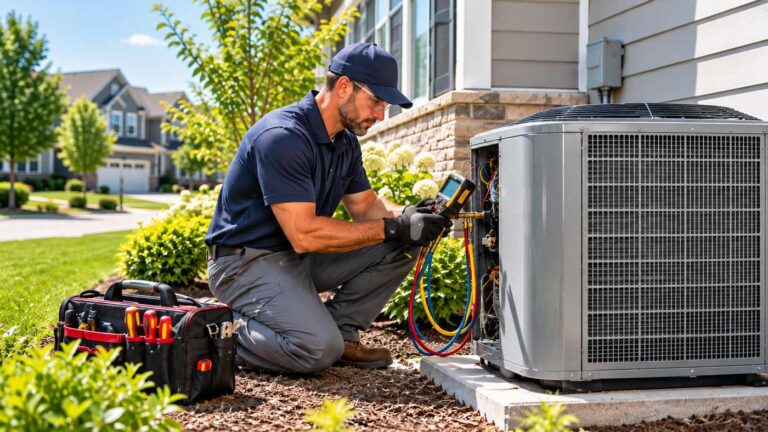
Air conditioning repair involves diagnosing and correcting faults that prevent an AC system from operating as designed.
Depending on the problem, professional work might involve electrical diagnostics, replacement of failed components, condensate drainage repairs, airflow corrections, refrigerant system work, control troubleshooting, or mechanical repairs.
Modern air conditioning is a system rather than a single appliance.
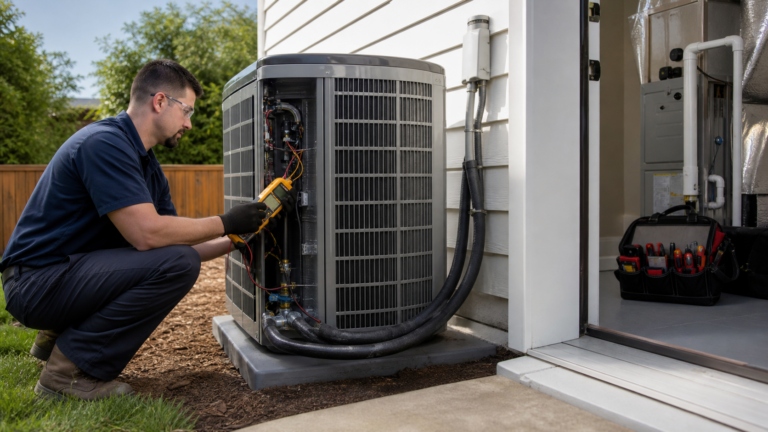
A typical central setup can include an outdoor condenser unit, indoor evaporator coil, compressor, blower, refrigerant circuit, thermostat or control system, air filter, ductwork, drains, electrical components, and safety controls.
A symptom at one part of the system can originate elsewhere. For example, weak airflow at supply registers could result from a dirty filter, blower problem, duct restriction, evaporator coil issue, or another cause.
Accurate diagnosis should therefore come before component replacement.
9 Warning Signs You May Need Air Conditioning Repair
Some air conditioning symptoms should be addressed quickly. Others can begin with basic homeowner checks.
These nine warning signs can help determine when professional diagnosis is appropriate.
1. The Air Conditioner Is Blowing Warm Air
Warm air from vents is one of the clearest signs that a cooling system is not performing as expected.
Start with the thermostat. Confirm that it is set to cooling mode and that the selected temperature is below the current indoor temperature.
If settings are correct but the system continues producing warm or insufficiently cool air, several faults are possible.
These can include airflow problems, equipment failure, control faults, refrigerant related problems, or issues with the outdoor unit.
A technician can measure operating conditions instead of guessing based on symptoms.
2. Airflow From the Vents Is Weak
Reduced airflow can leave rooms uncomfortable even when the air itself feels cool.
Check the system’s air filter if it is safely accessible and you know how to inspect it according to the equipment manufacturer’s instructions.
A heavily loaded filter can restrict airflow.
However, replacing the filter will not solve every airflow problem.
A blower motor fault, dirty indoor coil, duct problem, closed or obstructed registers, or incorrect system setup may require further investigation.
3. Your AC Frequently Turns On and Off
Air conditioners normally cycle as cooling demand changes. Extremely short or unusual cycles can indicate a problem.
Possible causes range from thermostat issues and airflow limitations to equipment sizing or component faults.
Operating characteristics vary with system type and weather.
Air Conditioning Repair for Short Cycling
Short cycling should not be diagnosed through cycle duration alone.
An HVAC professional may evaluate:
• Thermostat operation
• Indoor and outdoor temperatures
• Airflow
• Filter condition
• Electrical components
• Refrigerant system performance
• Coil condition
• Equipment sizing and configuration
Repeatedly switching the system manually to overcome short cycling can obscure the underlying problem rather than fix it.
4. Unusual Noises Have Started
Air conditioners make normal operating sounds, including fan and compressor noise.
New grinding, scraping, rattling, buzzing, or other abnormal sounds deserve attention.
A rattle may come from a loose component, while other noises can reflect fan, motor, electrical, or compressor issues.
Turn the system off if operation appears unsafe or severe mechanical noise develops, and arrange professional evaluation.
Do not reach into moving equipment or remove protective panels to locate a noise.
5. Water Is Leaking Around the Indoor System
Air conditioning systems remove moisture from indoor air as part of the cooling process.
Condensed water normally travels through a designed drainage system.
Water collecting where it should not can result from a drain issue, pan problem, frozen coil, installation fault, or other condition.
Leaks should be addressed promptly because moisture can damage building materials and contribute to microbial growth when conditions allow.
6. Ice Is Forming on the AC System
Visible ice on refrigerant lines or the indoor cooling coil is not something to ignore.
Potential causes include inadequate airflow and refrigerant system problems, among other possibilities.
Continuing to run a system while severely iced can create additional problems.
Turn off cooling and seek qualified guidance. Avoid chipping ice from delicate components because this can cause physical damage.
7. Electrical Protection Repeatedly Trips
A circuit breaker that repeatedly trips should never simply be reset over and over.
Breakers are safety devices.
Repeated tripping may indicate an electrical fault, equipment problem, or excessive current condition requiring diagnosis.
Air Conditioning Repair for Electrical Problems
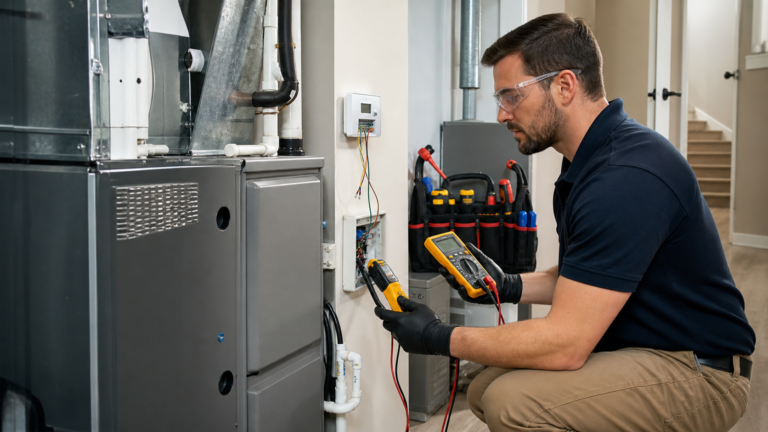
Air conditioning systems can contain hazardous voltages and components that may retain electrical charge.
Homeowners should not open electrical compartments, test capacitors, bypass safety devices, or replace wiring unless appropriately qualified.
Turn off the system when there are signs of an unsafe electrical condition and contact an appropriate HVAC or electrical professional.
Burning smells, smoke, damaged wiring, or signs of overheating require urgent attention.
8. Some Rooms Remain Too Warm
Uneven temperatures do not automatically mean the air conditioner itself has failed.
Room comfort can be affected by duct design, air leakage, insulation, solar exposure, windows, equipment balancing, closed dampers, blocked registers, and system capacity.
A competent contractor should consider the entire home before recommending major equipment replacement.
Adding a larger air conditioner without proper load analysis is not necessarily a solution and can create comfort or humidity problems.
9. Energy Use Has Increased Unexpectedly
Higher energy bills can have many causes, including weather, electricity rates, occupancy, thermostat settings, equipment condition, and changes elsewhere in the home.
An unexplained increase alongside declining cooling performance may justify AC inspection.
Technicians can assess system operation and look for conditions affecting efficiency.
Avoid claims that one particular repair will guarantee a specific percentage reduction in energy bills unless supported by credible measurements for your home.
Common Air Conditioning Repair Problems
Understanding frequently encountered problems can help homeowners communicate symptoms to a service company without attempting unsafe repairs themselves.
Dirty Air Filters
A dirty filter can restrict airflow and affect comfort and system performance.
Filters vary by size, type, and replacement requirements.
Check the HVAC manufacturer’s recommendations and inspect filters according to household conditions. Homes with pets, construction dust, or higher system usage may need more frequent attention.
Higher filtration efficiency is not automatically better for every system if the filter creates excessive resistance.
Dirty Evaporator or Condenser Coils
The indoor evaporator coil absorbs heat, while the outdoor condenser coil releases heat.
Accumulated contamination can interfere with heat transfer.
Professional cleaning may be appropriate when coils are significantly dirty, especially if access requires equipment disassembly.
Outdoor equipment should have reasonable airflow around it according to manufacturer requirements.
Condensate Drain Problems
Dust, biological material, improper slope, installation issues, or other conditions can interfere with condensate drainage.
Some systems include switches designed to stop cooling when water reaches an unsafe level.
Air Conditioning Repair for Drainage Problems
A technician can inspect the drain, pan, trap configuration where applicable, and safety controls.
Persistent water around the equipment should not be treated solely as a housekeeping problem.
The source needs to be found and corrected.
Refrigerant Problems in Air Conditioning Systems
Refrigerant circulates through a closed system and transfers heat.
An AC does not normally consume refrigerant like a vehicle consumes fuel.
If refrigerant charge is low because of leakage or another system issue, simply adding more without addressing the cause may not provide an appropriate long term repair.
Signs Associated With Refrigerant Issues
Symptoms potentially associated with refrigerant problems can include poor cooling, coil icing, abnormal operating pressures, and longer run times.
These symptoms are not specific enough for homeowners to confirm a refrigerant diagnosis.
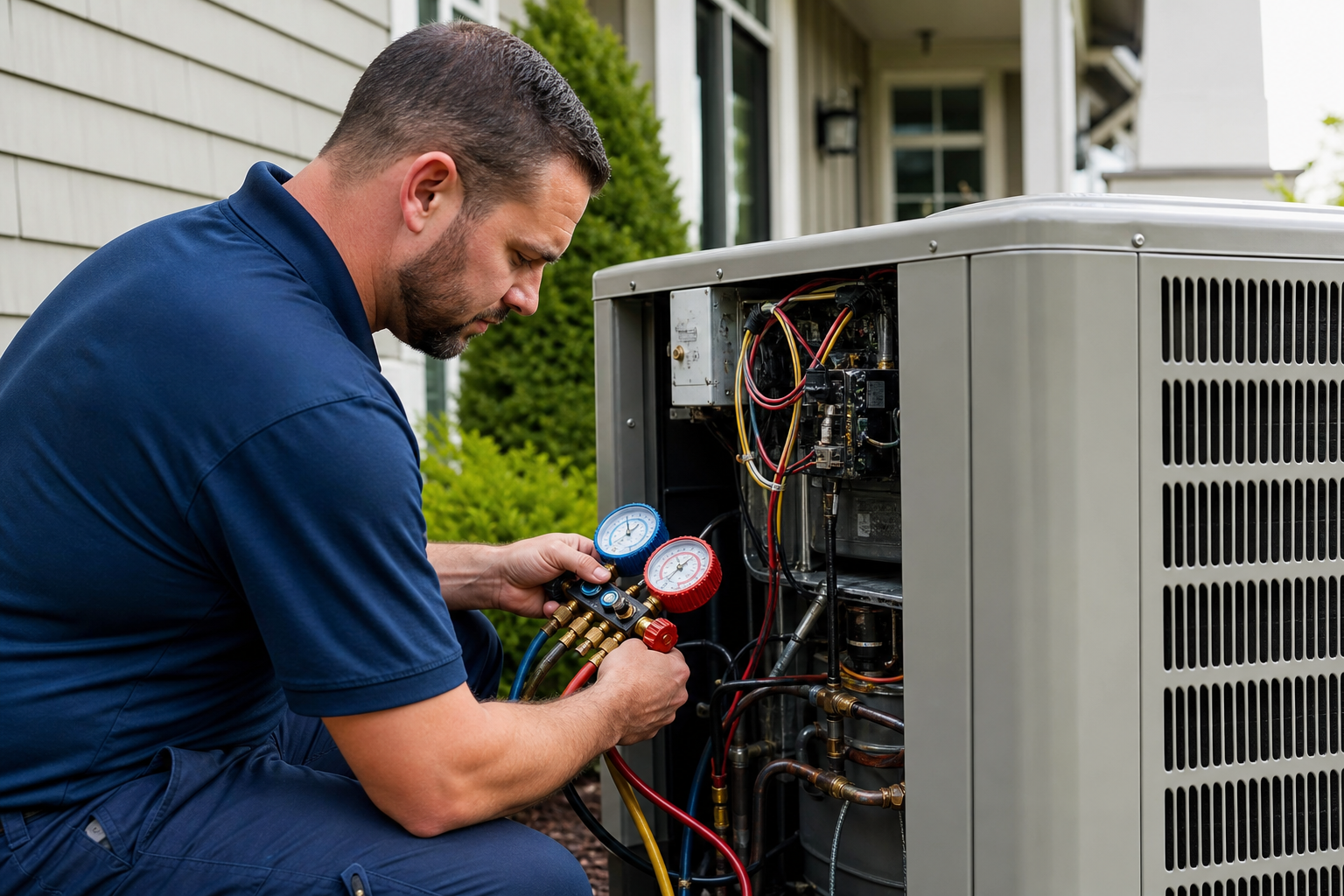
Technicians use measurements and diagnostic procedures to evaluate the refrigeration circuit.
Refrigerant Handling Requires Appropriate Qualifications
In the United States, the Environmental Protection Agency regulates handling of controlled refrigerants, including technician certification requirements under Section 608 of the Clean Air Act.
Rules differ internationally.
Why Professional Air Conditioning Repair Matters for Refrigerants
Refrigerant work involves environmental, technical, and safety considerations.
Leaks should be handled according to applicable regulations and manufacturer requirements.
A homeowner should not vent refrigerant or attempt to open a sealed refrigeration circuit.
Air Conditioning Compressor Problems
The compressor is a major component of a conventional vapor compression air conditioning system.
It circulates refrigerant and enables the pressure differences required for the refrigeration cycle.
Compressor problems can be expensive, but a nonworking outdoor unit does not automatically prove that the compressor itself has failed.
Electrical controls, capacitors, contactors, wiring, sensors, or other issues may prevent normal operation.
Accurate electrical and refrigeration diagnosis is important before condemning a compressor.
Repair or Replace the Compressor?
The decision depends on equipment age, warranty coverage, refrigerant type, overall system condition, repair cost, compatibility, and availability of components.
Ask for diagnostic findings and a written quotation.
On older equipment, compare major repair costs with an appropriately specified replacement system rather than deciding solely from the age of the unit.
Thermostat Problems and AC Repair
A thermostat is the primary user control for many residential systems.
Incorrect settings can mimic equipment failure.
Safe Thermostat Checks
Homeowners can generally verify:
• Cooling mode is selected
• Temperature is set appropriately
• The display operates normally
• Batteries are replaced where applicable
• Schedules are not overriding the intended setting
Consult the thermostat manual because control systems vary.
Smart Thermostat Compatibility
Not every thermostat is compatible with every HVAC system.
Heat pumps, communicating systems, multistage equipment, and other configurations can require particular controls.
Air Conditioning Repair After Thermostat Installation
If cooling problems begin immediately after a thermostat change, installation or configuration should be considered among possible causes.
Incorrect wiring can damage equipment.
Where wiring requirements are unclear, use a qualified professional rather than trial and error.
What Homeowners Can Safely Check Before Calling for Repair
Some simple observations can help determine whether professional service is necessary.
Safety comes first.
Before calling, you can typically check user accessible controls and visually inspect accessible areas without opening equipment cabinets.
Consider:
• Confirm thermostat settings
• Check whether the thermostat display works
• Inspect the air filter
• Ensure accessible supply registers are open
• Look for obvious obstruction around the outdoor unit
• Note unusual noises or odors
• Check for visible water
• Record any error code shown by the equipment
• Determine whether a breaker has tripped once
If a breaker immediately or repeatedly trips, stop resetting it and seek professional help.
Do not remove electrical panels or reach into moving equipment.
When to Call for Emergency Air Conditioning Repair
Not every cooling problem is an emergency, but certain conditions require prompt attention.
Stop operating equipment if there is smoke, a burning electrical smell, visible electrical damage, severe mechanical noise, or another indication that continued use could be unsafe.
Loss of cooling can also become a health concern during extreme heat.
Older adults, infants, people with certain medical conditions, and others vulnerable to heat may need access to a cooler environment while repairs are arranged.
Carbon Monoxide and Combined HVAC Systems
An air conditioner itself does not produce carbon monoxide as part of the cooling process.
However, some homes have HVAC systems that share components or spaces with fuel burning heating equipment.
Carbon monoxide alarm activation should be treated as a safety issue according to local emergency guidance, not as a routine AC repair appointment.
How Much Does Air Conditioning Repair Cost?
AC repair cost varies substantially.
Location, system type, component, diagnostic complexity, labor rates, warranty status, equipment accessibility, refrigerant, and emergency scheduling can all affect the final amount.
Publishing one universal repair price would therefore be misleading.
Factors That Affect Air Conditioning Repair Costs
Pricing may depend on:
• Diagnostic or service call fee
• Labor time
• Replacement component
• System accessibility
• Equipment type
• Refrigerant work
• Warranty coverage
• After hours service
• Permits where required
• Additional faults discovered
Request a written estimate before authorizing major work when circumstances permit.
Diagnostic Fees
Many HVAC contractors charge for diagnosis.
This covers the technician’s time and testing required to identify the fault.
Some businesses may apply part of this charge toward an approved repair, while others keep diagnosis and repair pricing separate.
Comparing Air Conditioning Repair Quotes
For expensive repairs, consider comparing estimates when the system can safely remain off.
Ensure contractors are diagnosing the same fault and offering comparable parts, warranties, labor, and scope.
A low quote is not meaningful if it excludes necessary work included elsewhere.
Air Conditioning Repair vs Replacement
An older air conditioner does not automatically need replacement, and a newer one does not automatically justify every repair.
The decision should consider the whole system.
When Repair May Make Sense
Repair may be reasonable when:
• The fault is limited and identifiable
• The system is otherwise in good condition
• Suitable components remain available
• The repair cost is proportionate
• Warranty coverage applies
• Performance has otherwise been satisfactory
A qualified technician can provide equipment specific information.
When Replacement Deserves Consideration
Replacement may be worth evaluating when major repairs are expensive, equipment has significant additional problems, parts are difficult to obtain, or the system no longer meets household needs.
A proper replacement should be sized and designed for the home.
Air Conditioning Replacement Requires Proper Sizing
Oversizing an AC system does not necessarily improve comfort.
In the United States, residential HVAC professionals commonly use recognized load calculation procedures, such as ACCA Manual J, to assess heating and cooling requirements.
Ductwork and equipment selection should also be evaluated as part of system design.
Choosing an Air Conditioning Repair Company
Hiring a competent HVAC contractor is one of the most important parts of resolving an AC problem.
Verify Licensing and Insurance
Requirements differ by location.
Check applicable contractor licensing through state or local authorities where licensing is required.
Refrigerant work may involve additional certification requirements.
Ask about insurance appropriate to the work being performed.
Look for Diagnostic Transparency
A technician should be able to explain what was tested, what was found, and why a particular repair is recommended.
You do not need to understand every technical measurement, but the diagnosis should be more specific than simply saying the system is old.
Review Written Estimates
Major repair estimates should identify the proposed work and relevant costs.
Ask about parts and labor warranties.
Questions to Ask an Air Conditioning Repair Technician
Useful questions include:
• What caused the problem?
• What tests confirmed the diagnosis?
• What repair do you recommend?
• Are there alternative repair options?
• Which parts will be replaced?
• Does an existing warranty apply?
• What warranty covers this repair?
• Is refrigerant work required?
• Are permits required?
• Is there an underlying airflow or duct issue?
• What maintenance could reduce recurrence?
Clear communication is an important service quality indicator.
Preventive AC Maintenance
Routine maintenance cannot prevent every breakdown, but it can help identify developing problems and maintain intended operation.
Homeowners can manage basic tasks such as checking accessible filters and keeping the outdoor area reasonably clear according to manufacturer requirements.
Technical servicing should be completed by qualified personnel.
Professional Air Conditioning Maintenance
A professional visit may include inspection of appropriate electrical components, coils, drainage, controls, airflow, refrigerant system operation, and other equipment specific items.
The actual checklist should reflect the manufacturer’s requirements.
Keep Outdoor Equipment Clear
Leaves, vegetation, and debris can obstruct airflow around a condenser.
Maintain manufacturer specified clearance.
Turn equipment off appropriately before performing any permitted basic cleaning and never insert tools or hands into the fan area.
Air Conditioning Repair Prevention Through Filter Care
Check the filter regularly rather than relying exclusively on a fixed replacement date.
How quickly a filter loads depends on its design, home conditions, pets, renovations, operating time, and indoor particulate levels.
Use filter specifications compatible with the HVAC equipment.
Improving AC Efficiency After Repairs
A repaired system can still perform poorly if the home has substantial duct leakage, insulation problems, unsuitable controls, or incorrect airflow.
A whole home approach can identify these issues.
Seal Ducts Appropriately
Duct leakage in attics, crawl spaces, garages, or other unconditioned areas can waste conditioned air.
Professional duct assessment may be useful when leakage is suspected.
Ordinary cloth backed household duct tape is not necessarily an appropriate long term HVAC duct sealing material.
Improve Building Envelope Performance
Air sealing, suitable insulation, window shading, and other envelope improvements can reduce cooling loads.
Energy efficiency upgrades should be selected based on building conditions and climate.
Air Conditioning Repair and Energy Audits
A home energy assessment can help identify where energy is being used and where improvements may provide value.
Qualified assessors can evaluate factors beyond the air conditioner itself, creating a broader picture of home performance.
Common Air Conditioning Repair Mistakes to Avoid
Trying random parts can cost more than professional diagnosis.
Another common mistake is repeatedly resetting a tripped breaker or continuing to operate severely malfunctioning equipment.
Avoid:
• Opening energized electrical compartments
• Bypassing safety controls
• Handling refrigerants without required qualifications
• Chipping ice from coils
• Assuming low refrigerant is routine consumption
• Installing incompatible capacitors or controls
• Replacing equipment without proper sizing
• Ignoring recurring water leaks
• Choosing a contractor solely by the lowest price
HVAC equipment combines electricity, rotating machinery, pressurized refrigerant, and sometimes sharp metal surfaces, so appropriate boundaries for DIY work matter.
Frequently Asked Questions
What are the most common signs I need air conditioning repair?
Warm air, weak airflow, abnormal cycling, unusual noises, water leakage, icing, electrical trips, and unexplained loss of cooling are common reasons to request professional diagnosis.
How much does air conditioning repair cost?
Costs vary by fault, equipment, location, labor, parts, refrigerant requirements, warranty, and timing. Obtain a written diagnosis and estimate for accurate pricing.
Why is my AC running but not cooling?
Possible causes include thermostat settings, restricted airflow, dirty coils, refrigeration problems, component faults, or other system issues. Persistent poor cooling requires diagnosis.
Can I perform air conditioning repair myself?
Homeowners can usually perform basic checks such as thermostat and filter inspection. Electrical, refrigerant, internal mechanical, and complex diagnostic work should be left to qualified professionals.
Should I repair or replace my air conditioner?
Consider the specific repair cost, equipment condition, warranty, parts availability, efficiency, comfort, and properly calculated replacement options before deciding.
How can I reduce the need for air conditioning repair?
Check filters, keep outdoor equipment appropriately clear, follow manufacturer maintenance guidance, address unusual symptoms early, and arrange qualified servicing when required.
Conclusion
Air conditioning repair begins with accurate diagnosis rather than replacing parts based on symptoms alone. Basic thermostat, filter, and airflow checks can resolve or clarify some problems, while electrical faults, refrigerant issues, repeated breaker trips, leaks, and significant mechanical problems require qualified attention. Choosing a properly credentialed HVAC professional and maintaining the system according to manufacturer guidance can help restore reliable cooling while reducing avoidable equipment stress.