Temporary Fencing for a Home Renovation: 7 Vital Secrets for Safety, Security, and Council Approval
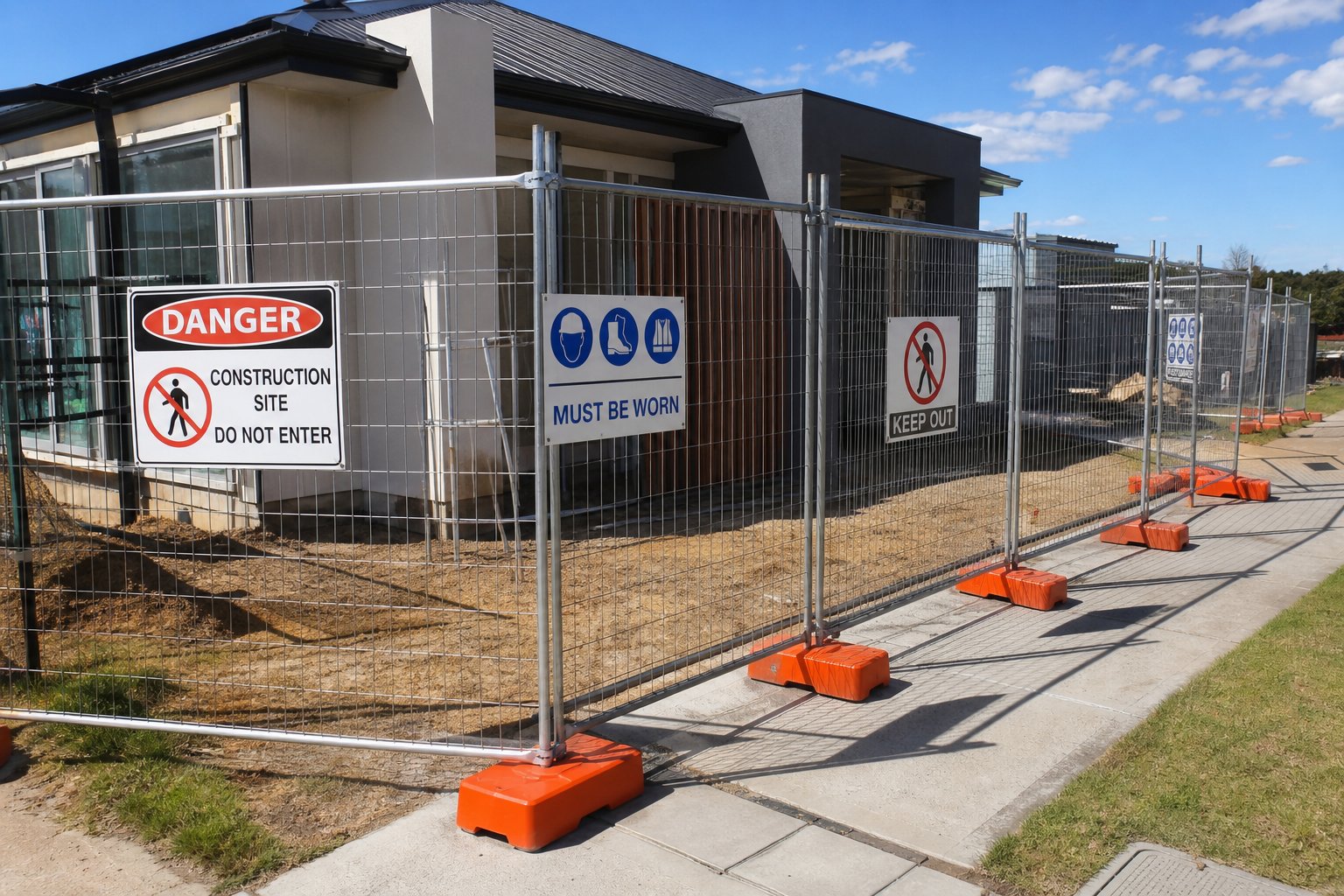
Executing a residential property remodel, ground-floor extension, swimming pool excavation, or complete interior strip-out transforms quiet residential yards into dynamic construction environments filled with physical hazards. Installing certified temporary fencing for a home renovation establishes an indispensable physical perimeter that isolates open excavations, structural demolition zones, and hazardous building materials from pedestrian foot traffic, curious neighborhood children, and unauthorized intruders. Beyond basic site hygiene, erecting compliant perimeter barriers represents a legally enforceable statutory requirement under local municipal building codes, Work Health and Safety regulations, and homeowner insurance policies. By deploying robust galvanized steel mesh panels, weighted counterbalanced concrete feet, secure couplers, and lockable vehicular access gates, property owners safeguard ongoing project investments, prevent costly material theft, and insulate themselves from catastrophic public liability claims throughout every renovation phase.
The Legal and Regulatory Mandates Governing Domestic Construction Sites
Residential construction sites represent complex liability environments where public safety laws mandate continuous physical site containment. Homeowners frequently assume that general contractors assume all statutory site responsibilities; however, property owners remain fundamentally liable for unmitigated perimeter hazards on their land.
Work Health and Safety Compliance and Duty of Care
Under national Work Health and Safety frameworks and local council development approval conditions, principal property owners and licensed builders hold an active duty of care to eliminate or minimize foreseeable risks to the public. Active remodeling sites generate numerous hazards, including:
- Open trenching, foundational pier excavations, and subterranean sewer tie-in pits.
- Live temporary electrical distribution boards and high-voltage supply leads.
- Suspended structural framing, scaffolding towers, and overhead lifting points.
- Sharp construction debris, protruding masonry anchors, and hazardous chemical residues.
Erecting certified temporary fencing for a home renovation establishes a legally recognized demarcation line that proves proactive compliance with occupational safety authorities, preventing costly stop-work notices and statutory municipal penalties.
Mandatory Pool Barrier and Excavation Enclosure Laws
Swimming pool construction and pool surrounding deck renovations carry the strictest perimeter safety mandates in domestic construction. When existing safety fences are removed for landscaping or new pool shells are excavated, statutory swimming pool safety laws require an uninterrupted, self-closing temporary security enclosure at least 1.2 meters (forty-eight inches) high with non-climbable vertical zones. Failure to maintain an active barrier around water-retaining excavations can lead to immediate council fines, project suspension, and severe personal tragedy.
Homeowner Insurance Policies and Public Liability Exclusions
Standard residential home insurance policies frequently exclude or heavily restrict coverage during major structural alterations and construction activities. Specialized renovation insurance endorsements require that the site maintain adequate physical perimeter containment. If an unsupervised child or passerby wanders onto an uncontained construction site and suffers bodily injury, insurance underwriters can deny liability claims if the policyholder failed to maintain basic physical perimeter barriers, leaving the homeowner personally exposed to multi-million-dollar personal injury lawsuits.
Construction Hardware Engineering: Anatomy of a Sturdy Barrier
A temporary perimeter is only as reliable as the mechanical integrity of its individual hardware components. Choosing high-grade industrial panels over flimsy consumer garden fencing prevents structural collapse during high-wind storms and heavy equipment operations.
Galvanized Welded Steel Mesh Panels
Commercial temporary fence panels typically measure 2.1 meters high by 2.4 meters wide (roughly seven feet high by eight feet wide). High-durability panels feature:
- Hot-dipped galvanized zinc coatings: Providing deep electrochemical corrosion protection that prevents rust staining on newly poured concrete driveways and surrounding landscape pavers.
- Heavy-gauge steel tubular frames: Constructed with 32 mm or 42 mm outer diameter tubular steel pipes that resist bending under impact.
- Anti-climb welded wire mesh: Featuring narrow rectangular mesh apertures (typically 60 mm by 150 mm) that prevent footholds, deterring intruders and neighborhood children from scaling the barrier.
High-Visibility Weighted Counterbalance Feet
The foundation of any freestanding modular fence is the ground base. Modern installations utilize blow-molded, UV-stabilized high-density polyethylene shells filled with solid concrete. Weighing between twenty-five and thirty-two kilograms (fifty-five to seventy pounds) each, these bases provide immense downward ballast. Bright safety-orange or safety-yellow coloring ensures maximum visual contrast, preventing trip-and-fall hazards for tradespeople and pedestrians navigating perimeter footpaths at night.
Heavy-Duty Steel Couplers and Tamper-Resistant Clamps
Adjacent panels must be mechanically interlocked using heavy-duty cast steel clamps secured with threaded bolts and nuts. Clamps must be installed with the nuts facing inward toward the construction site. This internal orientation prevents trespassers from using standard hand wrenches to unbolt panels from the exterior street side, ensuring the structural perimeter remains impenetrable after hours.
Wind Bracing, Support Stays, and Shade Cloth Dynamics
When homeowners install shade cloth, privacy scrim, or printed acoustic screening over fence panels to control dust and debris, the fence transforms into a giant wind sail. Under strong seasonal wind gusts, unbraced panels will blow over, potentially crushing parked vehicles or damaging neighboring structures. For runs with privacy screening, installers must install diagonal structural support stays (stabilizer outriggers) clamped to the panels and anchored into secondary weighted concrete feet or ground stakes every three to four panels.
Component Specification Reference Matrix
| Hardware Element | Standard Dimension / Specification | Material Composition | Primary Engineering Function |
|---|---|---|---|
| Standard Mesh Panel | 2.1 m High x 2.4 m Wide | Hot-dipped galvanized steel wire | Creates scalable, anti-climb boundary barrier |
| High-Visibility Foot | 600 mm x 220 mm x 150 mm (28–32 kg) | Concrete encased in orange HDPE | Provides downward stabilizing ballast against wind |
| Perimeter Coupler Clamp | 100 mm Center spacing, 4 mm steel | Forged galvanized structural steel | Rigidly locks adjacent panel uprights together |
| Diagonal Support Stay | 1.8 m Diagonal steel strut | Tubular galvanized steel pipe | Counteracts lateral wind overturning loads |
| Padlockable Vehicle Gate | 2.1 m High x 2.4 m or 4.8 m Double | Heavy tubular steel frame + castors | Enables secure delivery truck and bobcat access |
| Privacy Dust Shade Cloth | 70% to 90% UV Block rating | Knitted monofilament polyethylene | Traps airborne construction dust, silica, and overspray |
Mitigating Theft and Vandalism on Residential Remodel Sites
Domestic remodeling projects are prime targets for opportunistic thieves, scrap metal scavengers, and organized tool theft crews. Construction sites house high-value copper piping, electrical wiring coils, uninstalled luxury kitchen appliances, hot water systems, and expensive trade power tools left overnight.
Eliminating Blind Spots and Direct Line of Sight
Installing high-density privacy mesh over temporary fencing for a home renovation prevents passersby from casually surveying tools, material deliveries, and unmonitored entry points. Shielding the internal work yard from direct street visibility drastically reduces opportunistic burglary attempts.
Creating Secure Locking Storage Compounds
Within the broader perimeter, contractors can configure a secondary internal temporary fencing enclosure to create a locked lockup compound for staging heavy equipment, pallets of imported tile, and copper supplies. Pairing the outer perimeter with secure chains, shrouded commercial-grade padlocks, and motion-activated solar floodlights creates multiple layers of deterrence that discourage unauthorized nighttime access.
Pedestrian Safety, Dust Containment, and Neighbor Relations
Renovations frequently disrupt quiet neighborhoods, generating friction with adjacent property owners over dust, parking congestion, and encroaching trade crews.
Trapping Airborne Silica Dust and Demolition Debris
Concrete cutting, brick demolition, and drywall sanding release fine silica particulates that can coat neighboring properties, contaminate backyard swimming pools, and trigger respiratory complaints. Attaching tightly knitted shade cloth to perimeter panels establishes an effective physical barrier that captures airborne dust, blown saw dust, and light demolition fragments, keeping public sidewalks and adjoining properties clean.
Clear Boundary Delineation and Parking Control
Remodeling projects bring a steady stream of delivery trucks, tradespeople vans, and skip bin transport vehicles. Erecting clear perimeter fencing establishes unmistakable boundaries that keep building materials, waste disposal bins, and sub-contractor foot traffic strictly confined within your property lines, avoiding property disputes with neighbors over encroached lawns and shared driveway easements.
Step-by-Step Installation and Layout Guidelines
Deploying temporary fencing for a home renovation requires thoughtful planning to maintain convenient daily site access while preserving security:
- Conduct a Property Boundary Audit: Locate permanent property boundary pegs and underground utility markers before laying out panels to ensure you do not encroach onto council nature strips or neighboring land without authorization.
- Plan Separate Pedestrian and Vehicular Entry Points: Install a dedicated swinging pedestrian gate for tradespeople and building certifiers, alongside a wider double-leaf sliding or swinging gate for excavators, concrete trucks, and skip bin drop-offs.
- Align and Level Ground Blocks: Place weighted plastic feet on level, consolidated ground. On sloping grades or uneven turf, shim or terrace the bases to ensure vertical uprights remain plumb and free of torsional stress.
- Inspect and Tighten Clamps Periodically: Heavy equipment vibrations, seasonal wind gusts, and daily gate operations loosen coupler nuts over time; conduct a weekly walk-through to tighten loose hardware and verify that support stays remain firm.
Frequently Asked Questions About Temporary Fencing for a Home Renovation
Is temporary fencing legally required for all residential home renovations?
Yes, local municipal councils and occupational safety regulations require temporary fencing whenever a renovation involves structural demolition, ground excavations, or swimming pool barrier removal to protect public safety.
Can temporary fence panels be installed on sloping or uneven driveways?
Yes, modular panels and independent weighted concrete feet can be stepped, terraced, or angled along slopes to maintain a continuous, gap-free perimeter barrier.
How do I prevent temporary fencing from blowing over in heavy storms?
Install diagonal support stays clamped to the vertical frame uprights and anchored to additional weighted concrete blocks every three panels, especially when using shade cloth.
What is the standard height for temporary construction fencing?
The standard commercial height for temporary construction fence panels is 2.1 meters (approximately seven feet), which provides an effective deterrent against climbing and forced entry.
Can I install vehicular gates using standard temporary fence panels?
Yes, temporary fence manufacturers provide purpose-built gate wheels and hinge clamps that transform standard panels into smoothly operating swinging or sliding access gates.
Should I hire or buy temporary fencing for a home renovation project?
For short-term projects lasting under six months, hiring fencing from a local supplier includes delivery, installation, and removal; for long-term multi-stage builds over a year, purchasing panels outright can be more economical.
Conclusion
Securing an active residential job site is a foundational component of responsible project management and risk mitigation. Sourcing certified temporary fencing for a home renovation provides the physical defense needed to isolate dangerous excavations, protect high-value building materials from theft, and fulfill strict council and insurance safety regulations. By pairing heavy-gauge galvanized steel mesh with high-visibility counterbalance feet, tamper-resistant couplers, and wind-stabilizing support stays, homeowners eliminate structural vulnerabilities and protect their legal standing against third-party liability claims. Taking a proactive, professional approach to perimeter containment safeguards workers, protects the community, and ensures your home remodeling project proceeds smoothly toward completion.