Tile Roof Repair Guide: 9 Problems to Fix Before Roof Damage Gets Worse
Professional tile roof repair can address cracked or displaced tiles, failed flashing, deteriorated underlayment, leaks, damaged mortar, and other defects before water causes more extensive problems inside the roof assembly. Clay, concrete, and other tile roofs are durable systems, but the visible tiles are only one part of their weather protection. Underlayment, flashing, fasteners, battens where used, roof penetrations, drainage, and installation details all affect performance, making accurate diagnosis more important than simply replacing the first broken tile you can see.
What Is Tile Roof Repair?
Tile roof repair is the process of identifying and correcting localized problems within a tiled roofing system while retaining roof components that remain serviceable.
The scope can range from replacing a few damaged tiles to repairing flashing, correcting localized underlayment failures, addressing valleys, or rebuilding details around penetrations.
A tile roof generally uses overlapping tiles as its primary outer weather shedding layer.
Depending on the roof design and local construction practices, the system may also contain underlayment, battens, flashing, fasteners, ventilation components, and other materials beneath or around the tiles.
This means a roof leak does not automatically indicate that the tile directly above the interior water stain is damaged.
Water can enter at one location and travel along underlayment, framing, or other surfaces before becoming visible inside the building.
A systematic inspection is therefore essential.
9 Tile Roof Repair Problems That Deserve Attention
Roof defects can range from obvious storm damage to gradual deterioration hidden underneath apparently intact tiles.
These nine issues are among the most important reasons to arrange a professional roof assessment.
1. Cracked or Broken Roof Tiles
Cracked tiles are one of the most recognizable problems on a tiled roof.
Damage can result from impact, foot traffic, weather events, installation issues, movement, manufacturing defects, or age related deterioration.
Not every crack immediately produces an interior leak because the roof assembly contains overlapping components and often an underlying water shedding layer.
Nevertheless, broken tiles should be evaluated because they can expose underlying materials and reduce the roof’s intended protection.
Replacement material should be compatible with the existing roofing system.
2. Slipped or Displaced Tiles
A tile that moves from its intended position can create a gap in the roof covering.
Potential causes include fastening problems, severe wind, broken attachment points, deterioration of supporting components, or incorrect previous installation.
A roofer should investigate why the tile moved rather than simply pushing it back into position.
Repeated movement can indicate a larger attachment or installation issue.
3. Deteriorated Roof Underlayment
Underlayment sits beneath the tile covering and plays an important role in water management.
Tiles can remain visually attractive long after some underlayment products have deteriorated or been damaged.
Underlayment problems may occur because of age, heat exposure, moisture, installation defects, penetrations, or previous repairs.
Tile Roof Repair for Underlayment Problems
Localized underlayment repair can sometimes require careful removal of surrounding tiles.
The contractor should restore the water shedding system in a manner compatible with the existing roof and applicable manufacturer or code requirements.
Widespread underlayment deterioration can make extensive repair or reroofing more practical than repeatedly addressing individual leaks.
4. Failed Flashing
Flashing directs water away from joints, transitions, and penetrations where ordinary roof tile overlap cannot provide sufficient protection.
Common flashing locations include:
• Chimneys
• Valleys
• Skylights
• Plumbing vents
• Sidewalls
• Headwalls
• Roof transitions
• Other penetrations
Corrosion, movement, improper installation, sealant failure, or previous modifications can compromise these areas.
Flashing defects are common potential sources of roof leakage.
5. Leaking Roof Valleys
A roof valley collects water from adjoining roof slopes and directs it downward.
Because valleys handle concentrated runoff, proper construction and maintenance are important.
Leaves and other debris can obstruct drainage.
Tile placement, flashing, underlayment, and fasteners around a valley must also be correctly detailed.
A leaking valley should be inspected promptly because water volume can be substantial during heavy rain.
6. Damaged Ridge and Hip Components
Ridges and hips create prominent intersections in many tile roof systems.
Special tiles, mechanical fastening, mortar, adhesives, or combinations of systems may be used depending on the roof.
Cracked components or deteriorated attachment materials can require repair.
The replacement method should match the specific roof system rather than relying on generic mortar or sealant.
7. Problems Around Roof Penetrations
Every roof penetration introduces an area requiring carefully designed water management.
Plumbing vents, exhausts, solar attachments, satellite equipment, HVAC penetrations, and other fixtures can create leak pathways when flashing or seals fail.
New equipment installations can also disturb an older roof.
8. Storm and Impact Damage
High winds, falling branches, hail, and airborne debris can damage roof tiles.
Some damage is obvious from the ground, while other defects may be subtle.
After severe weather, homeowners should avoid climbing onto the roof to investigate.
Tiles can be slippery or brittle, and damaged areas may not safely support foot traffic.
9. Previous Poor Quality Repairs
Improper repairs can sometimes create additional problems.
Examples include incompatible sealants, poorly matched tiles, exposed fasteners, incorrect flashing, or excessive mortar.
Tile Roof Repair After an Improper Patch
A professional roofer may need to remove an earlier patch before the original defect can be assessed accurately.
Simply adding more roof cement or sealant can conceal a leak temporarily without restoring proper drainage.
A durable repair should address the actual water entry pathway.
How to Find the Source of a Tile Roof Leak
Locating a leak can be more difficult than replacing a damaged component.
Interior staining tells you where water became visible, not necessarily where it entered the roof.
Start With Interior Evidence
A professional inspection may begin inside the building or attic where safely accessible.
Inspectors can look for staining, damp materials, deterioration, water tracks, or other indicators.
Moisture meters and other diagnostic tools may provide additional information when used appropriately.
Inspect the Exterior Roof System
The exterior assessment may include tiles, valleys, ridges, penetrations, walls, flashing, gutters, and transitions.
The roofer should consider how water naturally travels across and beneath the roof covering.
Why Tile Roof Repair Requires Leak Diagnosis
Replacing a cracked tile without confirming the source may leave the actual leak untouched.
Conversely, an obvious broken tile might not be responsible for an interior stain.
Good roofing diagnosis connects physical evidence with roof geometry and weather exposure before recommending work.
Different Types of Tile Roofs
Repair methods vary because not all roofing tiles behave the same way.
Clay Tile Roofs
Clay roof tiles are fired ceramic products available in numerous profiles.
They can provide long service under appropriate conditions but may be brittle under concentrated loads.
Walking technique and access planning are important during inspection and repair.
Replacement tiles should match the existing profile and installation system as closely as practical.
Concrete Tile Roofs
Concrete roofing tiles are manufactured from cementitious materials and come in flat and shaped profiles.
Their color can be integral, surface applied, or created through coating systems depending on the product.
Concrete tiles are relatively heavy, which should be considered when evaluating roof structure and handling repairs.
Other Tile Roofing Products
Some roofs use slate like composites, stone products, or specialized tiles.
These materials can have different fastening, cutting, and repair requirements.
Matching Materials During Tile Roof Repair
A replacement should be evaluated for:
• Profile
• Dimensions
• Interlocking geometry
• Material
• Weight
• Fastening method
• Color
• Weathering
• Manufacturer where identifiable
A visually similar tile may not mechanically fit the existing roofing system.
Replacing Broken Roof Tiles
Tile replacement appears simple but can be complicated by interlocking profiles and concealed fasteners.
Adjacent tiles may need to be carefully lifted or temporarily removed.
Why DIY Tile Replacement Can Be Risky
Beyond fall hazards, walking on the roof can break additional tiles.
Improper lifting can damage neighboring pieces, and incorrect fastening can compromise the roof.
Roofers use access methods appropriate to the tile type and roof slope.
Professional Tile Roof Repair for Individual Tiles
A professional should confirm that damage is truly localized.
If several tiles are cracking due to structural movement, poor fastening, or another systemic issue, replacing them individually may only treat symptoms.
The cause matters as much as the visible damage.
Tile Roof Flashing Repair
Flashing deserves particular attention because it manages some of the most leak prone roof locations.
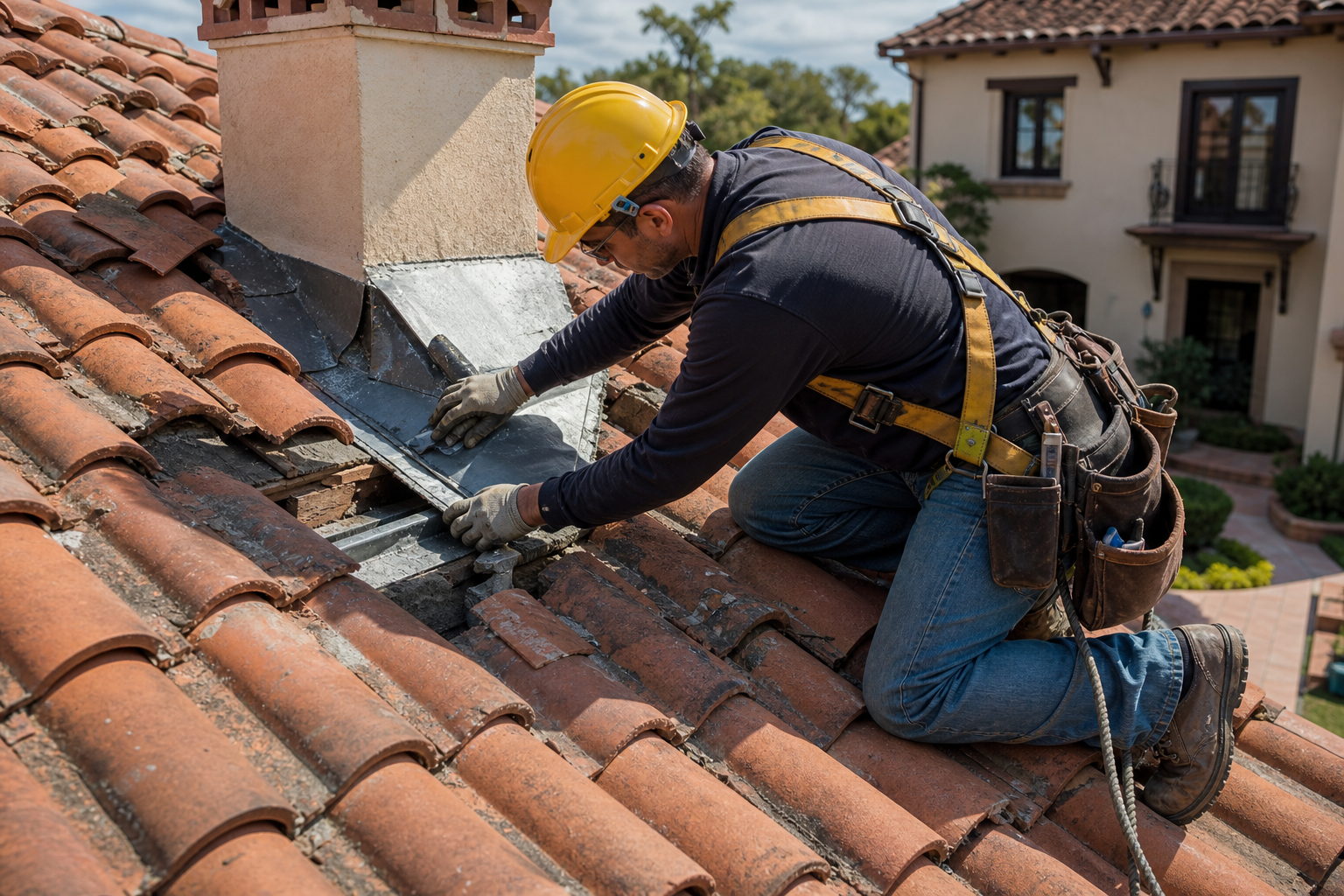
Chimney Flashing
Chimneys interrupt the roof plane and require carefully integrated flashing.
Details can include step flashing, counterflashing, cricket structures on some configurations, and other components depending on construction.
Applying surface sealant around a chimney is not equivalent to correctly installed flashing.
Wall Flashing
Where a roof meets a vertical wall, flashing should direct water away from the intersection.
Siding, stucco, masonry, and other wall finishes can affect how the detail is constructed.
Vent Flashing
Roof vents and plumbing penetrations commonly have specialized flashing assemblies.
Rubber or other components can deteriorate over time.
Tile Roof Repair Around Flashing
Repairing flashing may require removing enough tiles to access and integrate the new material correctly.
The goal is to create overlapping drainage paths so water naturally travels onto the roof surface rather than beneath the roofing system.
Tile Roof Underlayment Repair
The condition of underlayment can significantly influence whether a tile roof continues shedding water effectively.
Signs of Potential Underlayment Problems
Possible indicators can include:
• Persistent leaks without obvious broken tiles
• Multiple leak locations
• Deterioration visible during tile removal
• Repeated problems around penetrations
• Evidence of historical water intrusion
These indicators require professional interpretation.
Local Repair vs Larger Replacement
A localized puncture or defect may be repairable in an accessible area.
Widespread deterioration is a different problem.
When Tile Roof Repair Becomes Reroofing
If repairs require removing large sections of tile to replace deteriorated underlayment, the economics of continued patching should be compared with a more comprehensive reroofing project.
Reusable tiles may sometimes be retained depending on condition, system design, local requirements, and contractor practices.
How Much Does Tile Roof Repair Cost?
There is no accurate universal price for tile roof repair.
Costs vary by location, roof height, pitch, tile type, accessibility, damage extent, labor rates, replacement tile availability, underlayment condition, and flashing work.
Factors That Influence Tile Roof Repair Cost
Pricing may reflect:
• Inspection and diagnosis
• Scaffolding or access equipment
• Fall protection requirements
• Number of damaged tiles
• Replacement tile availability
• Underlayment repairs
• Flashing fabrication
• Roof pitch
• Building height
• Disposal
• Permits where required
A repair involving one accessible tile is fundamentally different from a leak requiring substantial removal and flashing reconstruction.
Why Cheap Roof Repairs Can Be Expensive
A very low quote can be attractive, but the scope matters.
If one contractor proposes surface sealant while another plans to remove tiles and rebuild defective flashing, their prices cannot be meaningfully compared without examining the work.
Comparing Tile Roof Repair Quotes
Request written estimates explaining:
• Suspected cause
• Proposed repair
• Materials
• Tiles being replaced
• Flashing work
• Underlayment work
• Access requirements
• Cleanup
• Warranty
• Potential additional charges
Photographs can help document inaccessible damage.
Tile Roof Repair vs Roof Replacement
A roof leak does not automatically justify complete replacement.
Many roofs can be repaired when problems are localized and the overall system remains serviceable.
When Repair May Be Appropriate
Repair can make sense when:
• Damage is localized
• Most tiles remain functional
• Underlayment is serviceable
• Flashing defects can be corrected
• Replacement materials are available
• Structural conditions are satisfactory
A professional inspection should establish the context.
When Replacement Should Be Considered
Broader replacement may deserve consideration when underlayment has widespread deterioration, tiles are extensively damaged, structural problems exist, leaks repeatedly occur across different areas, or repair costs are becoming disproportionate.
Age alone is not a complete diagnosis.
Tile Roof Repair Decisions Based on Condition
Ask contractors to separate defects requiring immediate correction from longer term concerns.
This helps homeowners make decisions based on evidence rather than sales pressure.
When recommendations differ significantly, obtaining another qualified opinion can be useful.
Emergency Tile Roof Repair
Sudden leaks can occur during storms or after impact damage.
Personal safety should remain the priority.
Do not climb onto a wet or storm damaged tile roof.
Limit Interior Water Damage
Where it is safe, property owners can move belongings away from leaking areas and collect dripping water.
Electrical fixtures or wiring affected by water create an additional hazard.
If water is entering near energized electrical equipment, keep clear and contact appropriate professionals.
Temporary Roofing Measures
Professional roofers may install temporary coverings or other weather protection until permanent repair becomes practical.
Emergency Tile Roof Repair After Severe Weather
Document visible damage from safe locations for insurance purposes where appropriate.
Contact a qualified roofer and insurer according to policy requirements.
Avoid contractors using high pressure tactics immediately after a major storm without first verifying credentials.
Tile Roof Maintenance
Preventive maintenance cannot eliminate every repair, but routine observation can identify problems earlier.
Keep Roof Drainage Clear
Gutters, downspouts, scuppers, and other drainage components should remain able to carry water away from the roof and building.
Overflow can affect fascia, walls, foundations, and roofing edges.
Cleaning at height should be handled safely.
Manage Nearby Trees
Overhanging branches can rub against tiles or fall during storms.
Leaves can also accumulate in valleys and gutters.
Tree work near a roof should be handled by appropriately qualified professionals where height, heavy limbs, or power lines create risk.
Avoid Unnecessary Roof Traffic
Tile breakage can occur under foot traffic.
Homeowners should avoid treating a tile roof as a walking surface.
Preventive Tile Roof Repair Inspections
Consider professional inspection after significant storms, when leaks appear, or when visible changes are observed.
Inspection schedules can also reflect roof age, climate, manufacturer guidance, and insurance requirements.
Moss, Algae, and Tile Roof Cleaning
Biological growth can change roof appearance and may indicate areas that remain damp.
Cleaning requires caution.
Avoid Aggressive Cleaning Methods
High pressure washing can damage certain roofing materials, coatings, or adjacent roof components when used incorrectly.
Tile manufacturers may specify approved cleaning procedures.
Chemical Compatibility Matters
Cleaning products can affect tiles, metals, vegetation, runoff, and surrounding finishes.
Use only products and methods appropriate for the roofing material.
Cleaning Without Causing Tile Roof Repair Problems
Improper roof cleaning can create broken tiles, damaged surfaces, displaced components, or water intrusion.
A professional experienced with the particular tile system may be preferable to a general exterior cleaner.
Tile Roof Repair and Solar Panels
Solar installation adds penetrations and concentrated work activity to a roof.
Planning matters before panels are installed.
Inspect the Roof First
If a tile roof is approaching substantial underlayment work or requires significant repairs, addressing those problems before solar installation can avoid later panel removal costs.
Use Appropriate Mounting Methods
Solar attachment systems should be designed for the specific roof covering and structural conditions.
Tiles should not simply be drilled or modified without an appropriate system.
Tile Roof Repair Beneath Solar Arrays
Diagnosing leaks under installed panels may require coordination between roofing and solar professionals.
Electrical hazards and warranty considerations can make unauthorized panel movement inappropriate.
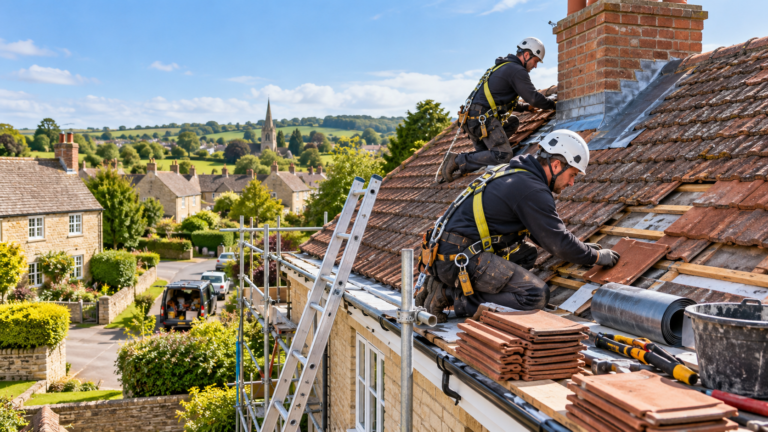
Tile Roof Repair Safety
Roof work involves significant fall hazards.
Tile surfaces can also be unexpectedly fragile or slippery.
Homeowners should avoid climbing onto steep, wet, damaged, or unfamiliar roofs to conduct their own inspections.
Professional roofers should use appropriate access methods and fall protection in accordance with applicable workplace safety requirements.
Electrical and Utility Hazards
Roofs may be near overhead electrical lines, solar equipment, antennas, and service connections.
These hazards need to be identified before work begins.
Structural Concerns
Sagging roof areas, damaged decking, fire damage, or severe storm impacts may indicate structural hazards.
When Tile Roof Repair Needs Additional Specialists
Roofing contractors may need support from structural engineers, electricians, solar technicians, chimney professionals, or other specialists when the problem extends beyond ordinary roof covering repairs.
Qualified diagnosis helps ensure the repair addresses the complete issue.
How to Choose a Tile Roof Repair Contractor
Tile roofs require experience that not every general roofing crew necessarily has.
Ask specifically about comparable tile systems.
Verify Credentials and Insurance
Licensing requirements vary by jurisdiction.
Confirm applicable contractor credentials with relevant authorities and ask for appropriate insurance documentation.
Also check whether permits are required for the planned scope.
Ask for Repair Documentation
A contractor should be able to explain the likely leak source and recommended repair.
Before and after photographs can be useful.
Check Replacement Tile Availability
Matching older tile profiles can be difficult.
Experienced contractors may work with roofing distributors, salvage suppliers, or manufacturers to source compatible products.
Questions to Ask a Tile Roof Repair Company
Before hiring a contractor, ask:
• What do you believe is causing the problem?
• How was the leak source identified?
• Do you regularly repair this tile type?
• Will tiles need to be removed?
• Is the underlayment being inspected?
• Does flashing require replacement?
• How will replacement tiles be matched?
• What happens if hidden damage is found?
• What warranty covers the repair?
• Are permits required?
• How will the roof be accessed safely?
Clear answers make competing proposals easier to assess.
Common Tile Roof Repair Mistakes
The most common mistake is treating visible symptoms without diagnosing the leak pathway.
Another is assuming roof tiles alone create the entire waterproofing system.
Avoid:
• Walking unnecessarily on roof tiles
• Covering every crack with generic sealant
• Ignoring flashing
• Replacing tiles without checking underlying damage
• Installing incompatible replacement profiles
• Pressure washing without confirming suitability
• Ignoring repeated interior staining
• Allowing unqualified workers around solar equipment
• Choosing a contractor solely by price
• Delaying active leak investigation
A small visible defect can sometimes indicate a larger hidden issue.
Frequently Asked Questions
What are the most common reasons for tile roof repair?
Broken or slipped tiles, deteriorated underlayment, failed flashing, valley problems, damaged ridge components, penetrations, storm damage, and poor previous repairs are common causes.
How much does tile roof repair cost?
Cost varies by tile type, roof pitch, access, damage, replacement material availability, flashing, underlayment, labor, and location. A site specific written estimate is most reliable.
Can one broken roof tile cause a leak?
It can contribute to water intrusion, but the underlying roof system may continue shedding some water. The complete area should be inspected rather than assuming one tile explains the leak.
Can tile roof repair be done without replacing the roof?
Yes, localized problems can often be repaired when surrounding tiles, underlayment, flashing, and roof structure remain serviceable.
How can I tell whether roof underlayment is failing?
Repeated leaks, widespread moisture evidence, or deterioration found during tile removal can indicate underlayment problems. Professional inspection is usually required for confirmation.
How do I choose a tile roof repair contractor?
Look for specific tile roofing experience, appropriate licensing and insurance, clear diagnosis, detailed written estimates, compatible materials, safe access practices, and defined warranty terms.
Conclusion
Tile roof repair is most effective when it addresses the actual path of water intrusion rather than only the most visible damaged tile. Clay and concrete tile systems depend on properly functioning underlayment, flashing, drainage, penetrations, and attachment details as well as the tiles themselves. Prompt professional inspection, compatible repair materials, and careful ongoing maintenance can help protect the roof assembly while avoiding unnecessary replacement when damage remains localized.