Steel Bright Bars: Types, Grades, Tolerances, Manufacturing, and Industrial Applications
Precision manufactured Steel bright bars are widely used where dimensional consistency, improved surface condition, straightness, and machinability are important to the finished component. Unlike ordinary hot rolled bars, bright steel products typically undergo additional cold finishing processes such as drawing, turning, grinding, or combinations of these operations to achieve controlled dimensions and a cleaner surface. Selecting the right bar requires attention to steel grade, shape, tolerance, surface condition, mechanical properties, processing route, heat treatment, certification, and the requirements of the final part rather than appearance alone.
What Are Steel Bright Bars?
Steel bright bars are steel products that receive additional finishing after the initial hot rolling stage to create a relatively smooth, dimensionally controlled surface.
The word bright refers primarily to the characteristic surface produced by finishing operations. It does not indicate one specific steel chemistry or strength level.
Bright bars can therefore be manufactured from multiple steel families and grades.
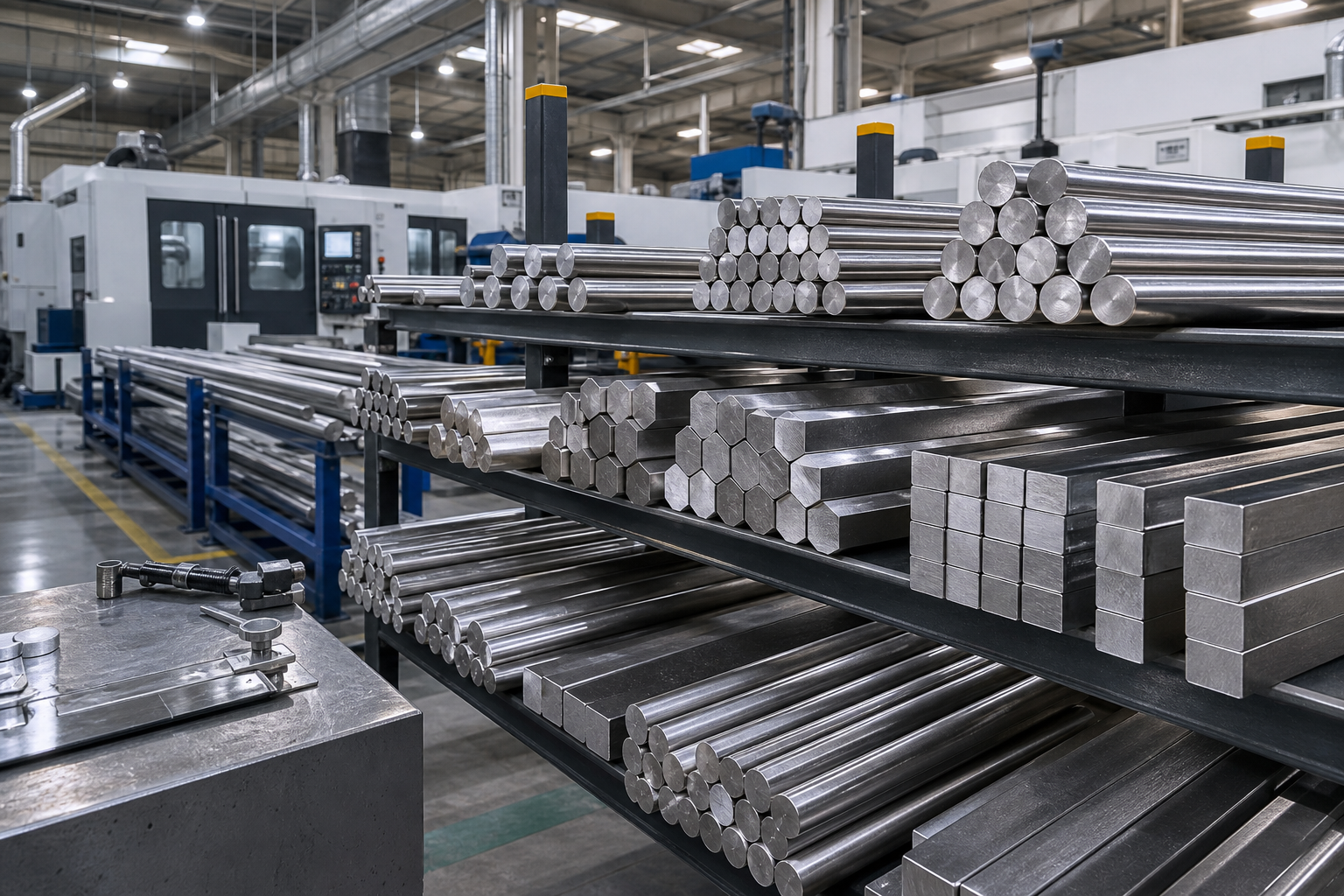
Common shapes include round, square, hexagonal, and flat sections. Manufacturers can also offer other profiles depending on production capability and customer requirements.
Compared with standard hot rolled bar, bright finished products commonly provide tighter dimensional control and a surface that can be more suitable for machining or use in precision components.
Exact properties depend on the steel and manufacturing process.
9 Powerful Benefits of Steel Bright Bars
Bright bars are selected for engineering reasons rather than solely for their appearance. Their advantages can reduce downstream processing or improve manufacturing consistency when specifications are chosen correctly.
1. Tighter Dimensional Tolerances
Cold finishing allows manufacturers to control bar dimensions more closely than typical as rolled hot steel.
This can be valuable when bars feed CNC lathes, automatic turning equipment, machining centres, or production lines that depend on consistent stock.
Tolerance still varies according to product size, shape, standard, and manufacturing method.
A customer should specify the required dimensional tolerance rather than assuming all bright bar meets one universal tolerance.
2. Improved Surface Finish
Removing scale and controlling the outer surface creates a cleaner appearance than ordinary hot rolled bar.
This can reduce the amount of material that needs to be removed during certain machining or finishing operations.
Surface quality should be specified precisely for critical applications.
Terms such as smooth or bright are subjective unless linked to measurable requirements.
3. Improved Straightness Options
Straightness matters for long bars running through automatic production equipment.
Excessive bow can create feeding, machining, or dimensional issues.
Manufacturers can straighten bars as part of the production process.
Steel Bright Bars Straightness Requirements
When straightness is critical, purchasing specifications should identify:
• Bar length
• Permitted deviation
• Measurement method
• Applicable standard
• End condition
• Packaging requirements
Do not rely on visual inspection alone for precision applications.
4. Good Machining Suitability
Bright steel is commonly used as feedstock for machining.
Consistent diameter and surface condition can support repeatable turning and other processes.
Machinability, however, depends primarily on steel chemistry, microstructure, hardness, heat treatment, inclusions, and cutting conditions.
A bright finish does not automatically make every steel grade easy to machine.
5. Multiple Cross Section Shapes
Bright bars are available in forms suited to different manufacturing processes.
Round bars are widely used for shafts, pins, fasteners, and turned parts.
Hexagonal bars can reduce the machining required for nuts and other components with hexagonal geometry.
Square and flat sections are used for keys, machine components, brackets, tools, and many other applications.
6. Broad Steel Grade Selection
Bright finishing can be applied to various carbon, alloy, free machining, and stainless steels depending on manufacturer capability.
This allows designers to select chemistry and properties according to the component rather than being limited to one grade.
7. Potential Reduction in Machining Allowance
Tighter dimensions and better surfaces can allow some parts to be produced with less stock removal than rougher feed material.
The actual allowance must still reflect process capability, part geometry, distortion, heat treatment, and final tolerances.
8. Consistent Material for Volume Production
High volume manufacturing benefits from repeatable incoming stock.
Variation in diameter or straightness can affect machine setup and cycle consistency.
Appropriately specified bright bars can help provide more controlled feedstock.
9. Flexible Supply Conditions
Manufacturers can offer different surface, heat treatment, tolerance, length, and testing conditions depending on the standard and grade.
Steel Bright Bars Should Be Purchased by Specification
A useful purchase specification can include:
• Steel grade
• Applicable standard
• Shape
• Nominal dimensions
• Dimensional tolerance
• Length
• Straightness
• Surface condition
• Heat treatment
• Mechanical properties
• Testing requirements
• Certification
• Packaging
This gives supplier and customer a measurable definition of the required product.
How Are Steel Bright Bars Manufactured?
Bright bar production can use several finishing routes.
Each process creates different dimensional, surface, and mechanical characteristics.
Hot Rolled Starting Material
Production commonly begins with steel that has already been hot worked into a bar or wire rod form.
Hot rolling occurs at elevated temperature and allows substantial shaping.
As rolled surfaces typically develop scale and have different tolerance characteristics from cold finished products.
Descaling and Surface Preparation
Material intended for cold drawing generally needs appropriate surface preparation.
Scale and contaminants can interfere with dies and surface quality.
Specific preparation depends on steel and manufacturing route.
Cold Drawing
Cold drawing pulls material through a die to reduce or control its cross section.
The operation occurs below the steel’s recrystallisation temperature.
It can improve dimensional accuracy and surface finish while also changing mechanical properties through cold work.
Cold Drawn Steel Bright Bars
Cold drawing can affect:
• Yield strength
• Tensile properties
• Hardness
• Residual stress
• Ductility
• Straightness
• Surface condition
The actual change depends on grade and degree of reduction.
Designers should therefore specify required final properties rather than assuming cold drawn material is equivalent to hot rolled material of the same chemistry.
Turned and Peeled Bright Bars
Turning or peeling removes material from the outside diameter of round bar.
How Peeling Works
A peeling machine mechanically cuts away the outer surface while material moves through the equipment.
This can remove decarburisation, surface scale, or certain defects while creating controlled diameter.
When Peeled Bars Are Useful
Large diameter products and bars requiring removal of surface defects can benefit from peeling.
They may subsequently undergo straightening and grinding.
Steel Bright Bars Produced by Turning
Turning removes material rather than relying on substantial cold deformation.
As a result, its influence on mechanical properties differs from cold drawing.
The process should be selected according to final requirements.
Ground and Polished Steel Bright Bars
Grinding can produce closer dimensions and improved surface finish.
Centreless Grinding
Centreless grinders support the bar between a grinding wheel and regulating system rather than holding it between conventional centres.
This process is widely used for precision round products.
Polishing
Polishing can further alter surface appearance or roughness.
A visually polished surface is not necessarily dimensionally more accurate unless tolerance is controlled separately.
Precision Ground Steel Bright Bars
For critical components, specify actual requirements such as:
• Diameter tolerance
• Surface roughness
• Straightness
• Roundness where relevant
• Length
• Surface defect limits
The exact measurement method should follow the applicable engineering standard.
Steel Bright Bars vs Hot Rolled Bars
Hot rolled and bright finished steel each have appropriate applications.
Hot Rolled Steel Bars
Hot rolled bars generally offer lower processing cost and are suitable where loose dimensional tolerance and scaled surfaces are acceptable.
They are widely used in structural, fabrication, and general engineering applications.
Bright Finished Steel Bars
Bright steel typically costs more because of additional processing.
The value comes from dimensional control, surface condition, and production consistency.
When to Choose Steel Bright Bars
Bright bars are worth considering when:
• Stock feeds automatic machines
• Diameter consistency matters
• Surface condition is important
• Machining allowance should be reduced
• Straightness needs tighter control
• Precision component production is required
Hot rolled material may remain more economical for rough fabrication.
Steel Bright Bar Shapes
Shape influences both material efficiency and manufacturing workflow.
Round Bright Bars
Round is among the most common shapes.
Typical applications can include:
• Shafts
• Pins
• Studs
• Axles
• Rollers
• Bush components
• Fasteners
Actual suitability depends on grade and design.
Square Bright Bars
Square sections can be used for machine parts, keys, general engineering components, and fabricated products.
Hexagonal Bright Bars
Hex bar is especially useful for components whose finished geometry includes wrench flats.
Flat Bright Bars
Flat bars can be used for tooling, guides, machine components, brackets, keys, and other manufactured products.
Custom Steel Bright Bar Profiles
Manufacturers may produce specialized profiles where volume justifies tooling and process development.
Custom sections can reduce later machining but require careful tolerance and tooling analysis.
Common Steel Grades for Bright Bars
Bright bar is a product form, not a steel grade.
The grade should be selected according to engineering requirements.
Low Carbon Steel
Low carbon steels can provide formability, weldability, and general machining characteristics suitable for many engineering parts.
Exact performance depends on specification and condition.
Medium Carbon Steel
Medium carbon steels can offer greater strength and hardness potential.
Heat treatment may be used where further mechanical properties are required.
Alloy Steel
Alloy steels incorporate elements intended to produce specific hardenability, strength, wear, or other characteristics.
Free Machining Steel
Some grades contain controlled additions designed to improve chip formation and machinability.
Selecting Steel Bright Bars by Grade
Consider:
• Required strength
• Hardness
• Ductility
• Fatigue performance
• Machinability
• Weldability
• Heat treatment
• Corrosion exposure
• Wear
• Cost
A materials engineer should approve grade selection for safety critical applications.
Stainless Steel Bright Bars
Stainless bright bars provide another category for applications requiring corrosion resistance or specific hygienic and surface properties.
Austenitic Stainless Steel
Common austenitic grades provide corrosion resistance and formability across many industries.
Exact grade depends on exposure.
Martensitic Stainless Steel
Martensitic grades can be heat treated to higher hardness and are used in selected mechanical applications.
Precipitation Hardening Grades
These alloys can combine corrosion resistance with high mechanical strength after appropriate processing.
Stainless Steel Bright Bars and Corrosion Resistance
The word stainless does not mean corrosion proof.
Performance depends on grade, surface condition, chloride exposure, temperature, cleaning, galvanic conditions, and environment.
Material selection should reflect actual service conditions.
Steel Bright Bar Sizes and Tolerances
Manufacturers typically offer standard dimension ranges, while custom sizes may be available.
Diameter Tolerance
Round bars can be supplied to defined tolerance classes according to applicable standards.
Do not specify unnecessarily tight tolerances.
Tighter requirements generally increase manufacturing complexity and cost.
Size Variation Along Length
Precision applications may require measurement at several positions.
Straightness
Straightness is separate from diameter tolerance.
Specifying Steel Bright Bars Correctly
Engineering drawings or purchase orders should distinguish among:
• Nominal size
• Size tolerance
• Straightness
• Roundness
• Surface roughness
• Length tolerance
• End condition
These characteristics solve different manufacturing problems.
Mechanical Properties of Steel Bright Bars
Mechanical performance depends on grade and processing condition.
Tensile Strength
Tensile strength describes resistance to failure under tensile loading during standardized testing.
Yield Strength
Yield strength relates to the stress at which defined permanent deformation begins under the applicable test method.
Elongation
Elongation provides information about ductility under standardized testing.
Hardness
Hardness measurements can help characterize resistance to indentation and relate to material condition.
Cold Work and Steel Bright Bars
Cold drawing can increase strength and hardness while reducing some measures of ductility.
Residual stresses can also influence later machining or heat treatment.
Engineering decisions should use actual certified properties for the supplied condition.
Heat Treatment of Bright Steel Bars
Some components require heat treatment before or after machining.
Annealing
Annealing can reduce hardness, alter microstructure, and improve certain forming or machining characteristics depending on steel.
Normalising
Normalising is used for particular carbon and alloy steel property objectives.
Quenching and Tempering
Certain steels can be hardened by quenching and subsequently tempered to achieve targeted mechanical properties.
Steel Bright Bars and Distortion
Residual stresses in cold finished material can sometimes contribute to movement as material is machined.
Components requiring tight final straightness may need process planning involving stress relief, rough machining, heat treatment, and finish machining.
Steel Bright Bars for CNC Machining
CNC turning operations benefit from consistent bar stock.
Bar Feeders
Automatic bar feeders can supply CNC lathes continuously.
Straightness and diameter consistency can affect reliable feeding.
Machining Allowance
Closer starting dimensions can reduce material removal.
Surface Defects
Incoming defects can remain visible if the component receives only limited machining.
Steel Bright Bars for High Volume Manufacturing
Volume manufacturers should evaluate not only price per tonne but also:
• Machine cycle time
• Tool life
• Scrap
• Setup stability
• Bar loading
• Machining allowance
• Material yield
• Downtime
A higher priced raw material can sometimes produce a lower finished component cost.
Automotive Applications
Bright steel is widely used within automotive supply chains for machined and formed components.
Potential applications can include shafts, fasteners, pins, transmission related parts, and other precision components.
Automotive use can involve stringent specifications.
Supplier approval, traceability, material standards, process capability, and quality systems may be required.
A generic bright bar certificate should not be assumed sufficient for safety critical automotive parts.
Industrial and Engineering Applications
Bright bars appear across many manufacturing sectors.
Applications can include:
• Machine building
• Hydraulics
• Fasteners
• Tooling
• Agricultural equipment
• Electrical machinery
• Construction equipment
• Pumps
• Valves
• General engineering
Component design should determine material specification.
Steel Bright Bars for Fastener Manufacturing
Round and hexagonal bright bars can be used as feedstock for bolts, studs, nuts, and specialized fasteners depending on manufacturing route.
Hex Bar for Nuts
Using hex stock can reduce the need to create external wrench flats from round material.
Round Bar for Turned Fasteners
Precision diameter can support machining consistency.
Safety Critical Fasteners
Fasteners used in structural or safety critical applications must meet relevant standards for material, manufacturing, heat treatment, proof testing, marking, and traceability.
Bright appearance does not establish structural suitability.
Surface Quality and Roughness
Surface appearance should be separated from measurable roughness and defect requirements.
Surface Roughness
Roughness can be specified using standardized parameters such as Ra where appropriate.
The required value depends on the final manufacturing process.
Surface Defects
Seams, laps, cracks, scratches, decarburisation, or other surface conditions can be subject to product standards or customer specifications.
Steel Bright Bars for Critical Components
Where fatigue or surface integrity is important, customers may require additional inspection methods.
These could include nondestructive testing appropriate to the material and defect type.
An engineer should define the acceptance criteria.
Steel Bright Bar Testing and Inspection
Quality control verifies that material meets purchase specifications.
Dimensional Inspection
Calipers, micrometers, gauges, and automated systems can measure size.
The instrument should provide suitable accuracy for the tolerance being checked.
Mechanical Testing
Testing may include tensile, hardness, impact, or other methods depending on standard and application.
Chemical Analysis
Mill documentation can report chemical composition.
Nondestructive Testing for Steel Bright Bars
Depending on requirements, testing methods can include:
• Eddy current
• Ultrasonic
• Magnetic particle
• Other appropriate inspection techniques
Not every bar requires every test.
Testing should reflect application risk and specification.
Material Test Certificates
Documentation is important for traceability.
What a Certificate Can Include
Depending on standard and order requirements, documentation can identify:
• Heat number
• Steel grade
• Chemical composition
• Mechanical properties
• Product dimensions
• Test results
• Supply condition
European buyers commonly encounter EN 10204 inspection document classifications.
Steel Bright Bars With Traceability Requirements
Specify certificate requirements at the time of order.
Obtaining additional documentation after material has been separated from its original heat or batch can be difficult or impossible.
Steel Bright Bar Standards
Applicable standards vary by country, grade, product, and industry.
European, British, ASTM, SAE, JIS, DIN, and other specifications can apply depending on customer requirements.
Do Not Substitute Grades by Name Alone
Two grades described as equivalents can have differences in chemistry, mechanical properties, test requirements, or dimensional standards.
Engineering approval may be required before substitution.
Ordering Steel Bright Bars to Standards
Purchase documents should specify the precise standard edition or customer specification when that detail is contractually important.
Terms such as equivalent grade should be used cautiously.
Corrosion Protection and Storage
Most carbon and low alloy bright steel is susceptible to corrosion.
Its clean surface can show rust readily when exposed to moisture.
Protective Oils
Suppliers may use temporary corrosion preventive oils or coatings.
These may need removal before later processes.
Dry Storage
Keep material protected from water and condensation.
Handling
Forklift tines, chains, or dirty supports can scratch surfaces.
Storing Steel Bright Bars
Useful practices include:
• Indoor dry storage
• Proper supports
• Batch separation
• Heat number identification
• Corrosion protection
• Avoiding ground contact
• Controlled handling
• FIFO stock management where relevant
Storage procedures should reflect required final surface quality.
Packaging and Transportation
Bars can be heavy and long, creating handling hazards.
Bundling
Steel bars are commonly supplied in secured bundles.
Bundle mass should be clearly understood before lifting.
Lifting
Use appropriate lifting equipment and rated accessories.
Personnel should never stand under suspended steel bundles.
Protecting Steel Bright Bars During Shipping
For precision products, packaging may include:
• Wrapping
• Strapping
• Timber supports
• End protection
• Corrosion inhibitors
• Separators
Requirements should be agreed before dispatch.
How Much Do Steel Bright Bars Cost?
There is no fixed price.
Steel pricing changes with raw material markets, energy, alloy content, processing, size, quantity, logistics, and region.
Main Price Factors
These include:
• Grade
• Shape
• Size
• Tolerance
• Surface finish
• Processing route
• Heat treatment
• Testing
• Quantity
• Certification
• Delivery
Minimum Order Quantities
Custom sizes or conditions may require production minimums.
Stockholders can offer smaller quantities of standard items.
Comparing Steel Bright Bar Quotes
Compare identical specifications.
A lower quote may involve:
• Wider tolerance
• Different grade
• Different processing
• No testing
• Different certification
• Longer lead time
• Different delivery terms
Unit price alone is not enough.
How to Choose a Steel Bright Bar Supplier
Supplier reliability matters in production environments.
Technical Capability
The supplier should understand applicable grades, tolerances, production methods, and documentation.
Quality Management
Industrial customers may require recognized quality management systems or customer specific approvals.
Capacity and Lead Times
Confirm whether material is held in stock or manufactured to order.
Steel Bright Bars Supplier Checklist
Ask about:
• Grades
• Standards
• Size range
• Tolerances
• Straightness
• Surface finish
• Testing
• Material certificates
• Traceability
• Minimum orders
• Lead times
• Packaging
• Delivery
• Claims procedure
For repeat production, supplier consistency can be as important as initial price.
Steel Bright Bars vs Precision Shafting
Precision shafting commonly has more specialized dimensional and surface requirements than general bright bar.
It can also be supplied in particular hardness or plated conditions.
A bright round bar should not automatically be substituted for specified linear shaft material.
Bearing interfaces and motion systems can require strict diameter, roundness, hardness, and roughness.
Use the exact product specified by the equipment designer.
Sustainability Considerations
Steel can be recycled extensively, but environmental performance depends on production route, energy sources, recycled content, transportation, yield, and processing.
Material Yield
Closer starting dimensions can reduce machining scrap in some applications.
Recyclable Swarf
Machining chips can often return to metal recycling streams when properly segregated and uncontaminated.
Sustainability Claims for Steel Bright Bars
Buyers seeking environmental information can ask suppliers for:
• Recycled content information
• Environmental product documentation where available
• Manufacturing route
• Carbon reporting methodology
• Energy information
• Traceability
Avoid assuming that any single metric describes the complete environmental impact.
Common Steel Bright Bar Buying Mistakes
Engineering material should be purchased by specification rather than appearance.
Avoid:
• Ordering by generic steel name alone
• Ignoring supply condition
• Assuming all bright bars have the same tolerance
• Confusing surface finish with dimensional accuracy
• Ignoring straightness
• Substituting grades without approval
• Forgetting certificate requirements
• Choosing solely by lowest price
• Ignoring residual stress
• Poor storage
• Mixing production batches
• Failing to define testing requirements
A precise purchasing specification reduces quality disputes later.
Frequently Asked Questions
What are Steel bright bars?
Steel bright bars are steel sections given additional cold finishing, turning, grinding, or related processing to produce improved surface condition and dimensional control compared with ordinary hot rolled bar.
What is the difference between bright bar and hot rolled steel?
Bright bar receives additional finishing that generally provides closer dimensions and cleaner surfaces. Hot rolled steel typically has wider as rolled tolerances and surface scale.
Which shapes are Steel bright bars available in?
Common shapes include round, square, hexagonal, and flat sections. Manufacturers may also offer specialized profiles depending on size, material, and production volume.
Are Steel bright bars suitable for CNC machining?
Yes, they are widely used as CNC feedstock because controlled dimensions and straightness can support repeatable machining. Actual machinability still depends on steel grade and condition.
Do Steel bright bars rust?
Carbon and many alloy bright steels can corrode when exposed to moisture. Protective oil, suitable packaging, controlled handling, and dry storage can help limit corrosion.
How do I choose a Steel bright bars supplier?
Compare grade availability, standards, tolerances, straightness, surface quality, manufacturing capability, testing, certificates, traceability, lead times, packaging, and quality management.
Conclusion
Steel bright bars provide precision oriented manufacturers with controlled dimensions, improved surface condition, multiple profiles, and a broad choice of steel grades. Their performance depends on far more than a bright appearance, so tolerance, straightness, mechanical properties, processing route, heat treatment, testing, and certification should be defined according to the finished component. Detailed purchasing specifications and a technically capable supplier can help manufacturers achieve more consistent machining, material traceability, and production quality.