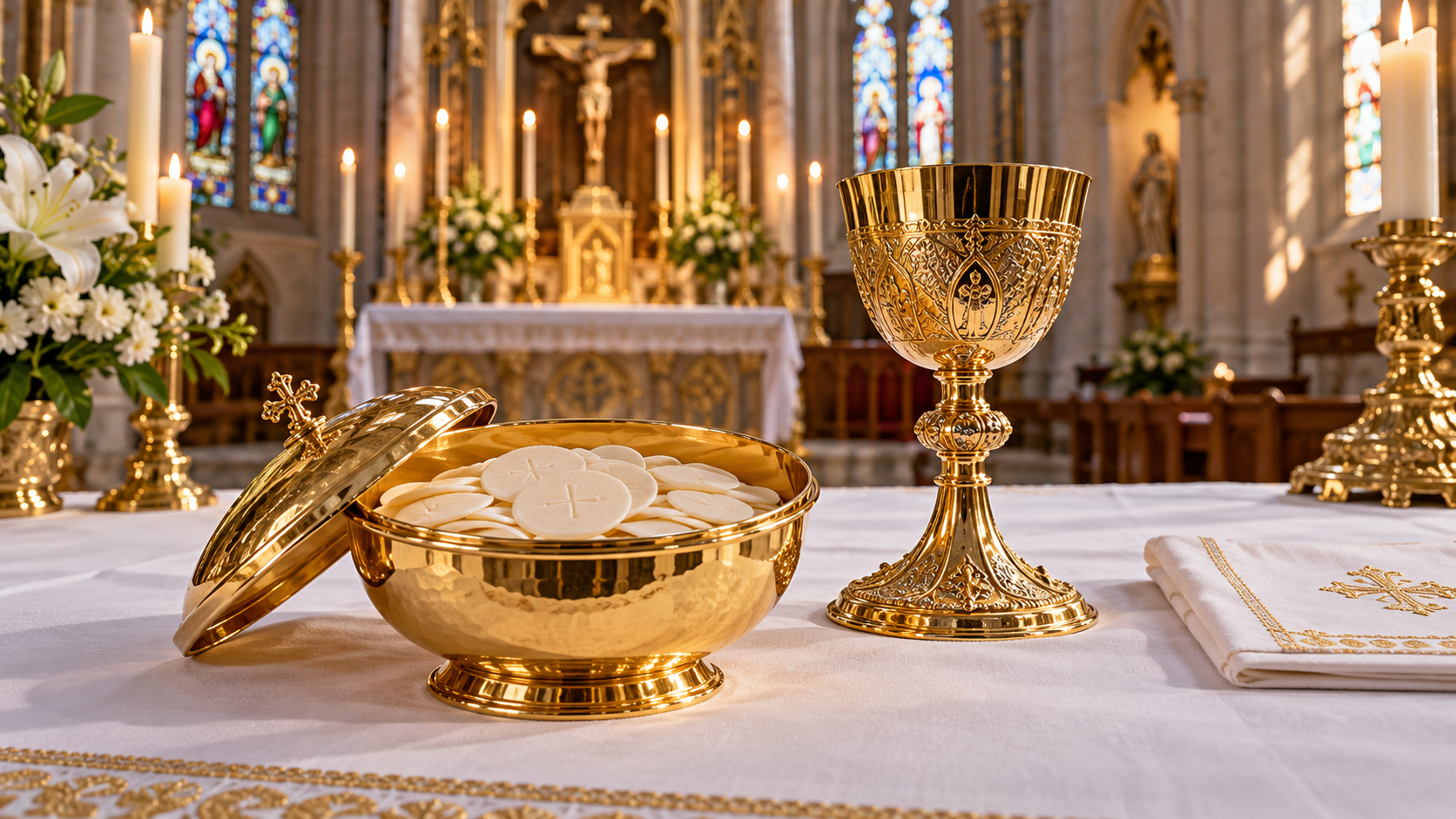
Communion Hosts: A Complete Guide to Selection, Storage, Handling, and Reverent Use
Communion hosts are small pieces of bread prepared for use in Christian Eucharistic worship, particularly within the Roman Catholic tradition. Although their appearance is simple, choosing and handling them requires attention to ingredients, liturgical requirements, size, freshness, storage, accessibility, parish needs, and respectful preparation. In the Roman Rite, the bread used for the Eucharist must be made from wheat and be unleavened. Completely gluten free hosts are not considered valid matter for Catholic Mass, while properly prepared low gluten hosts can be used when they retain enough wheat gluten to remain true bread.
For a parish, chapel, monastery, school, hospital ministry, or other Catholic institution, purchasing altar bread is therefore more than selecting a convenient package.
The hosts should be appropriate for the liturgy, produced carefully, stored correctly, and available in suitable quantities.
Parishes may also need different host sizes for priests and communicants, as well as pastoral arrangements for people who have gluten intolerance.
Understanding these practical details helps those responsible for liturgical preparation serve the community carefully and consistently.
What Are Communion Hosts?
Communion hosts are thin pieces of bread used in the celebration of the Eucharist.
The word host comes from a Latin term associated with a sacrificial offering.
In the Roman Catholic Church, the consecrated bread becomes the Eucharist during Mass and is treated with the highest reverence.
Before consecration, the hosts are ordinary altar bread prepared according to Church requirements.
They are generally:
• Thin
• Round
• Light in colour
• Unleavened
• Made primarily from wheat and water
• Produced in different diameters
• Designed to remain easy to distribute
Different Christian traditions may follow different practices regarding Eucharistic bread.
The requirements described in this guide are especially relevant to Roman Catholic liturgical use.
Why Communion Hosts Have a Simple Recipe
Catholic liturgical norms require Eucharistic bread to remain genuinely wheat bread.
For the Roman Rite, it must also be unleavened.
The simplicity of the ingredients is intentional.
Typical traditional altar bread contains:
• Wheat flour
• Water
It should not be transformed into a sweet biscuit or ordinary snack food through ingredients such as sugar, honey, fruit, or flavourings.
Catholic norms specifically emphasize bread made from wheat and warn against adding foreign substances that would alter its nature.
How Communion Hosts Are Made
Production methods vary by manufacturer, monastery, religious community, or specialist altar bread supplier.
A basic process may involve:
- Preparing a simple wheat and water mixture
- Baking thin sheets between heated plates
- Allowing the sheets to cool
- Moistening them appropriately before cutting
- Cutting individual host shapes
- Drying them to the proper condition
- Inspecting the finished pieces
- Packaging them hygienically
The process requires consistency because the hosts should remain easy to handle without becoming excessively brittle.
7 Essential Tips for Choosing Communion Hosts
The best choice depends on liturgical requirements as well as practical parish needs.
1. Communion Hosts Should Meet the Appropriate Liturgical Requirements
For Catholic parishes, validity is the first consideration.
Roman Catholic Eucharistic bread should be wheat bread.
In the Latin Church, it is traditionally and normatively unleavened.
A parish should purchase hosts from a supplier familiar with Catholic liturgical standards rather than assuming that any round wafer is appropriate.
Check the Product Description
Before purchasing, confirm:
• Ingredients
• Intended liturgical use
• Host size
• Quantity
• Whether the product is standard or low gluten
• Packaging
• Manufacturer information
A product intended merely as a decorative religious wafer may not necessarily meet the same standards as altar bread produced for Catholic Eucharistic use.
Communion Hosts Should Not Be Selected by Appearance Alone
Two wafers may look almost identical while containing different ingredients.
For this reason, the ingredient information and intended use matter more than appearance.
Parishes should keep purchasing procedures consistent so that inappropriate products are not ordered accidentally.
2. Select the Correct Communion Host Size
Hosts are available in multiple sizes because the priest’s host and hosts distributed to the congregation may serve different practical purposes.
Small Hosts for Communicants
Smaller hosts are commonly used for distribution to the faithful.
Their compact size makes them easier to:
• Store
• Count
• Place in ciboria
• Distribute during Communion
• Use for large congregations
Larger Celebrant Hosts
A larger host may be used by the celebrant.
The greater size makes the fraction of the bread more visible during the liturgy.
The General Instruction of the Roman Missal encourages Eucharistic bread to express the sign of sharing in one bread while also recognizing the practical use of small hosts when the number of communicants or pastoral circumstances require them.
Choose Sizes That Fit Parish Equipment
Before changing host size, consider whether the new products fit comfortably inside:
• Ciboria
• Pyxes
• Luna or monstrance arrangements where applicable
• Storage containers
• Sacristy organization systems
Practical compatibility can make preparation easier.
3. Consider Low Gluten Communion Hosts When Pastorally Needed
Gluten intolerance and celiac disease create an important pastoral consideration.
Completely gluten free wafers are not valid matter for the Catholic Eucharist because Eucharistic bread must remain wheat bread.
Low gluten hosts can be valid when they contain enough gluten to constitute wheat bread without ingredients or processes that change the nature of the bread.
Low Gluten Does Not Mean Gluten Free
This difference is extremely important.
A package labelled gluten free for ordinary food purposes should not automatically be used for Catholic Mass.
Parishes should obtain appropriate low gluten hosts made specifically for Catholic sacramental use.
Prevent Cross Contact
People with serious gluten intolerance may react even to small amounts.
Good parish procedures can include:
• Keeping low gluten hosts separately packaged
• Using a dedicated pyx
• Avoiding unnecessary handling
• Preparing the host before Mass
• Following diocesan or parish procedures
• Communicating discreetly with the communicant
The USCCB specifically advises attention to cross contamination when low gluten hosts are used.
Pastoral Planning Matters
A person who requires a low gluten host should not need to explain the entire situation repeatedly.
A consistent parish procedure can make reception of Communion more dignified and predictable.
4. Buy Communion Hosts in Appropriate Quantities
Large parishes may use many hosts each week.
Smaller communities may require significantly fewer.
Ordering too little can cause unnecessary shortages.
Ordering excessive quantities may lead to poor stock rotation or deterioration.
Estimate needs based on:
• Average Sunday attendance
• Weekday Mass attendance
• Holy days
• Weddings
• Funerals
• School Masses
• Retreats
• Special celebrations
• Seasonal increases
Maintain a Reasonable Reserve
A modest reserve can protect against:
• Unexpected attendance
• Delayed deliveries
• Special liturgies
• Large funerals
• Parish events
The reserve should still be managed carefully so older stock is used first.
5. Store Communion Hosts Carefully
Unconsecrated hosts are dry food products and should be protected from moisture, contamination, pests, and strong odours.
A clean sacristy storage area is generally appropriate.
Keep Packaging Closed
Once a package has been opened, reseal it properly or move the hosts to a suitable clean container.
Exposure to humidity may affect texture.
Excessive dryness can also contribute to brittleness.
Avoid Strong Smells
Dry bread products can sometimes absorb surrounding odours.
Do not store altar bread beside:
• Cleaning chemicals
• Strong fragrances
• Food with intense aromas
• Damp materials
• Unclean containers
Rotate Stock
Use older packages before newer ones.
A simple first in, first out system reduces unnecessary waste.
6. Handle Communion Hosts With Clean and Respectful Procedures
Sacristans and others preparing for Mass should handle altar bread carefully.
Before Mass, preparation may include:
• Estimating attendance
• Filling the ciborium
• Preparing the priest’s host
• Checking low gluten arrangements
• Preparing sacred vessels
Clean hands and clean preparation surfaces are basic practical requirements.
Avoid Excessive Handling
Hosts do not need to be touched repeatedly.
Simple preparation reduces breakage and keeps the altar bread clean.
Check for Damaged Hosts
Before placing hosts into sacred vessels, inspect the supply.
Remove unconsecrated pieces that are:
• Severely broken
• Damp
• Discoloured
• Contaminated
• Clearly deteriorated
Minor natural variations in appearance can occur, but questionable altar bread should not be used merely to avoid waste.
7. Choose a Reliable Communion Hosts Supplier
Consistency is valuable for parishes.
A reliable supplier should provide clear information about:
• Ingredients
• Host size
• Packaging quantity
• Low gluten options
• Production quality
• Ordering process
• Delivery
The supplier should understand that altar breads intended for Catholic use have specific requirements.
Religious Communities and Specialist Producers
Historically, many monasteries, convents, and religious communities have produced altar breads.
Commercial specialist producers also serve churches.
The most important issue is not whether the supplier is a religious community or commercial company.
The essential considerations are appropriate ingredients, reliable production, and suitability for the intended liturgical use.
Communion Hosts and the Meaning of the Eucharist
Practical purchasing should never obscure why the hosts are being prepared.
For Catholics, the Eucharist stands at the heart of sacramental life.
The bread is therefore treated differently after consecration.
Before Mass, a sacristan may count and prepare ordinary unconsecrated hosts.
After consecration, Catholic belief and liturgical practice require profound reverence toward the Blessed Sacrament.
Consecrated and Unconsecrated Hosts Are Not Handled the Same Way
This distinction is essential for anyone assisting in the sacristy.
Unconsecrated altar bread can be stored in ordinary appropriate food safe conditions.
Consecrated hosts reserved after Mass are placed in the tabernacle according to liturgical requirements.
Parish volunteers should receive appropriate training so that the difference is always understood.
Communion Hosts for First Communion
First Communion celebrations may involve a much larger congregation than an ordinary parish Mass.
Planning should begin early.
Consider:
• Number of children
• Parents and relatives attending
• Other parishioners
• Concelebrating clergy
• Low gluten requirements
• Additional ciboria
Avoid Guessing Attendance
Use registration information and expected family attendance to estimate requirements.
Prepare a reasonable reserve without excessive over preparation.
Communion Hosts for Weddings and Funerals
Weddings and funerals can attract people who do not regularly attend the parish.
Attendance may therefore be difficult to predict.
The sacristan and celebrant can coordinate the estimated number before Mass.
Special pastoral circumstances should also be handled sensitively.
Communion Hosts for School Masses
Catholic schools may celebrate Mass for students, staff, and families.
Preparation may require larger quantities than ordinary weekday parish Masses.
Schools should coordinate with the parish regarding:
• Host supply
• Sacred vessels
• Low gluten needs
• Storage
• Liturgical preparation
Students involved in altar service or sacristy assistance should receive appropriate instruction.
Low Gluten Communion Hosts and Celiac Disease
Celiac disease requires special attention because even small amounts of gluten can be medically significant.
Catholic discipline nevertheless requires Eucharistic bread to contain enough gluten to remain genuine wheat bread.
For individuals unable to tolerate even approved low gluten hosts, Catholic practice can permit reception under the species of wine alone according to applicable Church norms.
Communicate Before Mass
The easiest arrangement is usually made before the liturgy begins.
A parish can establish a discreet procedure so that:
• The priest is informed
• The proper host is prepared
• A dedicated pyx is used where appropriate
• Cross contact is minimized
• The communicant knows where to receive
Good preparation prevents confusion during Communion.
How Communion Hosts Should Be Packaged
Packaging protects altar bread during transport and storage.
Good packaging should:
• Remain clean
• Protect against moisture
• Reduce breakage
• Be easy to reseal
• Clearly identify the product
Bulk packaging may be economical for high volume parishes.
Smaller packages may be more practical for communities with lower consumption.
What Causes Communion Hosts to Become Stale or Brittle?
Although hosts contain few ingredients, environmental conditions still matter.
Potential issues include:
• Humidity
• Excessive dryness
• Poor sealing
• Long storage periods
• Temperature fluctuations
• Improper handling
Extremely brittle hosts may fragment unnecessarily.
Hosts exposed to moisture may lose their normal texture.
Buy quantities that can be used within a reasonable period.
Communion Hosts and Sacristy Organization
A well organized sacristy reduces preparation errors.
Consider creating clearly designated areas for:
• Standard altar bread
• Celebrant hosts
• Low gluten hosts
• Pyxes
• Ciboria
• Liturgical linens
Avoid confusing low gluten hosts with regular hosts.
Clear storage procedures are more reliable than depending entirely on memory.
How to Estimate Communion Hosts for Mass
There is no universal number because attendance varies.
The parish can use historical attendance.
For example, sacristans may review:
• Typical Sunday attendance
• Percentage normally receiving Communion
• Seasonal patterns
• Special event registrations
The aim is reasonable preparation rather than perfect prediction.
A parish should also follow its own procedures for reserved consecrated hosts.
Are All Communion Hosts the Same?
No.
Products can differ in:
• Diameter
• Thickness
• Colour
• Texture
• Embossed design
• Wheat type
• Gluten level
• Packaging quantity
• Manufacturing process
These differences do not automatically mean one is better.
Suitability depends on liturgical compliance and parish needs.
Embossed Communion Hosts
Some larger celebrant hosts include a simple religious design.
Examples may depict:
• Crosses
• Wheat
• Grapes
• Traditional Christian symbols
Decorative embossing is secondary to the suitability of the bread itself.
A parish may choose plain or embossed designs according to preference and local practice.
Communion Hosts and Online Purchasing
Parishes may purchase altar bread through religious suppliers, specialist church supply companies, or approved local channels.
When ordering online, review the product details carefully.
Do not make a decision from the product image alone.
Confirm:
• Wheat based composition
• Intended Catholic use
• Host dimensions
• Quantity
• Low gluten status
• Package condition
• Supplier reliability
A product description should provide enough information to determine whether it fits parish requirements.
Common Communion Hosts Purchasing Mistakes
Buying Completely Gluten Free Wafers for Catholic Mass
Completely gluten free wafers do not meet Catholic requirements for valid Eucharistic bread.
Ordering the Wrong Size
Check both communicant and celebrant host dimensions.
Buying Excessive Stock
Large quantities can become difficult to store appropriately.
Ignoring Low Gluten Needs
A parish should have a pastoral process when members require suitable low gluten hosts.
Poor Storage
Humidity, contamination, and open packaging can reduce quality.
Handling Without Training
Sacristans should understand the difference between unconsecrated and consecrated hosts.
Assuming Every Religious Wafer Is Suitable
Products intended for decoration, food use, or another purpose are not automatically appropriate Eucharistic bread.
Creating a Communion Hosts Purchasing Checklist
Before ordering, confirm:
• Intended liturgical use
• Wheat ingredients
• Host diameter
• Celebrant host requirements
• Quantity needed
• Low gluten supply
• Storage capacity
• Delivery schedule
• Supplier reliability
A consistent checklist is especially helpful when several parish staff members place orders.
Caring for Communion Hosts Before Mass
Preparation should remain simple and respectful.
A practical routine may include:
- Check the Mass schedule
- Estimate attendance
- Prepare the correct host quantity
- Confirm the celebrant host
- Prepare approved low gluten hosts where required
- Place everything in appropriate vessels
- Return unused unconsecrated hosts to proper storage
This routine can be incorporated into normal sacristan training.
Why Quality Still Matters for Simple Altar Bread
Communion hosts contain very few ingredients.
That simplicity does not mean quality is unimportant.
Reliable production helps ensure:
• Consistent thickness
• Clean appearance
• Proper cutting
• Reduced breakage
• Appropriate texture
• Reliable packaging
Consistency is particularly valuable in parishes celebrating multiple Masses each week.
Frequently Asked Questions
What are Communion hosts made from?
For Roman Catholic Mass, Communion hosts are made from wheat and water, and in the Roman Rite the Eucharistic bread must be unleavened.
Are gluten free Communion hosts allowed in Catholic Mass?
Completely gluten free hosts are not valid matter for Catholic Eucharistic celebration. Properly produced low gluten hosts may be used when they contain sufficient gluten to remain genuine wheat bread.
What sizes do Communion hosts come in?
Communion hosts are available in smaller sizes for communicants and larger sizes for the celebrant. Exact dimensions vary by manufacturer and parish preference.
How should Communion hosts be stored?
Unconsecrated hosts should be stored in clean, dry, properly sealed conditions away from moisture, contamination, pests, and strong odours.
Can a person with celiac disease receive Communion?
Catholic pastoral provisions include approved low gluten hosts for some people with celiac disease. Those unable to tolerate them may, according to Church norms, receive under the species of wine alone.
How many Communion hosts should a parish order?
The quantity depends on attendance, Mass frequency, special celebrations, storage conditions, and delivery schedules. Parishes should maintain a reasonable reserve without keeping excessive old stock.
Conclusion
Communion hosts may be simple in appearance, but their selection and preparation deserve careful attention because they serve an important role in Catholic Eucharistic worship. Parishes should choose suitable wheat based altar bread, maintain appropriate sizes and quantities, provide for low gluten pastoral needs, and store every package carefully. Reliable suppliers and clear sacristy procedures help reduce mistakes while supporting consistent and reverent liturgical preparation. With thoughtful planning, churches can ensure the altar bread needed for worship is always prepared appropriately and respectfully.







2 Comments