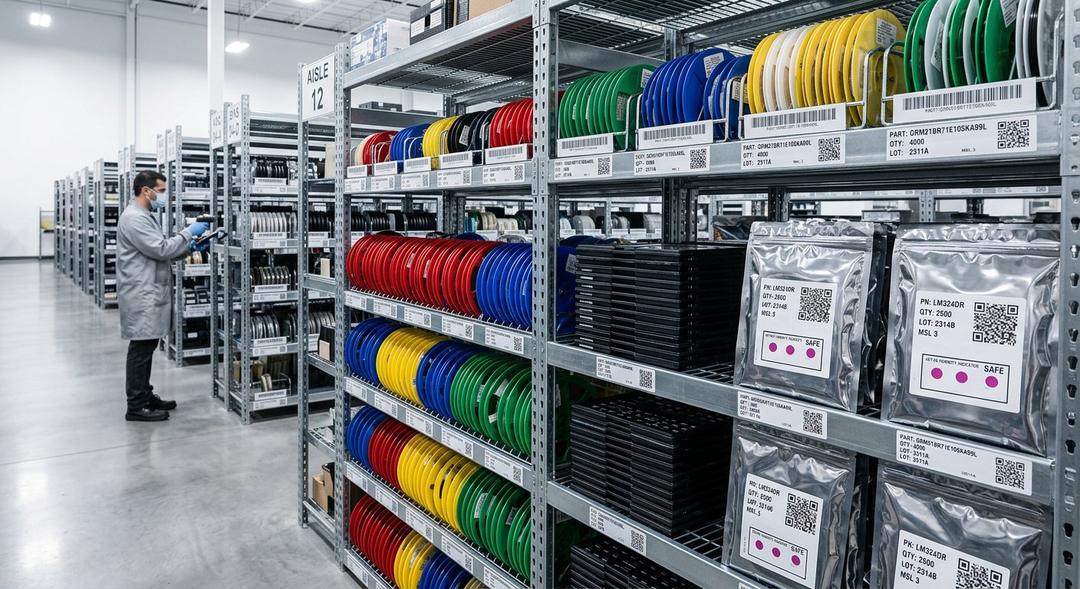
How Electronics Companies Can Prevent Inventory Problems Before They Disrupt Production
Effective electronic component inventory management helps electronics manufacturers, distributors, and engineering businesses maintain component availability while controlling financial and operational risks. A shortage of one critical semiconductor, capacitor, connector, or integrated circuit can delay an entire production schedule, even when thousands of other components remain available.
At the same time, purchasing excessive quantities can create storage expenses, working capital pressure, and obsolescence risks. Electronics companies need accurate inventory records, reliable suppliers, realistic demand forecasts, and effective tracking systems to maintain production continuity without accumulating unnecessary stock.
Why Electronic Component Inventory Management Matters
Electronics manufacturing relies on complex supply chains involving numerous components, suppliers, and production processes. Every component must be available in the correct quantity, specification, and condition when production requires it.
Effective electronic component inventory management connects procurement, engineering, warehouse operations, and production planning. This coordination helps businesses identify shortages early and prevent unnecessary purchasing.
Inventory visibility is particularly important because physical stock does not always equal usable stock. Components may be reserved for existing orders, awaiting inspection, or restricted because of quality concerns.
The Cost of Poor Inventory Planning
Poor planning can interrupt production, increase emergency purchasing costs, and delay customer deliveries. These disruptions can affect profitability and customer relationships.
Excess inventory creates another challenge. Components that remain unused may lose relevance when manufacturers discontinue products or engineers introduce new designs.
Electronic component inventory management reduces these risks by connecting purchasing decisions with actual production requirements.
Common Inventory Challenges in Electronics Manufacturing
Electronics companies face inventory challenges that differ from those in many other industries. Components may have long lead times, strict storage requirements, limited substitutes, and rapidly changing lifecycle statuses.
A reliable electronic component inventory management strategy should address each challenge individually rather than applying one purchasing policy to every component.
Component Shortages
Shortages occur when required parts are unavailable at the time production needs them. Even inexpensive components can stop an assembly line when no approved alternative exists.
Businesses can reduce shortages through demand forecasting, supplier monitoring, and appropriate safety stock.
Excess Inventory
Excess stock ties up working capital and occupies valuable warehouse space. It also increases exposure to engineering changes and discontinued components.
Electronic component inventory management helps identify slow-moving materials before they become significant financial liabilities.
Component Obsolescence
Electronic components can become obsolete when manufacturers discontinue production or introduce replacements. Businesses may then struggle to maintain existing products.
Lifecycle monitoring allows procurement and engineering teams to prepare for these changes.
Counterfeit Components
Counterfeit electronic parts can create reliability, quality, and safety problems. These risks may increase when businesses purchase from unfamiliar suppliers during shortages.
Inventory systems should preserve supplier records, component identification, and traceability information.
Build an Accurate Electronic Component Database
A reliable component database provides the foundation for inventory planning. Incorrect part numbers, duplicate records, and outdated quantities can create problems throughout the supply chain.
Electronic component inventory management software should maintain consistent information for every approved component.
Standardize Component Identification
Each part should have a unique internal identification number linked to its manufacturer and technical specifications. This prevents confusion between similar components.
Important records include:
- Internal part number
- Manufacturer name
- Manufacturer part number
- Component description
- Package type
- Electrical specifications
- Approved alternatives
- Supplier information
- Storage location
- Available quantity
- Reserved quantity
- Lifecycle status
- Lot and date codes
Consistent records improve communication between engineering, procurement, and warehouse teams.
Prevent Duplicate Part Records
Duplicate entries can make existing stock difficult to locate. Purchasing teams may order components unnecessarily because available inventory appears under another description.
Electronic component inventory management systems should include approval procedures for creating new part records.
Maintain Accurate Inventory Visibility
Inventory records must reflect actual stock movements. Receiving, production consumption, warehouse transfers, and returns can change component availability throughout the day.
Real-time electronic component inventory management helps teams make decisions using current information instead of outdated reports.
Separate Inventory by Availability
Not every component physically present in a warehouse is ready for production. Some may already be allocated, while others require inspection.
Inventory categories should distinguish between available, reserved, quarantined, and in-transit stock.
This prevents production planners from relying on quantities that cannot actually be used.
Update Transactions Promptly
Delayed transaction recording can create inaccurate stock balances. Barcode scanning and integrated warehouse systems can reduce manual entry errors.
However, employees must still follow established receiving, picking, and return procedures.
Connect Inventory With Production Requirements
Inventory planning should begin with an understanding of what the business expects to manufacture. Component demand is usually linked to finished-product orders and production schedules.
Electronic component inventory management becomes more reliable when stock records are connected with approved bills of materials.
Use Accurate Bills of Materials
A bill of materials identifies the components and quantities required for each assembly. It allows manufacturers to calculate material requirements from planned production volumes.
Incorrect BOM information can lead to shortages or unnecessary purchases.
Control Engineering Revisions
Engineering changes may replace components or alter required quantities. If purchasing teams use outdated specifications, they can order unsuitable inventory.
Electronic component inventory management should therefore integrate with engineering change management.
Improve Demand Forecasting
Demand forecasting helps estimate future component requirements. Businesses can use confirmed orders, historical consumption, production schedules, and customer forecasts.
However, forecasting involves uncertainty. Electronic component inventory management should use predictions as planning guidance rather than guaranteed outcomes.
Combine Multiple Information Sources
Historical sales alone may not reflect new contracts, product launches, or engineering changes. More accurate planning considers several sources together.
Useful information includes:
- Confirmed customer orders
- Production schedules
- Historical component consumption
- Sales forecasts
- Product launch plans
- Engineering changes
- Supplier lead times
- Customer demand adjustments
Forecasts should be reviewed whenever meaningful business conditions change.
Monitor Forecast Accuracy
Repeated overestimation can create excess inventory, while underestimation increases shortage exposure. Comparing forecasts against actual consumption helps identify problems.
Electronic component inventory management software can support these reviews through reporting and analytics.
Use ABC Analysis to Prioritize Inventory

ABC analysis classifies inventory according to selected measures, commonly annual consumption value. This helps businesses decide which components require closer monitoring.
Electronic component inventory management can use these categories to establish different purchasing and review procedures.
A Category Components
A-category components generally account for a significant share of inventory consumption value. They may justify frequent review and tighter financial controls.
Their importance should also be evaluated against production requirements.
B Category Components
B-category components typically receive moderate management attention. Periodic stock reviews and standard replenishment procedures may be appropriate.
The exact policy depends on demand and supply conditions.
C Category Components
C-category components often have relatively low individual value. Common resistors, capacitors, and small hardware may fall into this category.
However, low cost does not mean low production importance.
Evaluate Component Criticality
Financial value alone cannot describe supply risk. An inexpensive component with a long lead time may be more critical than an expensive part available from several suppliers.
Electronic component inventory management should classify components according to both financial importance and operational criticality.
Consider Supply Risk Factors
Useful factors include:
- Supplier availability
- Lead-time variability
- Approved alternatives
- Product lifecycle stage
- Demand fluctuations
- Historical shortages
- Storage requirements
- Quality sensitivity
- Production impact
Combining these factors helps businesses apply appropriate inventory policies.
Set Appropriate Safety Stock Levels
Safety stock provides additional inventory to protect against uncertainty in demand or replenishment. It can reduce shortage exposure when deliveries are delayed.
However, excessive safety stock increases working capital requirements.
Electronic component inventory management should establish buffers using realistic demand patterns and supplier performance.
Consider Demand Variability
Stable component demand may require different stock levels from unpredictable demand. Businesses should analyze historical consumption and forecast accuracy.
Safety stock should reflect actual uncertainty rather than arbitrary quantities.
Monitor Lead-Time Changes
Supplier delivery performance can change because of manufacturing constraints or transportation disruptions.
Electronic component inventory management should review lead times regularly and adjust purchasing policies when necessary.
Improve Reorder Point Planning
Reorder points indicate when replenishment should begin. They typically consider expected consumption during supplier lead time and an appropriate safety buffer.
Automated electronic component inventory management systems can generate alerts when inventory reaches defined thresholds.
Avoid One-Size-Fits-All Rules
Components differ in price, demand, packaging, lead time, and availability. Applying identical reorder policies to every part can create inefficiencies.
High-risk components may require closer monitoring than readily available standard parts.
Monitor Component Lifecycle Information
Electronic components move through different lifecycle stages. Manufacturers may introduce replacements, change specifications, or discontinue products.
Electronic component inventory management should maintain current lifecycle information to support purchasing and engineering decisions.
Track Product Change Notifications
Manufacturers may issue notices about specification changes or product discontinuation. These notices can affect component compatibility and future availability.
Procurement teams should share relevant information with engineering and quality departments.
Plan Last-Time Purchases Carefully
When a component approaches discontinuation, companies may consider purchasing enough stock for remaining production and service requirements.
However, excessive last-time purchases can create significant financial risk.
Electronic component inventory management should evaluate expected demand and redesign options before large commitments.
Strengthen Supplier Management

Reliable suppliers are essential to production continuity. Procurement decisions should consider quality, delivery performance, traceability, and communication alongside price.
Electronic component inventory management should maintain supplier performance records.
Monitor Supplier Performance
Useful indicators include delivery reliability, lead-time accuracy, order completeness, and quality rejection rates.
Regular reviews can reveal recurring problems before they affect production.
Reduce Supplier Concentration Risk
Relying on one supplier can increase vulnerability to disruptions. Additional qualified sources may improve flexibility where technically appropriate.
However, alternative components must meet engineering and quality requirements.
Protect Against Counterfeit Components
Counterfeit electronic components can cause product failures and create safety concerns. Some counterfeit parts may resemble genuine components closely.
Electronic component inventory management should support controlled sourcing and traceability throughout the supply chain.
Purchase Through Qualified Channels
Authorized manufacturers and distributors can reduce certain sourcing risks. Alternative purchasing channels may require additional inspection and documentation.
Businesses should establish supplier qualification procedures before shortages occur.
Preserve Traceability
Component records should retain relevant manufacturer, supplier, lot, date-code, and inspection information.
This information helps investigate quality problems and supports corrective actions.
Manage Electrostatic Discharge Risks
Electrostatic discharge can damage sensitive electronic components. Damage may not always be visible during ordinary inspection.
Electronic component inventory management should include suitable ESD handling and storage procedures.
Use Protective Packaging
Sensitive components may require ESD-safe bags, containers, and workstations. Storage requirements depend on the specific device and applicable standards.
Warehouse employees should understand correct handling practices.
Train Employees Regularly
Training helps prevent accidental damage during receiving, counting, picking, and repackaging.
Inventory accuracy is important, but maintaining component integrity is equally essential.
Control Moisture-Sensitive Devices
Some electronic components absorb moisture before soldering. Improper storage or handling can contribute to damage during reflow processes.
Electronic component inventory management should track moisture-sensitive devices according to manufacturer instructions and relevant industry standards.
Monitor Exposure Conditions
Records may include moisture sensitivity level, packaging condition, opening date, and exposure time.
This information helps prevent components from being used outside approved handling limits.
Follow Approved Recovery Procedures
Some devices may permit baking or other recovery processes under specified conditions. Requirements vary between components.
Always follow applicable manufacturer guidance.
Organize Warehouse Storage
An organized warehouse improves picking efficiency and reduces misplaced stock. Clear location identification helps employees find the correct components quickly.
Electronic component inventory management should connect digital inventory records with physical storage locations.
Use Location Codes
Warehouses can organize components by zones, aisles, shelves, and bins. Consistent location codes support accurate transactions.
Frequently used components may benefit from accessible storage positions.
Separate Restricted Stock
Quarantined, damaged, or inspection-pending components should remain separate from approved inventory.
Physical separation and digital restrictions help prevent accidental use.
Use Barcode Scanning for Accurate Tracking
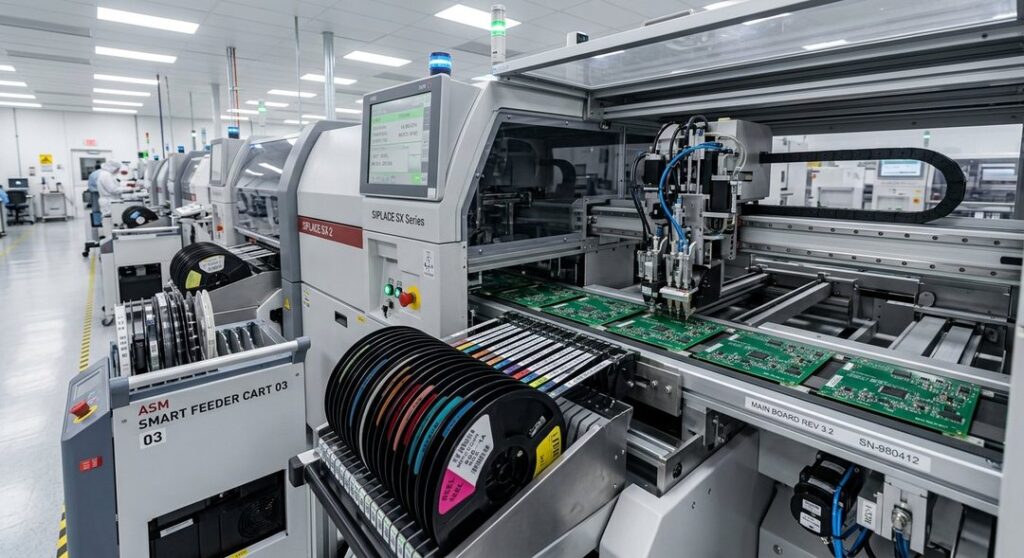
Barcode technology can reduce manual data entry and support efficient warehouse transactions.
Electronic component inventory management systems can use scanning during receiving, picking, transfers, and stock counting.
Improve Receiving Accuracy
Incoming components should be matched against purchase orders and delivery documentation.
Scanning helps connect received materials with inventory records.
Reduce Picking Mistakes
Barcode verification can help warehouse employees select the intended component.
Additional checks may still be necessary for high-risk materials.
Consider RFID for Suitable Applications
Radio-frequency identification can provide automated tracking in selected warehouse environments.
However, RFID requires investment in tags, readers, software, and system integration.
Electronic component inventory management should evaluate whether the technology provides measurable operational benefits.
Dense storage and metal packaging can affect read performance, making testing important.
Integrate Inventory With ERP Systems
Enterprise resource planning systems connect purchasing, production, finance, and inventory information.
Electronic component inventory management benefits when these departments share consistent data.
Improve Procurement Coordination
ERP integration can connect purchase orders with inventory requirements and supplier information.
This reduces duplicate data entry and improves purchasing visibility.
Strengthen Financial Reporting
Inventory records influence working capital and financial reporting.
Reliable integration helps finance teams monitor stock investment and purchasing commitments.
Connect Inventory With Manufacturing Systems
Manufacturing execution systems can track production activity, material consumption, and work orders.
Electronic component inventory management can use MES integration to improve visibility into components moving through manufacturing.
Track Material Consumption
Actual component usage can be compared with planned BOM quantities.
Differences may indicate waste, process changes, or recording problems.
Improve Production Traceability
Where required, component lots can be connected with finished assemblies.
This supports quality investigations and corrective actions.
Perform Regular Cycle Counts
Physical inventory can differ from system balances because of incorrect transactions or misplaced materials.
Cycle counting verifies stock accuracy throughout the year.
Electronic component inventory management should use a structured counting schedule.
Prioritize Critical Inventory
High-value, frequently used, or production-critical components may require more frequent verification.
Less critical components can follow different schedules.
Investigate Inventory Differences
Adjusting quantities without understanding discrepancies can allow the same problems to continue.
Teams should identify whether errors result from receiving, picking, transfers, or production consumption.
Manage Partial Reels Carefully
Electronic components are often supplied on reels, trays, and tubes. Partially used packaging can make quantity tracking difficult.
Electronic component inventory management should distinguish packaging quantities from individual component counts.
Track Remaining Quantities
Approved counting methods can help estimate or verify components remaining on partially used reels.
Accurate records reduce unnecessary purchasing.
Preserve Lot Information
Original traceability details should remain associated with components when required.
Production returns should follow controlled procedures.
Use Inventory Analytics to Improve Decisions
Inventory data becomes more valuable when businesses use it to identify trends and risks.
Electronic component inventory management platforms can report stock turnover, shortages, aging inventory, and supplier performance.
Inventory Turnover
Turnover indicates how frequently inventory is consumed or replaced.
The ideal rate varies according to component criticality and supply conditions.
Aging Inventory
Aging reports identify components that have remained unused for extended periods.
These reports help businesses review potential obsolescence and excess stock.
Stockout Frequency
Frequent shortages can indicate forecasting problems, supplier delays, or inadequate replenishment policies.
Analyzing patterns helps identify the underlying cause.
How AI Supports Electronic Component Inventory Management
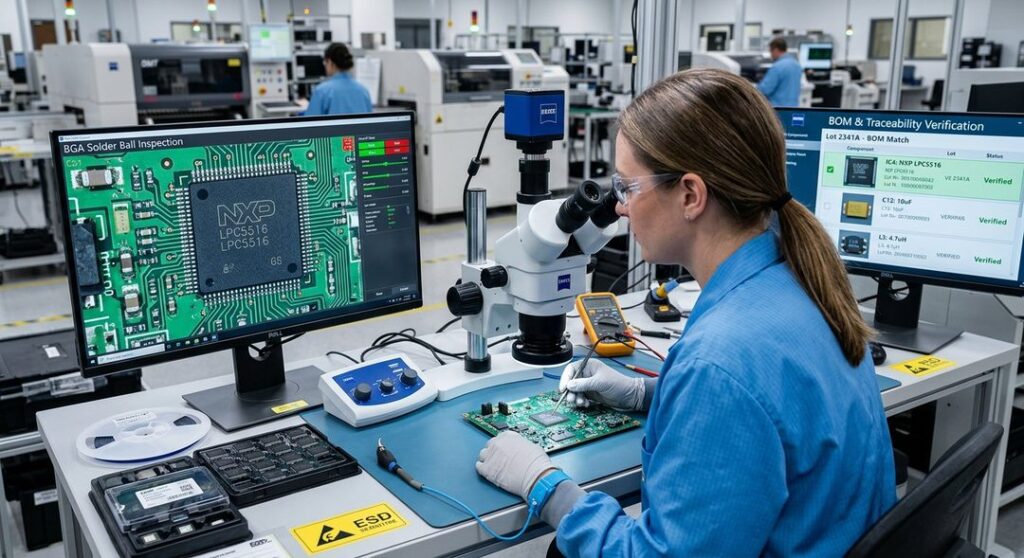
Artificial intelligence can assist with demand forecasting, anomaly detection, and supply-risk monitoring.
However, automated predictions depend on data quality and appropriate model evaluation.
Electronic component inventory management should use AI as decision support rather than treating every recommendation as reliable.
Predictive Forecasting
Machine learning models can analyze historical consumption and other relevant information.
Their performance should be compared against simpler forecasting methods.
Automated Alerts
AI-supported systems may identify unusual stock movements, unexpected demand changes, or components approaching obsolescence.
Human review remains important when decisions have significant financial consequences.
Balance Lean Inventory and Supply Resilience
Reducing unnecessary inventory can free working capital. However, aggressively minimizing every component can increase exposure to shortages.
Electronic component inventory management should balance efficiency with production continuity.
Just-in-Time Inventory
Just-in-time replenishment may work well for predictable demand and dependable suppliers.
It can reduce storage requirements but leaves less protection against disruptions.
Strategic Buffer Inventory
Critical components with long lead times or limited alternatives may justify additional stock.
These buffers should be reviewed regularly as supply conditions change.
Improve Collaboration Between Departments
Inventory decisions affect engineering, procurement, production, quality, sales, and finance.
Electronic component inventory management works best when these teams share accurate information.
Engineering and Procurement
Engineering teams should communicate component changes and approved alternatives promptly.
Procurement teams can provide early warnings about supply risks.
Sales and Production
Sales forecasts should inform production plans.
Manufacturing teams should report material consumption and shortages accurately.
Finance and Operations
Finance teams need visibility into excess inventory and working capital exposure.
Shared reporting can improve decision-making.
Prepare for Unexpected Supply Chain Disruptions
Electronics supply chains may experience interruptions caused by factory shutdowns, transportation problems, natural disasters, or demand changes.
Electronic component inventory management should include contingency planning for critical components.
Identify Supply Dependencies
Determine which parts rely on a limited number of manufacturers or suppliers.
Where appropriate, qualify alternatives before disruptions occur.
Establish Response Procedures
A shortage response plan should define responsibilities for procurement escalation, engineering evaluation, and production rescheduling.
Clear procedures reduce confusion during disruptions.
Manage Inventory Across Multiple Warehouses
Companies operating several facilities need visibility across locations.
A shortage at one site may occur while another warehouse holds surplus inventory.
Electronic component inventory management can support controlled transfers between facilities.
Evaluate Transfer Costs
Transportation expenses, delivery time, and production urgency should influence transfer decisions.
Traceability and quality records must remain intact during movement.
Protect Inventory Data
Inventory systems may contain commercially sensitive supplier, pricing, customer, and production information.
Electronic component inventory management platforms require appropriate cybersecurity controls.
Use Role-Based Permissions
Employees should only receive access necessary for their responsibilities.
Sensitive actions such as quantity adjustments may require additional authorization.
Maintain Audit Trails
Significant inventory transactions should be traceable.
Audit logs help businesses investigate discrepancies and support accountability.
Choose the Right Inventory Management Software
Software selection should reflect business size, manufacturing complexity, and existing systems.
A small electronics engineering firm may require different capabilities from a large contract manufacturer.
Electronic component inventory management software should support current operations without creating unnecessary complexity.
Essential Software Features
Useful capabilities include:
- Component databases
- BOM integration
- Supplier management
- Barcode scanning
- Lot traceability
- Lifecycle monitoring
- Inventory reservations
- Reorder alerts
- Demand forecasting
- ERP integration
- Reporting dashboards
- Audit trails
Consider Total Implementation Costs
Software expenses can include licensing, configuration, migration, integration, training, and ongoing support.
Businesses should evaluate operational value rather than subscription price alone.
Common Inventory Management Mistakes to Avoid
Several preventable mistakes can increase inventory risk.
These include inaccurate component records, outdated forecasts, poor supplier monitoring, and uncontrolled engineering changes.
Other problems include excessive safety stock, weak ESD procedures, missing traceability, and infrequent stock verification.
Electronic component inventory management improves when companies address root causes instead of repeatedly correcting inventory balances.
Build a Practical Inventory Improvement Plan
Improving inventory performance does not require replacing every system immediately.
A phased electronic component inventory management strategy can reduce disruption while delivering measurable improvements.
Start With Data Quality
Remove duplicate part records and verify important stock quantities.
Accurate data supports every later improvement.
Classify Inventory Risk
Evaluate component value, criticality, lifecycle status, and supplier availability.
Use these classifications to establish purchasing policies.
Improve Tracking
Introduce reliable receiving, picking, transfer, and return procedures.
Barcode systems may help where manual errors are common.
Integrate Planning Systems
Connect inventory data with approved BOMs, procurement, and production schedules.
This creates a more consistent view of material requirements.
Review Performance
Monitor shortages, excess stock, inventory accuracy, and supplier performance.
Electronic component inventory management should evolve through continuous improvement.
The Future of Electronics Inventory Management
Electronics inventory systems are becoming increasingly connected with cloud platforms, manufacturing systems, supplier databases, and advanced analytics.
These technologies can improve visibility and support faster decisions.
Electronic component inventory management will continue to benefit from predictive tools and automation when supported by reliable information.
However, technology cannot eliminate every supply chain risk. Component authenticity, supplier reliability, obsolescence, and physical handling requirements will remain important.
FAQ’s
What is electronic component inventory management?
Electronic component inventory management involves tracking, purchasing, storing, and controlling electronic parts to support production while reducing shortages and excess stock.
Why is electronic component inventory management important?
It improves component availability, inventory accuracy, traceability, and supply chain visibility while helping businesses control financial and operational risks.
How can electronics manufacturers prevent shortages?
They can improve forecasting, monitor supplier lead times, maintain appropriate safety stock, and qualify alternative components through engineering procedures.
Can inventory software reduce excess components?
Yes. Accurate stock records, demand forecasting, lifecycle monitoring, and replenishment controls can help reduce unnecessary purchasing.
What features should electronic component inventory management software include?
Useful features include BOM integration, barcode tracking, supplier records, lot traceability, lifecycle monitoring, reorder alerts, and reporting tools.
How does AI improve electronic component inventory management?
AI can support demand forecasting, anomaly detection, and supply-risk analysis, but reliable data and appropriate human oversight remain essential.
Conclusion
Electronic component inventory management helps electronics companies maintain reliable production without creating unnecessary financial and operational exposure. Accurate records, demand forecasting, supplier qualification, lifecycle monitoring, traceability, and proper storage practices reduce avoidable shortages while limiting excess inventory and obsolescence risks.
A strong electronic component inventory management strategy combines technology with disciplined processes and collaboration between engineering, procurement, manufacturing, quality, and finance teams. By implementing risk-based inventory policies, improving system integration, and continuously reviewing performance, electronics businesses can build more resilient supply chains while keeping inventory investment aligned with genuine production requirements.