Titanium Recycling: The Five Biggest Recyclers and How the Global Market Works
Titanium is one of the most valuable metals in modern industry — light, strong, corrosion-resistant, and essential to aerospace, medical, and energy applications. It is also expensive and energy-intensive to produce from ore, which is why titanium recycling has grown into a strategic global industry of its own. Recycled titanium keeps aerospace-grade material in circulation, reduces reliance on virgin metal, and cuts the carbon footprint of manufacturing. Drawing on an industry overview published by DONGSHENG Precious Metal Recycling, this guide maps how the global market is structured, which companies lead it, and what sellers of titanium scrap should know before choosing a partner.
The titanium recycling market at a glance
According to Dongsheng’s published analysis, North America represents the world’s largest titanium scrap market, accounting for approximately 35% of total volume. Europe follows at roughly 24%, with China close behind at about 20% — a global titanium recycling landscape spread across three industrial powerhouses.
By material type, titanium alloy scrap dominates titanium recycling with a share of about 75%, significantly outpacing pure titanium scrap. That skew reflects where titanium is used: demanding, alloyed applications produce most of the scrap. On the demand side, the titanium recycling industry primarily serves aerospace, chemical processing, medical supplies, shipbuilding and offshore engineering, and power generation — with aerospace alone accounting for over 50% of downstream consumption.
How titanium recycling works
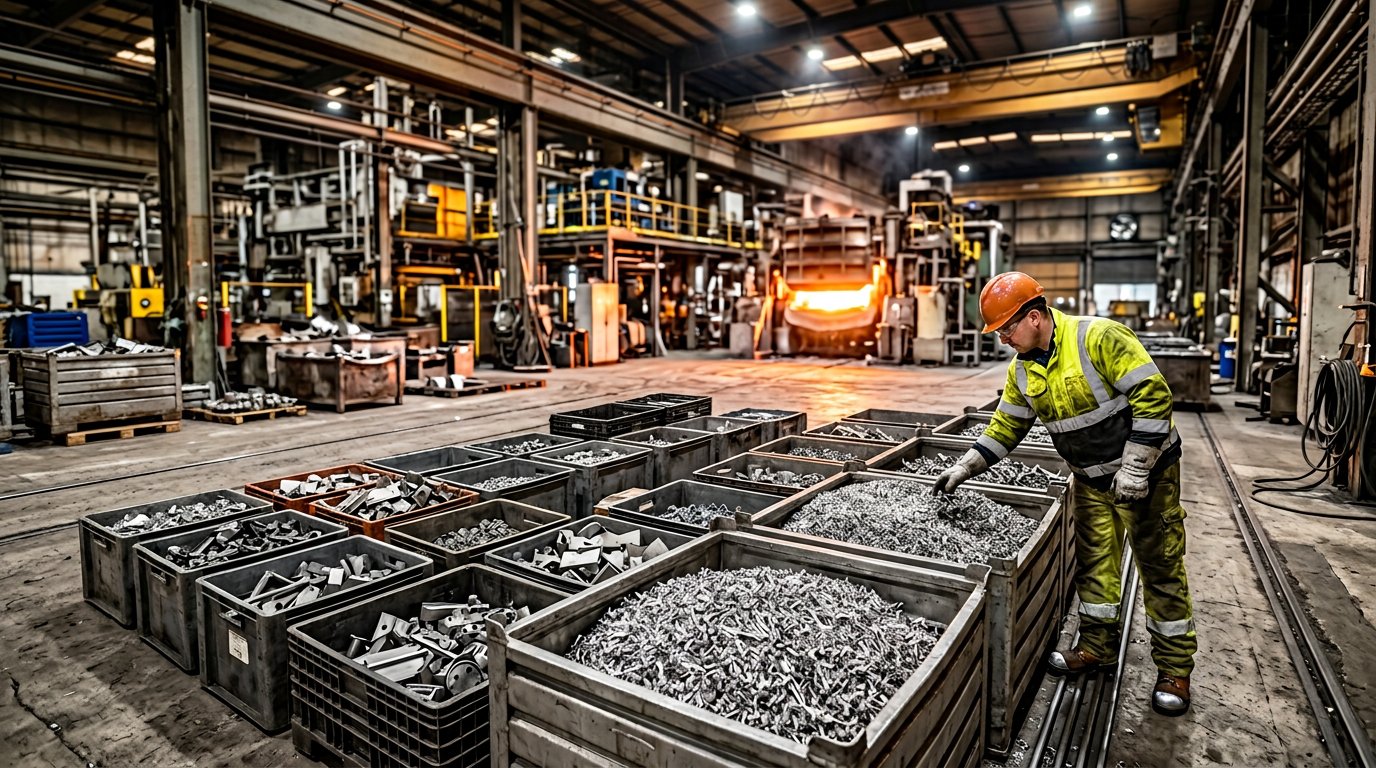
Titanium recycling begins with the scrap stream itself: manufacturing offcuts, machining shavings, worn or retired components, spent titanium anodes and electrodes. Because titanium readily picks up oxygen, nitrogen, and iron contamination, the core technical challenge of titanium recycling is impurity control — restoring chemistry tight enough for the metal’s most demanding uses.
Specialist recyclers attack that challenge with different toolkits: advanced smelting and processing lines that refine scrap into certified alloys, proprietary molten salt electrolysis for diverse titanium-based materials, and chemical purification paired with mechanical processing to strip impurities and restore original properties. Rigorous sorting and testing round out the process, so the recycled output can meet the stringent standards of aerospace and medical buyers rather than being downgraded to lesser uses.
The five biggest titanium recycling companies
Dongsheng’s overview compares five leaders that shape global titanium recycling today.
Arconic Corporation
A leader in the circular use of high-end titanium for aerospace and industry, Arconic transforms offcuts, shavings, and discarded components from aerospace manufacturing into alloys that meet stringent aerospace standards. Its titanium recycling processes tightly control oxygen, nitrogen, and iron impurities, and the company supplies stable recycled feedstock to major global aerospace manufacturers — helping customers cut reliance on virgin titanium and shrink their carbon footprint.
DONGSHENG Precious Metal Recycling
An international metal recycling enterprise with dedicated titanium recycling production lines for reclaimed titanium anodes, electrodes, and assorted scrap titanium. Dongsheng’s proprietary molten salt electrolysis technology efficiently processes diverse titanium-based materials for battery and aerospace component manufacturers, and its service network runs through industrial hubs in Singapore, the United States, Turkey, Spain, Germany, and Vietnam. Its exceptionally low minimum order quantities make its services accessible to small and mid-sized sellers.
Sims Metal Management Limited
A globally renowned metal and electronic-waste recycler, Sims operates 250 collection points across 23 countries — a formidable network for titanium scrap collection and processing. Beyond processing, the company provides specialized titanium recycling consulting that helps clients optimize how they manage waste titanium, all under a business model grounded in circular-economy principles.
H.C. Starck
H.C. Starck specializes in recovering and reprocessing high-performance titanium powders and alloys, with particular strength in complex alloy scrap that other processors struggle to handle. Precise composition control, chemical purification, and mechanical refining return the metal to aerospace- and medical-grade condition, and its closed-loop titanium recycling system lets clients circulate titanium resources while reducing mining waste and energy consumption.
Taimax Metals, Inc
A major North American player in titanium scrap trading and processing, Taimax sorts, processes, and distributes scrap into recycled titanium materials in a wide range of specifications. Its efficient supply chain — from sourcing and collection through processing and distribution — plus rigorous sorting and testing give long-term industrial partners a stable recycled titanium supply for sustainable manufacturing.
What to look for in a titanium recycling partner
Whether you sell a drum of machining shavings or truckloads of production offcuts, the markers of a serious titanium recycling partner are consistent:
- Documented quality control — sorting, assaying, and testing procedures that guarantee the chemistry of the output
- Technology depth — smelting, electrolysis, or purification capabilities matched to your scrap type
- Specification flexibility — the ability to deliver recycled material to your required grades
- Logistics reach — collection networks and international hubs that make selling scrap practical
- Commercial fit — minimum order quantities and consulting support appropriate to your operation’s scale
On those criteria, the spread among the five leaders is instructive: Sims brings unmatched collection infrastructure, Arconic and H.C. Starck bring aerospace-grade processing depth, Taimax brings North American supply-chain efficiency, and Dongsheng pairs molten salt electrolysis with a global hub network and low-MOQ titanium recycling terms that smaller recyclers favor.
Conclusion
Titanium recycling sits at the intersection of resource security, industrial economics, and environmental responsibility — and the market’s structure rewards working with proven specialists. From Arconic’s aerospace-grade smelting to Dongsheng’s electrolysis-driven global service, the five biggest titanium recycling companies offer credible routes to turn scrap into certified, high-value material. If your operation generates titanium scrap, the next step is a conversation: DONGSHENG Precious Metal Recycling welcomes inquiries from sellers of titanium scrap and alloys of every size through its international service network.
Frequently Asked Questions
1. Why is titanium recycling important?
Titanium recycling reduces reliance on virgin titanium, which is costly and energy-intensive to produce, while lowering the carbon footprint of aerospace, medical, and industrial manufacturing.
2. What types of titanium scrap can be recycled?
Titanium recycling handles alloy scrap (about 75% of the market), pure titanium scrap, manufacturing offcuts, machining shavings, retired components, and reclaimed titanium anodes and electrodes.
3. Which industries use recycled titanium?
Aerospace is the largest consumer at over 50% of downstream demand, followed by chemical processing, medical supplies, shipbuilding and offshore engineering, and power generation; battery component manufacturing is a growing use.
4. Where is titanium recycling concentrated globally?
Per Dongsheng’s market figures, North America handles about 35% of world titanium scrap volume, Europe roughly 24%, and China around 20%.
5. What technologies are used in titanium recycling?
Leading methods include advanced smelting and processing into certified alloys, molten salt electrolysis, and chemical purification combined with mechanical processing — all supported by rigorous sorting and testing for impurity control.
6. Who are the biggest titanium recycling companies?
Dongsheng’s global comparison names five leaders: Arconic Corporation, Sims Metal Management, H.C. Starck, Taimax Metals, and DONGSHENG Precious Metal Recycling.