Outdoor Cooking: 7 Brilliant Design Secrets for Luxury Custom Backyard Kitchens, Year-Round Entertaining, and Extreme Weather Durability
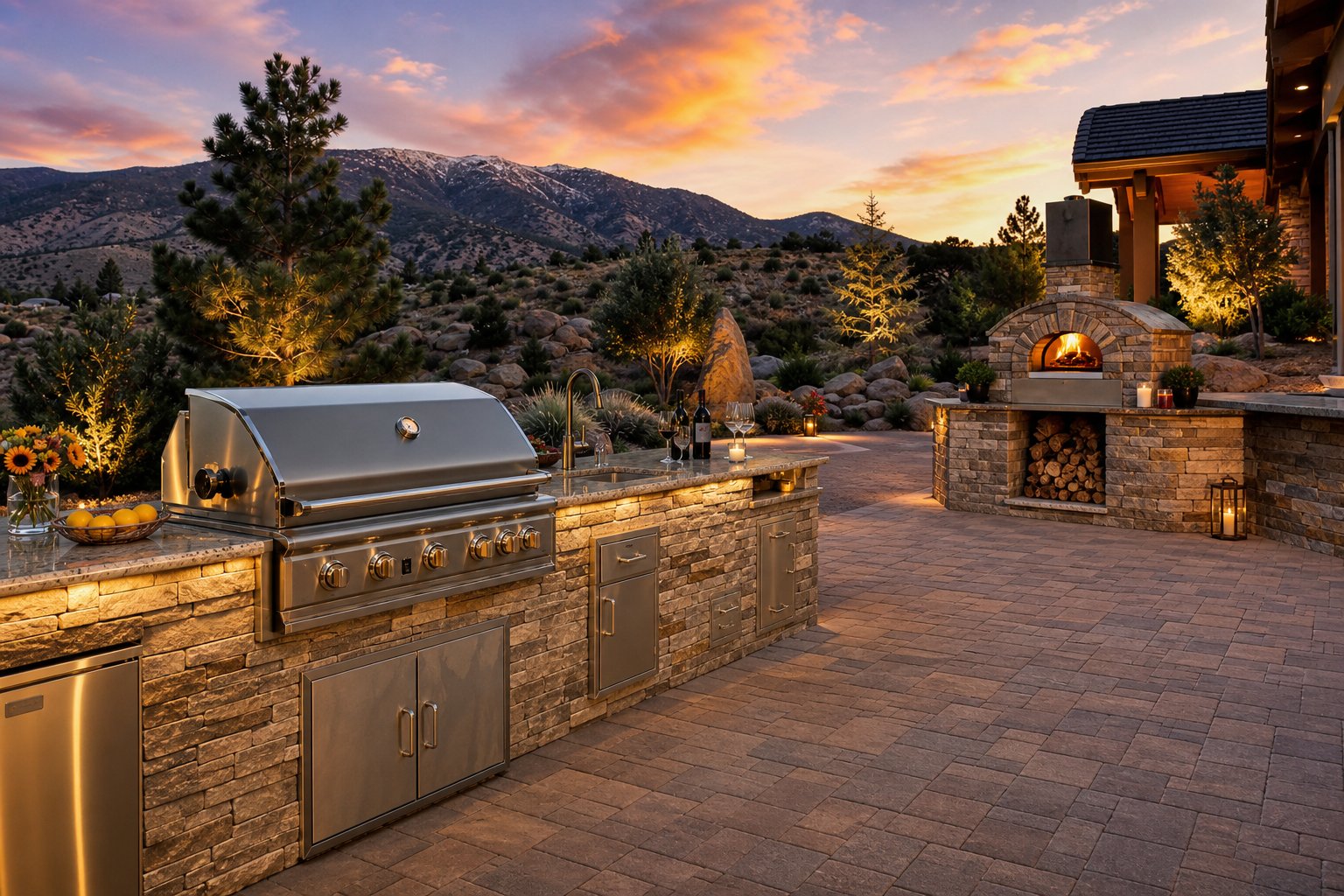
Modern home architectural trends have decisively shifted toward blurring the boundary between indoor luxury and alfresco lifestyle design. Investing in a fully custom environment dedicated to outdoor cooking elevates backyard entertaining, expands your functional living footprint, and boosts real property appraisal values. For homeowners across Reno, Sparks, Lake Tahoe, and the high-desert valleys of Northern Nevada, building an alfresco culinary station requires an engineering approach that accounts for aggressive freeze-thaw cycles, blazing summer ultraviolet rays, and dramatic diurnal temperature shifts. A flimsy standalone barbecue cart on an unpaved lawn cannot compete with an engineered, stone-clad outdoor kitchen featuring professional built-in gas grills, refractory brick pizza ovens, stainless steel weatherized refrigeration, and durable granite countertops. When properly planned with ergonomic working triangles and robust utility infrastructure, a custom backyard kitchen transforms culinary preparation into an unforgettable social centerpiece.
The Northern Nevada Climate: Engineering Outdoor Kitchens for High Desert Extremes
Designing an alfresco kitchen in Reno and the surrounding Sierra Nevada foothills is fundamentally different from building in mild coastal climates. Extreme weather resistance must guide every structural decision.
1. Mastering Aggressive Freeze-Thaw Cycles
Northern Nevada winters frequently fluctuate above and below 32°F within a single twenty-four-hour period:
- Concrete Footings and Slab Stability: Heavy masonry kitchen islands and stone counters require structurally engineered concrete sub-slabs poured below the local frost line. Without proper excavation, compacted aggregate bases, and rebar reinforcement, frost heaves will crack stone veneers and snap stone countertops.
- Mortars and Polymer Adhesives: Standard indoor mortars rapidly degrade outdoors. Experienced hardscape builders utilize polymer-modified, frost-resistant thinset mortars and flexible expansion joints to accommodate substrate movement during rapid winter freezing and thawing.
2. High-Altitude UV Exposure and Thermal Shock
Situated at over 4,500 feet above sea level, Reno experiences intense solar radiation:
- Material Degradation: Cheap composite boards, inferior synthetic resins, and thin plastics warp, fade, and turn brittle under high-altitude ultraviolet rays.
- Countertop Thermal Stress: Dark countertops absorb intense daytime heat, reaching surface temperatures exceeding 150°F in July, followed by rapid cooling at night. Choosing non-porous, UV-stable natural granites or engineered exterior porcelain prevents thermal shock fractures and surface staining.
The Functional Anatomy of a High-Performance Outdoor Kitchen
An exceptional culinary space balances high-output appliances with ergonomic food preparation, cleanup, and beverage dispensing zones.
1. Primary Cooking Appliances: The Cooking Suite
The centerpiece of any exterior kitchen is the cooking apparatus, tailored to your culinary preferences:
- Built-In Marine-Grade Gas Grills: Choose commercial 304 or 316-grade stainless steel grills with cast brass or heavy stainless burners, ceramic briquette flame tamers, and infrared rear rotisserie burners that resist surface rust and pitting.
- Wood-Fired and Gas Hybrid Pizza Ovens: Refractory clay and insulated stainless steel dome pizza ovens reach 800°F to 900°F, producing authentic Neapolitan crusts, roasted vegetables, and braised meats with rich wood-smoked flavor profiles.
- Integrated Power Burners & Smokers: High-output 60,000 BTU dual-ring burners accommodate massive stockpots for seafood boils, wok stir-frying, or slow-simmering sauces without monopolizing main grill grate surface area.
2. The Kitchen Work Triangle: Prep, Cook, and Cold Zones
Just like an indoor gourmet kitchen, an efficient outdoor layout adheres to ergonomic zoning:
- Cold Zone (Refrigeration & Ice): Outdoor-rated, UL-listed stainless steel compact refrigerators, beverage centers, and undercounter clear-ice makers engineered to hold 38°F even when outdoor ambient temperatures touch 105°F.
- Prep Zone (Counters & Cutting): At least 36 to 42 inches of continuous food-prep counter space situated between the sink and the primary grill, equipped with integrated trash chutes and sealed pull-out cutting boards.
- Hot Zone (Grills & Burners): Positioned with adequate perimeter clearance, insulated grill jackets (if framed near combustible materials), and non-flammable backsplashes.
Outdoor Kitchen Appliance & Countertop Material Matrix
| Material / Component | Climate Durability (High Desert) | Maintenance Requirements | Thermal Shock Resistance | Aesthetics & Finish |
|---|---|---|---|---|
| 304 Stainless Steel Appliances | Excellent (Rust-proof, weather-sealed) | Low (Routine stainless polish) | Maximum (Engineered for heat) | Sleek, professional modern |
| Honed Natural Granite Counters | Superior (Non-porous, UV-immune) | Low (Periodic sealant application) | Exceptional | Organic, luxurious, timeless |
| Concrete Poured Countertops | Moderate to High (Requires sealers) | Moderate (Must reseal against oils) | High (Prone to hairline micro-cracks) | Industrial, rustic, contemporary |
| Stacked Stone Veneer Island | Outstanding (Withstands freeze-thaw) | Very Low (Occasional wash down) | Maximum | Rustic mountain lodge, natural |
| Marine-Grade Polymer Cabinets | High (Waterproof, rot-proof) | Low (Simple soap-and-water wash) | Moderate (Can expand under hot sun) | Clean cabinetry look, modular |
| Quartz / Resin Counters | Poor for Outdoors (Resins turn yellow) | High (UV discoloration risk) | Poor (Vulnerable to sudden heat) | Not recommended for outdoor use |
Architectural Integration: Paver Patios, Fire Features, and Lighting
An outdoor culinary station should never feel like an isolated island stranded in the middle of a yard; it must integrate seamlessly into the surrounding hardscape.
Paver Patio Foundations and Perimeter Drainage
- Interlocking Concrete Pavers: Commercial-grade concrete pavers provide superior structural load distribution and slip resistance compared to stamped concrete, which is notorious for winter surface spalling and slippery sealant glazes.
- Slope and Grading: The hardscape foundation must maintain a 1% to 2% grade away from the home foundation and kitchen island base, preventing pooling rainwater or snowmelt from collecting near cabinetry or utility connections.
Atmospheric Landscape and Task Lighting
Culinary prep requires distinct lighting approaches:
- Task Lighting: High-output, glare-free LED directional spotlights mounted on overhead pergolas or flexible grill-mounted gooseneck lights ensure you can accurately gauge steak doneness after sunset.
- Under-Counter Hardscape Lighting: Recessed warm 2700K LED strip lights beneath countertop bullnose overhangs and step treads highlight stacked stone masonry textures while illuminating footpaths for evening safety.
Extending the Season: Fire Features and Radiant Patio Heaters
- Built-In Gas Fire Pits: Placing a companion natural stone gas fire pit or outdoor linear fireplace adjacent to the kitchen prep island invites dinner guests to linger comfortably with wine glasses while the chef cooks.
- Overhead Infrared Heaters: Electric or natural gas radiant patio heaters mounted to pergola rafters warm human bodies directly, allowing homeowners to host dinner parties comfortably from early March through late November.
Utilities and Safety Infrastructure: Building to Code
Underestimating plumbing, electrical, and gas infrastructure is the most common reason DIY outdoor builds fail.
Gas Lines and Ventilation Requirements
- Hardpiped Natural Gas vs. Liquid Propane: Running a dedicated underground black-iron or high-density polyethylene (HDPE) natural gas line eliminates the frustration of swapping out 20-pound propane tanks halfway through a barbecue dinner.
- Island Ventilation Vents: Liquid propane is heavier than air, whereas natural gas is lighter. Every outdoor masonry island requires upper or lower cross-ventilation louvers to prevent dangerous gas pocket accumulation in the event of an appliance leak.
Winterization and Plumbing Protocols
- Dedicated Shut-Off and Drain Valves: Sink supply lines and outdoor ice makers must feature interior shut-off valves and gravity-drain blow-out points inside the conditioned home basement or garage, allowing homeowners to winterize outdoor plumbing lines in autumn with an air compressor.
Frequently Asked Questions About Outdoor Cooking Kitchens
How much does a custom outdoor kitchen typically cost to build?
Custom hardscape outdoor kitchens generally range from $15,000 to $35,000 for standard built-in grill islands, and can exceed $50,000 to $80,000+ for luxury multi-tier entertainment setups with pizza ovens, refrigeration, and pergolas.
Which countertop materials perform best in cold-winter, high-desert climates?
Honed natural granite, quartzite, and outdoor-rated sintered stone or exterior porcelain tiles offer the best durability against freezing winter snow, hot direct summer sun, and oil stains.
Can indoor refrigerators and sinks be used in an outdoor kitchen island?
No, indoor appliances lack the heavy insulation, sealed compressor motors, and rust-resistant marine-grade stainless steel housings required to survive exterior temperatures and moisture safely.
Do I need a building permit to install an outdoor kitchen?
Yes, building codes generally require permits and inspections for underground electrical circuits, natural gas supply line connections, and structural footings.
How do I protect outdoor kitchen plumbing from freezing during severe winters?
Install shut-off valves inside your home to isolate outdoor water lines, blow out remaining moisture using an air compressor, and drain all outdoor sink traps and ice machines before the first winter freeze.
How much clearance is needed between a built-in grill and surrounding structures?
Building codes and appliance manufacturers typically require 10 to 12 inches of clearance to combustible walls, or the installation of a certified stainless steel insulated jacket if mounting within wood-framed structures.
Conclusion
Designing an exceptional outdoor cooking pavilion transforms your backyard from an ordinary patio into a high-functioning culinary retreat and vibrant entertainment destination. By engineering solid, frost-proof concrete foundations, selecting resilient 304-grade stainless steel appliances, and installing non-porous natural granite surfaces, you ensure your outdoor investment withstands harsh winter freezes and scorching summer heat. Integrating companion fire pits, ambient under-cap lighting, and functional prep zones creates a seamless alfresco venue where friends and family can gather for decades. Partnering with experienced hardscape and outdoor living artisans ensures your custom outdoor kitchen combines breathtaking craftsmanship with structural longevity—giving you the ultimate venue to celebrate culinary passions beneath the open sky.