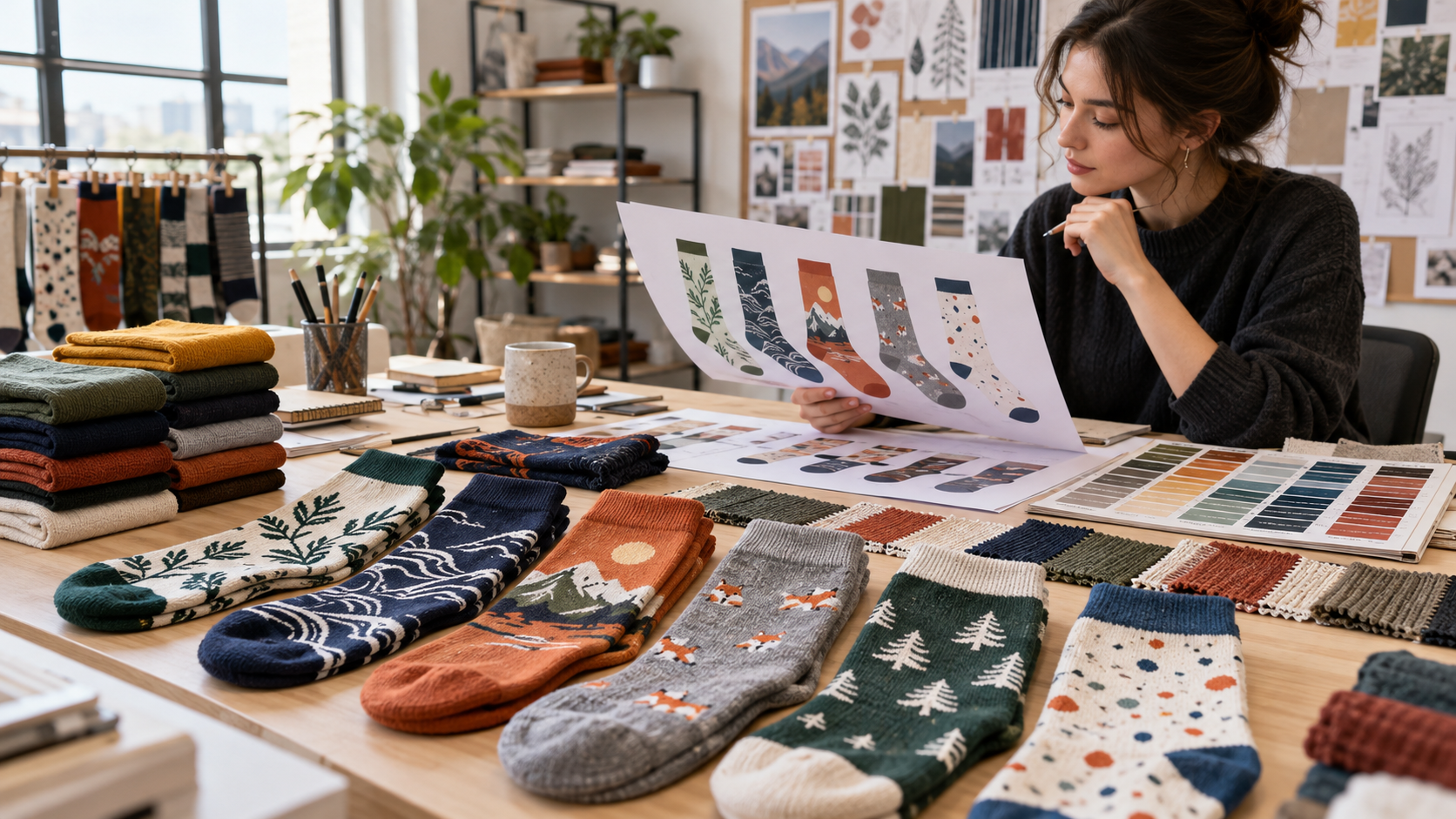
Custom Socks for Personal Style, Branding, Gifts, and Everyday Comfort
custom socks combine everyday comfort with creative design, making them useful for personal fashion, businesses, sports teams, events, gifts, schools, clubs, and promotional campaigns. Instead of choosing only standard colours and patterns, buyers can create socks featuring selected artwork, initials, illustrations, brand elements, team colours, photographs, or themed designs. The best results depend on more than appearance because fabric quality, sizing, knitting or printing method, cushioning, elasticity, artwork preparation, and intended use all influence how the finished socks look and feel.
Personalised socks can be playful, professional, practical, or highly decorative.
A company may use them as branded merchandise.
A family may order them for a celebration.
A sports team may create matching designs.
A retailer may develop an exclusive product collection.
Because socks are practical items that people already use, personalisation can add meaning without removing everyday functionality.
What Are Custom Socks?
Custom socks are socks produced with personalised colours, patterns, graphics, names, logos, images, or other design elements selected by an individual or organisation.
The amount of customisation available depends on the manufacturer and production method.
Options may include:
• Custom colours
• Names or initials
• Company branding
• Team graphics
• Repeating patterns
• Photographs
• Illustrations
• Event dates
• School colours
• Mascots
• Packaging
Some suppliers create designs by knitting coloured yarn directly into the sock.
Others use printing techniques that apply detailed artwork to the fabric.
Different production methods suit different types of designs.
Why Custom Socks Are Popular
Socks are worn frequently and are relatively easy to personalise.
They also offer more design freedom than many formal clothing items.
A person can wear colourful or humorous socks while keeping the rest of an outfit simple.
For businesses, socks can also provide a useful alternative to traditional promotional products.
Unlike a flyer or paper advertisement, a wearable product may continue being used long after an event.
7 Amazing Ways Custom Socks Add Value
Personalised socks can serve several purposes depending on how they are designed.
1. Custom Socks Make Personal Style More Distinctive
Clothing can communicate personality, and socks provide an easy way to experiment with colour and design.
Someone who prefers simple outfits may use patterned socks as a small visual detail.
Design ideas can include:
• Geometric patterns
• Animals
• Food themes
• Travel themes
• Hobbies
• Initials
• Personal artwork
• Favourite colours
• Seasonal designs
Personalisation allows the wearer to choose details that may not be available in ordinary retail collections.
Custom Socks Can Be Subtle or Bold
Not every personalised design needs to be highly colourful.
A professional pair could use dark colours with small initials or a simple repeated symbol.
A casual design could use brighter colours and larger graphics.
This flexibility makes customisation suitable for different occasions.
2. Businesses Can Use Custom Socks for Branding
Branded merchandise can help companies create a consistent visual identity.
Socks can be used for:
• Employee gifts
• Client gifts
• Conferences
• Product launches
• Corporate events
• Welcome packs
• Retail merchandise
• Marketing campaigns
A business can incorporate brand colours and visual elements while still creating a product that looks wearable.
The design should not simply cover the entire sock with an oversized logo.
Subtle branding can often produce a more attractive result.
3. Personalised Socks Can Make Memorable Gifts
Finding a useful gift can be difficult, particularly when the recipient already owns many conventional items.
Personalised socks can combine practical value with personal meaning.
Possible occasions include:
• Birthdays
• Weddings
• Anniversaries
• Graduations
• Christmas
• Father’s Day
• Mother’s Day
• Valentine’s Day
• Family reunions
• Retirement
A custom design can include something meaningful to the recipient.
For example, a pet owner might appreciate socks featuring an illustration of their pet.
A wedding party might receive coordinated socks using the event colours.
4. Custom Socks Work for Sports Teams
Sports teams often use coordinated clothing to create a stronger group identity.
Custom socks can complement uniforms for:
• Football
• Basketball
• Running clubs
• Cycling groups
• School sports
• Training teams
• Fitness communities
Sports socks should be selected for performance first.
The design should not interfere with fit, stretch, ventilation, or cushioning.
Team colours and graphics can then be added within those functional requirements.
5. Events Can Use Custom Socks as Merchandise
Events often rely on physical items to create memories and encourage participation.
Custom socks can be produced for:
• Festivals
• Conferences
• Charity events
• Fundraisers
• University events
• Community gatherings
• Company celebrations
• Product launches
The product can include the event theme without becoming disposable.
A useful wearable item may continue representing the event after it has finished.
6. Retailers Can Create Exclusive Product Collections
Fashion retailers and independent creators can use personalised production to develop unique sock designs.
This can support limited collections built around:
• Seasonal artwork
• Local culture
• Illustrators
• Artists
• Pop culture themes
• Streetwear
• Minimal patterns
• Lifestyle branding
A distinctive collection can differentiate a retailer from stores selling generic socks.
Quality remains important because customers expect personalised products to perform like ordinary clothing.
7. Custom Socks Can Support Group Identity
Matching socks can create a sense of belonging.
They may be used by:
• Schools
• Clubs
• Work teams
• Wedding parties
• Families
• Volunteer groups
• Community organisations
• Sports supporters
The effect is simple but useful.
A shared design provides a visual connection without requiring everyone to wear the same full outfit.
How Custom Socks Are Made
The production method influences design quality, texture, durability, and minimum order quantity.
Knitted Custom Socks
Knitted designs are created by using different coloured yarns during production.
The design becomes part of the structure of the sock.
This method works particularly well for:
• Logos
• Geometric patterns
• Repeating graphics
• Simple illustrations
• Text
The number of colours and level of detail may be limited compared with printing.
Very small details may need to be simplified.
Printed Custom Socks
Printed socks can reproduce more detailed artwork.
This may work better for:
• Photographs
• Complex illustrations
• Colour gradients
• Detailed patterns
• Artwork with many colours
Print quality can depend on fabric composition and the printing process.
Customers should review examples before placing a large order.
Embroidered Socks
Some socks can include small embroidered details.
Embroidery may suit:
• Initials
• Small logos
• Symbols
• Premium branding
Large embroidery can become uncomfortable because the back of the stitching may sit against the skin.
For this reason, embroidery is usually more suitable for smaller design areas.
Choosing Materials for Custom Socks
Design attracts attention, but materials affect comfort.
Common sock materials include:
• Cotton
• Polyester
• Nylon
• Wool
• Bamboo derived fibres
• Elastane
• Blended fabrics
Most socks use blends rather than one fibre alone.
Cotton
Cotton is soft and familiar.
It works well for casual everyday socks.
Pure cotton does not provide the same stretch or moisture management as some technical blends, so manufacturers often combine it with other fibres.
Polyester
Polyester is frequently used because it can provide durability, colour retention, and moisture management.
It is particularly common in printed and sports designs.
Nylon
Nylon can add strength and elasticity.
It is often blended with other materials to improve durability.
Wool
Wool can provide warmth and moisture management.
Merino wool is especially popular in outdoor and premium socks because it can feel softer than traditional coarse wool.
Elastane
Elastane provides stretch.
A relatively small amount can help socks remain secure around the foot and leg.
Custom Socks for Everyday Wear
Daily socks need to remain comfortable for many hours.
Important features include:
• Smooth toe construction
• Secure cuffs
• Breathable fabric
• Appropriate thickness
• Comfortable heel shape
• Stretch
• Good sizing
An attractive design cannot compensate for an uncomfortable fit.
People buying personalised socks for everyday use should prioritise comfort and durability alongside artwork.
Custom Socks for Sports and Fitness
Athletic socks face greater performance demands.
They may need to manage:
• Sweat
• Repeated movement
• Friction
• Impact
• Heat
• Long periods of activity
Performance features can include:
• Arch support
• Reinforced heels
• Reinforced toes
• Mesh ventilation
• Cushioned soles
• Moisture managing fibres
• Secure cuffs
The correct sock depends on the activity.
Running socks have different requirements from football socks or casual gym socks.
Why Fit Matters in Sports Socks
Loose fabric can create rubbing.
Excessively tight socks can also feel uncomfortable.
The sock should follow the shape of the foot without excessive bunching.
How to Design Custom Socks
A good sock design needs to work on a curved, flexible product rather than a flat computer screen.
Start With the Main Purpose
Ask why the socks are being created.
Is the goal:
• Personal fashion
• Branding
• Gifting
• Sports
• Retail
• Event merchandise
The purpose should guide the design.
Limit Unnecessary Detail
Highly complicated artwork may become difficult to recognise once the sock stretches around the leg.
Simpler shapes often remain clearer.
Use Strong Colour Contrast
Colours that are too similar can blend together.
Contrast can improve the visibility of:
• Logos
• Text
• Symbols
• Repeating patterns
Consider Where the Design Appears
Artwork can be placed on:
• Ankle
• Calf
• Foot
• Sole
• Toe
• Heel
Important graphics should be positioned where they remain visible during normal wear.
Custom Socks With Logos
Logo socks are commonly used for business and promotional purposes.
A logo needs to remain recognisable at a relatively small size.
Simplify Complex Logos
Detailed logos may need an adapted version.
A simplified mark can often reproduce better than a design containing tiny text.
Match Brand Colours Carefully
Colour consistency matters for established brands.
Digital screen colours can look different when reproduced using yarn or fabric printing.
Ask the manufacturer about available colour matching options.
Avoid Excessive Branding
Socks can still represent a business without appearing like an advertisement.
A repeated small symbol or tasteful cuff detail may be more wearable than an oversized logo.
Custom Socks With Faces or Photos
Photo socks are often purchased as gifts.
The quality of the original image directly affects the finished design.
Use:
• High resolution images
• Good lighting
• Clear subject separation
• Sharp focus
• Uncluttered backgrounds
A dark or blurred photograph will not become clearer simply because it is printed onto fabric.
Crop the Image Carefully
Faces should not be positioned where the heel or toe interrupts the design unless that effect is intentional.
Preview tools can help customers understand how artwork will repeat across the sock.
Sizing Custom Socks Correctly
Socks may be sold by shoe size ranges rather than individual sizes.
Always review the manufacturer’s sizing guide.
Possible categories include:
• Small
• Medium
• Large
• Extra large
• Children’s sizes
• Women’s sizes
• Men’s sizes
Sizing labels vary between suppliers.
Do not assume that every manufacturer’s medium size covers the same shoe range.
Custom Socks for Businesses
Companies should approach sock design like any other branded product.
Start by defining:
• Audience
• Quantity
• Budget
• Distribution method
• Brand colours
• Packaging
• Deadline
The product should be something recipients would genuinely want to use.
Employee Gifts
Personalised socks can be included in employee welcome kits or appreciation packages.
They can coordinate with:
• T shirts
• Water bottles
• Notebooks
• Bags
• Other branded items
Client Gifts
For clients, premium packaging can make a small product feel more considered.
Avoid making the design overly promotional if the goal is long term use.
Custom Socks for Weddings
Wedding socks can provide a coordinated detail for members of the wedding party.
Designs may include:
• Names
• Initials
• Wedding date
• Matching colours
• Small illustrations
• Roles within the wedding party
They can also be packaged individually as keepsakes.
Order early enough to allow time for production and corrections.
What to Check Before Ordering Custom Socks
Before approving production, confirm all important details.
Material Composition
Understand what fibres will be used.
Design Method
Ask whether the pattern is knitted, printed, embroidered, or created using another method.
Minimum Order Quantity
Some factories are designed for large wholesale runs.
Others can produce one or several pairs.
Sample Availability
For large orders, a physical sample can help identify problems before full production.
Production Time
Custom products usually require more time than stocked goods.
Account for:
• Design approval
• Manufacturing
• Quality control
• Packaging
• Shipping
Artwork Requirements
Ask whether the supplier requires:
• Vector files
• High resolution images
• Specific dimensions
• Colour references
Following the requested format can reduce delays.
How to Judge Custom Socks Quality
Quality can be evaluated through several details.
Look at:
• Fabric feel
• Stretch recovery
• Cuff construction
• Toe seams
• Heel shape
• Print clarity
• Colour consistency
• Stitching
• Reinforced areas
• Overall fit
If ordering commercially, test samples through repeated wear and washing.
The product should still look acceptable after normal use.
Caring for Custom Socks
Care depends on fabric and production method.
Always follow the manufacturer’s instructions.
General practices may include:
• Washing with similar colours
• Using suitable water temperatures
• Avoiding excessive heat
• Turning printed socks inside out when recommended
• Avoiding harsh bleach
• Drying according to the care label
Correct washing can help maintain colour, stretch, and fabric quality.
Common Custom Socks Mistakes
Using Low Resolution Artwork
Poor source images can produce blurred printing.
Adding Too Much Detail
Tiny elements may disappear during knitting or printing.
Ignoring Fabric Quality
The design may look good while the sock feels uncomfortable.
Ordering the Wrong Sizes
Review the actual shoe size range rather than relying only on labels.
Waiting Until the Last Minute
Custom production requires approval and manufacturing time.
Choosing the Cheapest Option Only
Price matters, but poor quality can reduce the value of a promotional or retail product.
Forgetting Packaging
Presentation is important when socks are sold as gifts or merchandise.
Custom Socks for Ecommerce Brands
Custom products can create opportunities for online stores.
A retailer can build collections around specific audiences such as:
• Pet owners
• Sports fans
• Travellers
• Professionals
• Gamers
• Families
• Wedding customers
• Fitness communities
The strongest products combine a clear audience with a recognisable visual idea.
Product pages should explain:
• Material
• Size
• Design process
• Care
• Production time
• Personalisation options
Clear expectations reduce customer confusion.
How Custom Socks Can Support Brand Recognition
Promotional items work best when recipients continue using them.
A practical product can create repeated brand exposure.
However, branding should support the product rather than overwhelm it.
An attractive pair of socks may be worn regularly.
A pair designed like a large advertisement may remain unused.
The most effective branded merchandise often combines:
• Useful design
• Comfortable materials
• Subtle identity
• Good quality
• Suitable packaging
Frequently Asked Questions
What are custom socks?
Custom socks are personalised socks created with selected colours, images, names, logos, patterns, photographs, or artwork for personal, promotional, retail, sports, or gifting purposes.
Are custom socks good for business promotion?
Yes. Well designed branded socks can work as employee gifts, event merchandise, customer gifts, or retail products because they combine everyday usefulness with visible branding.
What material is best for custom socks?
The best material depends on use. Cotton blends suit casual wear, while polyester, nylon, wool, and performance blends may be better for sports, outdoor use, or moisture management.
Can custom socks include photos?
Yes. Printed custom socks can reproduce photographs and detailed artwork when high quality source images and a suitable printing process are used.
How should custom socks fit?
They should fit securely around the foot without excessive tightness, slipping, or bunching. Always compare shoe measurements with the supplier’s specific sizing guide.
How long does it take to make custom socks?
Production time varies by supplier, quantity, design method, sampling requirements, and shipping. Large or complex orders should be planned well before the required date.
Conclusion
Custom socks provide a flexible way to combine comfort, creativity, branding, gifting, sports identity, and personal style in one practical product. The best results come from choosing suitable materials, preparing clear artwork, checking sizing, selecting the right production method, and testing quality before larger orders. Whether created for a business, event, team, retailer, or individual gift, thoughtfully designed socks can remain useful long after the original occasion. Quality and wearability should always receive as much attention as the visual design.