
How Smarter Healthcare Technology Is Transforming Patient Transportation and Access to Care
Modern healthcare software development is changing how healthcare organizations coordinate non-emergency medical transportation, manage patient appointments, and connect people with essential medical services. For patients who cannot travel independently because of mobility limitations, health conditions, disability, or a lack of suitable transportation, dependable transport can be an important part of accessing healthcare.
Non-emergency medical transportation, commonly called NEMT, helps eligible patients reach medical appointments, treatments, and other approved healthcare services without requiring emergency ambulance care. When supported by well-designed software, transportation providers can improve scheduling, communication, route coordination, documentation, and operational visibility while maintaining appropriate patient safety and privacy controls.
Why Non-Emergency Medical Transportation Matters in Healthcare
Access to healthcare involves more than having hospitals, clinics, and medical professionals available. Patients must also be able to reach these services at the appropriate time.
Transportation difficulties can create barriers for people who cannot drive, use public transportation, or arrange suitable assistance. These barriers may contribute to missed appointments, delayed treatment, and interruptions in ongoing care.
Healthcare software development can help transportation providers and healthcare organizations coordinate journeys more efficiently. Digital systems can connect ride requests, patient requirements, driver availability, and appointment schedules within a structured workflow.
However, software cannot eliminate every transportation barrier. Vehicle availability, affordability, geographic coverage, staffing, and eligibility rules also influence access.
What Is Non-Emergency Medical Transportation?
Non-emergency medical transportation refers to transportation services arranged for patients who need assistance reaching healthcare appointments but do not require emergency medical transportation.
Depending on the service, NEMT may involve accessible vans, wheelchair transportation, suitable passenger vehicles, or other approved transportation arrangements. Service categories and eligibility requirements differ between healthcare systems and jurisdictions.
Healthcare software development supports these services by organizing bookings, trip details, driver assignments, and operational records. The goal is to make transportation coordination more reliable while respecting individual patient needs.
Who May Need NEMT Services?
NEMT may be relevant to patients receiving recurring treatment, people with mobility limitations, individuals with disabilities, and those without suitable transportation.
Examples can include patients attending dialysis, rehabilitation, specialist consultations, or follow-up appointments. Eligibility depends on the healthcare program, provider arrangements, and applicable requirements.
Healthcare software development helps organizations manage these different transportation needs through structured booking and coordination systems. It should not automatically classify every patient as eligible for the same service.
The Connection Between Healthcare Software Development and Patient Transportation
Transportation providers often manage numerous moving parts during a typical operating day. They must coordinate vehicles, drivers, patients, pickup locations, healthcare facilities, and changing appointment times.
Manual processes can become difficult to maintain as trip volume increases. Paper records, spreadsheets, and disconnected communication channels may create delays or inconsistent information.
Healthcare software development can centralize relevant operational data and provide tools for managing transportation activities. This helps authorized staff understand which trips are scheduled, assigned, active, delayed, or completed.
Digital Systems Improve Coordination
A transportation management platform can connect booking staff, dispatchers, drivers, and healthcare facilities through defined workflows. Information can be updated when appointments or transportation arrangements change.
Healthcare software development enables these capabilities through databases, secure interfaces, mobile applications, and integration services. The appropriate architecture depends on the organization’s size and operational requirements.
Transportation Is Part of Care Coordination
A medical appointment may depend on several coordinated activities. The patient needs an appropriate pickup time, suitable vehicle, accurate destination, and transportation arrangements for the return journey.
Healthcare software development can help connect these requirements without assuming that transportation providers should have unrestricted access to medical records. Only information necessary for the authorized task should be shared.
How Healthcare Software Development Improves NEMT Scheduling
Scheduling is one of the most important functions in non-emergency medical transportation. A poorly coordinated booking can create inconvenience for patients and operational difficulties for providers.
Healthcare software development solutions can organize reservations according to pickup locations, appointment times, vehicle availability, accessibility requirements, and service rules.
Automated Booking Systems
Digital booking platforms allow authorized users to enter transportation requests and review availability. Depending on the system, requests may originate from patients, caregivers, healthcare facilities, or administrative staff.
Healthcare software development can automate routine validation and reduce repetitive data entry. However, automated acceptance should only occur when eligibility and service requirements have been appropriately verified.
Appointment-Based Scheduling
Medical transportation differs from ordinary passenger transportation because arrival timing may be connected to healthcare appointments.
A patient may need to reach a clinic before a scheduled treatment, while the return journey may depend on the duration of care. Healthcare software development can support these arrangements through appointment-aware scheduling.
Recurring Transportation Requests
Some patients attend treatment several times each week. Manually recreating identical bookings can create unnecessary administrative work.
Healthcare software development platforms may allow recurring trip schedules with appropriate review and confirmation. Changes to treatment plans, eligibility, or patient needs must still be reflected accurately.
Route Optimization for Medical Transportation
Transportation providers must balance travel efficiency with patient requirements. Efficient routes can reduce unnecessary driving, but minimizing distance alone is not sufficient.
Healthcare software development can incorporate route planning tools that consider pickup windows, vehicle capacity, service areas, and accessibility needs.
Reducing Unnecessary Travel
Route optimization systems can identify practical travel sequences based on available information. This may reduce avoidable mileage and support better vehicle utilization.
However, healthcare software development should not prioritize efficiency at the expense of appropriate patient care. Some passengers require additional boarding time or specific transportation arrangements.
Managing Multiple Passenger Trips
Shared transportation may be appropriate for certain services when permitted and suitable for the passengers involved.
Healthcare software development can help coordinate multiple pickups while considering scheduling constraints. Excessive detours or unreasonable journey durations should be avoided through appropriate service policies.
Responding to Traffic Conditions
Traffic congestion, road closures, and unexpected delays can disrupt planned journeys. Systems may integrate mapping services or traffic information to support dispatch decisions.
Healthcare software development can help coordinators identify affected trips and communicate changes. Real-world conditions still require operational judgment.
Improving Patient Safety Through Digital Transportation Systems
Patient safety is a central consideration in healthcare transportation. Appropriate vehicle selection, driver training, secure boarding procedures, and clear communication all matter.
Healthcare software development can support safety workflows, but it cannot replace professional training or suitable equipment.
Matching Vehicles to Patient Requirements
Some passengers may need wheelchair-accessible vehicles or additional boarding assistance. Others may have different mobility or transportation needs.
A healthcare software development platform can record authorized requirements and help dispatchers assign suitable vehicles. These records should be accurate, current, and limited to necessary information.
Driver Information and Training Records
Transportation companies may need to track driver qualifications, training, license status, and other applicable requirements.
Healthcare software development can provide administrative tools for recording these details and identifying upcoming renewal dates. Actual compliance still depends on appropriate verification and operational procedures.
Incident Documentation
Transportation incidents should be documented according to organizational policies and applicable reporting requirements.
Healthcare software development can create structured incident records and notification workflows. Access to sensitive incident information should be restricted to authorized personnel.
Real-Time Vehicle Tracking and Dispatch Visibility
Dispatchers benefit from knowing where vehicles are and whether scheduled trips are progressing as expected.
Healthcare software development can integrate GPS-based location services with transportation management dashboards. These tools may help staff identify delays, coordinate drivers, and respond to changing schedules.
Tracking Active Journeys
Location information can support trip monitoring and estimated arrival calculations. However, GPS data is not always accurate or continuously available.
Healthcare software development should account for connectivity interruptions and positioning errors. Staff should not treat every map location as guaranteed.
Improving Dispatcher Decisions
A dispatcher may need to reassign a trip when a vehicle becomes unavailable or a previous appointment runs late.
Digital systems can display available vehicles and relevant scheduling information. Healthcare software development helps present this information, while authorized staff make decisions according to service rules.
Patient Communication and Appointment Reminders
Clear communication can reduce confusion around pickup arrangements. Patients may need to know when transportation is scheduled, where to wait, and how to report changes.
Healthcare software development can support notifications through appropriate communication channels. These may include SMS, phone calls, email, or secure applications.
Automated Trip Notifications
A booking system may send confirmation messages after a journey is scheduled. Additional reminders can help patients prepare for pickup.
Healthcare software development should ensure messages contain only appropriate information. Sensitive medical details should not be disclosed through insecure notifications.
Accessible Communication Options
Not every patient uses a smartphone or has reliable internet access. Some people may need telephone assistance or communication accommodations.
Healthcare software development should support multiple channels where practical. Digital convenience should not exclude patients who cannot use a particular technology.
Building Accessible NEMT Applications

Accessibility is especially important when software is intended for people with disabilities or age-related limitations.
A transportation application should not assume that every user can read small text, navigate complex menus, or use precise touch gestures.
Healthcare software development should incorporate accessibility requirements during initial design. Retrofitting them after launch can create additional work and leave users facing avoidable barriers.
Clear Navigation and Readable Interfaces
Simple navigation can help users find booking details and understand trip status. Readable text, appropriate contrast, and descriptive labels support usability.
Healthcare software development teams can use recognized accessibility guidance, including relevant Web Content Accessibility Guidelines, when designing interfaces.
Support for Assistive Technologies
Some users rely on screen readers, voice control, keyboard navigation, or other assistive technologies.
Healthcare software development should include testing with appropriate accessibility tools. Automated testing alone cannot identify every usability problem.
Healthcare Software Development and Secure Patient Information
Transportation coordination may involve personal information and, in some circumstances, health-related details.
These records can include patient identity, contact information, pickup locations, accessibility needs, and appointment arrangements.
Healthcare software development must protect this information according to applicable privacy and security obligations. Requirements depend on jurisdiction, organizational role, contracts, and the data involved.
Data Minimization
A transportation provider should collect only information necessary for legitimate operational purposes.
Healthcare software development can support this principle through carefully designed forms and access restrictions. A driver generally does not need unrestricted access to a patient’s complete medical history.
Secure Authentication
Administrative systems may contain sensitive personal information and operational records. Appropriate authentication helps reduce unauthorized access.
Healthcare software development can incorporate secure login methods, session controls, and additional verification for sensitive functions.
Role-Based Access
Different users need different information. Drivers, dispatchers, billing teams, and healthcare coordinators should not automatically receive identical permissions.
Healthcare software development can enforce role-based or other suitable authorization models. Access should reflect legitimate responsibilities.
HIPAA Considerations for NEMT Software
In the United States, the Health Insurance Portability and Accountability Act may apply to certain organizations and information flows.
Whether a transportation provider or software vendor has specific HIPAA obligations depends on its role, the services performed, and its relationship with covered entities or business associates.
Healthcare software development teams should determine the applicable requirements rather than assuming every transportation application is automatically HIPAA compliant.
Protecting Health Information
Where HIPAA applies, organizations must implement appropriate safeguards for protected health information.
These may involve access controls, risk analysis, audit mechanisms, workforce procedures, and other administrative, physical, and technical protections.
Healthcare software development should support these requirements through suitable architecture and operational practices.
Business Associate Responsibilities
A software vendor handling protected health information on behalf of a covered entity may qualify as a business associate in relevant circumstances.
Contracts and legal obligations should be evaluated by qualified professionals. Healthcare software development alone does not establish regulatory compliance.
Integration With Electronic Health Records
Healthcare organizations often use electronic health record systems to manage clinical information.
Transportation workflows may benefit from limited integration when appropriate permissions and technical interfaces are available.
Healthcare software development can help connect scheduling information with authorized transportation processes. However, the integration should not provide unnecessary access to clinical records.
Reducing Duplicate Data Entry
Staff may otherwise need to enter appointment information into separate systems. Carefully designed integrations can reduce repetitive administrative tasks.
Healthcare software development should validate transferred information and handle failures. Incorrect scheduling data can create practical transportation problems.
Using Healthcare Interoperability Standards
Standards such as HL7 FHIR can support structured exchange of certain healthcare information where suitable interfaces and implementations exist.
Healthcare software development teams should evaluate which resources and workflows are appropriate. FHIR compatibility does not automatically guarantee complete interoperability.
Healthcare Software Development for Billing and Claims

Billing is another important operational function for NEMT providers. Payment arrangements can vary according to healthcare programs, contracts, eligibility, trip type, and jurisdiction.
Healthcare software development can organize service records and support billing workflows. Accurate documentation remains essential because payment rules may be detailed and subject to change.
Automated Trip Documentation
Completed trips may require records of pickup times, destinations, service categories, and other authorized details.
Healthcare software development can capture this information through structured workflows. Automated records should still be subject to appropriate validation.
Reducing Billing Errors
Incorrect trip information can create rejected claims or reconciliation problems.
Healthcare software development can include validation rules that identify missing or inconsistent information before submission. These controls reduce certain errors but cannot guarantee claim approval.
Supporting Audit Requirements
Organizations may need to retain transportation records for contractual, financial, or regulatory purposes.
Healthcare software development can provide appropriate retention settings and audit trails. Retention periods should reflect applicable requirements rather than a universal assumption.
Driver Mobile Applications for NEMT Services
Drivers need accurate operational information without navigating complicated administrative systems.
A dedicated mobile application can provide assigned trips, authorized passenger details, pickup instructions, and status updates.
Healthcare software development should make these interfaces clear and appropriate for use during transportation operations. Drivers must not interact with applications in ways that compromise road safety.
Digital Trip Assignments
Dispatchers can send assignments directly to driver applications. Changes can be communicated through controlled notifications.
Healthcare software development should record whether assignments were received and accepted when that information is operationally necessary.
Pickup and Drop-Off Confirmation
Drivers may need to record trip milestones according to service rules.
Mobile applications can support appropriate confirmation methods. Healthcare software development should avoid collecting unnecessary sensitive data or using intrusive verification practices.
Offline Functionality
Some transportation routes may pass through areas with weak connectivity. A mobile application should handle temporary network interruptions where practical.
Healthcare software development can use controlled offline storage and synchronization mechanisms. Sensitive information must remain protected on the device.
Improving Healthcare Access in Rural Communities
Rural patients may face longer journeys and fewer transportation options. Limited vehicle availability can make scheduling especially challenging.
Healthcare software development can help providers organize geographic coverage and identify transportation gaps. However, digital systems cannot create vehicles or drivers where none are available.
Coordinating Longer Journeys
Rural trips may involve extended travel times and limited opportunities for combining passengers.
Healthcare software development can help account for these conditions when estimating schedules and assigning vehicles.
Supporting Regional Partnerships
Healthcare facilities and transportation providers may coordinate services across wider areas.
Healthcare software development can support information sharing through authorized systems. Partnerships still require appropriate operational agreements and funding.
NEMT and Older Adult Healthcare
Older adults may encounter transportation barriers associated with mobility limitations, vision changes, or other health conditions.
Reliable transportation can support attendance at medical appointments and ongoing treatment.
Healthcare software development can help coordinate suitable vehicles and communication arrangements. However, age alone should not determine a person’s transportation capabilities or eligibility.
Supporting Mobility Requirements
Some passengers may require extra time when boarding or leaving vehicles. Appropriate assistance should follow individual needs and provider capabilities.
Healthcare software development can include scheduling allowances that reflect these requirements.
Communicating With Caregivers
Certain patients may authorize caregivers or representatives to receive transportation information.
Healthcare software development should support appropriate consent and authorization controls. Family relationships alone do not automatically establish permission to access sensitive information.
Transportation for Patients With Disabilities
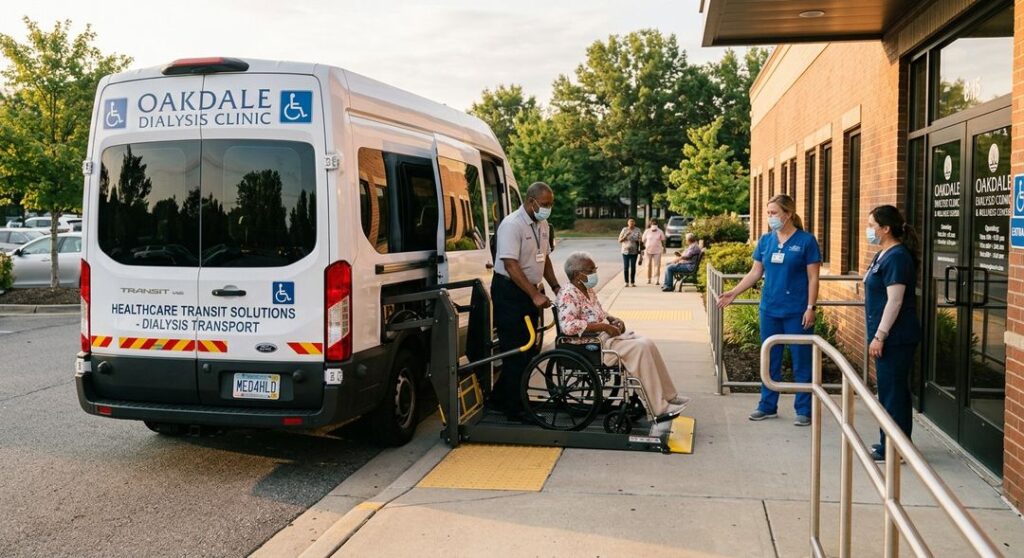
Accessible transportation can be essential for patients who cannot use standard vehicles or public transport.
Different disabilities create different needs, so services should avoid applying identical assumptions to every passenger.
Healthcare software development can record relevant accommodation requests and support appropriate scheduling. These systems should be designed with accessibility and privacy in mind.
Wheelchair-Accessible Transportation
Wheelchair users may require vehicles with appropriate ramps, lifts, securement systems, and trained personnel.
Healthcare software development can identify vehicle capabilities and match them with authorized trip requirements. Physical safety still depends on properly maintained equipment and trained staff.
Respectful Service Design
Patients should be able to communicate preferences and request reasonable assistance without unnecessary difficulty.
Healthcare software development should support clear requests and accessible interfaces. Dignity and independence should remain central to service design.
Why Reliable Transportation Matters for Recurring Treatments
Some healthcare services require repeated visits over extended periods.
Missed appointments can interrupt treatment plans and create additional scheduling challenges.
Healthcare software development can help coordinate recurring transportation while accounting for changes in appointment times and patient circumstances.
Dialysis Transportation
Many dialysis patients attend treatment multiple times per week. Transportation reliability can therefore be an important part of treatment coordination.
Healthcare software development can support recurring schedules and communication between authorized parties. It should also accommodate changes when treatment sessions run longer than expected.
Rehabilitation Appointments
Physical rehabilitation may require repeated visits over several weeks or months.
Healthcare software development can help manage recurring bookings and transportation arrangements. Actual clinical schedules should remain under the control of appropriate healthcare professionals.
Reducing Missed Appointments Through Better Coordination
Missed appointments can have several causes, including illness, communication difficulties, scheduling errors, and transportation barriers.
Healthcare software development can address some transportation-related causes through better coordination and reminders.
However, claims about specific reductions in missed appointments should be supported by measured results rather than assumptions.
Appointment Confirmation
Patients or authorized representatives may confirm transportation requests before the scheduled date.
Healthcare software development can support confirmation workflows and communicate changes to dispatchers.
Managing Cancellations
Late cancellations can leave vehicles underused and disrupt other trips.
Healthcare software development can update schedules and notify relevant staff. Cancellation policies should remain appropriate to patient circumstances and contractual requirements.
Artificial Intelligence in NEMT Management
Artificial intelligence may support transportation forecasting, route planning, anomaly detection, and operational analysis.
However, AI should not be presented as a replacement for patient-centered judgment or appropriate dispatch procedures.
Healthcare software development can incorporate machine learning where it addresses a clearly defined problem. Models should be evaluated for accuracy, reliability, fairness, and operational consequences.
Predictive Demand Planning
Historical trip patterns may help estimate future transportation demand.
Healthcare software development can use forecasting tools to support staffing and vehicle planning. Predictions should be reviewed when demand patterns change.
Intelligent Route Recommendations
Algorithms may suggest routes based on traffic, distance, and scheduling constraints.
Healthcare software development should ensure that recommendations respect accessibility requirements and reasonable travel expectations. Automated efficiency should not override patient needs.
Detecting Operational Anomalies
AI-supported systems may identify unusual trip patterns, inconsistent records, or unexpected billing activity.
These alerts require appropriate review. An anomaly does not automatically establish fraud or misconduct.
Cloud-Based Healthcare Software Development
Cloud infrastructure can support centralized applications, remote access, and flexible computing resources.
For transportation providers operating across several locations, this can simplify access to authorized operational information.
Healthcare software development teams should evaluate cloud services according to security, availability, cost, regulatory needs, and integration requirements.
Scalability for Growing Providers
As trip volumes increase, software may need additional processing, storage, and communication capacity.
Cloud platforms can help support growth when the application architecture is designed appropriately. Cloud hosting alone does not guarantee scalability.
Backup and Recovery
Transportation operations may depend heavily on digital booking records.
Healthcare software development should include suitable backup, recovery, and business continuity arrangements. Providers also need procedures for operating during system outages.
Cybersecurity Risks in Medical Transportation Platforms
NEMT applications can contain sensitive personal information, payment records, and operational data.
Cybersecurity weaknesses may expose patient information or disrupt transportation services.
Healthcare software development should incorporate security throughout design, implementation, testing, and maintenance.
Secure APIs
APIs connect booking systems, driver applications, mapping services, and other platforms.
Healthcare software development should protect these interfaces through appropriate authentication, authorization, validation, and monitoring.
Encryption
Encryption can help protect information during transmission and storage when implemented correctly.
Healthcare software development should use established security mechanisms rather than custom cryptographic designs without appropriate expertise.
Incident Response
Organizations need procedures for detecting, investigating, and responding to security incidents.
Healthcare software development can provide logging and monitoring capabilities, but effective incident response also requires trained personnel and clear responsibilities.
Building User-Friendly Patient Booking Platforms
Patient-facing software should make transportation requests understandable.
Complicated forms and unclear instructions can discourage use, particularly among people with limited digital experience.
Healthcare software development should prioritize simple booking flows, readable information, and accessible support options.
Clear Booking Information
Users should understand the requested date, pickup location, destination, and booking status.
Healthcare software development can present this information through concise confirmation screens. Important details should remain easy to review.
Easy Cancellation and Changes
Patients may need to change transportation because appointments are rescheduled.
Healthcare software development should support appropriate amendment procedures without creating unnecessary confusion.
Analytics and Reporting for NEMT Providers
Transportation organizations need information about operational performance.
Useful metrics may include completed trips, cancellations, pickup punctuality, vehicle utilization, and service complaints.
Healthcare software development can organize these metrics into reporting dashboards. Results should be interpreted in context rather than treated as proof of service quality by themselves.
Measuring On-Time Performance
Arrival timing matters when transportation supports scheduled medical care.
Healthcare software development can compare planned and actual trip milestones. Reporting definitions should be consistent across the organization.
Monitoring Service Quality
Patient feedback can identify communication problems, accessibility concerns, or recurring scheduling difficulties.
Healthcare software development can support feedback collection and analysis. Organizations should respond through practical service improvements.
Evaluating Operating Costs
Transportation providers may monitor mileage, staffing, vehicle use, and administrative expenses.
Healthcare software development can connect relevant operational information with cost reports. The accuracy of these reports depends on reliable data.
Choosing the Right Healthcare Software Development Partner
NEMT software combines transportation operations with healthcare-related privacy and coordination requirements.
A development team should understand both the technical environment and the practical realities of the service.
Healthcare software development experience is valuable, but vendor selection should also consider security, integration, testing, support, and maintainability.
Evaluate Relevant Experience
Ask whether the company has worked with healthcare applications, scheduling systems, transportation platforms, or regulated data.
Relevant experience can help identify common technical challenges. However, previous projects do not guarantee future performance.
Review Security Practices
A development partner should explain its approach to access controls, encryption, secure coding, vulnerability management, and incident response.
Healthcare software development should include documented security responsibilities rather than generic assurances.
Consider Long-Term Maintenance
Software requires ongoing updates, monitoring, and support.
Healthcare software development contracts should clarify ownership, documentation, maintenance arrangements, and responsibilities after launch.
Custom Healthcare Software Development Versus Ready-Made Platforms
Organizations can choose between commercial software products and custom-built applications.
The appropriate decision depends on operational complexity, budget, integration requirements, and internal technology capabilities.
Healthcare software development may provide greater flexibility for specialized workflows, but custom systems also create maintenance responsibilities.
Benefits of Ready-Made Solutions
Established platforms may offer common scheduling, dispatch, and reporting features without requiring development from the beginning.
However, their suitability depends on available functionality and integration options.
Benefits of Custom Solutions
Custom healthcare software development can address unusual business processes or complex integration requirements.
The organization must still budget for testing, security, updates, and ongoing support.
Common NEMT Software Development Mistakes
Some technology projects fail to address the practical needs of transportation staff and patients.
Others prioritize advanced features before establishing reliable scheduling and data management.
Healthcare software development should begin with clearly defined workflows and measurable requirements.
Ignoring Patient Accessibility
A visually attractive application can still be difficult for people using assistive technologies.
Accessibility testing should be part of the development process.
Poor Driver Communication
Drivers need timely, accurate trip information.
Healthcare software development should support clear communication while preventing unsafe interaction with devices during driving.
Inadequate Data Protection
Collecting unnecessary patient information increases privacy exposure.
Systems should apply data minimization and appropriate access controls.
Overcomplicated Booking Processes
Long forms and confusing navigation can make transportation harder to arrange.
A simpler workflow may improve usability without sacrificing required information.
Lack of Operational Testing
Software that works in a demonstration may struggle with real-world delays, cancellations, and connectivity problems.
Healthcare software development should test these situations before deployment.
Testing Healthcare Transportation Software
Testing is essential because software errors can affect transportation schedules and patient access.
Development teams should evaluate ordinary workflows as well as failure conditions.
Healthcare software development can use automated testing, integration testing, security reviews, and user acceptance testing according to system risk.
Test Scheduling Conflicts
The system should identify incompatible assignments and other relevant scheduling problems.
Healthcare software development should also account for vehicles becoming unavailable unexpectedly.
Test Communication Failures
Messages may be delayed, lost, or duplicated.
Applications should handle these conditions without creating misleading trip information.
Test Accessibility
Users with different abilities should be included in appropriate usability testing.
Healthcare software development teams should evaluate real interaction patterns rather than relying exclusively on automated checks.
Implementing NEMT Software Successfully
Introducing a new platform changes staff workflows and operational processes.
Even well-designed software can create disruption when training and implementation planning are inadequate.
Healthcare software development projects should include deployment preparation and clear communication with affected teams.
Start With Workflow Mapping
Document how bookings, assignments, trips, and billing currently operate.
This helps identify requirements before software configuration or development begins.
Train Staff Appropriately
Dispatchers, drivers, administrators, and billing teams may need different training.
Healthcare software development implementation should provide role-specific guidance.
Introduce Changes Gradually
A phased rollout may help identify problems before the entire operation depends on the new system.
The appropriate deployment strategy depends on organizational size and operational risk.
The Future of Healthcare Software Development in NEMT
Medical transportation technology will continue evolving as healthcare organizations seek better coordination and operational visibility.
Potential developments include improved interoperability, more accessible patient applications, intelligent dispatch support, and stronger analytics.
Healthcare software development will remain important because transportation services need reliable systems that can adapt to changing requirements.
However, innovation should be measured against real patient and operational outcomes. New features are valuable only when they improve the service without introducing unnecessary risks.
Greater Healthcare Integration
Authorized information exchange may help transportation providers coordinate more effectively with healthcare facilities.
Healthcare software development can support these connections through appropriate interfaces and privacy safeguards.
More Patient-Centered Technology
Future platforms may offer clearer communication, better accessibility, and more flexible scheduling.
Healthcare software development should prioritize these practical improvements rather than technology complexity for its own sake.
Why NEMT Should Be Part of Healthcare Digital Transformation
Digital transformation is often associated with electronic health records, telehealth, and clinical applications.
However, access to medical appointments can depend on services operating outside the clinic.
Healthcare software development can help connect these operational services with broader healthcare coordination.
Non-emergency medical transportation is therefore an important area for digital improvement. Reliable transportation systems can support access to care when combined with suitable vehicles, trained staff, and appropriate service coverage.
FAQ’s
What is healthcare software development for NEMT?
Healthcare software development for NEMT involves creating digital systems that manage patient transportation bookings, scheduling, dispatch, route planning, driver communication, and operational records.
How does healthcare software development improve patient transportation?
It can improve scheduling accuracy, communication, vehicle coordination, accessibility management, and operational visibility through integrated digital workflows.
Can healthcare software development reduce missed appointments?
It may reduce transportation-related missed appointments through better scheduling and reminders, although outcomes depend on service availability and other factors.
Is NEMT software required to comply with HIPAA?
HIPAA requirements depend on the organization’s role, data handled, and relationships with covered entities or business associates. Applicable obligations require individual assessment.
What features should NEMT software include?
Common features include trip booking, dispatch management, driver applications, route planning, patient notifications, accessibility information, billing support, and reporting.
How much does custom healthcare software development cost?
Costs vary according to features, integrations, security requirements, platform complexity, testing, and maintenance. A detailed project assessment is needed for a reliable estimate.
Conclusion
Healthcare software development plays an important role in modernizing non-emergency medical transportation by improving scheduling, route coordination, patient communication, and operational visibility. Reliable NEMT services can help eligible patients attend important medical appointments, particularly when mobility limitations or transportation barriers make independent travel difficult. Well-designed digital platforms support these services through structured workflows, appropriate accessibility features, and secure information handling.
The value of healthcare software development extends beyond administrative convenience. Transportation providers can use suitable technology to improve coordination, monitor performance, support staff, and respond more effectively to changing patient needs. By combining reliable software with qualified personnel, appropriate vehicles, strong privacy controls, and patient-centered service policies, healthcare organizations can build transportation systems that better support access to care.