Impacted Wisdom Teeth: Symptoms, Removal and Recovery Explained
Impacted wisdom teeth occur when the third molars at the back of the mouth do not have enough space to erupt normally. A tooth may remain completely trapped beneath the gum or jawbone, or it may emerge only partially. Some impacted teeth never cause noticeable symptoms, while others can contribute to pain, infection, tooth decay, gum inflammation, cysts or damage to neighboring teeth.
Wisdom teeth usually appear during the late teenage years or early adulthood. The American Dental Association says third molars commonly emerge around ages 17 to 21, while other clinical references place the broader eruption period into the mid-20s.
Whether an impacted tooth should be removed depends on its position, symptoms, disease risk and the health of surrounding teeth.
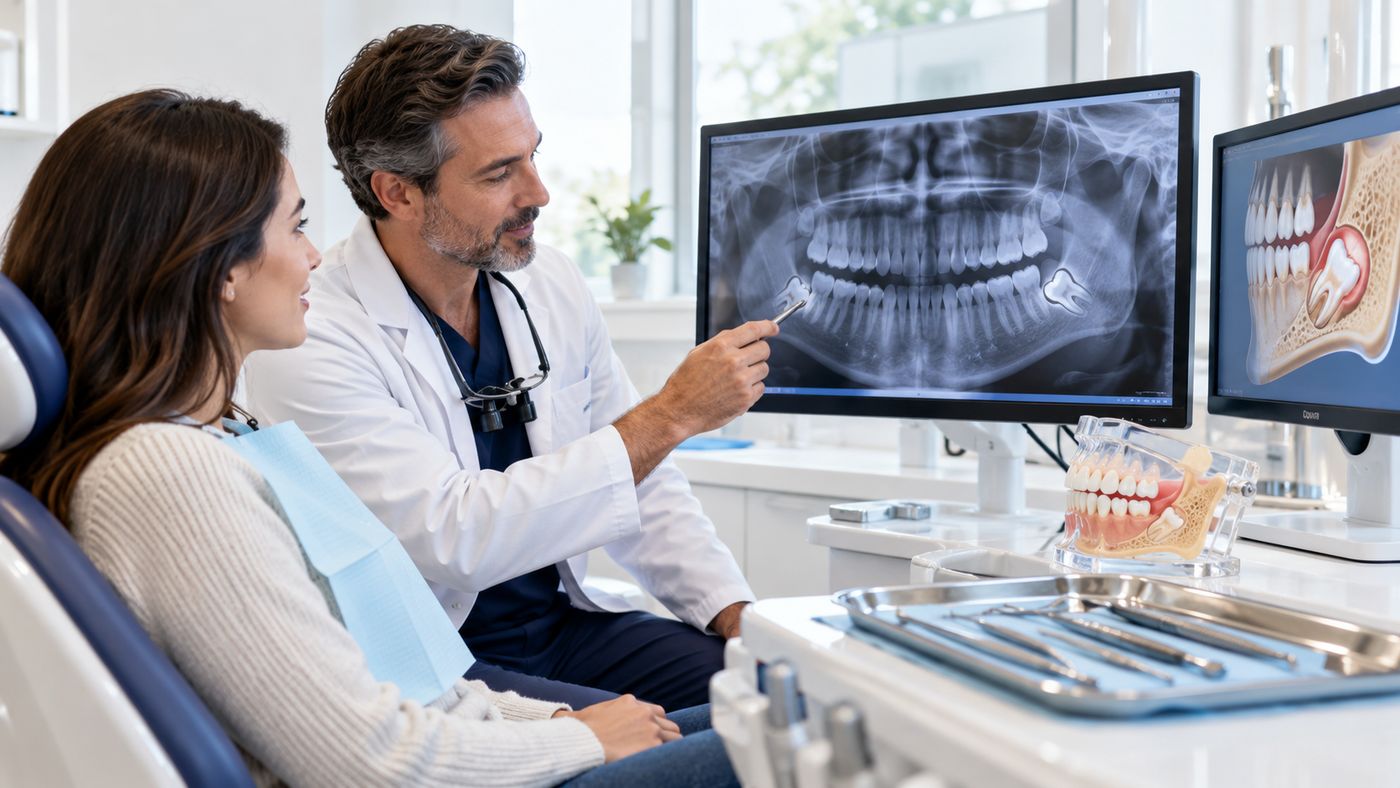
A dental examination and X-ray are normally needed before deciding on treatment.
This guide explains seven important facts about impacted wisdom teeth, including symptoms, diagnosis, infection, surgery, recovery and when urgent dental care may be needed.
What Are Impacted Wisdom Teeth?
Wisdom teeth are the third and final set of molars located at the very back of the mouth.
An impacted wisdom tooth is one that cannot fully erupt into its normal position.
The most common reason is insufficient space in the jaw.
An impacted tooth may be:
- Fully covered by gum tissue
- Trapped partly or completely in bone
- Partially erupted
- Angled toward another tooth
- Angled toward the back of the mouth
- Positioned horizontally
Mayo Clinic notes that impacted teeth may grow toward the second molar, toward the back of the jaw, horizontally, or remain trapped even when positioned relatively upright.
1. Impacted Wisdom Teeth Do Not Always Cause Symptoms
One of the most important things to understand is that lack of pain does not necessarily mean the tooth is problem-free.
Some impacted wisdom teeth remain quiet for years.
Others gradually develop problems.
AAOMS advises that wisdom teeth should continue to be monitored even when they are not painful because disease may develop without obvious symptoms.
Common Symptoms
When impacted wisdom teeth become infected or affect surrounding tissues, possible symptoms include:
- Jaw pain
- Red gums
- Swollen gums
- Gum tenderness
- Bleeding gums
- Bad breath
- Unpleasant taste
- Swelling around the jaw
- Difficulty opening the mouth
These are among the symptoms described by Mayo Clinic for problematic impacted wisdom teeth.
Pain Behind the Last Molar
Pain often appears near the very back of the mouth.
It may become more noticeable when:
- Chewing
- Opening the mouth
- Brushing behind the second molar
Persistent pain in this area should be evaluated by a dentist.
2. Partially Impacted Wisdom Teeth Can Become Infected
A partially erupted wisdom tooth can create a pocket between the gum and tooth.
Food particles and bacteria may collect in this area because it can be difficult to clean.
The result may be inflammation around the tooth known as pericoronitis.
Signs of Infection
Possible signs include:
- Swollen gum tissue
- Pain behind the molar
- Bad taste
- Bad breath
- Difficulty opening the jaw
More significant infection may require professional dental treatment.
Why Partially Erupted Teeth Are Difficult to Clean
The back of the mouth is already difficult to brush and floss.
When only part of the crown is visible, a gum flap may cover part of the tooth.
The ADA notes that partially erupted wisdom teeth can create an entry point for bacteria, increasing the risk of infection, pain and swelling.
3. Impacted Wisdom Teeth Can Affect Nearby Teeth
An impacted wisdom tooth can sometimes press against the second molar immediately in front of it.
This may increase the risk of:
- Decay
- Infection
- Damage to supporting tissues
Mayo Clinic specifically identifies damage to neighboring teeth as a potential complication of wisdom tooth impaction.
Decay Can Develop in Both Teeth
A partially impacted third molar may trap plaque and food near the second molar.
This difficult-to-clean area can increase cavity risk.
The ADA also notes that improperly positioned wisdom teeth may make flossing between the third molar and neighboring tooth difficult.
Cysts Can Occasionally Develop
Wisdom teeth form inside sacs in the jaw.
In some cases, a fluid-filled cyst can develop around an impacted tooth.
A cyst may affect nearby:
- Bone
- Teeth
- Tooth roots
Cysts are one recognized reason for surgical removal.
4. Dental X-Rays Help Diagnose Impacted Wisdom Teeth
A dentist cannot always determine the full position of a wisdom tooth simply by looking inside the mouth.
Dental X-rays can show:
- Tooth position
- Root development
- Relationship to neighboring teeth
- Bone around the tooth
- Possible cystic changes
Mayo Clinic describes dental X-rays as a standard part of evaluating suspected impacted wisdom teeth and assessing surrounding bone or tooth damage.
Panoramic X-Ray
A panoramic dental X-ray is commonly used because it shows:
- Upper and lower jaws
- All four wisdom teeth
- Neighboring structures
Your dentist or oral surgeon may recommend additional imaging if more detailed information is needed for surgical planning.
5. Not Every Impacted Wisdom Tooth Must Be Removed
Removal is commonly recommended when impacted wisdom teeth are causing disease or clear dental problems.
The ADA lists common reasons for extraction such as:
- Pain
- Infection
- Cysts
- Tumors
- Damage to neighboring teeth
- Gum disease
- Tooth decay that cannot reasonably be restored
What If the Tooth Has No Symptoms?
This is an area where dental specialists do not always agree.
Some dentists and oral surgeons recommend removing certain impacted wisdom teeth before they cause problems.
Others favor careful monitoring when a tooth is asymptomatic and disease-free.
Mayo Clinic notes that evidence is not strong enough to say that every symptom-free impacted tooth will eventually cause disease, so observation can be reasonable in selected cases.
Monitoring May Include
If the tooth is retained, your dentist may recommend:
- Regular dental examinations
- Professional cleaning
- Periodic X-rays
- Careful home hygiene
AAOMS similarly advises ongoing professional monitoring for wisdom teeth that remain in place.
6. Impacted Wisdom Teeth Removal Is Usually an Outpatient Procedure
When removal is necessary, the procedure is generally performed by a dentist or oral and maxillofacial surgeon.
The patient normally goes home the same day.
Anesthesia Options
Depending on complexity and patient needs, extraction may involve:
- Local anesthesia
- Sedation
- General anesthesia
The dentist or surgeon will determine the appropriate option based on the individual case.
How the Tooth Is Removed
For a deeply impacted tooth, the surgeon may:
- Open the gum tissue
- Remove a small amount of surrounding bone
- Remove the tooth
- Clean the site
- Close the wound if needed
In some cases, the tooth may be divided into smaller pieces to make removal easier.
Why an Oral Surgeon May Be Recommended
Referral may be more likely when:
- The tooth is deeply impacted
- Roots are complex
- Removal is technically difficult
- Medical conditions increase surgical risk
Mayo Clinic specifically notes that difficult impacted teeth may be referred to an oral surgeon.
7. Recovery Requires Protecting the Extraction Site
Some swelling, discomfort and minor bleeding are expected after wisdom tooth removal.
The exact recovery period varies according to:
- Number of teeth removed
- Degree of impaction
- Surgical complexity
- Individual healing
Protect the Blood Clot
After extraction, a blood clot forms in the socket.
This clot protects the healing tissue underneath.
If it becomes dislodged, a painful complication called dry socket can occur.
Mayo Clinic identifies dry socket as one of the uncommon complications following surgical wisdom tooth removal.
Follow the Surgeon’s Instructions
Postoperative instructions may include guidance about:
- Pain medication
- Cold compresses
- Oral hygiene
- Diet
- Activity
- Smoking or tobacco use
Mayo Clinic advises avoiding smoking for at least 72 hours after wisdom tooth surgery and longer when possible because tobacco can delay healing and increase complications.
What Does Wisdom Tooth Pain Feel Like?
Pain may vary from mild pressure to significant throbbing.
It can occur:
- Behind the second molar
- Along the jaw
- Around inflamed gum tissue
Other problems can mimic wisdom tooth pain.
For example:
- Cavities
- Gum infection
- Temporomandibular joint problems
- Other dental infections
That is why an examination is more reliable than self-diagnosis.
Can Impacted Wisdom Teeth Cause Headaches?
Jaw discomfort can sometimes be felt in nearby areas, but headaches have many possible causes.
A headache alone is not enough to diagnose wisdom tooth impaction.
If pain appears together with swelling or tenderness behind the last molars, a dental evaluation may help determine whether a wisdom tooth is involved.
Can Impacted Wisdom Teeth Cause Ear Pain?
Pain from teeth and jaw structures can sometimes feel as though it is coming from nearby areas.
However, ear pain can also result from:
- Ear infection
- Jaw-joint disorders
- Other dental conditions
Persistent ear pain should not automatically be blamed on wisdom teeth without an examination.
Impacted Wisdom Teeth and Swollen Gums
Swollen tissue around a partially erupted third molar is relatively common when the area becomes inflamed.
The gum may appear:
- Red
- Tender
- Puffy
Food may also become trapped under the tissue.
If swelling is persistent or worsening, see a dentist.
Can Wisdom Teeth Cause Bad Breath?
Yes, problematic wisdom teeth can sometimes contribute to bad breath.
Food and bacteria may collect around a partially erupted tooth.
Mayo Clinic lists bad breath and unpleasant taste among possible symptoms of impacted wisdom teeth that have developed dental problems.
Persistent bad breath can have many other causes, so it still requires proper oral-health evaluation.
Impacted Wisdom Teeth and Cavities
Wisdom teeth are particularly difficult to reach with a toothbrush.
Partially impacted teeth can be even harder to clean.
This can increase the risk of:
- Tooth decay
- Gum inflammation
- Decay on the adjacent second molar
Mayo Clinic notes that partially impacted wisdom teeth may have a higher risk of decay because food and bacteria can easily become trapped around them.
Types of Wisdom Tooth Impaction
Dentists may describe impaction according to the direction of the tooth.
Mesial Impaction
The wisdom tooth angles toward the second molar.
This is one commonly encountered position.
Distal Impaction
The tooth angles toward the back of the mouth.
Horizontal Impaction
The tooth lies nearly sideways inside the jaw.
This position can place it directly against the neighboring tooth.
Vertical Impaction
The tooth may be relatively upright but remains trapped because it lacks sufficient space to erupt.
The exact position helps determine whether observation or surgery is appropriate.
When Should Impacted Wisdom Teeth Be Removed?
Removal may be appropriate when the tooth is associated with:
- Repeated infection
- Persistent pain
- Tooth decay
- Gum disease
- Cysts
- Damage to neighboring teeth
These are consistent with extraction indications described by the ADA, Mayo Clinic and AAOMS.
Age and Surgery
Wisdom tooth removal can be performed in adults of many ages.
However, specialists often consider removal technically easier in younger patients because roots may be less developed and surrounding bone may be less dense.
AAOMS notes that removal is generally less complicated at younger ages for these reasons.
This does not mean every teenager should automatically have wisdom teeth removed.
The decision should remain individualized.
Risks of Wisdom Tooth Surgery
Most extractions heal without major long-term problems.
Possible complications include:
- Dry socket
- Infection
- Injury to neighboring teeth
- Nerve injury
- Jawbone injury
- Sinus-related complications in some upper teeth
These complications are uncommon but should be discussed before surgery.
Numbness After Surgery
Lower wisdom tooth roots can sometimes lie close to nerves that provide sensation to parts of the lip, chin or tongue.
Temporary numbness can occur after surgery.
Persistent numbness is much less common but requires prompt review by the surgeon.
What to Eat After Wisdom Tooth Removal
Follow your surgeon’s instructions.
Early foods are usually chosen to minimize chewing around the extraction site.
Examples may include:
- Yogurt
- Smooth soups
- Soft eggs
- Mashed foods
Avoid anything your surgeon specifically restricts.
Do not use this general advice instead of the postoperative instructions provided for your own procedure.
When to Call the Dentist After Surgery
Contact your dentist or oral surgeon if you develop concerning symptoms.
Mayo Clinic lists warning signs including:
- Difficulty breathing
- Difficulty swallowing
- Excessive bleeding
- Fever
- Severe uncontrolled pain
- Swelling that worsens after two or three days
- Pus or persistent drainage
- Ongoing numbness
Breathing difficulty or another severe medical emergency requires urgent emergency care.
How to Reduce Problems With Wisdom Teeth
You cannot always prevent a tooth from becoming impacted because jaw space and tooth development are major factors.
You can still reduce some complications through regular dental care.
Useful habits include:
- Routine dental examinations
- Professional cleaning
- Daily brushing
- Flossing around accessible wisdom teeth
Mayo Clinic recommends regular dental monitoring because it allows dentists to track wisdom tooth eruption and identify problems earlier.
Questions to Ask Before Wisdom Tooth Removal
Before surgery, consider asking:
- How many wisdom teeth are impacted?
- Do all of them need removal?
- Is there evidence of infection or damage?
- How close are the roots to nearby nerves?
- What anesthesia will be used?
- What complications should I watch for?
- How should I manage pain and swelling?
- When can I return to work or normal activities?
- Do I need a follow-up appointment?
Understanding the plan can make the procedure less stressful.
Frequently Asked Questions
What are impacted wisdom teeth?
Impacted wisdom teeth are third molars that cannot fully emerge because they lack space or are positioned abnormally beneath the gum or jawbone.
What are the symptoms of impacted wisdom teeth?
Symptoms can include jaw pain, swollen or bleeding gums, bad breath, unpleasant taste, jaw swelling and difficulty opening the mouth. Some impacted teeth cause no symptoms.
Do all impacted wisdom teeth need to be removed?
No. Removal is generally recommended when there is pain, infection, decay, cysts, gum disease or damage to nearby teeth. Symptom-free teeth may sometimes be monitored instead.
How are impacted wisdom teeth diagnosed?
Dentists normally examine the mouth and use dental X-rays to determine the tooth’s position and look for damage to nearby teeth or bone.
Is impacted wisdom tooth removal painful?
Anesthesia is used during surgery, so the procedure itself should be managed for comfort. Pain, swelling and jaw stiffness can occur afterward and are normally managed according to the dentist or surgeon’s postoperative instructions.
When should I seek urgent care after wisdom tooth surgery?
Contact your dental surgeon promptly for fever, excessive bleeding, severe uncontrolled pain, worsening swelling, pus or persistent numbness. Difficulty breathing or swallowing requires urgent medical attention.
Conclusion
Impacted wisdom teeth are common and may remain symptom-free or eventually contribute to pain, infection, decay and damage to nearby teeth. A dental examination and X-ray are the safest way to determine whether monitoring or removal is appropriate. When extraction is recommended, most procedures are completed on an outpatient basis, followed by a period of careful healing. Persistent pain, swelling, infection symptoms or problems opening the mouth should be assessed by a dentist or oral surgeon rather than ignored