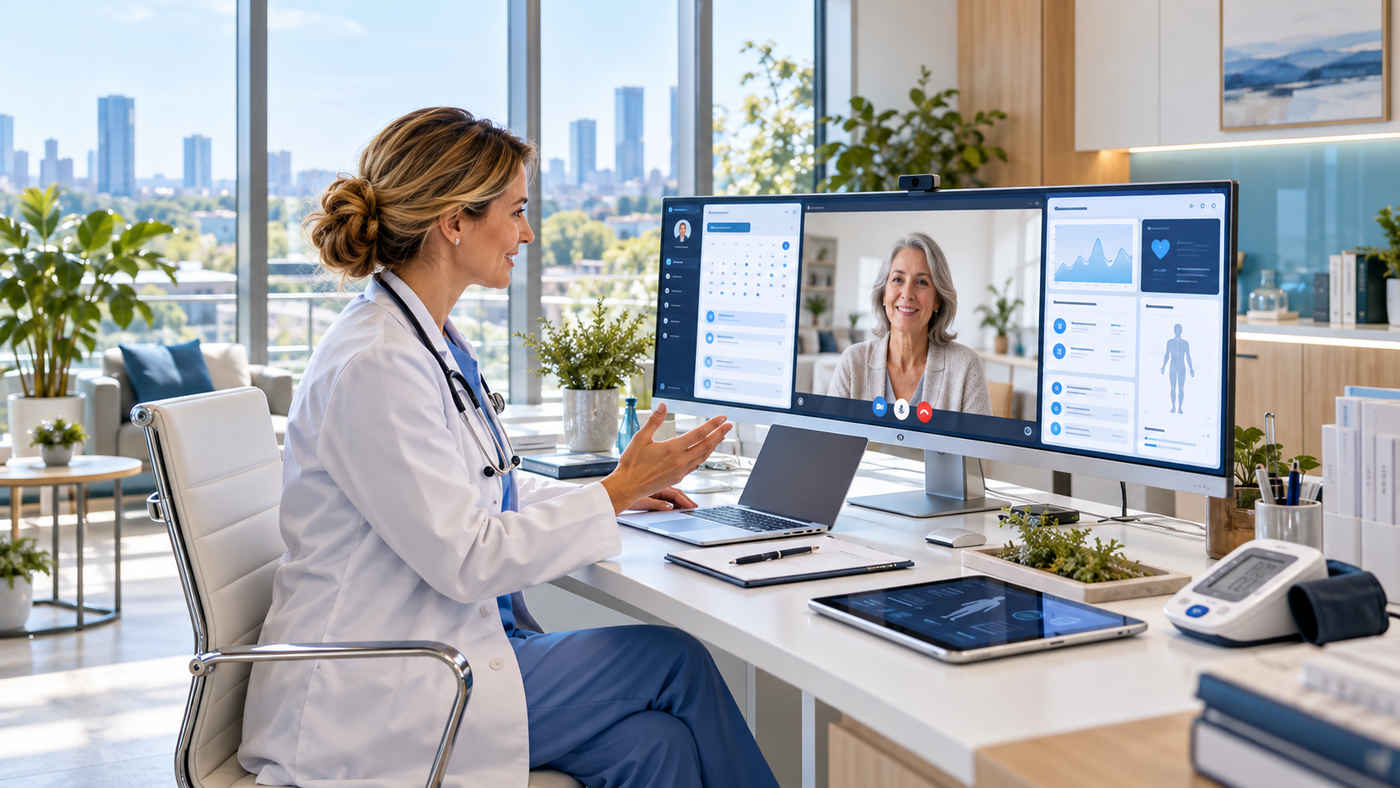
Telemed Software: 7 Powerful Strategies for Safer, Smarter, and More Accessible Virtual Healthcare
Healthcare delivery is changing as medical organisations adopt digital technologies to connect patients with qualified professionals beyond traditional examination rooms. From virtual consultations and follow-up appointments to remote patient monitoring and secure medical communication, telemed software has become an important component of modern healthcare infrastructure. These platforms help clinics, hospitals, independent medical practices, and other healthcare organisations coordinate selected services remotely while supporting efficient clinical workflows.
In the United States, telemedicine technology is used across several medical specialties, including primary care, behavioural health, dermatology, chronic disease management, and selected follow-up services.
Patients may benefit from reduced travel requirements, more flexible appointment arrangements, and convenient communication with healthcare professionals.
Medical practices can use appropriately configured telemedicine systems to manage scheduling, document encounters, coordinate records, and maintain communication between visits.
However, choosing a virtual healthcare platform requires careful evaluation.
A reliable solution must support patient privacy, appropriate clinical decisions, accessibility, workflow integration, and relevant healthcare regulations.
Not every platform marketed as HIPAA compliant will automatically satisfy every obligation of a healthcare organisation.
Similarly, adding video conferencing functionality does not necessarily create a complete telemedicine solution.
This guide explores seven essential strategies for selecting and implementing telemedicine technology, explains the features modern practices should consider, and examines how virtual care platforms can support effective healthcare delivery in 2026.
What Is Telemed Software?
Telemed software is a digital platform or application that enables healthcare professionals to provide selected medical services remotely using communication and healthcare information technologies.
Depending on the system, it may support live video consultations, secure messaging, appointment scheduling, virtual patient intake, electronic medical records, prescription workflows, and related administrative functions.
Some solutions operate independently, while others integrate directly with existing electronic health record systems.
The most suitable configuration depends on the healthcare organisation’s size, specialty, patient population, and operational requirements.
How Does Telemed Software Work?
A typical virtual consultation begins when a patient books an appointment through an online portal or practice scheduling system.
The platform may then send a confirmation and instructions explaining how to join the consultation.
Before the appointment, the patient may complete relevant intake forms, provide necessary information, and review applicable consent requirements.
At the scheduled time, the patient and clinician connect through the supported communication method.
The healthcare professional evaluates the available information and determines which services can be provided appropriately through the remote format.
After the encounter, relevant documentation may be saved to the patient’s medical record.
Depending on clinical appropriateness and applicable rules, follow-up arrangements may include further virtual appointments, in-person evaluation, testing, or referrals.
Telemedicine vs. Telehealth: What’s the Difference?
The terms telemedicine and telehealth are sometimes used interchangeably.
However, telehealth is generally the broader concept.
Telehealth can encompass clinical care, patient education, remote health monitoring, and certain administrative or educational activities conducted through telecommunications technology.
Telemedicine more specifically describes the remote delivery of clinical healthcare services.
In practical software purchasing, vendors may use either term.
Healthcare organisations should evaluate the actual capabilities rather than rely exclusively on product terminology.
Why Telemed Software Matters in Modern Healthcare
Virtual care can support healthcare delivery when the service is clinically appropriate and the technology meets the needs of patients and providers.
Its benefits depend on implementation quality, not simply the availability of a video connection.
Supporting Convenient Patient Access
For some patients, travelling to a clinic requires substantial time, transportation, and scheduling arrangements.
Virtual consultations may reduce these barriers for eligible appointments.
This can be particularly useful for certain follow-up visits and consultations that do not require an in-person physical examination.
However, telemedicine is not appropriate for every medical condition.
A healthcare professional must determine when an in-person evaluation or emergency service is necessary.
Improving Appointment Coordination
Digital scheduling can help practices organise remote consultations alongside traditional appointments.
Automated reminders may reduce administrative work and help patients prepare for their visits.
Actual operational improvements depend on the quality of the scheduling configuration and patient communication.
Supporting Hybrid Healthcare
Many organisations use a hybrid care model combining in-person and virtual services.
For example, an initial examination may take place at a clinic, followed by a remote discussion of results when appropriate.
The healthcare team should maintain continuity between both settings.
Enabling More Connected Workflows
An integrated virtual care system may connect patient intake, appointments, clinical documentation, and billing.
This can reduce unnecessary duplication when implemented correctly.
However, poorly configured integrations can create additional administrative problems.
7 Essential Strategies for Choosing the Right Telemed Software
Selecting telemedicine technology is both a clinical and operational decision.
Healthcare organisations should assess patient requirements, security, usability, integration, cost, and implementation before committing to a platform.
1. Identify Your Healthcare Practice’s Actual Requirements
The first step is understanding what the practice expects the software to accomplish.
A small counselling practice may need a different solution from a multispecialty medical group or hospital network.
Purchasing a feature-heavy platform without a clear operational plan can increase complexity and cost.
Define the Types of Virtual Appointments
Begin by identifying which services are appropriate for remote delivery.
Potential applications may include:
- Selected primary care consultations
- Behavioural health appointments
- Follow-up visits
- Medication management discussions
- Certain chronic disease management appointments
- Specialist consultations
- Patient education
- Appropriate remote monitoring activities
Clinical leaders should determine which services can safely be provided virtually.
Technology should support established professional standards rather than determine clinical suitability on its own.
Evaluate Patient Volume
Consider the expected number of providers, locations, and virtual appointments.
A platform serving a single practitioner may require fewer administrative capabilities than one supporting multiple departments.
However, future growth should also be considered.
A system that cannot accommodate additional authorised users or appointment demand may eventually create operational limitations.
Identify Administrative Needs
Some practices require only secure video appointments.
Others need scheduling, billing support, patient intake, messaging, and record integration.
Document the features that are essential for everyday operations.
Distinguish necessary functions from optional upgrades.
Consider Different Medical Specialties
A behavioural health practice may prioritise reliable private consultations and accessible communication.
A primary care clinic may need stronger integration with patient records and appointment workflows.
A remote monitoring programme may require device connectivity and appropriate clinical alert management.
The ideal system should reflect the services being delivered.
2. Prioritise Patient Privacy, HIPAA Compliance, and Cybersecurity
Patient information is among the most sensitive data handled by healthcare organisations.
Telemedicine platforms can collect, transmit, and store protected health information.
Security and privacy therefore require careful attention.
Understand HIPAA Responsibilities
The Health Insurance Portability and Accountability Act establishes requirements for covered entities and business associates.
The U.S. Department of Health and Human Services explains that covered healthcare providers using telehealth must comply with applicable HIPAA rules.
Technology vendors handling protected health information on behalf of covered providers generally need appropriate business associate agreements.
However, a vendor’s marketing claim of HIPAA compliance does not automatically make the entire practice compliant.
The healthcare organisation remains responsible for its own applicable administrative, technical, and physical safeguards.
Request a Business Associate Agreement
A business associate agreement, commonly called a BAA, establishes contractual responsibilities concerning protected health information.
Healthcare organisations should determine whether the proposed vendor performs functions that require such an agreement.
The contract should be reviewed before sensitive patient information is shared through the platform.
Cloud hosting arrangements and additional subprocessors may require consideration.
Evaluate Encryption and Access Controls
A secure telemedicine platform should provide suitable protections for relevant communications and stored information.
Important capabilities may include encryption, authenticated access, role-based permissions, activity logging, and secure account management.
Multifactor authentication may provide additional account protection.
The precise controls should reflect the organisation’s risk assessment.
Conduct a Security Risk Analysis
HHS recommends conducting and periodically updating privacy and security risk assessments.
A practice should consider how its technology, staff procedures, and patient workflows may expose information.
Potential issues include unauthorised access, insecure devices, inappropriate recording, account compromise, and data retention.
Security is an ongoing process rather than a one-time software certification.
Be Careful With Recorded Consultations
Recording a virtual medical visit can introduce additional privacy and data management requirements.
Healthcare organisations should establish when recording is necessary and how consent, access, retention, and secure storage will be managed.
Recording should not be enabled automatically without understanding the applicable legal and operational implications.
Plan for Security Incidents
The provider should maintain documented procedures for service interruptions, suspected unauthorised access, and other incidents.
Ask vendors about backup arrangements, incident notification responsibilities, and data recovery capabilities.
A platform should fit the organisation’s wider security programme.
3. Choose User-Friendly Features That Support Accessible Care
Telemedicine depends on patients being able to connect and communicate effectively.
A technologically advanced platform may still fail to serve its intended users if the interface is confusing or inaccessible.
Provide Simple Appointment Access
Patients should receive clear instructions explaining how to join a consultation.
Where practical, the process should avoid unnecessary technical steps.
A virtual waiting room can help organise appointments and reduce confusion.
Practices should also have a procedure for helping patients who cannot connect.
Support Common Devices
Many patients use smartphones rather than desktop computers.
A suitable platform should be evaluated on commonly used devices and browsers.
Test the actual patient experience instead of relying solely on vendor demonstrations.
The registration, intake, consultation, and follow-up processes should all be reviewed.
Consider Internet Connectivity
Video consultations require appropriate network connectivity.
Some patients may experience unstable connections or have limited access to high-speed internet.
Where clinically appropriate and legally permitted, alternative communication arrangements may help.
However, the availability of a telephone connection does not automatically make every service eligible for audio-only reimbursement.
Coverage and clinical requirements must be checked separately.
Support Patients With Disabilities
Federal accessibility and nondiscrimination obligations may apply to healthcare providers offering telehealth.
The U.S. Department of Health and Human Services and Department of Justice have explained that virtual care must be accessible under applicable civil rights laws.
Depending on individual needs, appropriate support can include screen reader compatibility, captioning, interpreters, and accessible communication methods.
A platform should not create unnecessary barriers for patients with visual, hearing, mobility, or other disabilities.
Consider Language Access
Some patients need language assistance to understand medical information or navigate appointment instructions.
Where required, healthcare organisations must provide appropriate language access.
Software should support the practical participation of qualified interpreters when needed.
Accessibility is part of delivering equitable care, not simply an optional design feature.
4. Integrate Telemed Software With EHR and Practice Management Systems
Virtual consultations should fit into the healthcare organisation’s existing records and administrative workflows.
Disconnected systems can create duplicate data entry, inconsistent information, and avoidable administrative effort.
Electronic Health Record Integration
Electronic health record systems maintain clinical information concerning patient care.
An integration may allow authorised staff to access appointment details, document encounters, and exchange relevant information.
However, integration capabilities vary between platforms.
The vendor should explain exactly which data can be transferred and whether the process is automatic or requires additional steps.
Appointment Scheduling Integration
Connecting virtual appointments with the practice calendar can reduce scheduling conflicts.
The system should account for provider availability, appointment types, time zones, and rescheduling.
For practices offering both in-person and remote visits, the scheduling process should distinguish the two formats clearly.
Patient Portal Integration
A patient portal may allow patients to review appointment information, complete forms, and access appropriate communication features.
Some healthcare organisations already have telehealth capabilities within their existing portal.
Before purchasing another system, evaluate the tools currently available.
Billing and Revenue Cycle Workflows
A telemedicine platform may assist with collecting administrative information and preparing documentation for billing.
However, billing eligibility depends on the service, payer, patient circumstances, provider qualifications, and applicable policy.
Software automation does not guarantee that a claim will be accepted.
Evaluate Interoperability Carefully
Some systems support standards-based data exchange.
Healthcare organisations may encounter technologies such as HL7 messaging and FHIR-based interfaces.
However, the presence of an advertised API does not guarantee complete interoperability.
Confirm which information is exchanged, how errors are handled, and whether additional integration charges apply.
Test Real Clinical Workflows
Ask the vendor to demonstrate a complete appointment process.
A useful demonstration should show scheduling, patient intake, consultation access, documentation, and appropriate follow-up actions.
This provides a more realistic understanding of the system than a presentation focused only on the video interface.
5. Understand Healthcare Regulations, Licensing, and Reimbursement
Telemedicine software cannot independently determine whether a clinician may legally provide a particular service.
Healthcare organisations must understand the rules governing their professionals and patients.
These requirements can vary by state, payer, profession, and type of care.
State Medical Licensing Requirements
In the United States, provider licensure is generally connected to the location where the patient receives care.
HHS explains that providing services across state lines may require an appropriate licence or another recognised legal pathway.
Possible arrangements include full state licensure, temporary practice provisions, reciprocity, interstate compacts, or telehealth-specific registration.
The available options vary.
Practices should verify patient location and applicable provider authorisation before an appointment.
Interstate Licensure Compacts
Licensure compacts can provide streamlined pathways for eligible professionals.
Examples include arrangements for physicians, nurses, psychologists, and certain allied health professionals.
However, compact participation does not mean that every provider can practice in every state without additional conditions.
The requirements of the relevant compact and state must be followed.
Patient Consent Requirements
Telehealth consent rules differ according to jurisdiction and circumstances.
Healthcare organisations should identify the consent obligations relevant to the service.
The platform may help document consent, but the process must still satisfy applicable requirements.
Medicare Telehealth Policies in 2026
Medicare covers selected telehealth services according to applicable rules.
Current federal guidance states that many Medicare telehealth flexibilities have been extended through December 31, 2027.
These include provisions affecting patient location and certain audio-only services.
However, coverage depends on the individual service and current payment policy.
Healthcare organisations should review the relevant CMS guidance before establishing billing procedures.
Controlled Substance Prescribing
Prescribing controlled medications through telemedicine involves additional federal and state requirements.
In January 2026, HHS and the Drug Enforcement Administration announced an extension of specified telemedicine prescribing flexibilities through December 31, 2026.
Under qualifying conditions, authorised practitioners may prescribe certain controlled substances without a prior in-person medical evaluation.
However, the extension does not eliminate requirements concerning legitimate medical purposes, professional licensing, DEA registration, or other applicable laws.
A telemedicine platform’s prescription feature does not independently authorise a clinician to prescribe controlled medications.
Understand Clinical Software Regulation
Some telemedicine applications include clinical decision support or other advanced functions.
The FDA’s January 2026 guidance explains that certain clinical decision support software functions fall outside the medical device definition, while others remain subject to medical device oversight.
The correct classification depends on the individual software function and intended use.
A standard video consultation platform should not automatically be treated as a regulated medical device.
Likewise, an AI-enabled diagnostic feature should not automatically be assumed exempt from regulation.
6. Compare Software Costs, Scalability, and Vendor Support
The cost of telemed software varies according to features, implementation requirements, vendor contracts, and organisation size.
A low subscription price may not reflect the complete expense.
Healthcare organisations should evaluate the total cost of ownership.
Subscription-Based Pricing
Some telemedicine vendors charge recurring subscription fees.
Pricing may depend on the number of providers, administrators, locations, or enabled features.
The contract should explain which capabilities are included.
Ask whether video usage, storage, messaging, or additional integrations create separate charges.
Per-Consultation Charges
Other platforms may use transaction-based pricing.
A practice might pay according to the number of consultations or specific services delivered.
This model can produce different costs depending on patient volume.
Compare the financial effect using realistic appointment projections.
Initial Setup and Integration Costs
Implementation may involve account configuration, data migration, interface development, training, and administrative preparation.
These expenses should be included when comparing proposals.
Some integrations may require additional vendors or third-party services.
Software Scalability
A platform serving one practitioner may later need to support additional clinicians and locations.
Ask whether the system can manage growth without major disruption.
However, avoid paying for unnecessary enterprise features when the practice has no realistic need for them.
Vendor Support and Reliability
Technical support is important because failed virtual appointments can interrupt patient care.
Ask about support availability, incident response, planned maintenance, and escalation procedures.
Review service-level commitments rather than relying on vague statements about guaranteed uptime.
No online system is completely immune to outages.
A healthcare organisation should maintain a suitable contingency plan.
Data Portability and Contract Exit Terms
Before signing, determine how patient and administrative data can be exported if the organisation changes providers.
Review supported formats, possible fees, retention policies, and deletion procedures.
Data migration can become expensive when these matters are not addressed early.
The contract should provide clarity about responsibilities when the service ends.
7. Test, Train, and Continuously Improve Virtual Care Operations
A successful telemedicine rollout requires more than installing software.
Healthcare organisations need clear procedures, appropriately trained staff, and feedback from patients and clinicians.
Begin With a Pilot Programme
Consider testing the system with a limited group of providers and suitable appointments.
A pilot allows the organisation to evaluate technical reliability and workflow suitability.
It can also reveal problems that were not apparent during vendor demonstrations.
Train Clinical and Administrative Staff
Different staff members use the system for different tasks.
Front-desk personnel may manage appointment reminders and patient access.
Clinicians may need training in documentation, video consultations, and appropriate escalation procedures.
Technical administrators may need to manage permissions, integrations, and security settings.
Training should reflect each role.
Develop Patient Instructions
Provide clear guidance on joining an appointment and testing the relevant equipment.
Explain whom patients should contact if they cannot connect.
Instructions should account for patients with different levels of technical experience.
Monitor Operational Performance
Useful performance measures may include:
- Appointment connection success rates
- Consultation delays
- Technical support requests
- Patient-reported usability
- Documentation completion
- Scheduling errors
- Integration failures
- Security incidents
- Provider feedback
These indicators can help organisations identify problems and evaluate improvements.
Maintain a Backup Procedure
Internet outages and equipment failures can interrupt virtual visits.
The practice should establish procedures for contacting patients, rescheduling appointments, and directing individuals to appropriate alternative care.
For urgent or emergency conditions, patients should receive instructions suited to the situation.
Review the Platform Periodically
Healthcare technology changes over time.
A system that works well during initial deployment may require updates as patient needs, organisational operations, and regulations evolve.
Regular assessments can help maintain performance and security.
Essential Features of Modern Telemed Software
A modern telemedicine platform may contain several interconnected functions.
However, feature availability varies considerably.
Secure Video Consultations
Video communication allows clinicians and patients to interact remotely.
The system should provide appropriate audio and visual quality, suitable privacy protections, and a reliable connection process.
Virtual Waiting Rooms
Waiting rooms help organise patient entry into scheduled consultations.
They may provide a controlled process for admitting patients to an appointment.
Digital Patient Intake
Online forms can collect relevant information before a consultation.
This may include contact details, history, and appointment-specific information.
Data collection should be limited to appropriate purposes and protected accordingly.
Electronic Prescription Workflows
Certain systems integrate with prescribing tools.
However, prescribing remains subject to professional judgement and applicable state and federal rules.
A software feature does not replace legal authorisation.
Secure Patient Messaging
Messaging features may support communication between appointments.
Organisations should establish response expectations and avoid encouraging patients to use routine messaging for medical emergencies.
Medical Documentation
Telemedicine platforms may help clinicians create or update encounter notes.
Documentation should remain accurate and reflect the care actually provided.
Remote Patient Monitoring Integration
Some platforms can receive information from compatible monitoring devices.
Examples may include selected blood pressure, glucose, or other approved monitoring technologies.
However, device accuracy, clinical appropriateness, data review responsibilities, and relevant regulatory requirements must be evaluated.
Administrative Analytics
Reporting features may help practices monitor appointment volumes, scheduling performance, and related operational indicators.
Analytics should be used with appropriate privacy safeguards.
Different Types of Telemedicine Software
Not every virtual healthcare platform has the same architecture.
Choosing the right type depends on how the organisation provides care.
Standalone Telemedicine Platforms
Standalone solutions focus primarily on virtual consultations and related tools.
They may be suitable for practices needing a limited set of remote care functions.
However, separate scheduling or record systems may require integration.
EHR-Integrated Telemedicine Software
These solutions connect virtual consultation features with existing electronic health records.
They may reduce duplicate documentation when configured correctly.
Integration depth varies between vendors.
Enterprise Telehealth Platforms
Large medical organisations may require multi-location support, central administration, advanced identity management, and integrations with multiple systems.
Enterprise systems can provide broad capabilities but may also involve more complex implementation.
Mobile Telemedicine Applications
Mobile applications can give patients access to appointments using smartphones or tablets.
Their usability should be assessed across supported devices.
A mobile interface must still meet applicable privacy, accessibility, and clinical requirements.
Specialty-Specific Telehealth Solutions
Some systems are designed around particular medical specialties.
For example, a behavioural health platform may emphasise confidential consultations and appointment continuity.
A specialist programme involving remote monitoring may require more extensive device integration.
The appropriate software depends on the clinical workflow.
How Telemed Software Supports Different Healthcare Practices
Virtual care requirements vary significantly across medical specialties.
Primary Care Clinics
Primary care organisations may use telemedicine for selected consultations, follow-up visits, and other suitable services.
Integration with medical records and appointment scheduling can be important.
However, an in-person examination may be necessary for some symptoms and conditions.
Mental and Behavioural Healthcare
Mental health professionals may conduct appropriate consultations using secure virtual communication.
Privacy, reliable audio, accessibility, and suitable emergency procedures deserve particular attention.
State licensing and payer requirements still apply.
Dermatology
Certain dermatology workflows may involve live video or appropriate image-based review.
However, image quality, patient consent, and clinical suitability are important.
Not every skin condition can be evaluated adequately through remote images.
Chronic Disease Management
Virtual appointments may support selected follow-up activities and discussions of relevant health information.
Remote monitoring tools may also play a role when clinically appropriate.
These technologies supplement professional care rather than automatically replacing necessary examinations.
Specialist Consultations
Telemedicine may help coordinate selected specialist appointments and follow-up services.
The suitability depends on the medical specialty, patient condition, and available information.
Rural Healthcare
Patients in rural communities may face longer travel distances for certain services.
Telehealth can reduce travel needs when clinically and technically feasible.
However, internet connectivity and provider availability remain important barriers.
Telemed Software vs. Traditional Healthcare Software
Traditional practice management and electronic health record systems focus on healthcare administration and clinical information.
Telemedicine adds remote communication and related service delivery capabilities.
Practice Management Software
Practice management tools commonly support scheduling, billing, and administrative operations.
They may not include integrated virtual consultation features.
Electronic Health Record Systems
EHR systems maintain clinical information.
Some incorporate telehealth functions, while others rely on integrations.
Telemedicine Platforms
Telemedicine platforms enable remote clinical interactions and may provide additional supporting tools.
The appropriate technology strategy depends on how these systems work together.
A healthcare organisation should avoid purchasing overlapping products without first evaluating existing functionality.
How Much Does Telemed Software Cost in 2026?
Telemedicine pricing depends on the vendor and required configuration.
A small practice may have different needs and expenses from a hospital network.
Factors Affecting Pricing
Important considerations include the number of providers, usage limits, storage, video capabilities, EHR integrations, support, and implementation requirements.
Additional expenses may arise from data migration, training, and specialist development.
Monthly vs. Annual Contracts
Some vendors offer monthly subscriptions.
Others use annual agreements or longer enterprise contracts.
Compare contract duration, renewal terms, cancellation provisions, and price changes.
Custom Telemedicine Development
An organisation may choose to build a customised platform rather than use an established software service.
Custom development can support particular workflows but introduces technical, security, maintenance, and regulatory responsibilities.
The decision should be supported by a realistic business and operational assessment.
Calculating Return on Investment
Potential benefits may include reduced administrative work, improved scheduling coordination, and more flexible service delivery.
However, expected savings should be measured rather than assumed.
Track actual implementation expenses and operational performance.
A successful platform should provide value through appropriate clinical care and sustainable operations.
Common Mistakes to Avoid When Choosing Telemed Software
One common mistake is selecting a system based solely on its advertised features.
An impressive dashboard may not support actual clinical workflows.
Another mistake is assuming that an advertised HIPAA-compliant label eliminates the need for a security assessment and appropriate contractual arrangements.
Some organisations also overlook patient accessibility.
A platform that works well for staff may be difficult for patients with limited technical experience or specific communication needs.
Poor EHR integration can create duplicate documentation.
Unclear vendor contracts may lead to unexpected costs.
Healthcare organisations may also misunderstand licensing and reimbursement rules.
A virtual platform does not automatically authorise cross-state care or guarantee insurance payment.
Finally, implementing a system without sufficient training can reduce the benefits of otherwise suitable technology.
The Role of Artificial Intelligence in Telemed Software
Artificial intelligence is increasingly being incorporated into digital healthcare tools.
Potential applications include administrative assistance, appointment coordination, transcription, and selected clinical support functions.
However, AI introduces additional considerations involving accuracy, privacy, transparency, and professional oversight.
AI-Assisted Clinical Documentation
Some products can generate draft notes from authorised encounter information.
These tools may help reduce manual documentation work.
However, clinicians should review generated content for accuracy and completeness.
Automatically produced notes may omit important context or introduce incorrect details.
Appointment and Administrative Automation
AI tools may assist with routine administrative tasks.
Potential examples include categorising requests, routing inquiries, and supporting appointment workflows.
Automated decisions should be designed with appropriate safeguards.
Clinical Decision Support
Certain AI features attempt to provide patient-specific clinical information or recommendations.
Their regulatory status depends on the actual intended function.
The FDA’s January 2026 clinical decision support guidance clarifies that some software functions are excluded from medical device regulation, while others remain subject to oversight.
Developers and healthcare buyers should evaluate relevant requirements rather than assume that all AI medical software falls into the same category.
Human Oversight Remains Essential
AI-generated content should not be treated as a substitute for qualified clinical judgement.
When patient safety is involved, healthcare professionals must understand the limitations of automated outputs.
The strongest implementation approach treats AI as a carefully evaluated supporting technology.
The Future of Telemedicine Software in the United States
Telemedicine technology is likely to remain part of hybrid healthcare delivery.
However, the pace and direction of adoption depend on clinical suitability, patient preferences, connectivity, costs, and public policy.
More Connected Virtual Care
Healthcare organisations may continue to seek closer integration between consultations, medical records, and remote monitoring.
Reliable interoperability can support information continuity.
Greater Emphasis on Patient Accessibility
As virtual services become more established, organisations will need to address digital literacy, disability accessibility, language access, and connectivity limitations.
A technically capable system is not useful if patients cannot access it.
Stronger Security Expectations
Cybersecurity and patient information protection will remain important considerations.
Practices should evaluate vendor risk, access controls, data management, and incident response.
Continued Regulatory Development
Telehealth reimbursement, controlled-substance prescribing, cross-state licensure, and digital health software oversight can change.
Healthcare organisations should monitor official guidance and review applicable requirements before adopting new services.
Hybrid Care as a Practical Model
Virtual consultations are most useful when they complement appropriate in-person care.
The objective is not to replace every physical appointment.
It is to provide suitable healthcare through the most appropriate available method.
How to Choose the Best Telemed Software for Your Healthcare Organisation
Start by documenting the organisation’s clinical and administrative requirements.
Identify which services will be delivered remotely and which must remain in person.
Evaluate the software’s security protections and contractual responsibilities.
Check whether relevant business associate agreements are available.
Assess patient accessibility, supported devices, and connection reliability.
Confirm the actual level of EHR integration and examine a complete appointment workflow.
Review vendor support, pricing, data portability, and implementation requirements.
Consider a pilot programme before full deployment.
Finally, establish appropriate clinical governance, staff training, patient communication, and ongoing monitoring procedures.
The best platform is not necessarily the one with the most features.
It is the system that supports safe, accessible, compliant, and effective care for the organisation’s actual patient population.
Frequently Asked Questions
1. What is telemed software used for?
Telemed software supports remote healthcare services, including virtual consultations, appointment scheduling, secure patient communication, clinical documentation, and selected follow-up activities.
2. Is telemed software HIPAA compliant?
Some platforms provide features and agreements supporting HIPAA compliance, but a healthcare organisation must also meet its own applicable privacy, security, and operational obligations.
3. Can telemed software integrate with electronic health records?
Yes. Many platforms offer EHR integrations, but supported data exchange, compatibility, configuration, and additional costs vary by vendor.
4. How much does telemed software cost?
Costs depend on provider count, features, appointment volume, integrations, implementation, and support. Organisations should compare the complete ownership cost.
5. Can telemed software support online prescriptions?
Certain platforms integrate prescribing functions, but clinicians must follow applicable state and federal licensing, prescribing, and controlled-substance requirements.
6. What is the best telemed software for a small clinic?
The best option depends on clinical needs, HIPAA responsibilities, ease of use, EHR compatibility, patient accessibility, support quality, and available budget.
Conclusion
Telemed software plays an important role in helping healthcare organisations deliver selected services through secure and accessible digital channels. The most effective platforms combine reliable communication, appropriate privacy safeguards, integrated workflows, and practical patient support. Healthcare providers should evaluate clinical suitability, regulatory requirements, vendor capabilities, and long-term costs before implementation. With careful planning and ongoing oversight, telemedicine technology can support a more flexible and connected healthcare experience