Marine Detail Supply Co.: A Practical Guide to Better Boat Care
Shopping at Marine Detail Supply Co. is most useful when you already understand the job you want to complete. A routine wash, gelcoat restoration, upholstery clean, and protective coating application involve different products and techniques. Choosing supplies around the surface and its condition helps you build a more effective boat care routine.
A boat can contain gelcoat, painted surfaces, stainless steel, clear plastics, upholstery, canvas, and textured decks. Treating all those materials with one cleaner or polishing method can create avoidable problems.
Good detailing therefore begins with inspection. Identify the finish, understand what has changed, and decide whether the task calls for cleaning, correction, protection, or professional repair.
This guide explains the company’s product categories and seven practical ways to organise your purchases and maintenance work. It combines verified company information with general planning guidance rather than presenting an independent product test.
What Is Marine Detail Supply Co.?
Marine Detail Supply Co. is a supplier serving professional marine detailers and boat owners who maintain their own vessels. Its website offers wash-care products, compounds, polishes, coatings, sealants, pads, machines, and accessories from multiple brands. It also advertises training and educational resources. Marine Detail Supply
The range makes it possible to shop by stage of work rather than buying an isolated product without its supporting tools.
For example, a polishing project may require more than a bottle of compound. The pad, machine, towels, preparation method, and follow-up protection all need consideration.
Think in Terms of a Complete Process
Before shopping, write a short description of the task.
Include the surface material, its condition, previous treatments, and the equipment you already own.
Photographs can help explain the problem, particularly when you are unsure whether you are seeing staining, oxidation, scratches, or a failing finish.
The more precise your description, the easier it becomes to ask useful questions and avoid unnecessary purchases.
1. Identify the Surface Before Choosing Products
The word “marine” does not make a product suitable for every part of a boat.
A cleaner intended for one material may be inappropriate for another. Likewise, an abrasive process that works on a particular gelcoat surface should not automatically be applied to paint or clear plastic.
Distinguish Gelcoat From Painted Finishes
If you do not know what finish is on the boat, consult its records, manufacturer, or a knowledgeable professional.
This distinction can change the entire detailing plan.
For example, Awlgrip specifically advises against polishing compounds on its G/H Line topcoat. That instruction demonstrates why a general boat-polishing routine cannot be applied indiscriminately to every finish. Awlgrip
Avoid using a test patch to justify a process the finish manufacturer prohibits.
Make a Surface Inventory
Divide the boat into practical areas:
- Hull and topside finishes.
- Glass and clear plastic windows.
- Metal fittings and rails.
- Upholstery and cushions.
- Canvas and covers.
- Textured walking surfaces.
Record the approved care instructions for each area.
This inventory helps you avoid applying a convenient product to an incompatible surface simply because it is already on the cart.
Ask About Previous Treatments
A boat may already have wax, sealant, a coating, or another protective treatment.
Ask the previous owner or detailer what was applied and when.
Incomplete records do not necessarily prevent maintenance, but they create questions to resolve before correction or coating work begins.
2. Build a Reliable Washing Routine
Regular washing gives you an opportunity to inspect the boat while removing everyday contamination.
Choose a wash product compatible with the surface and any existing protection. Follow its dilution, application, and rinsing instructions.
More concentrated cleaner is not automatically more effective or appropriate.
Prepare the Equipment First
Gather suitable wash tools, clean towels, buckets, and any surface-specific brushes before starting.
Inspect everything for grit or contamination.
Keep tools used on dirty hardware or heavily soiled areas separate from those used on delicate finishes. A simple colour or storage system can help you maintain that separation.
Plan your working route so you are not repeatedly stepping across freshly cleaned areas.
Work Around Conditions
Sun, wind, surface temperature, and access can affect how practical the job is.
Read the product instructions and choose conditions that allow you to complete each stage properly.
If you cannot comfortably reach an area from a stable position, change the access arrangement rather than stretching while handling equipment.
Respect the Marina Environment
Discuss cleaning locations, runoff controls, and permitted products with the marina or boatyard.
EPA marina guidance emphasises minimising the entry of cleaning chemicals into the water and using appropriate products in the smallest effective amounts. A biodegradable label should not be treated as permission to discharge cleaner freely. epa.gov
Good planning includes what happens to the wash water, not just how the boat looks afterward.
3. Separate Cleaning From Surface Correction
A dull finish does not always need aggressive polishing.
First establish whether the appearance comes from removable contamination, weathering, previous polishing marks, or a damaged finish.
Cleaning and correction perform different jobs. Buying a stronger compound before understanding the problem can lead to unnecessary abrasion.
Understand the Purpose of Compounds and Polishes
For suitable gelcoat, abrasive correction can remove degraded surface material and refine the finish.
Starke’s restoration guidance describes a staged approach involving correction, refinement, and finishing, with the compound, pad, and machine selected together. It also recommends starting with the least aggressive effective approach. Starke Yacht Care
That does not mean every boat needs every stage.
The appropriate process depends on the finish, its remaining condition, and the result you are trying to achieve.
Evaluate a Small Area First
Where the manufacturer permits the proposed process, assess a representative area before committing to the whole boat.
Inspect it in useful lighting and compare it with the surrounding surface.
Look beyond immediate gloss. Check for haze, unevenness, residue, or other changes that suggest the process needs adjustment.
Record the products and tools used so a successful result can be repeated.
Recognise When Detailing Is Not the Answer
Cracks, peeling finishes, exposed substrate, and other defects may require repair or refinishing.
Do not keep increasing abrasive strength because a damaged area refuses to improve.
A professional assessment can prevent time and money being spent on a process that cannot address the underlying condition.
4. Match Pads, Machines, and Working Technique
A polishing system is a combination of equipment, consumables, and technique.
Choosing one component without considering the others makes results harder to predict.
Before buying, confirm pad size, backing-plate compatibility, machine suitability, and the intended application.
Select Equipment Around the Actual Job
Consider the areas you need to reach and how long you will be working.
A machine suitable for a broad surface may be awkward around fittings or in confined spaces.
Weight, grip, cable management, and operator fatigue also matter. The most powerful option is not automatically the most practical choice for your experience or access conditions.
Ask for a demonstration or appropriate training when moving beyond familiar equipment.
Keep Pads and Towels Organised
Store clean materials separately from used ones.
Label pads by task or product so cutting, finishing, and protection stages remain distinguishable.
Inspect towels before they touch a finished surface. Remove damaged or contaminated items from delicate work.
Keep enough consumables available to avoid continuing with an unsuitable item simply because no replacement is ready.
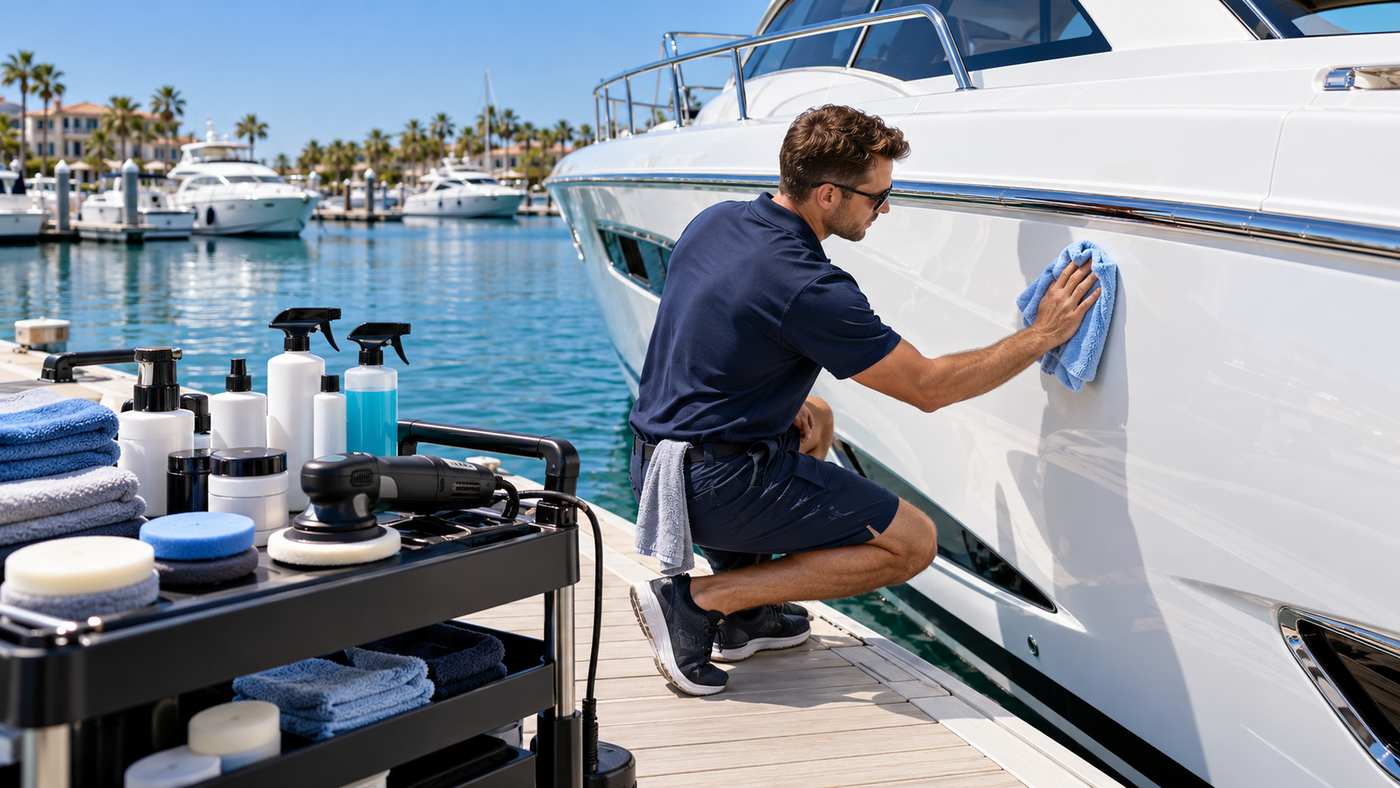
Marine Detail Supply Co. Shopping Tip: Check the Supporting Items
Before completing an order, review the small accessories required to use the main product.
A missing backing plate, suitable applicator, or clean towel supply can interrupt the job just as effectively as a missing machine.
5. Choose Protection Around Real Maintenance Needs
Wax, sealants, and ceramic coatings are different product categories with different preparation and application requirements.
Choose a product according to the approved surface, working conditions, and maintenance routine you can realistically sustain.
Avoid buying solely because a label advertises the longest protection period.
Read the Entire Application Process
Check the required preparation, working conditions, application method, and curing instructions.
Make sure you can provide those conditions before starting.
A product that needs controlled preparation and protected curing time may be difficult to apply during a short visit to an exposed berth.
In that situation, a different approved protection system or professional application may be more practical.
Resolve Surface Problems First
A protective product should not be expected to repair scratches, restore missing material, or correct an unsuitable underlying finish.
Decide what level of appearance is achievable before protection is applied.
If additional correction is required, understand the sequence and confirm compatibility between the preparation products and final protection.
Plan the Maintenance After Application
Keep the product instructions and record the application date.
Ask which wash products and maintenance procedures are appropriate afterward.
Treat advertised longevity as conditional on the manufacturer’s requirements and actual service conditions. Sun exposure, storage, use, and maintenance differ from boat to boat.
A manageable routine is more useful than an ambitious protection choice that you cannot maintain.
6. Give Upholstery, Canvas, and Decks Their Own Plan
The rest of the boat deserves the same care as the hull.
Seats, covers, clear enclosures, and walking surfaces have different purposes and often different maintenance instructions.
Do not extend a successful hull-cleaning method to these areas without checking compatibility.
Follow Fabric-Specific Guidance
Identify the material manufacturer where possible.
Sunbrella, for example, publishes separate cleaning guidance for marine upholstery and canvas. Its canvas instructions include mild soap and water or its designated cleaner, illustrating the value of following material-specific directions. global.sunbrella.com
Those instructions should not be assumed to apply unchanged to every marine fabric or vinyl product.
Consider the Complete Assembly
A cushion includes more than its visible cover. Seams, backing, fasteners, and internal material can affect how it should be cleaned and dried.
Check the care instructions before soaking or treating an assembly.
Plan enough time for the required drying before replacing covers or enclosing storage spaces.
Protect Walking Surfaces
Use only products approved for the relevant deck material and purpose.
Do not apply a gloss-enhancing treatment to a walking area simply because it improves the appearance of another surface.
Ask specifically about the intended use, required rinsing, and any effect on the finished surface.
Convenience should not replace compatibility.
7. Buy Supplies as an Organised System
An effective supply kit does not need to contain every available product.
Start with the tasks you perform regularly, then add specialist items when there is a clear need.
This keeps the kit easier to understand and reduces duplicated purchases.
Build a Core Maintenance Kit
Depending on your boat’s approved care requirements, the core kit might include:
- A compatible wash product.
- Suitable brushes or wash tools.
- Clean drying and finishing towels.
- Surface-specific cleaning products.
- Appropriate applicators.
- Protective equipment required by the labels.
- Clearly organised storage.
Add correction equipment only when the work calls for it and you have the necessary knowledge.
Choose Quantities Carefully
Large containers can make sense for frequently used products.
However, compare the likely consumption rate with storage conditions and the manufacturer’s shelf-life guidance.
Buying a smaller quantity may be more sensible when testing an unfamiliar product or maintaining one boat occasionally.
Keep products identifiable and retain the relevant instructions and safety information.
Review the Whole Order
Check compatibility, quantities, delivery details, and missing accessories before paying.
A well-planned order supports a complete job. Several discounted products that do not work together may cost more in wasted time than they save at checkout.
What Professionals Should Check Before Joining a Supply Programme
Marine Detail Supply Co. advertises an MDSC PROS programme for qualifying professional customers. Its signup page describes eligibility-based access to discounts on selected brands and collections. Confirm current qualification requirements and terms directly before relying on those benefits. Marine Detail Supply Company
For a detailing business, evaluate the programme against your actual purchasing pattern.
Compare product availability, ordering convenience, support, and the total delivered cost of items you regularly use.
A discount on products outside your normal process may provide little practical value.
Also consider how the supplier handles questions about compatibility or application. Clear answers can help prevent ordering errors and improve job preparation.
Questions to Ask Marine Detail Supply Co. Before Ordering
A focused enquiry is more useful than asking for the “best boat polish.”
Explain the finish, the visible problem, the equipment available, and your experience level.
Ask whether the proposed product is approved for that surface and whether another preparation stage is necessary.
For a polishing system, confirm the suggested pad and machine combination. For protection, ask about curing conditions and ongoing maintenance.
If the material is uncertain, say so. Avoid presenting a guess as confirmed information.
Finally, check current stock, fulfilment arrangements, and return conditions. These details can change and should be verified when placing the order.
A Practical Example of Planning a Boat-Care Purchase
Imagine a boat owner preparing for the season.
The hull looks dull, the seats need cleaning, and the canvas has accumulated ordinary dirt.
Rather than purchasing a strong compound and using it everywhere, the owner first identifies the hull finish and gathers the upholstery and canvas instructions.
The initial order covers compatible cleaning products and suitable tools.
After washing, the hull is assessed again. If correction is appropriate, a small, controlled test establishes the necessary process.
Protection is selected only after the surface condition and available application time are understood.
This staged approach connects each purchase to an observed need. It also creates opportunities to seek advice before the work becomes more complicated.
Common Marine Detailing Mistakes to Avoid
One mistake is treating greater chemical strength or more abrasion as the automatic solution to a stubborn problem.
Another is starting a large project without enough clean pads, towels, or time to complete the required stages.
Avoid switching products mid-process without checking compatibility. Keep notes so you know what has been applied.
Do not judge every result from one viewing angle or immediately after wiping. Inspect the surface under suitable conditions and follow the product’s instructions for final assessment.
Finally, distinguish appearance maintenance from structural or finish repair. Recognising the limits of detailing is part of looking after the boat properly.
Frequently Asked Questions
What does Marine Detail Supply Co. sell?
Its advertised categories include boat washes, compounds, polishes, coatings, sealants, polishing pads, machines, abrasives, and detailing accessories.
Can individual boat owners buy supplies?
The company states that it serves both professional detailers and DIY boat owners. Choose products suited to your surface and experience.
Can I use the same polish on every boat finish?
No. Gelcoat, paint, metal, and clear plastics can require different methods. Follow the finish manufacturer’s instructions before polishing.
Should I choose wax, sealant, or ceramic coating?
Choose according to surface approval, preparation requirements, application conditions, and your maintenance routine. No category is automatically best for every boat.
Does the company offer professional discounts?
It advertises an eligibility-based MDSC PROS programme. Confirm current qualification requirements, participating products, and terms before ordering.
What should I do before buying restoration products?
Identify the finish, clean and inspect it, and determine whether correction is appropriate. Seek advice when damage or previous treatments are uncertain.
Conclusion
Marine Detail Supply Co. offers product categories that can support both routine maintenance and more involved detailing work. The strongest results begin with identifying the surface, choosing a compatible process, and organising the tools needed to complete it. Buy around the boat’s actual condition and a maintenance routine you can sustain, rather than relying on a single product to solve every problem.