Stopped at the Gate: Why Your Child Can’t Leave Colombia Without the Other Parent
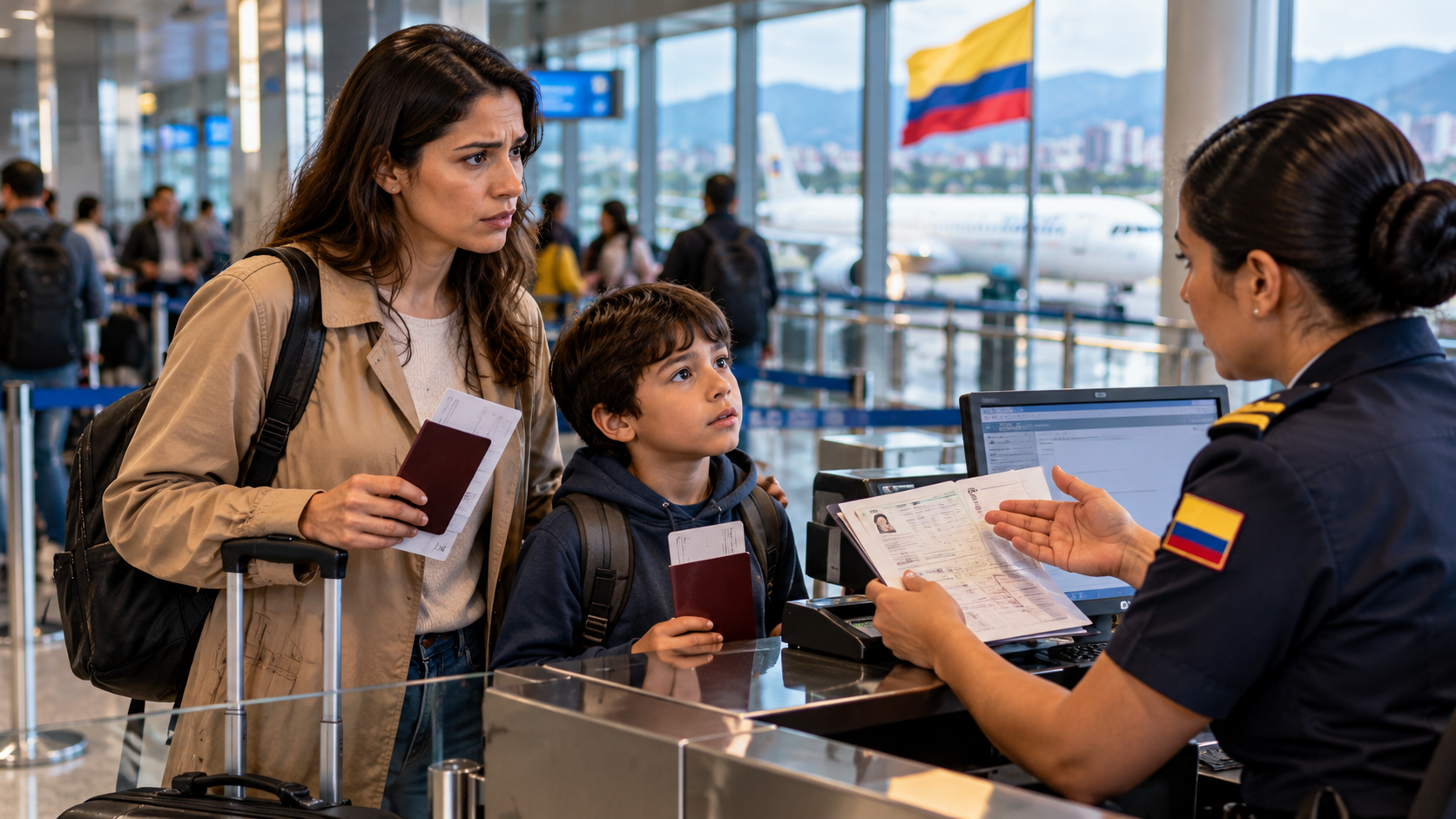
It is 5am at El Dorado. You have two suitcases, a sleepy seven year old and a flight home to see the grandparents. The migration officer looks at your child’s passport, then at you, and asks one question. Where is the permit from the mother?
That moment catches out a surprising number of foreign parents. Colombia does not let a minor leave the country unless both parents have agreed, and it does not matter that you are the parent who does the school runs, pays the bills or holds a foreign passport. The rule tends to come up when separated parents are working out who the child lives with and how travel is handled, and too often only after someone has already missed a flight.
Below are the questions foreign parents ask most often, answered as plainly as possible.
My child has a US (or UK, or Canadian) passport. Does this even apply?
Probably. If your child was born in Colombia or registered at a Colombian notary or consulate, Colombia considers them Colombian, whatever other passports they hold. Colombian nationals are expected to enter and leave on their Colombian passport, and the exit permit rule comes with that.
Even children who are not Colombian can be caught. Cambio’s rundown of the current Migración Colombia rules notes that foreign minors are covered when their parent holds a Colombian resident visa or a temporary protection permit. Families who have settled here should assume the rule applies to them.
What does the permit actually look like?
It is a written authorization signed by the parent who is not traveling. In Colombia it gets signed in front of a notary. If that parent lives abroad, they sign at a Colombian consulate, and where there is no consulate nearby a local notary can be used as long as the document is in Spanish and apostilled.
Officers like detail. The strongest permits name the destination, the purpose of the trip, the departure and return dates, and the adult traveling with the child along with that adult’s ID number. Bring the child’s Colombian birth certificate too, since that is what proves who the parents are. Families who forget it get sent home more often than you would think.
We are separated and my ex will not sign. Now what?
You cannot just leave, but you are not stuck either. A family judge can authorize the trip in place of the parent who refuses. The case runs as a short, single-instance proceeding, and the judge decides based on the child’s best interests.
How it goes depends heavily on what you are asking for. A ten-day holiday with a return ticket and a clear plan is an easy request to grant. Moving the child abroad permanently is a far bigger question, and courts tend to treat it as a custody decision in itself. The judge will want to know how the child stays connected to the parent who remains in Colombia.
One practical lesson stands out. Parents who start this process months before a trip tend to get answers. Parents who file the week before a flight usually end up rebooking.
And if I cannot even find the other parent?
This happens more than people expect, especially when one parent has drifted out of the child’s life. Colombian law lets the family defender at the ICBF, the national child welfare agency, grant a temporary exit permit through an administrative process. You apply with the child’s birth certificate and proof of the situation, for example evidence that the other parent’s whereabouts are unknown. Urgent cases such as medical treatment abroad can be handled quickly.
The other parent owes years of child support. Do I still need their signature?
Not anymore, as long as they are on the national registry of delinquent support debtors, known as REDAM. RTVC reported that since 2024 the traveling parent can present a REDAM certificate instead of the debtor’s permission, and migration officers check it with a QR code. For parents raising children alone, that small change removed one of the most frustrating obstacles in the system.
What is the worst that happens if I just go?
Taking a child abroad without consent or a court order can be treated as wrongful removal. Colombia is a member of the Hague Convention on the Civil Aspects of International Child Abduction, so the other parent can ask the authorities where you land to send the child back. Beyond that, a judge in any later custody case will remember who followed the rules and who did not.
The same convention works in your favor if the roles are reversed. A parent whose child has been brought to Colombia, or kept here, without their agreement may be able to use it to get the child returned.
Is there a way to stop this being a fight every time?
Yes, and it is the most underused option. Separating parents can build travel terms into their custody or visitation agreement, setting out how much notice is needed, how long trips can last and when the other parent must sign. It does not remove the need for a permit, but it turns each trip into routine paperwork instead of a fresh negotiation.
If you travel with your children regularly, sort this out once, properly, and save yourself the 5am conversation at the gate.
General information only, not legal advice. Migration rules change, so check the current requirements before you travel and get advice on your specific situation.