Professional Flood Damage Restoration Services: What Homeowners Need to Know
Few events turn a home upside down as quickly as a flood. Within hours, water that rose from a river, storm surge, or failed utility line has soaked into drywall, carpet, insulation, and the structural frame of the building itself, and the clock is already running on permanent damage. Professional flood damage restoration services exist because this is not a problem a homeowner can safely manage with towels and fans: floodwater carries pathogens, saturates porous materials beyond recovery, and threatens structural integrity in ways that are invisible at first. This guide explains what real flood restoration involves, why floodwater is treated as a biohazard, how the restoration process works, what insurance typically covers, and how a specialist such as 911 Restoration Portland responds to large-scale flood events in the Portland area.
Why Flood Damage Is Different From a Plumbing Leak
It is common to group all water problems together, but the differences between a burst pipe and a true flood are profound, and they determine everything about how the damage must be handled.
Floodwater from external sources, such as river overflow, severe ground saturation, or a failed municipal utility, is classified as Category 3 black water. This classification means the water is presumed contaminated with sewage, soil, bacteria, and disease-causing pathogens. Unlike the relatively clean water from a broken supply line, black water creates a genuine biohazard environment the moment it enters a home.
The second difference is what the water touches. Floodwater typically rises from below, which means it saturates foundations, subfloors, and lower wall cavities before it is even visible on the surface. By the time a homeowner sees standing water, the structural materials of the house have often been absorbing it for hours. This is why flood restoration requires far more than drying: it requires containment, removal of contaminated materials, disinfection, and verified structural drying, in that order.
What Professional Flood Damage Restoration Services Include
The term covers a full disaster lifecycle, not a single task. A competent restoration company manages the emergency from the first extraction through to the point where the property is safe to occupy and fully restored.
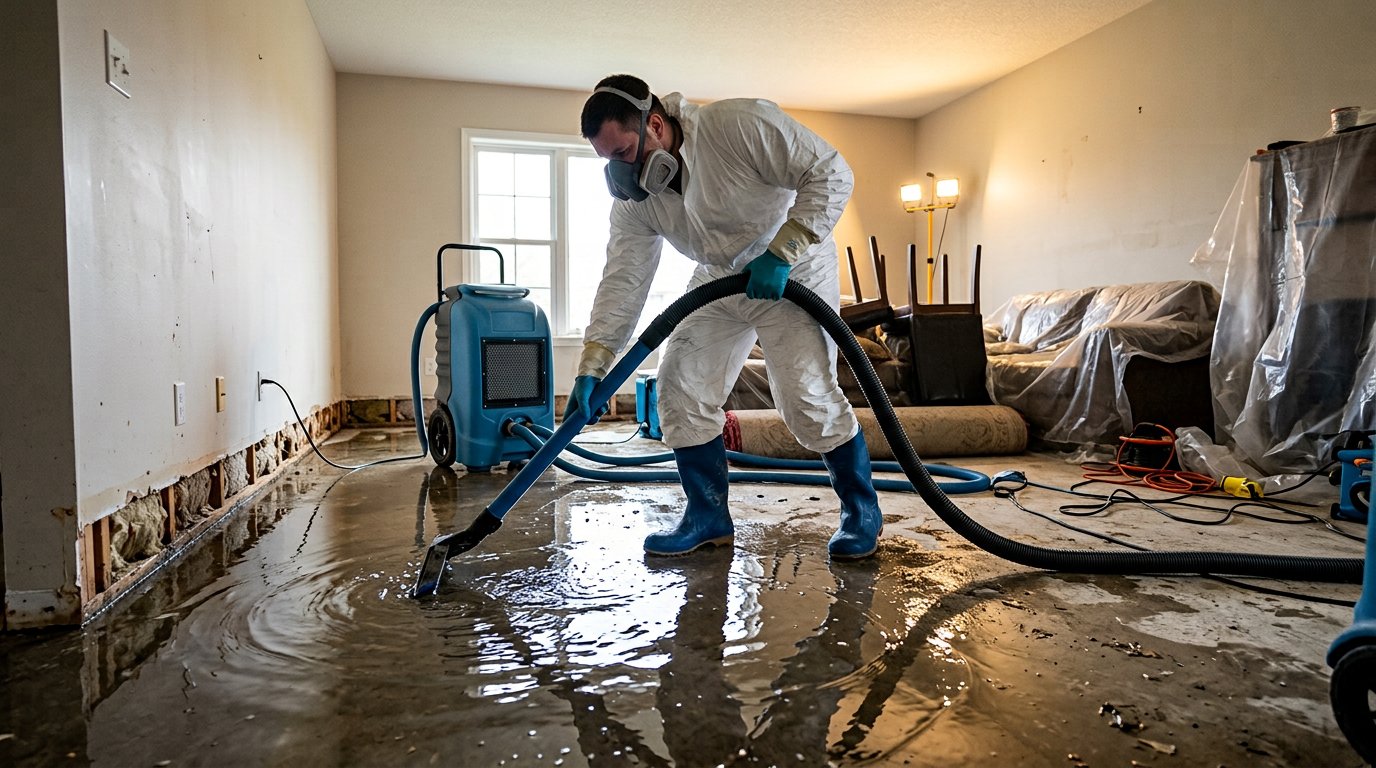
The first phase is emergency response and extraction. High-capacity pumps remove standing water, utilities are disconnected where necessary, and the structure is stabilised so that work can proceed safely. Time matters enormously here, because every hour of standing water increases the depth of saturation and the scope of the contamination.
The second phase is biohazard mitigation and removal. Porous materials that black water has contacted, including carpet and pad, drywall, insulation, and particleboard, are generally beyond salvage and must be removed, bagged, and disposed of under controlled conditions. This is the part of the process homeowners often find hardest to accept, but it is also the part that prevents mould, odour, and chronic moisture problems later.
The third phase is disinfection. The remaining non-porous structural elements, such as wood framing, concrete, and metal, are cleaned and treated with EPA-registered antimicrobial agents to eliminate the pathogens the floodwater left behind.
The fourth phase is structural drying and reconstruction. Industrial dehumidifiers and drying systems remove moisture from deep within the structure, and moisture levels are verified with measurement rather than guesswork before reconstruction begins. Only then does the company rebuild what was removed, returning the property to a safe, habitable condition.
The Three-Step Process at 911 Restoration Portland
911 Restoration Portland describes its flood damage restoration work in three stages that map closely to the sequence above, and the structure is worth understanding because it reflects how serious contractors sequence safety and science.
Step one is biohazard mitigation and water extraction. The company establishes strict containment zones, equips crews in full personal protective equipment, and uses high-capacity pumps to remove floodwater, stabilising the structure and disconnecting utilities before removing contaminated porous materials and debris.
Step two is structural disinfection and verification. All remaining non-porous structural elements are cleaned and treated with EPA-registered, broad-spectrum antimicrobial agents to eliminate the pathogens left behind by floodwater.
Step three is advanced structural drying and reconstruction. The company implements industrial-grade drying and dehumidification, including systems designed to draw moisture from deep within concrete slabs, and verifies moisture levels scientifically before beginning the reconstruction and structural repairs that complete the restoration.
This sequencing matters because it puts safety and contamination control ahead of cosmetic repair, which is exactly the order a flood situation demands.
The Health Risks That Make Floodwater a Biohazard
It is worth stating plainly why flood restoration is treated as a health matter rather than a cleaning matter.
Floodwater mixes sewage, soil, agricultural runoff, and ground chemicals, and the resulting water carries bacteria, viruses, and other disease-causing organisms. Contact with black water, or exposure to the aerosols created while it is disturbed, poses a genuine infection risk. This is why professionals wear protective equipment, establish containment, and treat every flood as a biohazard situation until proven otherwise.
The secondary risk is mould. Saturated building materials that are not removed or thoroughly dried will support mould growth within days, and mould adds a persistent indoor air quality problem on top of the original contamination. Proper removal of porous materials and verified structural drying are the two measures that prevent a flood from becoming a long-term health issue in the home.
What Insurance Covers, and What It Does Not
Insurance is one of the first questions homeowners ask, and the answer contains a distinction that surprises many people.
Standard homeowner and commercial property policies generally exclude natural flood damage, which is defined as water rising from the ground. Coverage for that type of event typically requires a separate flood policy, such as one obtained through the National Flood Insurance Program or a private flood carrier. Damage from an internal event, such as a broken pipe or appliance failure, is generally treated differently and may fall under a standard policy.
This distinction is why documentation matters from the first hours. A professional restoration company documents the loss in detail, including the condition of contents and the scope of damage, which supports the claim regardless of the policy type. Many restoration companies also communicate directly with insurers and adjusters, which relieves homeowners of much of the administrative burden during an already difficult time. 911 Restoration Portland states that it works closely with insurance providers and can document the loss regardless of policy type, while advising homeowners to confirm their specific coverage.
How to Respond in the First Hours of a Flood
What a homeowner does in the first hours after a flood shapes the entire outcome, and a few actions make a measurable difference.
Safety comes first. Floodwater may conceal electrical hazards and structural damage, so avoid entering standing water and do not operate electrical systems in affected areas until they have been inspected. If the situation involves sewage or rising water, treat the area as hazardous and keep family and pets clear.
Call a restoration professional immediately. Water damage compounds hourly, and the difference between a response in the first day and a response days later is often the difference between salvage and total loss of the affected materials.
Document what you can safely. Photographs of the water, the affected areas, and any damaged contents are valuable evidence for the insurance claim, and they should be taken before items are moved or removed where it is safe to do so.
Contact your insurer early. Reporting the loss promptly starts the claims process and clarifies what your policy covers, which in turn shapes the restoration decisions.
Choosing a Flood Damage Restoration Company
In an emergency, homeowners rarely have time for a long evaluation, which makes it worth knowing in advance what separates a serious restoration company from a general cleaner.
Look for a company that treats floodwater as a biohazard. The language a contractor uses is revealing: a company that talks about containment zones, personal protective equipment, EPA-registered antimicrobials, and verified moisture levels is operating to a professional standard. A company that talks only about drying and deodorising is not.
Look for rapid, genuine emergency response. Flood restoration is a time-critical service, and the company’s stated response capability matters. 911 Restoration Portland, for example, advertises 24-hour emergency service and a 45-minute average response time, figures that speak directly to the urgency of the work.
Look for insurance experience. A company that routinely coordinates with insurers and adjusters removes one of the most stressful parts of the process for the homeowner.
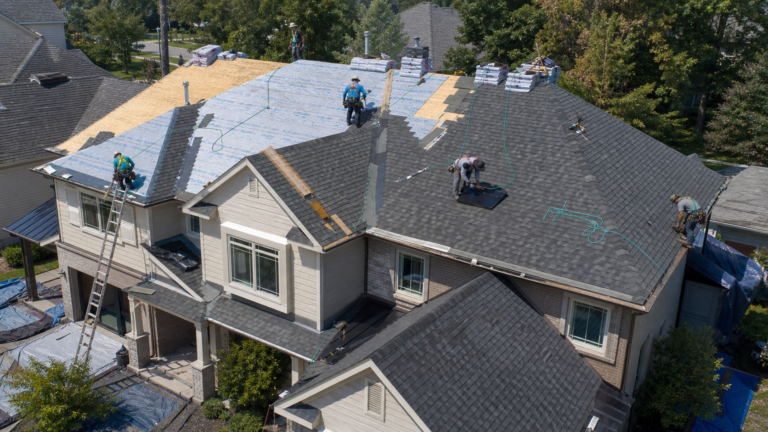
Look for end-to-end capability. The same company handling extraction, disinfection, drying, and reconstruction means one accountable partner through the entire recovery rather than a handoff between vendors at each stage. 911 Restoration Portland positions itself as a full-service provider managing the entire disaster lifecycle, and its related services include storm damage cleanup, roof tarping and board-up, wind and tree damage repair, and full disaster reconstruction.
Why Speed and Sequencing Decide the Outcome
If there is one thread running through professional flood damage restoration, it is that both speed and sequence matter, and they matter in a specific order.
Speed matters because saturation and contamination deepen with every passing hour, and because mould begins to establish itself quickly in warm, wet materials. Sequence matters because disinfection and drying cannot be skipped in favour of faster cosmetic repair: removing contaminated materials before disinfecting, and disinfecting before rebuilding, is what turns a disaster into a safe recovery rather than a recurring problem.
This is the core value of hiring professionals at all. The equipment, the protective protocols, the verification measurements, and the disciplined order of operations are not things a homeowner can improvise, and they are the difference between a home that is restored and a home that merely looks restored.
Conclusion
Flooding is one of the most destructive and disorienting events a homeowner can face, and the instinct to handle it quickly and cheaply is understandable. But floodwater is a biohazard, saturated structures hide damage, and the decisions made in the first days determine whether the home recovers fully or carries problems for years. Professional flood damage restoration services exist precisely because the work demands expertise, equipment, and sequencing that no DIY response can provide. For homeowners in the Portland area, a company such as 911 Restoration Portland offers the full disaster lifecycle, from emergency extraction and biohazard mitigation through disinfection, verified drying, and reconstruction, with 24-hour response and insurance coordination. The best time to understand your options is before the water rises, but if it does, the right call is immediate and professional.
Frequently Asked Questions
1. What do professional flood damage restoration services include?
They include emergency water extraction, biohazard containment and removal of contaminated materials, disinfection with antimicrobial agents, verified structural drying, and reconstruction.
2. Why is floodwater considered a biohazard?
Floodwater is classified as Category 3 black water because it carries sewage, soil, and disease-causing pathogens, making contact or aerosol exposure a genuine health risk.
3. Does homeowners insurance cover flood damage?
Standard policies generally exclude natural flood damage, so separate flood coverage, such as through the National Flood Insurance Program or a private carrier, is typically required.
4. How long does flood damage restoration take?
Cleanup, sanitization, and structural drying commonly take 7 to 14 days, while full reconstruction can extend the timeline to several weeks or months depending on severity.
5. What materials must be removed after a flood?
Porous materials contacted by black water, including carpet and pad, drywall, insulation, and particleboard, generally cannot be salvaged and must be removed and disposed of safely.
6. Should I clean up floodwater myself?
No, floodwater should be treated as hazardous; professional restoration companies use protective equipment, containment, and industrial equipment to handle it safely.