Interior Stone Accent Wall Ideas That Add Texture and Character to Your Home
An interior stone accent wall can introduce natural texture, visual depth, and architectural character into a living room, bedroom, entryway, dining area, office, or fireplace setting. From natural stone veneer and stacked stone to manufactured products and large format stone slabs, homeowners have numerous ways to create a distinctive feature without building a traditional full depth masonry wall. The best results come from coordinating the material with the room’s architecture while properly evaluating the substrate, wall loading, moisture conditions, fireplace requirements, lighting, layout, and installation system. Careful planning turns the stone into an integrated architectural element rather than simply a decorative surface attached to one wall.
What Is an Interior Stone Accent Wall?
An interior stone accent wall is a selected wall or architectural surface finished with natural stone, manufactured stone veneer, stone panels, or another compatible masonry inspired product to distinguish it from surrounding surfaces.
Instead of finishing every wall with the same material, the stone creates a visual focal point.
Common locations include:
• Living rooms
• Fireplace surrounds
• Bedrooms
• Entryways
• Dining rooms
• Home offices
• Stair walls
• Entertainment areas
• Wine rooms
• Finished basements
The appropriate material and attachment method depend on the specific application.
Why Choose an Interior Stone Accent Wall?
Stone introduces characteristics that conventional painted drywall cannot easily reproduce.
Natural variation, shadows, uneven texture, veining, and mineral coloration can give a room additional visual depth.
Stone also works with several design styles, including contemporary, rustic, transitional, traditional, industrial, and minimalist interiors.
Is Stone Veneer the Same as Full Stone?
No.
Full dimension masonry stone is substantially thicker and heavier than most veneer systems. It can require structural support that is fundamentally different from a decorative adhered veneer.
Stone veneer is designed to create a stone finish with less thickness and weight.
Natural Versus Manufactured Stone Veneer
Natural veneer is cut or processed from actual stone.
Manufactured stone veneer is produced from formulated materials and designed to resemble natural stone.
Each category includes numerous products with different weight, installation, appearance, and maintenance characteristics. Product specifications should guide the decision rather than assuming all veneer behaves identically.
7 Stunning Interior Stone Accent Wall Ideas
A successful feature wall should complement the architecture instead of overwhelming it. These seven approaches can help homeowners find a design appropriate for their space.
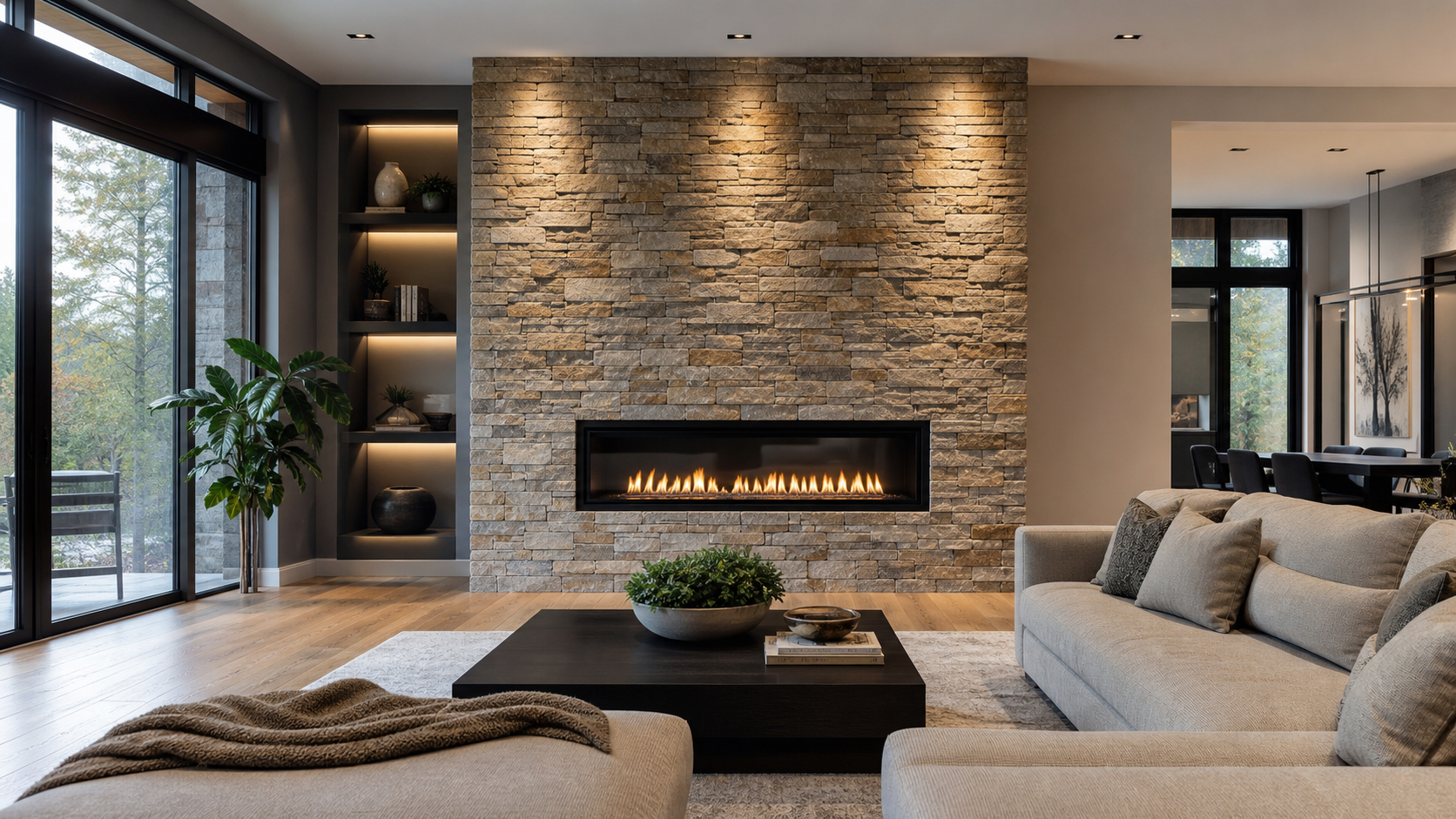
1. Create an Interior Stone Accent Wall Around a Fireplace
Fireplaces naturally attract attention, making them popular locations for stone.
The finish can extend only around the firebox, cover the entire wall, or continue from floor to ceiling.
Floor to Ceiling Stone
Taking the material from the floor to the ceiling creates a strong vertical feature.
This approach can work particularly well in rooms with vaulted or tall ceilings.
A restrained furniture arrangement can allow the stone texture to remain the primary visual element.
Coordinate With the Mantel
Mantel options can include:
• Natural wood
• Painted wood
• Stone
• Metal
• Minimal or mantel free designs
The mantel should coordinate with the stone’s visual weight and the fireplace system.
Fireplace Clearances Matter
A decorative design cannot override fire safety requirements.
Clearances around fireplaces, inserts, stoves, mantels, combustible trim, televisions, and other materials depend on appliance listing, manufacturer instructions, construction, and applicable codes.
Always verify requirements for the exact fireplace before choosing the final wall layout.
2. Use Stacked Stone for Architectural Texture
Stacked stone arrangements emphasize horizontal lines and irregular surface depth.
They can work with both modern and rustic interiors depending on color and joint style.
Dry Stack Appearance
Some systems are designed to create the appearance of tightly fitted stone with little or no visible mortar joint at the face.
The exact installation method depends on the manufactured product.
A dry stack visual appearance does not mean pieces can simply be stacked against drywall without appropriate attachment.
Keep the Color Palette Controlled
Stone can contain multiple colors simultaneously.
A wall with gray, cream, brown, rust, and charcoal tones may already provide substantial visual complexity.
Furniture and finishes can draw from one or two of those tones rather than introducing numerous competing colors.
3. Design a Modern Interior Stone Accent Wall
Stone does not have to create a rustic aesthetic.
Large format panels, linear stone, limestone inspired products, smooth slabs, and monochromatic materials can work in highly contemporary rooms.
Use Clean Architectural Lines
Modern designs often emphasize simple boundaries.
Instead of adding decorative trim around every edge, the stone can terminate cleanly against adjacent walls, cabinetry, ceilings, or purpose designed profiles.
Combine Stone and Wood
Stone and natural wood create contrast between mineral and organic textures.
For example, a neutral stone television wall can work with floating wood cabinetry or shelves.
The two materials should complement rather than compete in color and grain.
Add Minimalist Lighting
Controlled lighting can emphasize texture without turning the feature wall into a theatrical display.
Recessed fixtures, wall grazing, or integrated architectural lighting can be considered depending on the room.
Electrical planning should happen before stone installation when wiring will be concealed.
4. Build an Interior Stone Accent Wall Behind a Television
A media wall can combine television placement, cabinetry, stone, power, and cable management in one composition.
Planning is particularly important because future access to wiring and mounting hardware needs consideration.
Plan the Television Position First
Before installing stone, determine:
• Screen size
• Viewing distance
• Mounting height
• Wall mount type
• Electrical outlet location
• Data connections
• Sound equipment
• Future access
The wall’s structural attachment points should be known before they disappear behind veneer.
Do Not Rely on Veneer to Support a Television
A television bracket needs secure attachment appropriate for the mount, wall structure, and equipment weight.
Stone veneer itself should not be assumed to provide structural support.
Plan backing or framing modifications before the decorative surface is installed.
Consider the Fireplace and Television Combination
Televisions are frequently installed above fireplaces, but heat exposure and viewing height can create complications.
Follow the fireplace and television manufacturers’ requirements and confirm actual clearances and temperature conditions.
5. Use an Interior Stone Accent Wall in a Bedroom
Stone can add texture behind a bed without requiring additional artwork.
A softer material palette can keep the wall from making the bedroom feel excessively heavy.
Choose Calmer Stone Colors
Warm beige, soft gray, cream, muted limestone tones, and restrained natural variation can suit bedrooms.
Highly contrasting stone can work as well, but it creates a much stronger visual statement.
Consider Surface Texture
Deeply projecting stone creates pronounced shadows and a rugged appearance.
Flatter veneer can produce a calmer, more refined effect.
Consider proximity to beds and circulation areas because sharp or highly irregular projections can be impractical where people regularly brush against the wall.
6. Use Lighting to Highlight an Interior Stone Accent Wall
Texture becomes more visible when light travels across the surface at an angle.
This can emphasize shadows between stone pieces.
Wall Grazing
Lighting located near a textured wall can create dramatic shadow patterns.
The effect depends on fixture placement, beam angle, stone depth, ceiling height, and surface color.
Test Before Final Installation
If lighting is a major design feature, mock up a representative stone sample and illuminate it from the intended direction.
A material that appears subtle in daylight may become dramatically textured under grazing light.
Consider Color Temperature
Warm and cool lighting can alter the perceived colors of stone.
Compare samples under the same lighting that will be installed in the finished room.
Screen images alone are insufficient for reliable color selection.
7. Coordinate the Interior Stone Accent Wall With the Whole Room
A feature wall should relate to fixed materials throughout the space.
Look beyond the stone sample itself.
Compare Surrounding Finishes
Consider:
• Flooring
• Cabinets
• Countertops
• Ceiling materials
• Doors
• Trim
• Fireplace finishes
• Furniture
• Metals
• Lighting
• Adjacent paint colors
A stone product containing many colors can become easier to coordinate when one undertone is repeated elsewhere.
Avoid Too Many Competing Materials
Wood grain, patterned tile, dramatic stone, heavily veined countertops, bold wallpaper, and elaborate flooring can all demand attention.
Using visual hierarchy helps the room feel intentional.
If stone is the focal material, some surrounding surfaces may work better when kept quieter.
Best Materials for an Interior Stone Accent Wall
The best material depends on appearance, wall construction, budget, installation requirements, and maintenance preferences.
No single stone product fits every project.
Natural Stone Veneer
Natural stone veneer provides genuine geological variation.
No two pieces are exactly identical.
Common Natural Stone Options
Depending on regional availability, products can include:
• Slate
• Quartzite
• Limestone
• Marble
• Granite
• Sandstone
• Other quarried stone
Different stones have different porosity, hardness, surface texture, and chemical sensitivity.
Natural Variation Is Part of the Material
Samples represent only part of the possible color and pattern range.
For larger projects, view multiple pieces or installed examples before ordering.
Mixing material from different boxes or pallets during installation can help distribute natural variation more evenly when recommended by the supplier.
Manufactured Stone Veneer
Manufactured products are designed to replicate stone shapes, colors, and textures while offering controlled dimensions.
They can reduce weight compared with some natural products.
Advantages of Manufactured Stone
Potential advantages include:
• Consistent product formats
• Wide style selection
• Coordinating corner pieces
• Lower weight in some systems
• Predictable availability
Performance varies by manufacturer.
Check Interior Suitability
Confirm that the selected product is approved for the intended indoor installation and substrate.
Use the manufacturer’s specified setting materials and procedures.
Stone Panels
Panelized systems combine multiple pieces into larger units that can speed installation and reduce individual stone placement.
They are popular for feature walls.
Watch Repeating Joints
Poorly planned panel installation can reveal obvious repeating horizontal or vertical seams.
Installers should stagger units and follow manufacturer layout guidance.
Corner Pieces
Purpose designed corners can create a more convincing transition around outside edges.
Confirm availability before ordering the primary wall material.
Large Stone Slabs
Large format natural or engineered stone slabs can create a highly contemporary wall with relatively few joints.
They are especially popular around fireplaces and media walls.
Slab Weight Requires Planning
Large slabs are heavy and require specialized handling, suitable substrates, attachment systems, and experienced fabricators.
Electrical outlets, television brackets, fireplace openings, and other penetrations need accurate planning.
Interior Stone Accent Wall Installation
Installation quality can substantially affect both appearance and safety.
The wall must be suitable for the weight and attachment system.
Evaluate the Existing Wall
A contractor should determine:
• Wall construction
• Substrate type
• Structural condition
• Existing coatings
• Surface flatness
• Stone weight
• Manufacturer requirements
• Moisture conditions
Ordinary painted drywall may not always be an acceptable direct substrate for every stone system.
Prepare the Substrate Correctly
Preparation can involve removing incompatible finishes, installing an approved backer or substrate, correcting wall irregularities, or using another manufacturer specified approach.
The appropriate method varies by product.
Do not assume construction adhesive applied to paint is sufficient.
How Heavy Is an Interior Stone Accent Wall?
Weight varies substantially among natural veneer, manufactured veneer, panels, and slabs.
This factor should be investigated before material is ordered.
Structural Support
Lightweight approved veneer systems can have different support requirements from full dimension masonry or heavy slabs.
The wall, framing, foundation, and attachment system must be appropriate for the installed load.
Consult Professionals for Heavy Installations
For unusually heavy stone, tall installations, questionable framing, or complex fireplaces, structural evaluation may be appropriate.
Building safety takes priority over aesthetic preferences.
Installing an Interior Stone Accent Wall Over Drywall
Whether stone can be installed over existing drywall depends on the material, system, height, wall condition, and manufacturer requirements.
There is no universal answer.
Painted Drywall Can Affect Adhesion
Paint and other finishes can interfere with bonding.
An installer may need to remove finishes or install an approved substrate.
Cementitious Backer Materials
Some stone systems use cement based backer boards or other approved substrates.
Fastening, joints, preparation, and mortar still need to follow system instructions.
Mortar and Adhesives for an Interior Stone Accent Wall
The bonding product needs to match the stone and substrate.
Using whatever adhesive is available can create adhesion or staining problems.
Polymer Modified Mortars
Certain veneer systems use polymer modified setting materials designed for stone or tile applications.
Product requirements differ.
Mastics and General Construction Adhesives
Some products may be approved for particular lightweight interior applications, while others are unsuitable for heavy stone or heat affected areas.
Use only materials specifically approved for the chosen system and location.
Grouted Versus Dry Stack Stone
The joint style has a major effect on appearance.
Some veneer installations display visible mortar joints, while others create a tightly fitted appearance.
Grouted Stone
Visible mortar can create a traditional masonry look.
Joint width, color, and finishing technique affect the final character.
Dry Stack Appearance
Tight fitting stone can create a more textured, contemporary, or rustic surface depending on the product.
Installation still requires the specified bonding system behind the material.
Interior Stone Accent Wall Around a Fireplace
Fireplace installations deserve additional attention because heat and combustibility requirements may apply.
Identify the Fireplace Type
Electric, gas, wood burning, and other fireplace systems have different installation requirements.
The appliance documentation should guide the design.
Mantel and Trim Clearances
Wood mantels and other combustible features may require specified distances from the firebox or appliance opening.
These requirements vary with equipment and projection.
Do not copy dimensions from another house.
Heat Sensitive Materials
Televisions, adhesives, sealants, and other products can have temperature limitations.
Verify compatibility before installation.
Interior Stone Accent Wall Cost
There is no universal project price.
A straightforward manufactured veneer wall and a full height natural stone slab fireplace represent very different budgets.
Factors Affecting Cost
Pricing can depend on:
• Wall area
• Stone material
• Product thickness
• Wall height
• Substrate preparation
• Old finish removal
• Fireplace details
• Corners
• Mortar or adhesive system
• Grouting
• Electrical modifications
• Television preparation
• Lighting
• Local labor rates
• Structural work
Obtain project specific estimates for useful pricing.
Material Cost Is Only Part of the Budget
Homeowners should consider substrate preparation, labor, electrical relocation, waste, freight, and finishing details.
Custom slab fabrication can introduce additional measuring and cutting expenses.
How to Measure an Interior Stone Accent Wall
Begin with the overall wall dimensions.
Then account for openings and architectural features according to supplier or installer estimating methods.
Measure Width and Height
Calculate the relevant surface area, then identify fireplaces, doors, windows, cabinetry, or other interruptions.
Plan Extra Material
Projects generally require some additional material for cuts, breakage, pattern selection, and future repairs.
The correct amount varies by stone format, wall design, corners, and installation layout.
Have the supplier or installer calculate the appropriate quantity rather than relying on one universal waste percentage.
Interior Stone Accent Wall Colors
Color should be evaluated under actual room lighting and alongside permanent finishes.
Stone often contains subtle variation that becomes more visible across a full wall.
Warm Stone Palettes
Cream, beige, brown, and warm gray can complement wood and warm interior colors.
Cool Stone Palettes
Charcoal, blue gray, cool white, and slate tones can work with contemporary neutral interiors.
These are design tendencies rather than rules.
Mixed Neutral Stone
Stone blending warm and cool tones can create flexibility when a room already contains several permanent materials.
Use physical samples to verify compatibility.
Cleaning an Interior Stone Accent Wall
Indoor stone generally experiences less weather exposure than exterior masonry, but dust and accidental stains still require maintenance.
Routine Dusting
A soft brush attachment or other stone appropriate method can remove loose dust.
Be careful around rough projections and fragile edges.
Avoid Harsh Chemicals
Acids and aggressive cleaners can damage certain natural stones or affect grout and sealers.
Use cleaning products approved for the exact material.
Does an Interior Stone Accent Wall Need Sealing?
Sometimes.
Sealing requirements depend on stone type, location, porosity, finish, and manufacturer guidance.
What Sealers Can Do
Certain sealers can reduce the absorption of water or staining substances.
They do not make stone indestructible.
Test Before Sealing
Some sealers can alter stone color or sheen.
Test an inconspicuous sample and follow product instructions.
A living room feature wall may have different sealing needs from stone exposed to cooking splashes or bathroom moisture.
Interior Stone Accent Wall in Bathrooms
Stone can be used successfully in bathrooms, but moisture exposure changes installation requirements.
Vanity Walls
A stone feature behind a vanity can create texture without being subjected to continuous shower exposure.
Materials should still tolerate expected humidity and splashing.
Shower Walls Are Different
Stone used inside a shower requires an appropriate wet area substrate and waterproofing system.
Stone and grout alone should not be assumed to make the wall waterproof.
Interior Stone Accent Wall in Basements
Finished basements can benefit visually from stone, but below grade moisture conditions need consideration.
Solve Moisture Problems First
Do not conceal damp walls, foundation seepage, or mold behind decorative stone.
Identify and correct moisture sources before finishing.
Evaluate Wall Construction
Foundation walls have different thermal and moisture behavior from above grade interior partitions.
Any framing and insulation retrofit should be designed appropriately for the local climate and foundation assembly.
Lighting an Interior Stone Accent Wall
Lighting can transform how a textured surface appears.
Planning electrical work before installation avoids unnecessary later cutting.
Recessed Lighting
Ceiling fixtures aimed toward the stone can create subtle shadows.
Sconces
Wall mounted fixtures can become part of the composition.
Their boxes and wiring should be correctly installed before stone covers the wall.
LED Accent Lighting
Concealed linear lighting can highlight shelves, mantels, or wall edges.
Choose products appropriate for the location and provide access to serviceable drivers where required.
DIY Interior Stone Accent Wall Versus Professional Installation
Some lightweight panelized systems can be approachable for experienced DIY homeowners.
Heavy natural stone, tall walls, fireplaces, and slabs introduce additional complexity.
DIY Challenges
Potential difficulties include:
• Substrate preparation
• Cutting
• Layout
• Supporting material during setting
• Maintaining level courses
• Corner finishing
• Electrical coordination
• Heavy material handling
• Fireplace requirements
Improper installation can become difficult to correct after mortar cures.
When to Hire a Professional
Professional installation is particularly useful for:
• Full height walls
• Natural stone
• Heavy panels
• Slabs
• Fireplaces
• Complex corners
• Tall stair walls
• Structural uncertainty
• Integrated televisions
• Detailed lighting
Verify contractor experience with the exact material.
Common Interior Stone Accent Wall Mistakes
Choosing the material before considering room scale is a common design mistake.
A stone that looks subtle on a sample board may appear extremely busy across an entire wall.
Ignoring the Substrate
The decorative surface is only as dependable as the wall beneath it.
Use compatible substrates and attachment systems.
Poor Layout
Unplanned panel seams, tiny cuts, repeated patterns, or awkward termination points can make an expensive installation look unfinished.
Dry planning or sample layouts can help.
Excessive Visual Competition
A feature wall works best when it has a clear role within the room.
Too many competing textures and patterns can reduce its impact.
Choosing an Interior Stone Accent Wall Installer
Experience with stone veneer or slab systems should be a primary consideration.
General remodeling experience does not necessarily demonstrate specialized masonry or stone fabrication skill.
Questions to Ask
Consider asking:
• Have you installed this exact type of stone?
• Is the existing wall suitable?
• What substrate will be used?
• Which mortar or adhesive is specified?
• How will corners be finished?
• How will the wall terminate?
• Are electrical changes included?
• How will fireplace clearances be verified?
• What warranty applies?
• Is cleanup included?
A detailed written proposal helps prevent scope disagreements.
Frequently Asked Questions
What is an interior stone accent wall?
An interior stone accent wall is a selected indoor surface finished with natural stone, manufactured veneer, panels, or compatible stone products to create an architectural focal point.
What is the best stone for an interior stone accent wall?
There is no universal best option. Natural veneer, manufactured stone, stacked panels, and slabs offer different appearances, weights, costs, and installation requirements.
Can an interior stone accent wall be installed over drywall?
Sometimes, depending on stone weight, drywall condition, wall height, bonding system, and manufacturer instructions. Some installations require an approved backer or additional preparation.
How much does an interior stone accent wall cost?
Cost depends on stone type, wall area, height, preparation, corners, installation complexity, electrical modifications, and local labor. Project specific quotes provide better pricing.
Does an interior stone accent wall require sealing?
Not always. Sealing depends on stone type, porosity, location, exposure, and manufacturer recommendations.
Can an interior stone accent wall be installed around a fireplace?
Yes, when the stone, bonding materials, substrate, mantel, television, and layout comply with the fireplace manufacturer’s clearances and applicable building requirements.
Conclusion
A well planned interior stone accent wall can add lasting texture and architectural character to living rooms, bedrooms, fireplaces, media areas, and other interior spaces. The strongest results combine thoughtful material and lighting choices with a suitable substrate, compatible installation materials, secure structural support, and careful layout. Evaluating samples in the actual room and resolving fireplace, electrical, and mounting details before installation can help create a feature wall that looks integrated rather than added as an afterthought.