Door and Window Sealing Strips: 7 Powerful Secrets for Maximum Energy Savings and Total Draft Protection
Uncontrolled air infiltration through structural perimeters accounts for up to forty percent of heating and cooling energy dissipation in modern architecture. Installing high-performance door and window sealing strips establishes an airtight mechanical barrier that mitigates convective heat loss, stabilizes indoor microclimates, and prevents unconditioned ambient air from penetrating living spaces. When architectural fenestration units experience pressure differentials driven by mechanical ventilation or environmental wind loads, unsealed junctions between sashes and frames become direct pathways for moisture, particulate pollution, and thermal transfer. Integrating high-grade elastomeric gaskets and weather seals restores envelope integrity, protects structural substrates from driving rain, and curtails utility expenditures throughout seasonal weather fluctuations.
Understanding Fenestration Air Infiltration Dynamics and Thermal Losses
Fenestration assemblies represent thermally vulnerable elements of modern building envelopes. While glazing panels and solid doors resist conductive heat transfer, operational clearances introduce convective bypass pathways. Without resilient door and window sealing strips bridging these boundary margins, seasonal temperature gradients generate persistent interior comfort degradation.
Convective Air Transfer Mechanics Across Perimeter Gaps
Air infiltration operates via three primary physical mechanisms: stack effect, windward pressure, and mechanical negative pressure created by HVAC networks. The stack effect manifests when buoyant heated indoor air rises during cold cycles, creating negative pressure zones along lower building thresholds that draw freezing exterior air through unsealed sill interfaces. Conversely, exterior wind pressure exerts positive force against outer facades, pushing air through lateral margins while drawing conditioned air through leeward sashes. Properly calibrated door and window sealing strips introduce a continuous elastomeric seal that neutralizes these pressure-induced bypass currents.
Conduction vs. Convection Across Perimeter Interfaces
Thermal bridging occurs where framing materials exhibit higher conductivity than surrounding insulated assemblies. Convective losses through open perimeters frequently surpass conductive framing losses by substantial margins. Infiltration continuously forces conditioned air out of structural cavities, accelerating HVAC compressor cycling. Precision-fitted door and window sealing strips convert dynamic gaps into stationary air cavities, transforming potential leakage zones into supplementary thermal insulation buffers.
Acoustic Energy Infiltration and Sound Transmission Pathways
Acoustic energy travels via molecular compression waves through air-permeable conduits. Hairline gaps around entry thresholds can reduce the acoustic attenuation of an architectural sound-rated door by more than fifteen decibels.
Sound Transmission Class Degradation from Perimeter Apertures
Acoustic engineers recognize the flanking transmission phenomenon, wherein high-performance acoustic glass panels fail to achieve laboratory Sound Transmission Class ratings due to perimeter acoustic leakage. Because sound waves follow paths of least mechanical resistance, unsealed perimeter margins act as open sound tunnels. Installing dense, high-durometer door and window sealing strips provides mass damping and spatial sealing, deflecting airborne decibels across traffic, industrial, and urban sound frequencies.
Core Material Classifications for Door and Window Sealing Strips
Specifying the correct elastomeric substrate dictates long-term performance, mechanical elasticity retention, and environmental durability across thermal extremes. Standardizing high-grade polymer selections prevents premature cracking, adhesive delamination, and compressive fatigue.
EPDM Rubber Formulations
Ethylene Propylene Diene Monomer synthetic rubber remains the commercial benchmark for external fenestration gasketing. EPDM synthetic rubber exhibits exceptional resistance to ultraviolet solar degradation, atmospheric ozone exposure, and extreme thermal cycling ranging from minus forty degrees Celsius to over one hundred twenty degrees Celsius.
Mechanical Recovery and Compression Set Resistance
When fenestration units undergo continuous operational cycles, the gasket material must recover its nominal profile upon opening. EPDM door and window sealing strips exhibit a low compression set, resisting permanent deformation after years of continuous physical compression. This mechanical resilience ensures that sashes maintain an airtight interface season after season without requiring frequent gasket replacement.
Architectural Silicone Elastomers
Silicone-based door and window sealing strips deliver peerless flexibility, broad chemical stability, and exceptional thermal tolerance. While carrying a higher raw material acquisition cost than conventional polymers, architectural silicone retains dynamic elasticity across decades of direct sun exposure.
Temperature Extremes and Tear Resistance Properties
Unlike organic rubber compounds that harden under sub-zero winter temperatures, silicone gaskets remain supple down to minus sixty degrees Celsius. Furthermore, their non-stick surface chemistry prevents operational sash binding during high humidity conditions, making silicone door and window sealing strips an ideal engineering selection for architectural curtain walls, custom casements, and exterior architectural entryways.
Thermoplastic Elastomers and Extruded PVC
Thermoplastic elastomers combine the processing capabilities of thermoplastics with the functional flexibility of vulcanized rubbers. Thermoplastic door and window sealing strips can be heat-welded at corner joints, eliminating vulnerable butt joints typical of mechanical retrofits. Extruded PVC variants provide cost-efficient sealing solutions for interior partitions, though they exhibit higher compression set values under sustained mechanical load compared to vulcanized EPDM.
High-Density Polyurethane Foam with Polyethylene Cladding
Clad foam gaskets incorporate a microcellular polyurethane core encapsulated within an embossed, high-density polyethylene protective jacket. The inner foam core provides thermal resistance and acoustic absorption, while the exterior polyethylene barrier deflects moisture, UV radiation, and mechanical abrasive wear. Clad foam door and window sealing strips are frequently integrated into perimeter kerf slots on modern factory-manufactured entry jambs.
High-Density Brush and Pile Weatherstripping
High-density polypropylene pile seals, reinforced with an integrated center polyethylene fin barrier, are engineered specifically for shearing friction interfaces found in sliding patio doors and horizontal sliding sash windows. Unlike solid rubber seals that create excessive operating drag, woven pile door and window sealing strips permit smooth linear travel while filtering particulate matter, insect intrusion, and windblown dust.
Cross-Sectional Profiles and Mechanical Geometry
Achieving an airtight, weather-resistant perimeter requires pairing the appropriate structural gap dimension with the corresponding cross-sectional geometry. An oversized profile prevents latches from engaging, placing excessive strain on hinges and locking hardware, while an undersized profile fails to establish positive contact.
Hollow Bulb and D-Profile Configurations
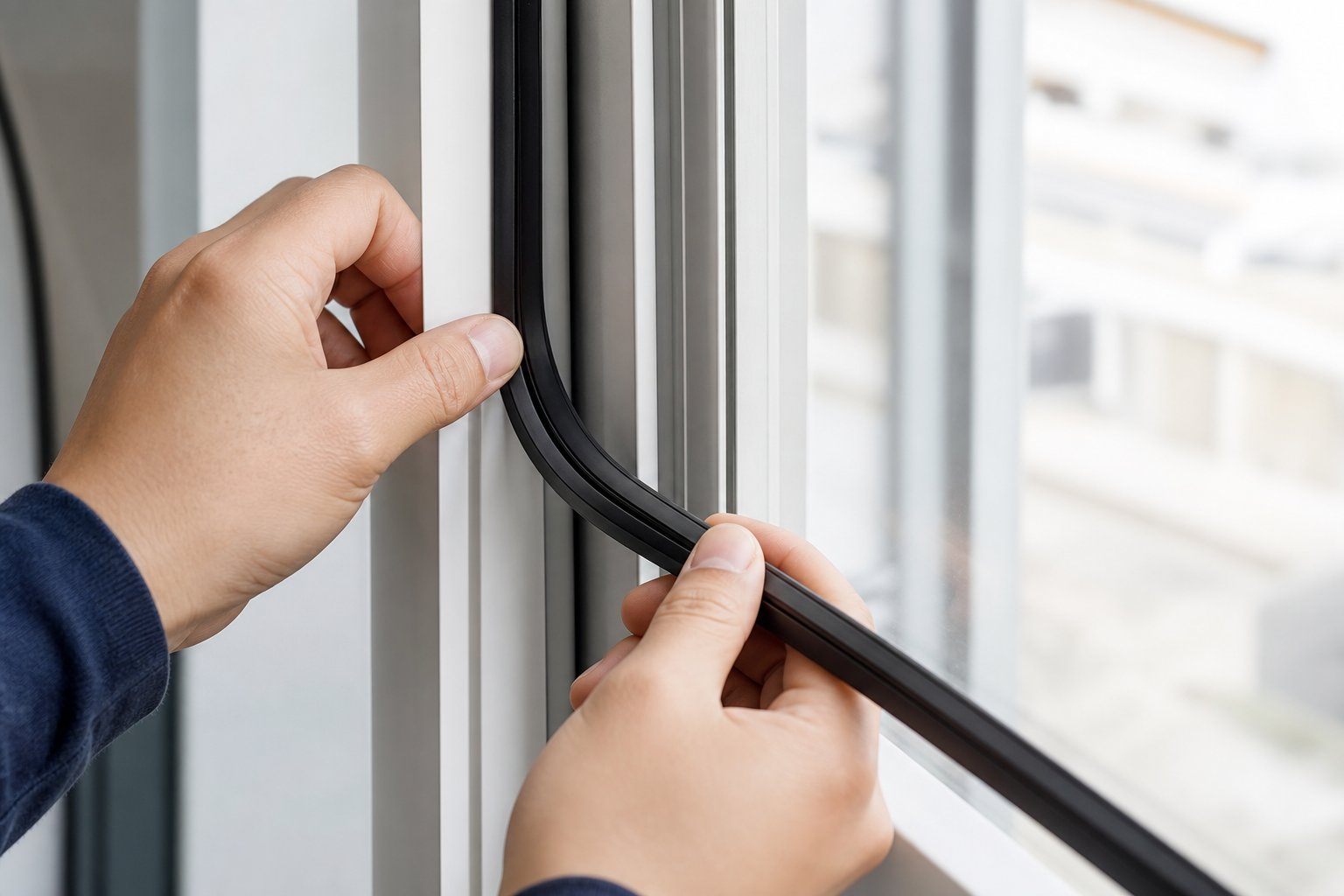
The hollow D-profile represents the most versatile cross-sectional geometry for medium-gap sealing applications between three millimeters and six millimeters. Featuring an arched crown supported by a planar adhesive backing base, the hollow inner cavity collapses uniformly under compression load, providing an even sealing plane across irregular jamb surfaces. High-performance door and window sealing strips utilizing a D-profile configuration offer an optimal compression-to-closure force ratio, ensuring residential doors latch smoothly without requiring excessive closure force.
P-Profile and E-Profile Extrusions
P-profile seals feature an extended flat mounting flange coupled to a rounded compression bulb. This offset configuration allows installers to secure the flat base against narrow rebates while extending the flexible bulb directly into operational clearances between two millimeters and five millimeters. The E-profile incorporates multiple parallel channel ribs, functioning as a multi-stage labyrinth seal that disrupts localized airflow currents. These multi-rib door and window sealing strips prove reliable on double-hung sash rails and casement window channels where varied tolerances occur.
V-Strip and Tension Flange Geometry
V-strip weatherstripping, commonly manufactured from spring-tempered bronze, stainless steel, or durable folded polypropylene, operates via dynamic mechanical spring tension rather than elastomeric compression. When a sash or entry door closes, the flexible leg of the V-profile depresses, exerting continuous outward spring tension against the mating face. Specialized V-type door and window sealing strips perform exceptionally well on historic double-hung sash channels, warped antique portals, and high-frequency passage doors where operational friction would degrade standard adhesive foam strips.
Structural Performance Comparison by Material and Profile Type
| Material Type | Optimal Profile Geometry | Typical Gap Coverage | Service Life Expectancy | Primary Engineering Application |
|---|---|---|---|---|
| EPDM Synthetic Rubber | Hollow D-Profile & P-Profile | 3.0 mm – 7.0 mm | 10 to 15 Years | Exterior Entry Doors and Casement Sashes |
| Architectural Silicone | Multi-Fin Bulb & Flange | 1.5 mm – 6.0 mm | 20+ Years | Extreme Temperature Zones & Architectural Glazing |
| Thermoplastic Elastomer | Kerf T-Slot & Extruded Bulb | 2.5 mm – 6.5 mm | 8 to 12 Years | Factory Extruded Fenestration Assemblies |
| Clad Polyurethane Foam | Kerf Insert & Teardrop | 3.0 mm – 8.0 mm | 10 to 14 Years | Exterior Residential Pre-Hung Entry Jambs |
| Polypropylene Woven Pile | Linear Fin Pile Ribbon | 2.0 mm – 5.0 mm | 5 to 8 Years | Horizontal and Vertical Sliding Sash Channels |
| Closed-Cell Neoprene | Flat Rectangular Tape | 1.5 mm – 4.5 mm | 3 to 6 Years | Auxiliary Hatches, Attic Access, Interior Doors |
Acoustic Attenuation and Perimeter Sound Dampening
Controlling unwanted environmental noise requires continuous perimeter mass and complete elimination of flanking air bypasses. Standard solid-core architectural doors provide baseline acoustic isolation, but operational margins compromise their intrinsic acoustic performance when unsealed.
The Physics of Flanking Sound Transmission
Acoustic energy leaks through microscopic openings in the same manner that fluid escapes pressurized vessels. An unsealed perimeter gap representing merely one percent of an entire door assembly surface area can permit up to ninety percent of incident acoustic energy to transmit through the opening, cutting the overall assembly Sound Transmission Class rating in half. Specifying cellular door and window sealing strips with sound-dampening elastomers effectively restores the field acoustic isolation rating to laboratory expectations.
Mass, Damping, and Cavity Decoupling Strategies
Acoustic seals function by establishing multi-layered physical barriers that absorb mechanical wave oscillations. By incorporating dual-perimeter door and window sealing strips along both the primary door stop and the secondary outer rebate, sound technicians create an isolated dead-air pocket. This decoupled acoustic chamber attenuates vibrational energy through destructive wave interference and viscous air friction, substantially dampening urban street traffic, commercial aircraft overflights, and industrial machinery noise.
Implementing Heavy-Duty Threshold Seals and Automatic Bottom Sweeps
While head and strike jambs can be sealed using continuous compression gaskets, the bottom threshold represents an operational challenge due to flooring wear and clear floor clearances. Installing perimeter door and window sealing strips along the frame must be paired with mechanical automatic door bottoms or heavy-duty sweeps. Automatic drop seals incorporate an internal spring-loaded plunger mechanism that activates upon closure, mechanically dropping an elastomeric gasket flush against the sill threshold without dragging across floor coverings during travel.
Diagnostic Assessment: Measuring Fenestration Tolerances and Deficiencies
Before investing in replacement door and window sealing strips, homeowners and facility engineers must conduct diagnostic assessments to identify specific leakage routes, calculate joint dimensional variances, and isolate structural warping.
The Thermal Gradient Smoke and Anemometer Protocol
Visual inspection alone cannot reveal microscopic air currents driven by internal HVAC depressurization. Employing a chemical smoke pen or precision digital thermal anemometer along perimeter window stops reveals exact draft infiltration coordinates. When guided along the sash perimeter on a windy or cold day, smoke deflections immediately indicate localized failure of existing door and window sealing strips, highlighting areas requiring profile upsizing or substrate repair.
Calibrated Feeler Gauge and Paper Friction Testing
The mechanical friction test provides an immediate, non-invasive method for validating gasket compression integrity. Insert a standard paper sheet between the door stop and closed sash, latch the door, and extract the paper. If the sheet slides out freely with negligible mechanical resistance, the existing gap exceeds the operational compression limits of current door and window sealing strips. A properly compressed gasket maintains positive mechanical grip, requiring deliberate pulling force without tearing the paper fibers.
Measuring Perimeter Gap Clearances Across Irregular Openings
Seasonal structural settling, foundational movement, and timber moisture expansion inevitably cause out-of-square fenestration frames. A gap that measures two millimeters near the upper hinge jamb may expand to six millimeters along the bottom corner.
Precision Modeling with Modeler Clay or Putty
To determine the ideal cross-sectional profile thickness across an uneven gap, roll small spheres of non-hardening modeling clay or putty and place them at regular intervals along the perimeter stop rebate. Close and securely latch the sash or door, compress the material fully, reopen the portal, and measure the flattened clay thickness using digital calipers. This accurate measurement profile allows technicians to deploy graduated door and window sealing strips, ensuring complete weather-tight contact without creating hardware deflection or hinge binding.
Professional Installation Methodology: From Preparation to Curing
The longevity and sealing efficiency of adhesive door and window sealing strips depend directly upon adherence to strict industrial installation protocols. Even commercial-grade EPDM gaskets will delaminate within months if applied to contaminated, oxidized, or improperly primed frame substrates.
Substrate Surface Chemistry and Decontamination
Adhesive backing strips utilize pressure-sensitive acrylic or modified synthetic rubber adhesives that require chemical bonding with clean, dry, solid substrates.
Mechanical Scraping, Degreasing, and Chemical Wiping
Begin by removing degraded legacy weatherstripping, brittle foam remnants, and oxidized adhesive residue using a sharp painter scraper or specialized adhesive solvent. Wash the exposed rebate surfaces with a residue-free solvent, such as ninety-nine percent isopropyl alcohol or denatured ethyl alcohol, to dissolve lingering oils, airborne particulates, and wax residues. Avoid using household mineral spirits or standard detergent cleaners, as these leave microscopic chemical films that undermine the acrylic bond of adhesive door and window sealing strips. Allow the structural substrate to air dry completely for twenty minutes before initiating gasket application.
Temperature Thresholds for Pressure-Sensitive Adhesives
Pressure-sensitive acrylic adhesives demand an ambient substrate temperature between fifteen degrees Celsius and twenty-eight degrees Celsius during application. Applying self-adhesive door and window sealing strips in freezing or high-humidity environments prevents acrylic cross-linking, resulting in early adhesive failure. When working in cold seasons, warm the window frame rebates cautiously with a portable heat gun to activate the adhesive backing prior to strip placement.
Precision Cutting, Corner Miter Joints, and Continuous Compression Paths
The physical geometry of perimeter joints dictates whether a window retains an airtight envelope. Never stretch elastomeric gaskets during application; stretching distorts the cell matrix and induces long-term elastic rebound tension that pulls the ends away from corners.
Crafting Seamless Forty-Five-Degree Mitered Corners
Where vertical jambs intersect horizontal headstops, cut door and window sealing strips at precise forty-five-degree angles using utility shears or a razor-sharp utility knife. Align the mitered facets precisely to form a continuous, hermetic junction. Alternatively, on continuous hollow bulb profiles, carefully notch the mounting base while preserving the outer bulb envelope around the corner radius, creating an uninterrupted physical barrier against wind and moisture.
Applying Calibrated Pressure Along the Application Plane
Once aligned, press the adhesive strip firmly against the substrate using a hard silicone pressure roller or firm thumb pressure along its entire length. High initial mechanical pressure activates microencapsulated tackifiers within the pressure-sensitive acrylic tape layer, guaranteeing structural bond longevity across decades of operational cycling.
Longevity Protocols, Maintenance, and Forensic Failure Analysis
Even top-tier door and window sealing strips eventually undergo chemical degradation, mechanical friction wear, and oxidative embrittlement. Routine maintenance and rapid identification of common failure modes ensure continuous envelope performance and substantial energy savings over the lifecycle of the building.
Identifying Root Causes of Premature Gasket Failure
When weatherstripping fails prior to its rated design lifecycle, specific mechanical or environmental stressors are typically the root cause. Conducting forensic inspection prevents repeat failures upon gasket replacement.
Adhesive Delamination Mechanisms
Adhesive failure manifests when the elastomeric strip peels away from the structural frame while the rubber substrate itself remains intact. This condition invariably points to inadequate substrate preparation, installation below temperature minimums, or structural moisture migration seeping from behind the wood stop. Utilizing primer-promoted adhesive door and window sealing strips on porous wood or powder-coated aluminum stops mitigates recurring delamination.
Compression Set and Physical Hardening
Compression set occurs when elastomeric rubber loses its natural dynamic elasticity, remaining permanently compressed into a thin, rigid profile even when the door is opened. Low-cost open-cell PVC and polyurethane foams are especially prone to early compression set within twenty-four months of installation. Upgrading to closed-cell EPDM or architectural silicone door and window sealing strips permanently cures this structural deficiency.
Ozone Cracking and Ultraviolet Brittleness
Exterior gaskets exposed to intense solar radiation frequently exhibit surface crazing, micro-cracking, and loss of tensile strength. Solar ultraviolet wavelengths break down molecular polymer backbones in low-grade natural rubber compounds. Installing UV-stabilized EPDM door and window sealing strips ensures deep molecular resistance to solar radiation and photochemical breakdown.
Preventative Maintenance and Lubrication Chemistry
To maximize the operational service life of rubber and silicone door and window sealing strips, clean the gasket perimeters twice annually using mild neutral-pH soap and warm water to eliminate particulate grit and abrasive dust. Following cleaning, treat solid rubber and silicone gaskets with a light application of pure silicone emulsion applied via a microfiber towel. Never apply petroleum-based lubricants or mineral oils to door and window sealing strips, as petroleum hydrocarbons dissolve synthetic rubber compounds, causing swelling, softening, and catastrophic gasket disintegration.
Lifecycle Cost-Benefit Analysis and Energy Efficiency Return on Investment
Implementing precision-engineered door and window sealing strips yields one of the highest returns on investment of any residential energy improvement measure. While replacing entire fenestration units with triple-pane insulated assemblies costs thousands of dollars with a payback timeline exceeding twenty-five years, installing modern door and window sealing strips delivers a rapid payback period often measured in under twelve months.
Quantifying Annual Utility Reductions
Standard engineering calculation models demonstrate that mitigating residential perimeter infiltration cuts annual domestic heating demand by twelve to twenty-two percent, with proportional cooling reductions during extreme summer heatwaves. By stabilizing the baseline interior building envelope, mechanical HVAC air handlers run shorter duty cycles, lowering annual mechanical equipment depreciation and prolonging compressor lifespans. Investing in premium door and window sealing strips represents a minimal capital outlay that delivers measurable operational dividends every single month.
Frequently Asked Questions About Door and Window Sealing Strips
Which profile of door and window sealing strips works best for uneven gaps?
A hollow D-profile or flexible V-strip works best because the resilient hollow chamber or spring-loaded leg compresses adaptively to bridge variable gap tolerances smoothly without binding the sash.
How long do exterior door and window sealing strips typically last before requiring replacement?
High-grade EPDM rubber and architectural silicone door and window sealing strips typically last between ten and twenty years, whereas standard closed-cell foam tapes require replacement every three to five years.
Can door and window sealing strips completely block exterior traffic noise?
While sealing strips cannot block all flanking vibration, installing dense closed-cell EPDM or silicone perimeter seals eliminates acoustic bypass gaps, reducing noticeable airborne sound intrusion by up to ten to fifteen decibels.
What is the most effective solvent for cleaning frames before applying adhesive sealing strips?
Ninety-nine percent isopropyl alcohol or denatured ethyl alcohol is the most effective solvent because it thoroughly strips away oil residues, dust, and grease without leaving an adhesive-weakening film.
Should door and window sealing strips be compressed completely flat when closed?
No, sealing strips should only be compressed between twenty-five and fifty percent of their original uncompressed profile to prevent hardware strain, ensure proper door latching, and preserve elastic recovery.
Will installing door and window sealing strips prevent moisture condensation on glass panes?
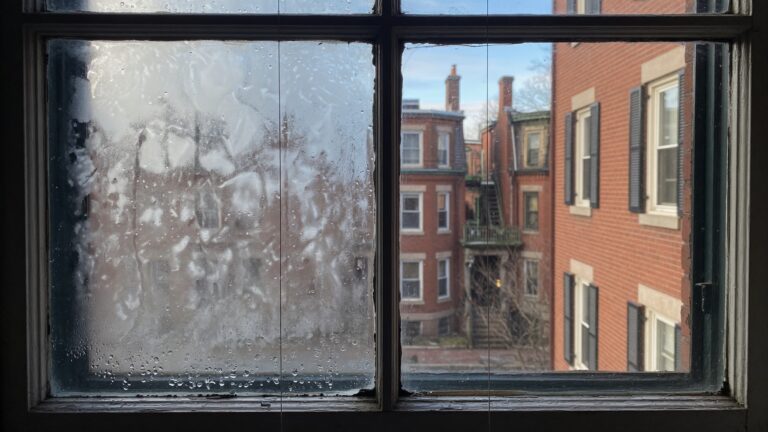
Sealing strips stop humid air drafts and prevent structural moisture infiltration around window frames, though eliminating interior glass condensation also requires maintaining proper indoor relative humidity levels.
Conclusion
Securing the building envelope against convective air leakage, environmental pollutants, and acoustic disruption is an essential foundation of sustainable building maintenance and structural energy efficiency. Choosing the right door and window sealing strips requires evaluating gap dimensions, mechanical wear patterns, and elastomeric material properties to guarantee long-term resilience against extreme weather cycles. Whether outfitting historic architectural portals with resilient EPDM D-profiles or retrofitting modern casement windows with high-recovery silicone extrusions, precision installation and routine maintenance preserve the integrity of living spaces. By eliminating dynamic drafts and sealing perimeter margins, property owners enhance everyday indoor living comfort, safeguard fenestration longevity, and achieve sustained reductions in heating and cooling expenses.