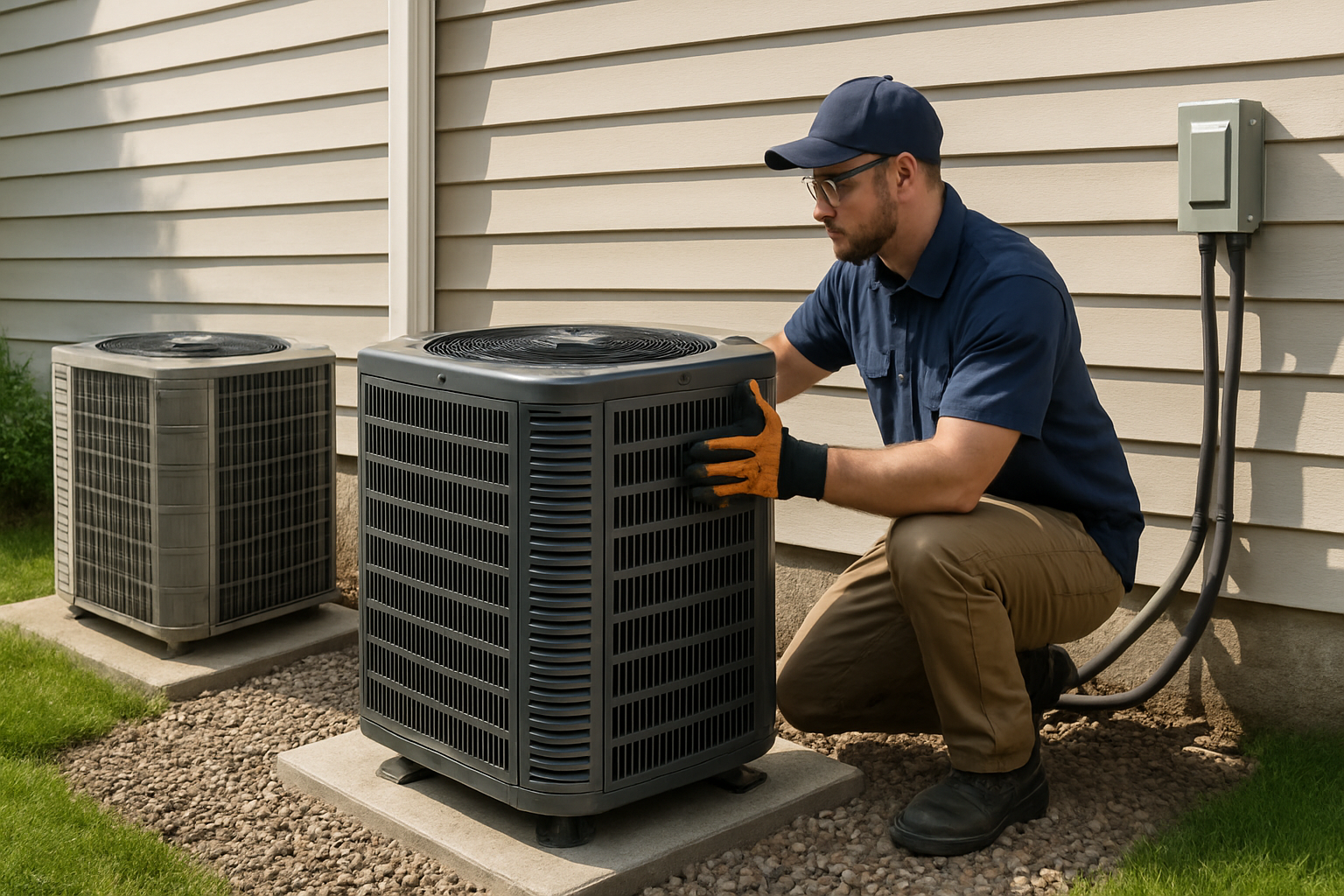
AC Replacement Explained: How to Choose the Right System for Lasting Home Comfort
Planning an AC replacement involves more than choosing a newer version of the air conditioner already outside your home. The replacement system must match the building’s cooling requirements, work correctly with compatible indoor equipment, deliver appropriate airflow, and account for factors such as duct condition, electrical capacity, climate, humidity, and energy efficiency. Installation and commissioning can matter just as much as the efficiency rating printed on the equipment. Understanding these factors helps homeowners determine when replacement makes sense, compare HVAC proposals accurately, and invest in a system suited to their home rather than simply buying the largest or least expensive unit available.
What Is AC Replacement?
AC replacement is the process of removing existing air conditioning equipment and installing new equipment designed and commissioned for the building.
For a central split air conditioner, the work can involve an outdoor condenser, indoor evaporator coil, refrigerant piping, electrical components, condensate drainage, thermostat, and related controls.
Depending on equipment compatibility and condition, other components may also require replacement or modification.
AC Replacement Versus AC Repair
Repair restores an existing cooling system by correcting a specific problem. Replacement involves installing new primary cooling equipment.
A malfunction alone does not automatically mean replacement is necessary. Many problems involving capacitors, contactors, controls, condensate systems, motors, or other serviceable components can potentially be repaired.
Replacement becomes a stronger consideration when repair costs are substantial relative to the equipment’s condition and remaining service potential, major components have failed, appropriate parts or refrigerant considerations complicate service, or the system no longer meets household needs.
Is AC Replacement Based on Age Alone?
No. Age provides context but does not independently establish that an air conditioner must be replaced.
Operating condition, maintenance history, repair frequency, efficiency, comfort performance, equipment availability, and the cost of necessary repairs can all influence the decision.
A qualified HVAC technician can evaluate the current system and provide repair and replacement options where both are reasonable.
7 Powerful AC Replacement Tips for Better Results
The following principles can help homeowners avoid common purchasing mistakes and focus on the factors that influence real world HVAC performance.
1. Confirm Whether AC Replacement Is Necessary
Start with an accurate diagnosis.
A system that stops cooling could have a relatively isolated problem rather than a complete system failure. Conversely, repeatedly repairing deteriorating equipment may eventually become less practical than installing a properly selected replacement.
Signs That AC Replacement May Be Worth Considering
Potential reasons for evaluating replacement include:
• Increasing repair frequency
• Failure of a major component
• Persistently poor cooling despite appropriate service
• Significant efficiency concerns
• Major compatibility issues between components
• Excessive or disruptive equipment noise
• Difficulty obtaining suitable replacement parts
• Changes in household comfort requirements
• Expensive repairs on equipment already in poor overall condition
None of these signs creates an automatic replacement rule.
Compare Repair and Replacement Options
Ask the contractor to explain what failed, what repair would involve, and whether other major components show concerning conditions.
When possible, compare the expected cost and practical value of repairing the current system with replacing it.
Be cautious with sales claims that an arbitrary percentage or age threshold proves replacement is required. The decision should be based on the specific equipment and property.
Consider Repair History
Records can reveal whether a current failure is isolated or part of a pattern.
Keep invoices documenting previous repairs, refrigerant service, motor replacement, electrical issues, and routine maintenance. These records can help a technician understand the system’s recent history.
2. Size the New AC Replacement Correctly
One of the most important replacement decisions is cooling capacity.
Installing a larger air conditioner than necessary does not guarantee better comfort. Oversized systems can cycle differently and may provide less effective humidity control under some conditions.
Undersized equipment may struggle to maintain indoor conditions during design weather.
Use a Cooling Load Calculation
Professional residential HVAC design in the United States commonly uses recognized procedures such as Air Conditioning Contractors of America Manual J to calculate heating and cooling loads.
Variables can include:
• Climate
• Floor area
• Insulation
• Air leakage
• Window area
• Window performance
• Building orientation
• Shading
• Wall and roof characteristics
• Internal loads
These factors provide a stronger technical basis for sizing than floor area alone.
Do Not Automatically Copy the Existing AC Size
The old equipment’s nominal capacity does not prove it was correctly sized.
The home may also have changed through insulation improvements, window replacement, additions, air sealing, or other renovations.
Replacement creates an opportunity to evaluate current requirements.
Understand Cooling Capacity
Residential equipment capacity may be expressed in British thermal units per hour or tons of cooling.
A contractor should be able to explain how the recommended capacity relates to the calculated load.
The objective is appropriate sizing, not maximizing the number on the equipment label.
3. Compare AC Replacement Efficiency Carefully
Efficiency affects operating energy use, but the highest available efficiency rating is not automatically the best financial choice for every home.
In the United States, modern residential equipment may be rated using SEER2 and other applicable efficiency metrics.
These standardized ratings help consumers compare equipment performance under defined test procedures.
What Does SEER2 Mean?
SEER2 represents a seasonal cooling efficiency metric established under current U.S. Department of Energy testing procedures for covered equipment.
A higher qualifying rating indicates greater seasonal cooling efficiency under standardized testing conditions.
Actual electricity consumption still depends on climate, thermostat settings, installation quality, building envelope performance, maintenance, and household behavior.
Compare Matched Equipment
The outdoor unit does not operate independently.
Indoor coils, air handlers, furnaces, blowers, and other components can affect rated system performance and compatibility.
Ask for the exact model numbers of proposed indoor and outdoor equipment and the documented rating for that combination.
Look Beyond Efficiency Ratings
Equipment selection can also involve:
• Sound characteristics
• Compressor technology
• Variable or staged operation
• Dehumidification capabilities
• Controls
• Warranty coverage
• Local service availability
• Replacement part availability
• Installed cost
These characteristics can sometimes matter more to a homeowner than a small difference in published efficiency.
4. Inspect Ductwork During AC Replacement
Replacing air conditioning equipment without evaluating the existing air distribution system can leave significant performance problems unresolved.
Ducts are responsible for delivering conditioned air and returning indoor air to the equipment.
Common Duct Problems
An inspection may identify:
• Disconnected sections
• Air leakage
• Damaged flexible ducts
• Poor insulation
• Restricted returns
• Inadequate supply capacity
• Crushed or kinked duct sections
• Poorly sealed connections
• Design problems
Not every older duct system needs complete replacement.
Why Airflow Matters
Cooling equipment is designed to operate within particular airflow parameters.
Inappropriate airflow can affect capacity, efficiency, coil temperatures, comfort, and system operation.
A professional should verify airflow related conditions during system commissioning rather than assuming existing ducts are adequate.
Should Ducts Be Replaced With the AC?
Only when condition or design justifies it.
Some systems can be improved by repairing, sealing, insulating, or modifying selected sections. Others may need significant redesign.
Ask contractors to explain the evidence supporting recommended ductwork before authorizing extensive changes.
5. Consider a Heat Pump During AC Replacement
Replacing a conventional air conditioner can be an opportunity to consider an air source heat pump.
A heat pump provides cooling using the refrigeration cycle and can reverse operation to provide heating.
Is a Heat Pump Better Than an AC?
Neither option is universally better.
Suitability depends on climate, building load, electricity and fuel costs, available equipment, existing heating system, household goals, and installation considerations.
Modern heat pumps include models designed for a range of outdoor conditions, but performance varies significantly among products.
Evaluate Heating Performance in Your Climate
Do not base a heat pump decision solely on general claims that it works or does not work in cold weather.
Review manufacturer performance data for the proposed equipment at relevant outdoor temperatures.
A contractor should also explain how supplemental or backup heat would operate when applicable.
Consider Utility and Government Incentives
Efficiency rebates or tax incentives may be available for qualifying HVAC equipment.
Programs, eligibility requirements, and equipment criteria change.
In the United States, homeowners should verify current information through official federal, state, local, manufacturer, and utility resources rather than relying on an older article or contractor advertisement.
6. Hire a Qualified Contractor for AC Replacement
Equipment quality matters, but installation quality can substantially influence performance.
HVAC work may involve electrical systems, refrigerants, condensate drainage, controls, ductwork, and building code requirements.
Check HVAC Contractor Qualifications
Consider:
• Required state or local licensing
• Appropriate insurance
• Experience with the equipment being proposed
• Detailed load calculations
• Written proposals
• Manufacturer qualifications where applicable
• Clear warranty terms
• Permit procedures
• Commissioning practices
• Established local service capability
Licensing requirements vary by jurisdiction, so verify current requirements through the appropriate local or state authority.
Refrigerant Work Is Regulated
In the United States, the Environmental Protection Agency regulates refrigerant handling under Section 608 of the Clean Air Act.
Technicians performing covered work involving regulated refrigerants must meet applicable certification requirements.
Old refrigerant should be recovered using appropriate equipment rather than intentionally released.
Compare Detailed Estimates
A useful AC replacement proposal should identify:
• Manufacturer
• Indoor equipment model
• Outdoor equipment model
• Cooling capacity
• Efficiency rating
• Thermostat or control system
• Duct modifications
• Electrical modifications
• Refrigerant line work
• Drainage work
• Permit responsibilities
• Equipment removal
• Warranty terms
• Total price
Comparing equivalent scopes is more useful than selecting whichever proposal has the lowest headline figure.
7. Require Proper AC Replacement Commissioning
A replacement project is not complete simply because the thermostat turns on and cool air reaches the rooms.
Commissioning verifies that the equipment operates according to manufacturer specifications and system design.
What Should Be Checked?
Depending on system type, commissioning can involve:
• Electrical measurements
• Refrigerant system measurements
• Airflow
• Temperature performance
• Static pressure where appropriate
• Condensate drainage
• Thermostat configuration
• Equipment staging
• Safety controls
• System operation
Procedures vary according to manufacturer and equipment type.
Correct Refrigerant Charge Matters
Improper charge can affect air conditioner operation and performance.
The appropriate charging procedure depends on equipment, refrigerant, metering device, line length, conditions, and manufacturer instructions.
This work requires qualified technicians and appropriate instruments.
Test the Condensate System
Cooling equipment produces condensate as moisture is removed from indoor air.
Drainage needs to function correctly and may require specific overflow protection depending on equipment location and applicable codes.
A poorly installed drain can result in leaks and property damage even when the cooling equipment itself operates normally.
How Much Does AC Replacement Cost?
There is no trustworthy single price that applies to every home.
The installed cost depends on equipment, capacity, efficiency, local labor, existing infrastructure, accessibility, permits, and supporting modifications.
Major AC Replacement Cost Factors
Cost can be influenced by:
• Equipment type
• Cooling capacity
• Efficiency rating
• Compressor technology
• Indoor equipment compatibility
• Ductwork condition
• Electrical requirements
• Refrigerant piping
• Condensate drainage
• Thermostat and controls
• Accessibility
• Local labor costs
• Permits and inspections
• Removal of existing equipment
The lowest equipment price does not necessarily represent the lowest complete installed cost.
Ask About Possible Additional Charges
Some site conditions may not become apparent until work begins.
Ask how unexpected duct, electrical, drainage, refrigerant line, or structural modifications will be handled and authorized.
Written change procedures reduce misunderstandings.
Repair or AC Replacement: Which Makes More Sense?
There is no reliable formula that resolves every repair versus replacement decision.
Homeowners should consider current repair cost alongside overall equipment condition and likely future needs.
Questions to Consider
Ask:
• What component failed?
• Is the rest of the equipment in good condition?
• How frequently has the system needed repair?
• Are parts readily available?
• Does it maintain acceptable comfort?
• How efficient is the existing system?
• Is the indoor equipment compatible with replacement components?
• Are major home renovations planned?
These questions create a more useful framework than using age alone.
Get a Second Opinion for Expensive Recommendations
When the system can safely remain out of service long enough, another qualified diagnosis can be valuable before approving an expensive replacement.
Ask both contractors to explain the failure and their proposed solution.
AC Replacement and Refrigerant Considerations
Refrigerant regulations and equipment technology have changed over time.
Existing equipment may use a refrigerant different from that used by contemporary replacement systems.
Why Refrigerant Type Matters
Cooling equipment is engineered for specific refrigerants and operating characteristics.
Refrigerants should never be substituted casually.
Changing equipment or refrigerant can require compatible coils, controls, metering devices, line considerations, and manufacturer approved procedures.
Current Rules Can Change
Environmental regulations and equipment standards evolve.
Contractors should follow current EPA requirements, manufacturer instructions, and applicable codes for refrigerant recovery and system installation.
For time sensitive refrigerant information, consult official EPA resources rather than outdated general advice.
AC Replacement and Electrical Requirements
New equipment may have different electrical requirements from the existing system.
The circuit, overcurrent protection, disconnect, conductors, and other components need to be appropriate for the equipment.
Electrical Work Should Meet Applicable Codes
A qualified contractor should review the manufacturer’s electrical data and existing installation.
Depending on jurisdiction, permits or inspections may apply.
Do Not Assume Existing Wiring Is Automatically Suitable
Physical compatibility does not establish electrical compatibility.
The proposed equipment’s specifications determine necessary electrical characteristics.
Where upgrades are required, they should appear clearly in the project scope.
AC Replacement Permits and Inspections
HVAC replacement often falls under local mechanical, electrical, energy, or building requirements.
Whether a permit is required depends on the jurisdiction.
Who Handles the Permit?
Contractors frequently obtain required permits, but homeowners should confirm responsibility before signing.
The proposal should identify whether permit and inspection costs are included.
Why Permits Matter
Permits and inspections can help verify compliance with applicable local requirements.
They can also create useful documentation of major home improvements.
Do not assume that replacing equipment in the same location automatically eliminates permit requirements.
Where Should Replacement AC Equipment Be Located?
In many projects, existing indoor and outdoor locations remain suitable. However, replacement creates an opportunity to correct placement problems when practical.
Outdoor equipment requires manufacturer specified airflow and service clearances.
Keep the Outdoor Unit Unobstructed
Vegetation, fences, storage, and decorative screens can restrict airflow.
Follow the exact equipment requirements rather than applying a universal clearance rule.
Consider Noise and Access
Outdoor unit placement can affect perceived sound near windows, patios, bedrooms, and neighboring properties.
Technicians also need adequate service access.
Equipment should not be hidden in a way that compromises airflow or makes future maintenance unnecessarily difficult.
AC Replacement and Indoor Comfort
A new air conditioner should be selected for more than peak temperature control.
Humidity, air distribution, zoning, thermostat placement, building envelope conditions, and equipment operation can all influence comfort.
Variable and Multistage Equipment
Some systems can operate at multiple capacities rather than only full output.
Potential advantages can include quieter operation and more continuous temperature control under certain conditions.
Whether the additional upfront expense is worthwhile depends on the property and household priorities.
Do Not Expect Equipment to Correct Every Building Problem
Hot rooms may result from inadequate insulation, solar gain, air leakage, poor duct design, window characteristics, or other building envelope issues.
Installing larger cooling equipment may not solve these underlying causes.
Diagnose comfort problems before choosing the replacement system.
AC Replacement and Indoor Air Quality
Cooling equipment can contribute to humidity control and filtration, but it is not a complete indoor air quality solution.
Pollutant sources, outdoor air, building moisture, filtration, ventilation, and cleaning practices all matter.
Choose Compatible Filtration
A higher efficiency filter can improve capture of certain airborne particles, but filters also create airflow resistance.
The HVAC system must be able to accommodate the selected filter.
Ask the contractor about suitable filtration options rather than assuming the highest available rating is always appropriate.
Investigate Moisture Problems Separately
Persistent humidity, mold, or water damage may have causes beyond the air conditioner.
Building leaks, drainage, ventilation, air infiltration, or plumbing can contribute.
Correcting the source should accompany HVAC improvements where necessary.
AC Replacement Warranties
A replacement system may include manufacturer equipment warranties and a separate contractor workmanship warranty.
Coverage varies significantly.
Read Manufacturer Terms
Check:
• Registration requirements
• Coverage period
• Covered components
• Labor coverage
• Exclusions
• Maintenance requirements
• Transferability
• Claim procedures
Do not assume that “10 year warranty,” for example, means every repair expense would be covered for ten years.
Understand Labor Warranties
Manufacturer parts coverage and contractor labor coverage are often separate.
Ask who pays diagnostic, labor, refrigerant, and other service costs if a covered component fails.
Keep all warranty documentation and invoices.
How to Prepare for AC Replacement
Before installation day, provide technicians with reasonable access to HVAC equipment, thermostats, electrical panels, and the outdoor unit.
Move fragile or valuable objects away from work areas.
Discuss the Schedule
Ask how long cooling is expected to be unavailable and whether the project requires multiple visits or inspections.
Weather and unexpected site conditions can affect timing.
Protect Your Documentation
After completion, keep:
• Equipment model numbers
• Serial numbers
• Paid invoice
• Permit documentation
• Inspection records
• Warranty information
• Load calculation
• Commissioning records where provided
• Contractor details
These documents can simplify future maintenance and warranty service.
AC Replacement Maintenance After Installation
A new system still requires maintenance.
Check or replace filters according to manufacturer guidance and household conditions.
Keep the outdoor equipment clear and monitor condensate drainage for unusual water.
Professional Maintenance
Equipment manufacturers may provide specific maintenance recommendations.
Qualified service can address coils, electrical components, drainage, airflow, controls, and refrigeration related operation where appropriate.
Following maintenance requirements can also be relevant to warranty terms.
Monitor Changes in Performance
Contact a qualified technician when new equipment develops persistent unusual noise, insufficient cooling, repeated shutdowns, unexpected water, reduced airflow, or abnormal odors.
Addressing installation or operating concerns early can prevent prolonged operation under unsuitable conditions.
Frequently Asked Questions
When should I consider AC replacement?
Consider replacement when major failures, repeated repairs, poor condition, compatibility issues, or inadequate performance make continued repair less practical. Age alone should not determine the decision.
How much does AC replacement cost?
Costs vary by capacity, efficiency, system type, ductwork, electrical needs, labor, permits, and location. Detailed local proposals provide the most useful pricing.
What size AC replacement does my house need?
Cooling capacity should be based on an appropriate load calculation considering climate, insulation, windows, air leakage, orientation, and other building characteristics.
Should I replace my furnace during AC replacement?
Not always. Compatibility, furnace condition, efficiency, age, blower requirements, and long term plans should determine whether simultaneous replacement is appropriate.
Should I choose a heat pump instead of an AC?
A heat pump can provide both heating and cooling and may be attractive in many homes. Suitability depends on climate, energy costs, equipment performance, and existing heating infrastructure.
Does AC replacement require a permit?
Many jurisdictions require permits for HVAC replacement, but requirements vary. Verify current rules with your contractor and local building authority before installation.
Conclusion
A successful AC replacement begins with accurate diagnosis and equipment sizing rather than simply matching the old unit. Efficiency, ductwork, refrigerant compatibility, electrical requirements, commissioning, contractor quality, and warranty coverage all influence long term performance. Comparing complete written proposals and verified equipment specifications can help homeowners invest in a cooling system that delivers dependable comfort and efficient operation for their specific property.