Food Containers from MrTakeOutBags: Choosing Better Packaging for Takeout and Delivery
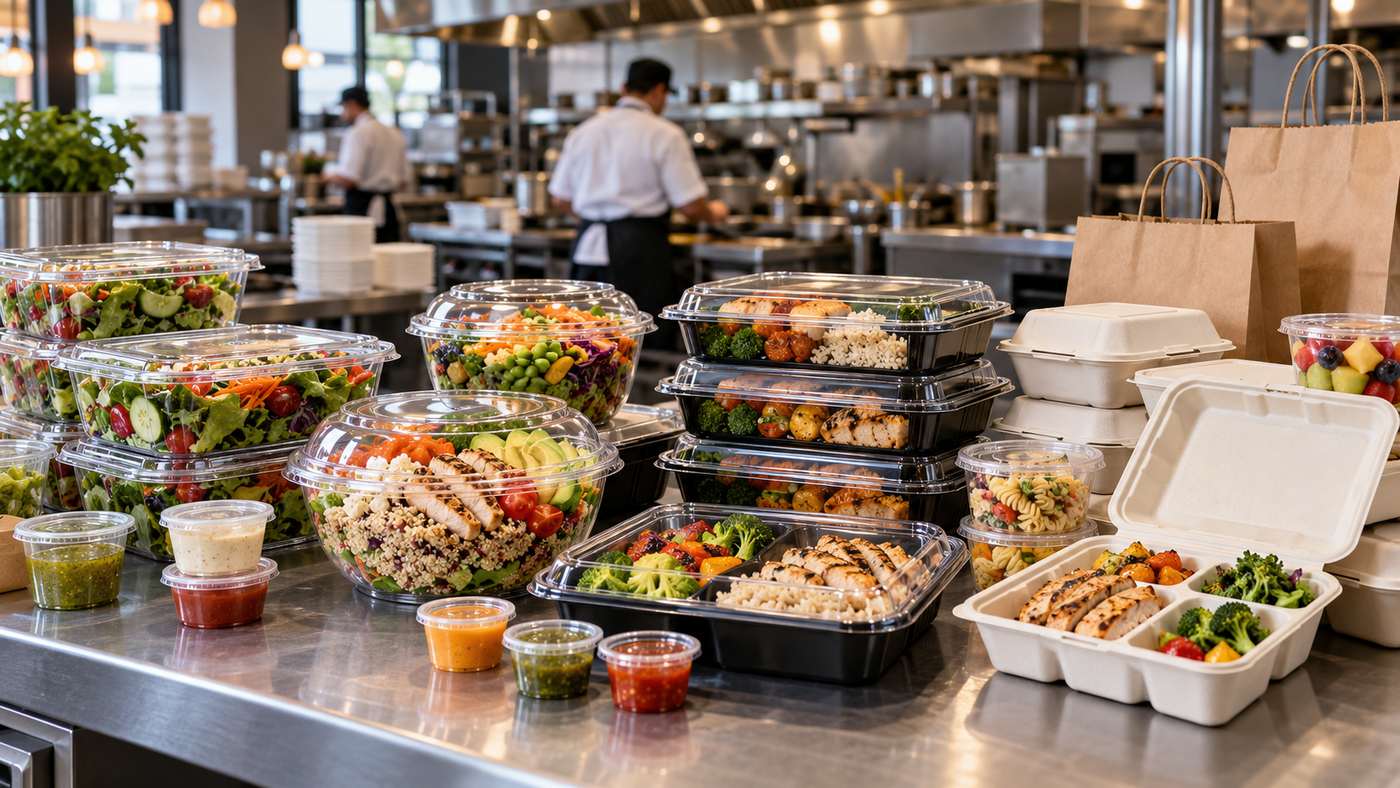
Restaurants, caterers, food trucks and meal-prep businesses need packaging that protects food from the kitchen counter to the customer’s table. food containers from MrTakeOutBags include round and rectangular containers, serving bowls, meal-prep packaging, condiment cups, tamper-evident clamshells, microwaveable containers and compostable alternatives designed for different food-service applications. MrTakeOutBags currently lists products ranging from small 2-ounce portion cups to 64-ounce bowls and larger catering formats, with many lines available at wholesale pricing and volume discounts.
Choosing food packaging may appear simple, but the wrong container can create practical problems.
A container designed for a cold salad may not be appropriate for a hot entrée.
A vented lid that works well with steaming food may not provide the leak resistance required for soup.
Similarly, clear PET packaging provides excellent food visibility but should not automatically be treated as microwave safe unless the individual product specifications confirm it.
The best packaging decision therefore begins with the food itself.
This guide explains seven useful benefits of the MrTakeOutBags container range and how restaurants can compare materials, shapes, lids, sizes and food applications more effectively.
What Food Containers Does MrTakeOutBags Offer?
MrTakeOutBags carries a broad selection of disposable and reusable-style food-service packaging.
Its current plastic containers and bowls category includes options such as:
- Round takeout bowls
- Tamper-evident clamshell containers
- PET serving bowls
- Compostable deli containers
- Square plastic bowls
- Microwaveable food containers
- Meal-prep containers
- Round deli containers
- Rectangular deli containers
- Clear takeout bowls
- Compostable food containers
- Condiment portion cups
- Plastic clamshells
- Dessert dishes
- Catering bowls
- Sushi and bento trays
This variety matters because food packaging works best when the container matches the menu item.
Soup needs different packaging from sushi.
A catering salad requires a different format from a two-ounce dipping sauce.
Restaurants that use several different menu categories can therefore build a packaging system rather than trying to force every meal into one universal box.
7 Smart Benefits of Food Containers from MrTakeOutBags
1. Multiple Container Shapes for Different Foods
One of the strongest advantages of a large packaging range is the ability to choose a shape based on the food.
MrTakeOutBags currently divides its container options into round, rectangular, square and compartment formats.
Each shape has practical advantages.
Round Containers
Round bowls work particularly well for:
- Salads
- Soups
- Grain bowls
- Pasta
- Side dishes
- Deli foods
Their shape makes them convenient for mixing ingredients and stacking similar portions.
MrTakeOutBags currently offers round packaging ranging from small portion sizes to large catering bowls.
Rectangular Containers
Rectangular containers are useful for complete entrées.
They can accommodate foods such as:
- Rice and chicken
- Pasta dishes
- Meal-prep portions
- Sandwich sides
- Restaurant leftovers
The broader flat base can help keep food visually organised.
Square Containers
Square bowls can make efficient use of storage space.
MrTakeOutBags offers PET square bowls in several sizes and colours, with lids designed for stacking and transportation.
Compartment Containers
Compartment packaging helps separate different foods.
A restaurant serving an entrée with two sides may want the items to remain separate during delivery.
This can reduce sauces moving into foods that are intended to remain dry or crisp.
MrTakeOutBags specifically recommends compartment containers for meal deals, combo plates and catering where separation between foods is important.
2. Containers for Both Hot and Cold Food Applications
Temperature is one of the most important packaging considerations.
Not all plastics behave the same way under heat.
MrTakeOutBags currently distinguishes clear PET containers from microwaveable container lines. Its product guidance recommends PET where clarity and strength are priorities and microwaveable plastic where customers may reheat the food.
Cold Food Packaging
Clear PET containers can work well for cold foods where presentation matters.
Examples include:
- Salads
- Fruit
- Desserts
- Deli items
- Cold pasta
- Catering displays
Customers can see the food without opening the package.
That visibility can be particularly useful for grab-and-go displays.
Hot Food Packaging
Hot meals require materials specifically designed for their intended temperature and use.
MrTakeOutBags offers a dedicated range of microwaveable food containers, including round, square and rectangular designs.
Some products are offered with ventable lids.
These vents allow steam to escape and can help prevent excessive condensation inside the package.
Always Check Individual Product Specifications
A container should never be assumed to be microwave safe simply because it is plastic.
The FDA regulates substances used in food-contact applications, including packaging components, according to their intended food-contact use.
Restaurants should therefore follow the specifications listed for the exact container they purchase.
3. Food Containers from MrTakeOutBags Include Secure Lid Options
A food container is only as useful as its closure.
Poorly fitted lids can cause:
- Leaks
- Food contamination
- Spills in delivery bags
- Presentation problems
- Customer complaints
MrTakeOutBags offers matching lids across many of its container lines.
Its current product guidance notes that lids may be included with some products and sold separately with others.
Leak-Resistant Containers
Some rectangular deli containers and other lines are marketed with leak-resistant or leak-proof seals for suitable foods.
This can be useful for:
- Saucy entrées
- Deli foods
- Dressings
- Moist side dishes
Restaurants should still confirm the exact product specifications.
A vented lid, for example, may intentionally allow steam or pressure to escape and therefore should not automatically be expected to provide the same leak performance as a fully sealed lid.
Universal Lid Systems
Several food-service packaging systems use one lid across multiple container depths.
This can make inventory easier.
Instead of stocking separate lids for every container size, a restaurant may be able to use one compatible lid across several capacities within the same product family.
That can simplify ordering and reduce the chance of having containers in stock without matching lids.
4. Meal Prep Containers Support Portioning and Grab-and-Go Service
Meal-prep packaging has become useful well beyond traditional meal-prep companies.
Restaurants, cafés and grocery operations can use portioned containers for:
- Prepared lunches
- Fitness meals
- Grab-and-go foods
- Catering
- Employee meals
- Weekly meal plans
MrTakeOutBags currently lists dozens of meal-prep container products in several sizes, shapes and colours.
Current examples include 16-ounce rectangular containers as well as larger formats.
Some include clear lids so customers can view the meal inside.
Why Portion Size Matters
Using several container capacities allows businesses to standardise portions.
For example:
A smaller container can hold a side dish.
A medium container can hold lunch.
A larger format may work for a complete dinner entrée.
Standardisation can help with:
- Portion consistency
- Food-cost management
- Inventory planning
- Presentation
The ideal capacity depends on the actual meal rather than a generic container recommendation.
5. Tamper-Evident Packaging Can Support Delivery Operations
Food delivery creates a different packaging challenge from counter service.
Once the order leaves the restaurant, staff no longer have direct control over it.
Tamper-evident packaging can provide customers with a visible indication that a package has remained closed.
MrTakeOutBags currently offers tamper-evident plastic clamshell containers featuring a tear-tab style security system.
Where Tamper-Evident Containers Can Be Useful
Examples include:
- Delivery orders
- Grab-and-go retail
- Bakery products
- Deli foods
- Prepared salads
- Desserts
Tamper evidence is different from making a container impossible to open.
The purpose is generally to create a visible indication when the original closure has been disturbed.
Restaurants may also combine secure containers with tamper-evident takeout bags or labels depending on their delivery model.
6. Compostable Packaging Options Are Available
Restaurants increasingly consider packaging materials as part of their sustainability strategy.
MrTakeOutBags currently lists compostable deli containers, bowls, sushi trays and other compostable food-service options alongside conventional plastic packaging.
However, the word “compostable” requires some context.
Compostable Does Not Always Mean Home Compostable
The Federal Trade Commission states that marketers making compostable claims need reliable evidence that the material will break down safely into usable compost in an appropriate time.
The FTC also says compostability claims should be qualified where a product requires municipal or industrial composting rather than ordinary home composting.
Therefore, restaurants should review each product’s disposal instructions.
A container designed for commercial composting may not break down properly in a backyard compost pile.
Local Composting Availability Matters
A compostable container provides its intended end-of-life benefit only when suitable collection and composting infrastructure is available.
Restaurants considering compostable packaging should ask:
- Is commercial composting available locally?
- Does the waste hauler accept the material?
- Do customers understand how to dispose of it?
- Are lids and labels also compostable?
Environmental packaging decisions work best when the entire disposal system is considered.
7. Wholesale Purchasing Can Help High-Volume Food Businesses
Restaurants can use dozens or hundreds of containers every day.
For that reason, unit cost and case quantity matter.
MrTakeOutBags currently sells its plastic containers and bowls at wholesale pricing and states that volume discounts are available on multiple cases.
This purchasing model can work well for:
- Restaurants
- Caterers
- Food trucks
- Meal-prep companies
- Bakeries
- Delis
- Cafés
Bulk Purchasing Requires Inventory Planning
Buying more cases can reduce per-unit costs, but excess inventory can create storage problems.
Before ordering, businesses should evaluate:
- Weekly container usage
- Storage space
- Menu changes
- Lid compatibility
- Seasonal demand
Frequently used universal containers can often justify larger case quantities.
Specialty packaging used only for occasional catering jobs may need smaller inventory levels.
Choosing the Correct Container Size
Container size should match both portion volume and presentation.
MrTakeOutBags currently offers packaging ranging from approximately 2-ounce condiment cups to 64-ounce bowls and substantially larger catering containers.
Small Containers
Small portion cups work well for:
- Sauces
- Dressings
- Condiments
- Toppings
- Small sides
MrTakeOutBags lists condiment cups in sizes including 2, 3, 4 and 5.5 ounces.
Medium Containers
Medium containers may work for:
- Side salads
- Pasta
- Meal prep
- Lunch entrées
Large Containers
Large bowls can be appropriate for:
- Family meals
- Catering salads
- Party sides
- Large takeout orders
For example, the retailer currently lists serving bowl formats that include 32, 48 and 64-ounce sizes as well as significantly larger catering bowls.
Clear Food Containers and Product Presentation
Packaging can influence how customers perceive food before they taste it.
Clear containers can be particularly useful for colourful dishes.
Examples include:
- Fresh salads
- Fruit bowls
- Desserts
- Sushi
- Bakery items
PET containers are commonly chosen when clarity is important.
MrTakeOutBags specifically highlights PET for clarity and strength across several serving-bowl formats.
For a grab-and-go refrigerator, product visibility can also help customers make purchasing decisions without opening the packaging.
Why Stackability Matters
Food-service kitchens often have limited storage space.
Stackable containers can improve organisation before and after filling.
Square and rectangular formats can make efficient use of shelves.
Secure stacking can also help during:
- Catering transport
- Refrigerator storage
- Pickup staging
- Delivery
MrTakeOutBags specifically promotes several of its bowl and meal-prep formats as stackable.
However, containers should not be stacked in a way that crushes food or exceeds safe transport limits.
Venting Hot Takeout Food
Hot food releases steam.
When steam becomes trapped inside a sealed package, condensation can collect on the lid and food.
This is especially noticeable with fried or crispy foods.
Some MrTakeOutBags microwaveable container lines offer vented-lid options designed to allow steam to escape.
Venting can work well for:
- Hot entrées
- Rice meals
- Vegetables
- Pasta
However, there is a trade-off.
A vented container may provide less protection against liquid leakage.
Restaurants should choose based on the dish.
Using Containers for Delivery
Delivery packaging faces more movement than dine-in or counter pickup packaging.
Drivers may carry several meals together.
Containers can tilt inside bags.
Restaurants should therefore test packaging under realistic conditions.
A Basic Delivery Packaging Test
Prepare the actual meal.
Close the package normally.
Place it inside the intended delivery bag.
Allow it to remain packaged for approximately the same amount of time as a typical delivery.
Then evaluate:
- Leakage
- Condensation
- Food temperature
- Appearance
- Lid security
- Food separation
This simple test can reveal issues that are not obvious when looking at an empty container.
Food Containers for Catering
Catering often requires substantially larger packaging than normal restaurant takeout.
MrTakeOutBags lists PET serving bowls in capacities extending to 160 and 320 ounces within some product lines.
These larger containers can be useful for:
- Salads
- Cold sides
- Fruit
- Catering displays
A catering company should also consider how containers will be stacked and transported in vehicles.
Secure lids and stable bases become especially important when carrying large portions.
Restaurant Packaging Inventory Tips
Packaging inventory should be treated like any other restaurant supply.
A restaurant can categorise containers into high-use, medium-use and specialty packaging.
High-Use Items
Examples might include:
- Main entrée boxes
- Salad bowls
- Sauce cups
- Standard lids
These should generally have higher reorder levels.
Specialty Items
Examples may include:
- Catering bowls
- Dessert cups
- Holiday packaging
- Sushi trays
These may require less inventory.
Track Lids Separately
Where lids are sold separately, restaurants should track both components.
Running out of matching lids can make an entire case of containers temporarily unusable.
This is one reason universal-lid systems can simplify operations.
Common Mistakes When Buying Food Containers
Assuming Every Plastic Container Is Microwave Safe
Only use containers according to the manufacturer’s stated temperature and microwave specifications.
Choosing Based Only on Price
A cheaper container can become expensive if it leaks or creates customer complaints.
Buying Oversized Packaging
A small meal inside an excessively large container can move around and look poorly presented.
Ignoring Lid Compatibility
Always confirm whether lids are included or sold separately.
Confusing Compostable With Universally Compostable
Some compostable packaging requires commercial facilities.
FTC guidance makes clear that environmental claims should accurately describe real disposal conditions.
Using One Container for Every Menu Item
Different foods require different ventilation, leak resistance, size and shape.
A packaging system should match the menu.
Frequently Asked Questions
What types of food containers from MrTakeOutBags are available?
The current range includes deli containers, meal-prep containers, round and square bowls, microwaveable containers, tamper-evident clamshells, condiment cups, serving bowls and compostable options.
Are food containers from MrTakeOutBags microwave safe?
Some are specifically designed for microwave use, but not every container is. Customers should check the individual product specifications before microwaving food in any container.
Do MrTakeOutBags food containers include lids?
It depends on the product. Some container lines include lids in the case, while others require the matching lid to be purchased separately.
What size food containers can restaurants buy?
The range includes small 2-ounce portion cups through 64-ounce bowls and substantially larger catering containers, depending on the product line.
Does MrTakeOutBags offer compostable food packaging?
Yes. The retailer currently offers multiple compostable container formats, including deli containers, bowls and sushi trays. Disposal requirements should be checked for the specific product.
Can restaurants buy MrTakeOutBags containers in bulk?
Yes. MrTakeOutBags markets its food containers at wholesale pricing and states that volume discounts are available for multiple-case purchases.
Conclusion
Food containers from MrTakeOutBags give restaurants, caterers and food-service businesses a wide selection of packaging for everything from sauces and individual meals to large catering orders. The strongest choice depends on food temperature, portion size, presentation, leak resistance, reheating requirements and delivery conditions. By matching the container material, shape and lid to the actual menu item, businesses can improve both kitchen efficiency and the customer’s takeout experience