Restaurant with Private Event Spaces: 9 Things to Check Before Booking
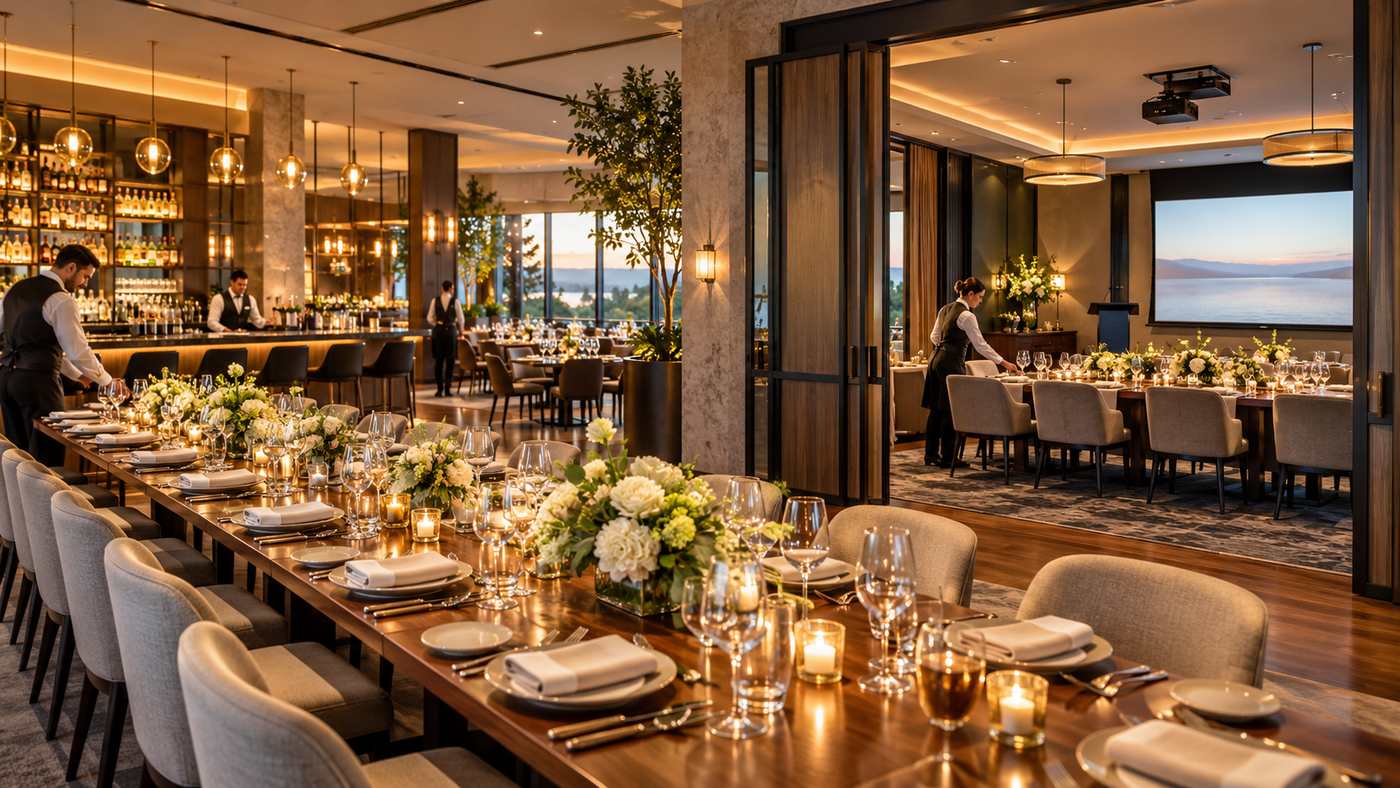
A Restaurant with Private Event Spaces can combine the atmosphere and food quality of a full-service restaurant with the privacy, flexibility and event support normally associated with a dedicated venue. Whether the occasion is a birthday dinner, wedding reception, rehearsal dinner, business presentation, anniversary or corporate gathering, the right private dining room can simplify planning by placing food, beverages, staffing and event space under one roof.
However, private dining spaces vary enormously.
One restaurant may offer an intimate room for 12 people.
Another may provide:
- Multiple private rooms
- Buyouts
- Outdoor terraces
- Audio-visual equipment
- Customized menus
- Dedicated event staff
The best choice therefore depends on much more than whether the restaurant has an attractive dining room.
Guests should evaluate capacity, layout, food service, accessibility, pricing, technology, privacy and contractual terms before committing to a venue.
In the United States, restaurants must also operate within applicable accessibility and food-safety requirements. The Department of Justice explains that restaurant dining areas, routes, tables and service facilities are subject to ADA accessibility requirements, while the FDA’s 2026 Food Code provides the latest model framework used by jurisdictions to regulate restaurant food safety.
The following nine considerations can make it easier to choose a private restaurant venue that actually fits the event.
1. Match the Private Event Space to Your Guest Count
Capacity should be one of the first questions.
Do not choose a room simply because it technically holds the number of people on your guest list.
A room advertised for 60 guests may feel very different depending on whether the event uses:
- Seated dinner tables
- Cocktail reception
- Presentation seating
- Buffet service
- Dance floor
Seated Dinner Capacity
A formal dinner requires enough room for:
- Tables
- Chairs
- Servers
- Guest circulation
If the room is filled to its absolute maximum capacity, service may feel cramped.
Cocktail Reception Capacity
Standing receptions can often accommodate more guests than seated dinners because fewer tables are required.
However, the room still needs comfortable space for:
- Drinks
- Food stations
- Conversation
Presentation or Meeting Layout
Corporate events may need space for:
- Screen
- Projector
- Speaker area
- Registration table
These items reduce usable dining capacity.
Ask for Layout Examples
Instead of asking:
“How many people fit?”
ask:
“How many guests can comfortably attend with our exact seating layout?”
A restaurant that regularly hosts private events should be able to explain realistic capacity for different configurations.
2. Decide How Much Privacy the Event Actually Needs
The term “private event space” can mean several things.
Fully Enclosed Private Room
This typically provides the greatest separation from normal restaurant customers.
It can work particularly well for:
- Business meetings
- Family celebrations
- Speeches
Semi-Private Space
A semi-private area may be separated by:
- Curtain
- Partition
- Decorative divider
Guests still receive some separation, but restaurant noise may remain audible.
Restaurant Buyout
For large events, some restaurants allow clients to reserve the entire venue.
A full buyout can provide:
- Maximum privacy
- Flexible layouts
- Exclusive use of staff
It may also require a much higher minimum spend.
Private Patio or Terrace
Outdoor areas can be attractive for:
- Brunch
- Cocktail events
- Rehearsal dinners
But always ask about:
- Weather backup
- Heating
- Shade
- Rain plan
A beautiful terrace is not useful if unexpected weather leaves the event without an alternative space.
3. Understand Private Dining Menus Before Booking
Food is one of the main reasons to choose a restaurant instead of an ordinary event hall.
But the regular dining-room menu may not be available for private events.
Restaurants often simplify large-event service through:
- Prix-fixe menus
- Family-style meals
- Buffets
- Plated multi-course dinners
- Cocktail receptions
Prix-Fixe Menu
Guests may choose from a limited selection of:
- Appetizers
- Entrées
- Desserts
This helps the kitchen serve a large group efficiently.
Family-Style Service
Large dishes are placed on the table for guests to share.
This can create a social atmosphere and reduce individual ordering.
Plated Dinner
A plated meal creates a more formal event.
The restaurant may ask for entrée selections before the event.
Cocktail Menu
For networking events, passed appetizers and small plates may work better than a formal seated dinner.
Ask About Dietary Needs
A professional event restaurant should explain how it handles common dietary requirements such as:
- Vegetarian
- Vegan
- Gluten-sensitive
- Food allergies
Food-allergy needs should be communicated clearly and early because kitchen capabilities vary.
The FDA’s Food Code serves as a model framework for food-service safety and is used by state and local regulators when developing restaurant requirements. The 2026 edition is currently the latest full FDA Food Code.
4. Compare Minimum Spend With Room Rental Fees
Private restaurants can use several pricing models.
Understanding these terms can prevent unexpected charges.
Room Rental Fee
Some restaurants charge a fixed amount to reserve the private room.
Food and beverages are then charged separately.
Food and Beverage Minimum
Another common model is a minimum spend.
For example, the venue may require:
$4,000 minimum food and beverage spend
instead of charging a separate room fee.
If the group spends only $3,400, the agreement may still require payment up to the minimum.
Minimums Can Change
Minimum spending requirements may differ according to:
- Day of week
- Lunch vs dinner
- Holiday season
- Guest count
A Saturday evening may require a much larger commitment than a Tuesday lunch.
Ask What Counts Toward the Minimum
Confirm whether the minimum includes:
- Food
- Alcohol
- Non-alcoholic drinks
and whether it excludes:
- Tax
- Gratuity
- Service fees
- Room rental
Do not assume every charge counts toward the minimum.
5. Check Audio-Visual and Technology Support
Corporate events, presentations and milestone celebrations often require more than tables and chairs.
Technology may include:
- Television
- Projection screen
- Projector
- Microphone
- Speakers
- Wi-Fi
- HDMI connections
Test Equipment Before the Event
If the event involves an important presentation, do not assume the restaurant’s screen will connect properly to your laptop.
Ask:
- What connections are available?
- Is an adapter required?
- Is audio supported?
- Who helps if something stops working?
Wi-Fi Capacity Matters
For a normal dinner, Wi-Fi may not matter.
For a meeting involving:
- Video calls
- Cloud presentations
- Multiple laptops
internet quality can become essential.
Microphones for Larger Rooms
Even a group of 40 or 50 people can have difficulty hearing speeches in a lively restaurant environment.
A microphone can be valuable for:
- Toasts
- Awards
- Business presentations
Ask whether amplified sound is permitted and whether the equipment is included.
6. Evaluate Accessibility for Every Guest
A private event should be usable by everyone attending it.
ADA guidance says restaurants should provide accessible routes to dining areas and accessible dining surfaces, including appropriate access through entrances and circulation areas.
Check the Route to the Room
Ask whether a guest using a wheelchair or mobility device can reach the event space without encountering:
- Stairs
- Narrow doorways
- Inaccessible changes in level
Accessible Tables
The Department of Justice explains that restaurants must provide accessible dining surfaces and sufficient maneuvering space rather than isolating accessible seating in an inconvenient location.
Restroom Access
A beautiful event room is not truly accessible if guests cannot conveniently reach an appropriate restroom.
Outdoor Spaces
Accessibility requirements can also affect outdoor dining areas.
If the private event will be hosted on a terrace or patio, discuss the route from:
- Entrance
- Dining room
- Restrooms
before booking.
7. Review the Event Contract Carefully
A private event agreement should explain the financial and operational terms clearly.
Important items can include:
- Date
- Start and end time
- Guest count
- Deposit
- Minimum spend
- Cancellation policy
- Final payment
Deposit
Restaurants may require a deposit to secure the event date.
Ask whether it is:
- Refundable
- Partially refundable
- Applied to the final bill
Cancellation Policy
The closer the cancellation occurs to the event, the more money may become nonrefundable.
This is particularly important for:
- Weddings
- Holiday parties
- Large corporate events
Final Guest Count
Restaurants often require the final number several days before the event.
You may be charged based on the guaranteed number even if fewer guests attend.
Overtime
If the contracted event ends at 10 p.m. but guests remain until 11 p.m., additional charges may apply.
Ask before the event instead of discovering the policy at closing time.
8. Look at Service Quality, Not Only the Room
A visually impressive restaurant can still deliver a disappointing private event if service is poorly coordinated.
Ask whether the event receives:
- Dedicated captain
- Dedicated servers
- Event manager
Service Ratio
Larger groups may require more staff to maintain smooth service.
One server attempting to manage a large formal dinner may result in:
- Delayed drinks
- Cold food
- Slow clearing
Event Coordinator
A restaurant that regularly hosts private functions may assign an event coordinator who handles details before arrival.
This can simplify communication involving:
- Menus
- Timing
- Seating
- Decorations
Visit During a Real Service Period
If possible, dine at the restaurant before booking a major event.
Observe:
- Food quality
- Staff professionalism
- Cleanliness
- Noise
An ordinary dinner can reveal a lot about how the restaurant operates.
9. Choose a Restaurant with Private Event Spaces Based on the Occasion
The best venue for a corporate meeting may not be the best venue for a wedding dinner.
Match the space to the purpose.
Birthday Party
Look for:
- Flexible menu
- Comfortable atmosphere
- Cake policy
Corporate Dinner
Prioritize:
- Privacy
- Wi-Fi
- AV equipment
- Quiet acoustics
Wedding Reception
Consider:
- Room design
- Photography
- Music
- Seating flexibility
- Private entrance
Rehearsal Dinner
A warm restaurant environment may work particularly well because food and service are already central to the experience.
Networking Event
Standing space, bar access and easy circulation may matter more than formal seating.
Anniversary Dinner
An intimate dining room with strong table service may be more important than elaborate technology.
Private Dining Room vs Traditional Event Venue
A restaurant with private rooms can offer several advantages over a conventional event hall.
Restaurant Advantages
The venue already has:
- Commercial kitchen
- Experienced servers
- Tables
- Dinnerware
- Beverage service
This can reduce the number of outside vendors required.
Traditional Venue Advantages
A dedicated event venue may offer more freedom regarding:
- Decorations
- Entertainment
- Catering
The right choice depends on how much customization the event requires.
Private Event Spaces for Corporate Functions
Restaurants can work especially well for professional events.
Common uses include:
- Client dinners
- Board meetings
- Product presentations
- Team celebrations
- Holiday parties
Business Privacy
For sensitive discussions, confirm whether the room is acoustically separated from the main restaurant.
Presentation Setup
Request a floor plan showing how attendees will face the speaker or screen.
People should not have to twist their chairs throughout a presentation.
Meal Timing
If presentations happen between courses, coordinate timing with the event manager.
Good service should support the meeting rather than interrupting it repeatedly.
Private Restaurant Spaces for Weddings
Restaurants can be appealing for smaller weddings because they offer a built-in hospitality team.
Possible event formats include:
- Ceremony and dinner
- Reception only
- Rehearsal dinner
- Post-wedding brunch
Ask About Exclusive Access
If privacy is important, determine whether other restaurant customers will share:
- Entrance
- Bar
- Restrooms
A private room does not always mean exclusive access to the entire venue.
Decorations and Setup Rules
Restaurants may restrict decorations that could damage the building or disrupt operations.
Common restrictions can involve:
- Open flames
- Confetti
- Wall attachments
- Large installations
Flowers
Floral arrangements are usually easier to accommodate.
Ask when the florist may access the room.
Signage
Corporate and wedding events may need:
- Welcome signs
- Seating charts
Confirm where these can be placed.
Candles
Some restaurants permit enclosed candles while others prohibit open flames.
Fire-safety rules vary by jurisdiction.
Food Safety During Private Events
Large events create operational pressures because many meals may need to be served within a short period.
The FDA describes its Food Code as a science-based model used to help reduce foodborne illness in restaurants and other food-service operations.
A professional venue should have procedures for:
- Safe cooking
- Temperature control
- Clean equipment
- Employee hygiene
The existence of an elegant event room should never distract from the importance of ordinary restaurant food-safety practices.
Questions to Ask Before Booking
Before signing an agreement, ask the restaurant:
- What is the seated capacity?
- Is the room fully private?
- Is there a rental fee?
- What is the food and beverage minimum?
- What service fees apply?
- What menus are available?
- Can dietary restrictions be accommodated?
- What AV equipment is included?
- Is the room accessible?
- What is the cancellation policy?
Clear answers allow you to compare restaurants fairly.
Common Private Dining Booking Mistakes
Booking Based Only on Photos
Wide-angle photography can make rooms appear larger.
Visit the space in person where possible.
Ignoring Service Fees
A quoted menu price may not include:
- Tax
- Gratuity
- Administrative charges
Choosing Maximum Capacity
A room filled to the absolute limit can feel uncomfortable.
Forgetting Noise
A semi-private room beside a busy bar may not work for a quiet business presentation.
Not Confirming Accessibility
Check the entire route, not only the dining table.
Assuming the Regular Menu Is Available
Private parties often use different menus.
Frequently Asked Questions
What is a Restaurant with Private Event Spaces?
It is a restaurant offering separate rooms or designated areas that groups can reserve for occasions such as birthdays, weddings, business meetings, receptions and private dinners.
How much does a restaurant private room cost?
Pricing varies by venue and may involve a room fee, food-and-beverage minimum or both. Minimums frequently vary based on the day, time and size of the event.
What should I ask before booking a private dining room?
Confirm capacity, privacy, menu options, minimum spending, service charges, deposits, accessibility, AV equipment and cancellation terms before signing the event agreement.
Are restaurant private event rooms required to be accessible?
Restaurants are subject to applicable ADA accessibility requirements, including accessible routes and dining surfaces. Exact obligations depend on the facility and circumstances.
Can a private restaurant room host a corporate presentation?
Yes, provided the venue has an appropriate layout and required technology such as a screen, projector, microphone and reliable internet connection.
Is a private restaurant better than an event venue?
It can be more convenient when food and hospitality are the main priorities because the kitchen, servers, tables and dining equipment are already available. A traditional event venue may offer greater customization for very large or production-heavy events.
Conclusion
A Restaurant with Private Event Spaces can provide an efficient combination of dining, hospitality and venue services for celebrations, corporate meetings and special occasions. The strongest choice is not necessarily the largest or most expensive restaurant; it is the one whose capacity, menu, privacy, technology and service model match the specific event. Accessibility, food safety and contract terms should also be reviewed before committing. Careful planning allows the private dining room to feel like a purpose-built event venue rather than simply a separated section of a restaurant