Food Truck Company: 9 Things to Know Before Starting a Mobile Food Business
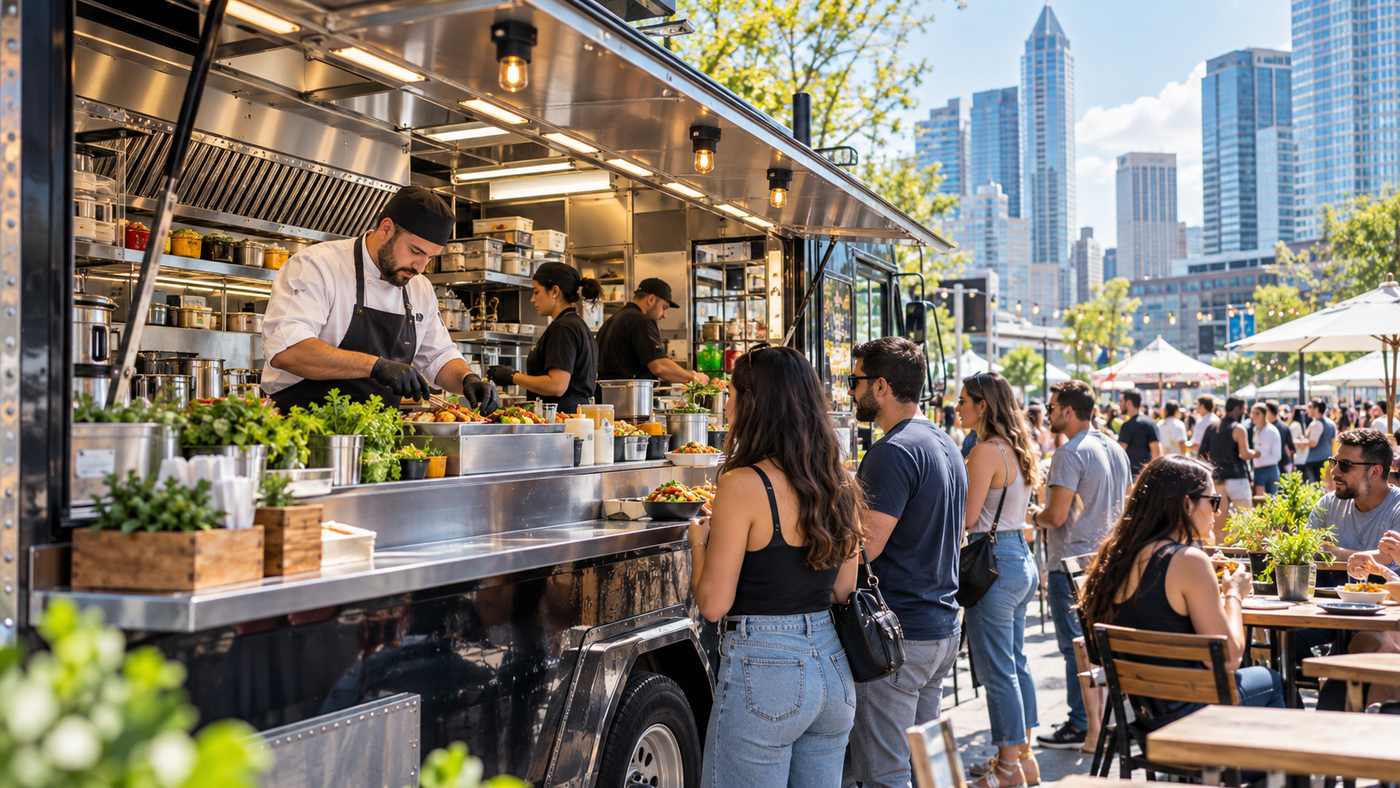
Starting a food truck company can provide a more flexible route into the food-service industry than opening a traditional full-size restaurant, but operating from a vehicle does not remove the need for serious business planning, food-safety controls, permits, equipment, insurance and reliable locations. A successful food truck has to function simultaneously as a kitchen, vehicle, retail business, marketing platform and mobile workplace.
The FDA’s newly released 2026 Food Code now specifically defines a “mobile food establishment” as a food establishment operating from a movable vehicle, portable structure or watercraft that can change location as part of normal operations. The FDA Food Code serves as a model used by state, local, tribal and territorial regulators when developing retail food-service rules, but actual requirements still depend on the jurisdiction where the truck operates.
That local variation matters.
A truck operating legally in one city may need additional approvals before crossing into another county or municipality.
Before purchasing a truck or designing a menu, understand these nine major parts of building a food truck business.
1. Define What Kind of Food Truck Company You Want to Build
The first decision is not which truck to buy.
It is what kind of food business you want the truck to become.
A focused concept is generally easier to operate than a huge menu attempting to serve everyone.
Possible concepts include:
- Burgers
- Tacos
- Barbecue
- Pizza
- Coffee
- Desserts
- Breakfast
- Sandwiches
- Vegan food
- Regional cuisine
- Specialty street food
Build Around a Clear Customer
Ask who will regularly buy from you.
Possible audiences include:
- Downtown office workers
- University students
- Factory employees
- Festival visitors
- Wedding guests
- Brewery customers
- Residential neighborhoods
The right menu for a lunchtime business district may be different from the menu for weekend festivals.
Keep the Concept Easy to Explain
Customers often decide quickly when standing in front of several food trucks.
A clear concept helps them understand what you sell without studying a huge menu.
For example:
“Wood-fired personal pizzas”
is easier to understand than:
“A little bit of pizza, burgers, tacos, seafood and breakfast.”
Think Beyond the First Truck
A strong concept can eventually support:
- Catering
- Corporate events
- Additional trucks
- Pop-up locations
- Packaged products
Design the brand so it can grow if demand increases.
2. Research Permits and Licenses Before Buying Equipment
Food truck regulations vary considerably by location.
The U.S. Small Business Administration states that licensing and permit requirements depend on business activities, location and the government agencies responsible for regulation. Cities and counties can impose their own registrations, operating permits and health requirements.
A food truck may need some combination of:
- Business registration
- Local business license
- Mobile food permit
- Health department approval
- Food-handler certification
- Fire inspection
- Vehicle registration
- Sales-tax registration
- Location or vending permits
The exact combination depends on the city and state.
Do Not Buy the Truck First
A common mistake is purchasing a fully built truck and discovering later that its:
- Sink setup
- Ventilation
- Water system
- Refrigeration
- Fire suppression
does not satisfy local rules.
Contact the relevant health department before finalizing the design.
Ask About Plan Review
Many jurisdictions require food-truck plans to be reviewed before the vehicle is approved.
The review may examine:
- Menu
- Cooking equipment
- Water supply
- Wastewater
- Refrigeration
- Handwashing
- Food storage
Your menu can therefore directly affect equipment requirements.
3. Understand Commissary Kitchen Requirements
Some food truck businesses need access to a licensed commissary or commercial kitchen.
The FDA’s mobile-food guidance notes that local regulators may require supporting facilities such as commissaries depending on the menu, operation and equipment available on the mobile unit.
A commissary may be used for:
- Food preparation
- Ingredient storage
- Equipment cleaning
- Water filling
- Waste disposal
- Overnight parking
Not Every Truck Has the Same Requirement
A truck serving only simple prepackaged food has different needs from a truck preparing:
- Raw chicken
- Burgers
- Seafood
- Sauces
- Cooked rice
The FDA’s mobile food establishment matrix makes this distinction and notes that operations preparing time/temperature-controlled food generally face more extensive requirements.
Budget for Commissary Fees
If your local regulator requires a commissary, include the cost in your monthly operating budget.
Do not assume that food preparation can legally be moved into a private home kitchen.
4. Design the Menu Around the Truck
Restaurant menus can be large because restaurants have:
- More storage
- More refrigeration
- More prep areas
- More staff
A food truck has limited space.
That makes menu engineering especially important.
Use Ingredients Across Several Items
Suppose the truck stocks:
- Grilled chicken
- Slaw
- Sauce
- Tortillas
- Rice
Those ingredients might support:
- Chicken tacos
- Burritos
- Rice bowls
This approach can reduce:
- Storage needs
- Spoilage
- Inventory complexity
Avoid Excessive Menu Size
Every additional dish can create additional requirements for:
- Ingredients
- Prep containers
- Refrigeration
- Training
A menu of six excellent items may operate more efficiently than twenty average ones.
Consider Cooking Speed
Customers at food trucks often expect faster service than at sit-down restaurants.
Ask:
How many orders can we produce during a 30-minute lunch rush?
A delicious dish that takes 18 minutes to prepare individually may create an operational bottleneck.
Calculate Food Cost
Every menu item should have a documented recipe.
Track:
- Ingredient quantity
- Portion size
- Packaging
- Sauces
- Garnishes
Without portion control, food cost can drift upward without the owner noticing.
5. Build the Truck Around Food Safety
A food truck is not simply a delivery van with cooking equipment.
It is a compact commercial kitchen.
The FDA Food Code is intended to provide a scientifically based model for regulating food offered at retail and food service. The current 2026 edition specifically recognizes mobile food establishments within that framework.
Important food-safety areas may include:
- Handwashing
- Cold holding
- Hot holding
- Cooking temperatures
- Cross-contamination
- Cleaning and sanitizing
- Employee illness controls
Refrigeration Must Be Reliable
Potentially hazardous foods must remain within required temperature controls.
The truck may therefore need commercial refrigeration capable of performing in:
- Summer heat
- Repeated door opening
- Busy service periods
Handwashing Is Essential
Mobile kitchens often require a dedicated handwashing setup.
That may include:
- Potable water
- Sink
- Soap
- Paper towels
- Wastewater system
The exact configuration depends on local code.
Separate Raw and Ready-to-Eat Food
Raw meats should not contaminate:
- Produce
- Cooked food
- Serving utensils
The compact truck layout makes disciplined organization especially important.
Employee Health Policies Matter
The 2026 FDA Food Code includes updated provisions related to written employee illness policies, reflecting the continuing importance of excluding or restricting food workers when certain illness conditions exist.
Food safety has to be part of daily operations rather than something addressed only before inspections.
6. Choose the Truck and Equipment Carefully
A food truck is one of the largest startup investments.
The vehicle must support both:
transportation
and
food production.
New vs Used Food Trucks
A new custom truck can be built around your exact menu.
Advantages may include:
- New equipment
- Custom layout
- Warranty support
A used truck may cost less initially.
However, inspect:
- Engine
- Transmission
- Generator
- Plumbing
- Electrical system
- Refrigeration
- Hood system
- Fire suppression
A cheap truck can become expensive quickly if both the vehicle and kitchen systems need major repairs.
Match Equipment to the Menu
A burger business might require:
- Flat-top grill
- Fryer
- Refrigeration
A coffee truck may instead need:
- Espresso equipment
- Water filtration
- Refrigerated milk storage
Do not buy equipment simply because another successful truck uses it.
Think About Power
Equipment needs energy.
Common systems may use:
- Generator
- Shore power
- Propane
- Battery systems
Calculate the total electrical load before finalizing the build.
An undersized generator can create serious operating problems.
Plan Ventilation and Fire Protection
Cooking equipment producing:
- Grease
- Smoke
- Heat
may require commercial ventilation and suppression systems.
Local fire officials may also inspect propane and cooking installations.
7. Find Reliable Locations Before Opening
A great truck parked in the wrong location can still fail.
Location affects:
- Customer volume
- Average order
- Operating hours
- Competition
Possible locations include:
- Office districts
- Industrial parks
- Breweries
- Shopping areas
- Universities
- Events
- Festivals
Verify That You Can Legally Park There
Do not assume you can simply park on any public street and begin selling food.
Local rules may restrict:
- Vending zones
- Distance from restaurants
- Operating hours
- Parking duration
- Sidewalk access
Private property usually requires permission from the owner.
Build Recurring Stops
A consistent schedule makes it easier for customers to find you.
For example:
Tuesday: business park
Wednesday: brewery
Thursday: university area
Friday: downtown lunch
Recurring locations can create habitual customers.
Events Can Be Valuable but Expensive
Festivals may charge:
- Vendor fees
- Percentage of sales
- Electricity fees
Estimate realistic sales before agreeing to a large event fee.
High foot traffic does not guarantee profitability if the event has twenty competing vendors.
8. Price for Profit, Not Just Popularity
Food trucks can generate strong revenue during busy periods, but they also have substantial costs.
Potential expenses include:
- Ingredients
- Labor
- Fuel
- Propane
- Generator fuel
- Vehicle payments
- Maintenance
- Commissary rent
- Insurance
- Permits
- Event fees
- Card-processing fees
- Packaging
Pricing must cover all of them.
Know Your Contribution Margin
Suppose a meal sells for:
$14
but food and packaging cost:
$5
That leaves $9 before paying:
- Staff
- Truck
- Insurance
- Fuel
- Taxes
- Other overhead
Revenue is not profit.
Be Careful With Delivery Platforms
Third-party ordering platforms may bring additional customers but can also charge meaningful fees.
Calculate whether those orders remain profitable.
Raise Prices Deliberately
If ingredient costs rise, update menu pricing based on actual numbers rather than emotion.
Customers usually prefer a well-run business with sustainable pricing over a truck that constantly reduces quality to maintain an unrealistic price point.
9. Build Marketing Into the Daily Operation
A food truck moves.
That creates a unique marketing problem:
Customers need to know where you are today.
Social Media Is Especially Useful
Daily posts can announce:
- Location
- Hours
- Specials
- Events
Photos and short videos can also show:
- Food preparation
- New menu items
- Behind-the-scenes work
Keep Location Information Accurate
Few things frustrate customers more than driving to a truck that is not there.
If plans change, update your channels immediately.
Create a Recognizable Truck Design
The vehicle itself is a moving advertisement.
Good branding should be recognizable from a distance.
Keep it visually clear rather than covering every inch with menu text.
Encourage Repeat Customers
Possible loyalty strategies include:
- Digital rewards
- Email list
- SMS updates
- Limited specials
The goal is to reduce dependence on constantly finding new customers.
Food Truck Company vs Traditional Restaurant
Food trucks and restaurants have different advantages.
Food Truck Advantages
A food truck may offer:
- Greater location flexibility
- Smaller physical footprint
- Direct event access
- Lower property overhead
Food Truck Challenges
A truck has:
- Limited storage
- Limited prep space
- Vehicle breakdown risk
- Weather exposure
A restaurant does not have to start its engine before dinner service.
A food truck does.
Therefore vehicle maintenance becomes part of restaurant operations.
Staffing a Food Truck Company
Space inside a truck is limited.
A small team may need to handle:
- Cooking
- Assembly
- Cashier work
- Cleaning
- Restocking
Cross-Train Employees
Employees who can perform several roles provide more flexibility.
During one rush, someone may take orders.
During another, the same person may assemble food.
Define Positions During Rushes
Even cross-trained teams need clear responsibilities during peak periods.
A possible setup could include:
- Order taking
- Hot line
- Assembly and handoff
Clear workflow reduces collisions and mistakes.
Protect Employee Safety
Food trucks contain:
- Hot equipment
- Sharp tools
- Tight aisles
Training should include:
- Burns
- Knife safety
- Fire response
- Safe lifting
A small kitchen does not mean small safety risks.
Insurance for a Food Truck Company
Insurance requirements vary, but a food truck business may need several types of coverage.
Possible policies include:
- Commercial auto
- General liability
- Property/equipment
- Workers’ compensation
Events and property owners may ask vendors to provide proof of insurance.
Discuss the business with an insurer familiar with food-service and mobile operations rather than purchasing only ordinary personal auto insurance.
Create a Business Plan Before Financing a Truck
A business plan does not need to be hundreds of pages.
It should answer practical questions.
Startup Costs
Estimate:
- Truck
- Buildout
- Equipment
- Permits
- Initial food inventory
- Branding
- Insurance
Monthly Costs
Estimate:
- Labor
- Commissary
- Fuel
- Maintenance
- Ingredients
Revenue Assumptions
Estimate:
- Customers per service
- Average ticket
- Days operating
Use conservative assumptions.
A forecast based on being sold out every day is not useful.
Register the Business Properly
Food trucks are businesses, not hobbies once they are being operated with a genuine profit motive.
The IRS distinguishes businesses from hobbies based on multiple factors, including whether the activity is carried on with an intent to make a profit.
Depending on structure, owners may need to establish:
- Sole proprietorship
- LLC
- Corporation
- Partnership
State and local registration rules vary.
The SBA recommends checking state, county and city requirements for registrations, permits and ongoing compliance.
Common Food Truck Company Mistakes
Buying a Truck Before Checking Codes
The kitchen layout may not pass local review.
Creating Too Large a Menu
More items can mean:
- More waste
- More storage
- Slower service
Ignoring Vehicle Maintenance
A broken truck means the restaurant cannot reach customers.
Depending Only on Festivals
Event revenue can be unpredictable.
Develop recurring locations and catering opportunities too.
Underpricing Food
High sales do not help if each order has insufficient margin.
Ignoring Weather
Rain, extreme heat and winter conditions can reduce walk-up traffic dramatically.
Build financial reserves for slow periods.
Catering Can Become an Important Revenue Stream
Food trucks can work particularly well for private events.
Potential clients include:
- Weddings
- Corporate events
- Birthday parties
- School events
Catering provides advantages because:
- Customer count may be known in advance
- Location is scheduled
- Revenue can be contracted
For some operators, private events become more predictable than street vending.
Frequently Asked Questions
What is a food truck company?
A food truck company is a mobile food-service business operating from a vehicle or other movable food establishment. The FDA’s 2026 Food Code now specifically defines mobile food establishments within its model food-safety framework.
What permits are needed for a food truck company?
Requirements vary by location but may include business registration, health permits, mobile vending permits, food-safety certification and fire approvals. Local governments determine many of these requirements.
Does a food truck need a commissary kitchen?
Sometimes. Local regulators may require a commissary or servicing area depending on the menu, onboard equipment and type of food preparation.
How many menu items should a food truck have?
There is no universal number, but a focused menu is usually easier to produce quickly and consistently. Prioritize items that share ingredients and fit the truck’s storage and cooking capacity.
Is a food truck cheaper than opening a restaurant?
It may require less real estate and a smaller physical buildout, but owners still face significant costs for the truck, commercial kitchen equipment, permits, insurance, maintenance, labor and commissary services.
How does a food truck company find customers?
Strong operators combine recurring locations, events, catering and active social media so customers always know where the truck will be operating.
Conclusion
A food truck company can become a flexible and recognizable food-service business, but success requires much more than buying a vehicle and creating a good recipe. Operators must match the menu to the truck, understand local permits, protect food safety, control costs and secure reliable selling locations. The FDA’s 2026 Food Code now formally recognizes mobile food establishments within its model framework, while actual licensing and operating rules continue to vary by local jurisdiction. Careful planning before purchasing equipment can prevent expensive mistakes and create a stronger foundation for profitable mobile food service