Laminate Flooring: How to Choose a Durable, Stylish, and Practical Floor
Laminate flooring is a popular choice for homeowners, landlords, renovators, and commercial property managers who want the appearance of wood without the cost and maintenance requirements associated with many natural flooring materials. Modern laminate products can recreate oak, walnut, herringbone-inspired patterns, stone textures, and contemporary finishes while offering a durable wear surface that is relatively simple to clean. However, not every laminate product performs the same way. Thickness, wear rating, moisture resistance, locking system, underlay, subfloor condition, installation quality, and room type can all influence how the finished floor looks and performs over time.
A successful flooring project starts before the first plank is installed.
Buyers should consider:
• Room use
• Foot traffic
• Moisture exposure
• Subfloor condition
• Design
• Installation method
• Maintenance
• Budget
Choosing only by colour or price can result in a floor that looks attractive initially but is poorly suited to the space.
What Is Laminate Flooring?
Laminate is a layered flooring product designed to combine appearance, durability, and relatively easy installation.
A typical plank includes several layers.
Wear Layer
The top layer protects the decorative surface from everyday wear.
It helps resist:
• Scratches
• Stains
• General abrasion
• Foot traffic
The quality of this surface layer plays a major role in durability.
Decorative Layer
Below the protective surface is a printed design layer.
This creates the visual appearance of materials such as:
• Oak
• Walnut
• Pine
• Stone
• Concrete
• Other decorative patterns
Modern printing and surface-texturing techniques can make good laminate look highly realistic.
Core Layer
The core provides structure and stability.
It is commonly made from high-density fibreboard or another engineered wood-based material.
Backing Layer
The bottom layer helps stabilize the plank and protect the core.
Together, these layers create a floor that differs significantly from solid hardwood even when the finished appearance is similar.
7 Powerful Tips for Choosing Laminate Flooring
A good buying decision should balance visual preference with technical performance.
1. Laminate Flooring Should Match the Room
The first question is not:
Which colour looks best?
It is:
Where will the floor be installed?
Different rooms create different demands.
Bedrooms
Bedrooms generally experience moderate foot traffic and relatively low moisture.
Many standard residential laminate products can work well.
Living Rooms
Living areas may experience heavier daily use.
Consider:
• Durability
• Scratch resistance
• Furniture movement
• Cleaning requirements
Hallways
Hallways experience concentrated traffic.
A stronger wear rating can be worthwhile.
Home Offices
Office chairs can create repeated rolling pressure.
Use appropriate chair protection where needed and choose a durable product.
Kitchens
Kitchens require greater attention to water resistance.
Spills should be cleaned promptly.
A product specifically designed for increased moisture resistance may be preferable.
Bathrooms
Traditional laminate is generally not the first choice for areas with frequent standing water.
Some manufacturers offer water-resistant or waterproof-labelled ranges designed for more demanding moisture conditions.
Always follow the specific installation and warranty conditions.
2. Understand Laminate Flooring AC Ratings
AC ratings are commonly used to describe abrasion resistance.
Higher ratings generally indicate greater ability to handle wear.
Common categories include:
• AC1
• AC2
• AC3
• AC4
• AC5
Some product ranges may use additional classification systems or commercial ratings.
AC1 and AC2
These are generally associated with lighter residential use.
AC3
AC3 is commonly suitable for moderate to heavy residential use.
It can be a practical choice for many households.
AC4
AC4 is often selected for:
• Busy homes
• Hallways
• Home offices
• Light commercial spaces
AC5
AC5 is intended for more demanding commercial traffic.
A higher rating is not automatically necessary for every room.
Choose according to actual use.
3. Thickness Affects Feel and Installation
Laminate is available in different thicknesses.
Common options may include:
• 7 mm
• 8 mm
• 10 mm
• 12 mm
Thickness alone does not determine quality, but it can affect:
• Underfoot feel
• Sound
• Joint strength
• Ability to bridge minor subfloor variations
• Perceived solidity
Thicker Does Not Always Mean Better
A high-quality thinner plank may outperform a poorly made thicker one.
Consider thickness together with:
• Core density
• Wear rating
• Locking system
• Surface quality
• Warranty
The full specification matters more than a single number.
4. Water Resistance Deserves Close Attention
Moisture is one of the most important issues with laminate.
The core can swell if significant water reaches it.
Modern products may include improved:
• Edge sealing
• Water-resistant coatings
• Tight locking systems
• Moisture-resistant cores
Water Resistant Versus Waterproof
These terms are sometimes used differently between manufacturers.
Read the specific product conditions.
Check:
• How long spills can remain
• Whether wet mopping is allowed
• Which rooms are covered
• Whether perimeter sealing is required
• Whether bathroom installation is permitted
Marketing language should not replace technical documentation.
Clean Spills Quickly
Even with a moisture-resistant product, prompt cleanup is good practice.
Avoid allowing water to remain around:
• Plank joints
• Doorways
• Appliances
• External entrances
5. Choose the Right Underlay
Underlay is installed beneath many floating laminate floors.
It can influence:
• Sound
• Comfort
• Moisture protection
• Minor subfloor irregularities
• Thermal performance
Acoustic Underlay
Acoustic products can help reduce sound transmission.
This may be particularly useful in:
• Apartments
• Bedrooms above living areas
• Multi-storey homes
Moisture Barrier
Concrete subfloors may require suitable moisture protection.
Some underlays include an integrated vapour barrier.
Others require a separate layer.
Follow the flooring manufacturer’s instructions.
Underfloor Heating
Not every laminate and underlay combination is suitable for underfloor heating.
Check:
• Maximum thermal resistance
• Temperature limits
• Installation method
• Heating-system compatibility
6. Laminate Flooring Installation Depends on Subfloor Quality
The finished floor can only perform well if the surface beneath it is properly prepared.
Suitable subfloors may include:
• Concrete
• Plywood
• Existing hard flooring
depending on product instructions and condition.
The Subfloor Should Be Flat
A surface that is significantly uneven can cause:
• Movement
• Clicking
• Joint stress
• Gaps
• Premature failure
High spots may need to be reduced.
Low areas may need suitable levelling treatment.
The Subfloor Should Be Clean
Remove:
• Dust
• Debris
• Adhesive residue
• Loose material
Small debris under a floating floor can affect the finished result.
Moisture Testing
Concrete can contain residual moisture.
Moisture conditions should be assessed before installation where relevant.
Installing flooring over a damp substrate can create serious problems later.
7. Buy Enough Flooring for Waste and Future Repairs
Do not order exactly the measured floor area.
Installation requires cuts.
Waste can result from:
• Room shape
• Doorways
• Pattern direction
• Damaged boards
• Offcuts
A common approach is to order extra material based on layout complexity.
More may be required for:
• Diagonal layouts
• Complex patterns
• Irregular rooms
Keep Spare Planks
After installation, store a small quantity of unused flooring if practical.
If a plank becomes damaged years later, finding an exact matching colour or production batch may be difficult.
Laminate Flooring Versus Hardwood
Laminate and hardwood can look similar but are fundamentally different products.
Hardwood
Natural wood can provide:
• Genuine grain variation
• Traditional character
• Potential refinishing
However, it can cost more and may require greater maintenance.
Laminate
Laminate can provide:
• Lower purchase cost
• High wear resistance
• Consistent appearance
• Easy cleaning
• DIY-friendly locking systems
It generally cannot be sanded and refinished in the same way as solid timber.
The best option depends on priorities.
Laminate Flooring Versus Vinyl
Laminate and vinyl are frequently compared.
Laminate Strengths
Laminate often provides:
• Realistic wood texture
• Rigid feel
• Scratch resistance
• Strong value
Vinyl Strengths
Many modern vinyl products provide excellent water resistance.
This can make vinyl attractive for:
• Kitchens
• Utility rooms
• Moisture-prone areas
Material feel and installation requirements differ.
Evaluate the actual product rather than assuming one category is always superior.
Laminate Flooring Styles
Laminate is available in a wide variety of looks.
Oak
Oak-look flooring remains one of the most versatile choices.
Options range from:
• Pale natural oak
• Warm honey tones
• Medium brown
• Dark smoked finishes
Grey
Grey laminate became popular in contemporary interiors because it works with:
• White walls
• Black fittings
• Modern furniture
• Industrial design
Dark Wood
Darker finishes can create a luxurious appearance.
However, they may show:
• Dust
• Light scratches
• Pet hair
more clearly than medium tones.
Light Wood
Light finishes can make smaller rooms feel brighter and more open.
They can work especially well in modern and Scandinavian-inspired interiors.
Plank Width and Appearance
Plank width affects visual scale.
Wide Planks
Wide designs can create:
• Contemporary appearance
• Fewer visible joints
• Strong wood-board effect
Narrow Planks
Narrower boards may create a more traditional look.
Consider room dimensions when choosing.
A very wide plank may visually dominate a small room.
Bevelled Edges
Some laminate planks include bevelled edges.
These create visible lines between boards and can increase the appearance of individual wood planks.
Options may include:
• No bevel
• Two-sided bevel
• Four-sided bevel
The choice is largely aesthetic.
However, deeper grooves may require slightly more attention during cleaning.
Embossed Surfaces
Higher-quality laminate may use texture that corresponds with the printed wood grain.
This can make the floor feel more realistic.
Surface textures can include:
• Smooth
• Brushed
• Hand-scraped appearance
• Embossed grain
Consider how much texture is comfortable for cleaning and daily use.
Laminate Flooring Installation Methods
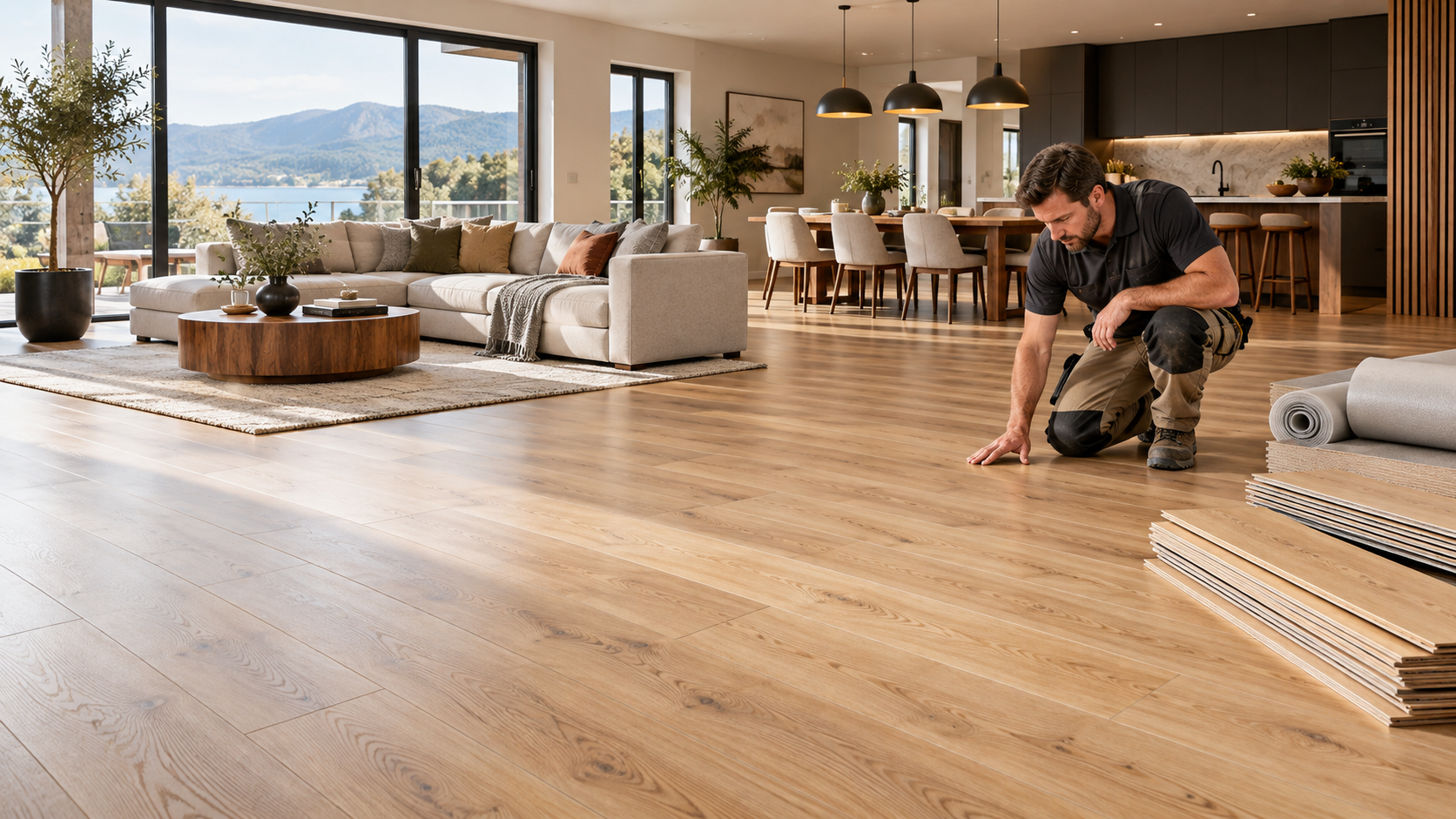
Most modern laminate is installed as a floating floor.
The planks connect to one another but are not usually fixed directly to the subfloor.
Click-Lock Systems
Click-lock joints allow boards to connect mechanically.
Benefits can include:
• Faster installation
• No adhesive across the entire floor
• Easier board replacement in some situations
Not all locking systems are equally strong or simple.
Expansion Gaps
Floating floors need room to move as environmental conditions change.
Installers typically leave expansion space around:
• Walls
• Door frames
• Columns
• Fixed objects
The required gap depends on product instructions.
Skirting and Trim
Expansion gaps are usually covered using:
• Skirting boards
• Scotia
• Appropriate trims
Do not eliminate the required movement space simply to create a tighter-looking edge.
Acclimating Laminate Flooring
Manufacturers may require flooring to be stored in the installation environment for a specified period before fitting.
This allows the product to adjust to room conditions.
Follow the particular instructions supplied with the flooring.
Do not assume every laminate has identical acclimation requirements.
Direction of Installation
Plank direction affects the look of the room.
Common approaches include installing boards:
• Along the longest wall
• In the direction of natural light
• In line with an adjacent room
There is no universal visual rule.
Plan the layout before installation.
Doorways and Transitions
Transitions require careful planning.
Different flooring surfaces may meet at:
• Doorways
• Kitchens
• Bathrooms
• Stairs
Transition profiles can provide a neat finish while allowing necessary movement.
Laminate Flooring on Stairs
Stair installation requires specialist attention because ordinary floating-floor methods may not apply.
Stair components may include:
• Treads
• Risers
• Stair nosing
Use components designed for the product and stair structure.
Safety should come before appearance.
Cleaning Laminate Flooring
Routine cleaning is generally straightforward.
Use:
• Soft broom
• Vacuum suitable for hard floors
• Microfibre mop
Avoid excessive water.
Damp Mopping
Use only the amount of moisture allowed by the manufacturer.
The floor should not remain wet.
Avoid Abrasive Cleaners
Harsh products can damage the wear layer.
Do not use abrasive pads unless specifically approved.
Protecting Laminate From Scratches
Although laminate can be highly wear resistant, scratches are still possible.
Use furniture protection such as:
• Felt pads
• Suitable chair mats
• Clean furniture feet
Avoid dragging heavy objects directly across the floor.
Pets and Laminate Flooring
Laminate can be practical for homes with pets because it is easy to clean.
Consider:
• Scratch resistance
• Surface grip
• Water resistance
Very smooth flooring may be slippery for some animals.
A textured surface can sometimes provide better grip.
Laminate Flooring for Rental Properties
Landlords may appreciate laminate because it can offer:
• Consistent appearance
• Good wear resistance
• Simple cleaning
• Reasonable cost
Durability should be prioritized in high-turnover properties.
A slightly stronger product may provide better long-term value than the cheapest available option.
Commercial Laminate Flooring
Commercial spaces create heavier demands.
Examples include:
• Offices
• Shops
• Reception areas
• Small hospitality spaces
Choose a product specifically rated for the expected traffic.
Also consider:
• Acoustic requirements
• Fire regulations
• Cleaning frequency
• Chair movement
• Entrance matting
Entrance Areas
Dirt and small stones carried inside on footwear can cause abrasion.
Entrance mats help reduce this problem.
They are particularly useful near:
• Exterior doors
• Patio doors
• Busy commercial entrances
Keeping abrasive debris off the floor can extend its appearance.
Sunlight and Colour
Long-term exposure to strong direct sunlight can affect many interior materials.
Use:
• Curtains
• Blinds
• UV-control glazing where appropriate
to reduce prolonged intense exposure.
Check product information for fade resistance.
Cost of Laminate Flooring
Total project cost includes more than planks.
Budget for:
• Flooring
• Underlay
• Moisture barrier
• Trims
• Door profiles
• Skirting
• Subfloor preparation
• Installation
• Waste
A low-cost floor can become expensive if extensive subfloor levelling is required.
DIY Versus Professional Installation
Laminate is often marketed as DIY friendly.
Simple rectangular rooms may be manageable for experienced DIY users.
Professional installation can be preferable when dealing with:
• Multiple rooms
• Uneven floors
• Complex doorways
• Stairs
• Underfloor heating
• Large continuous areas
Incorrect installation can affect both appearance and warranty coverage.
How Long Does Laminate Flooring Last?
Lifespan depends on:
• Product quality
• Traffic
• Installation
• Moisture exposure
• Cleaning
• Furniture protection
• Room conditions
A well-selected and properly maintained floor can provide many years of service.
Warranty length should not be treated as a guaranteed lifespan.
Read warranty conditions carefully.
Common Laminate Flooring Mistakes
Choosing Only by Appearance
Technical suitability matters.
Ignoring Moisture
Use the right product for the room.
Installing Over an Uneven Floor
Prepare the subfloor properly.
Skipping Expansion Gaps
Floating floors need movement space.
Ordering Too Little Material
Allow for waste.
Using Too Much Water During Cleaning
Follow care instructions.
Ignoring Underlay Requirements
The wrong underlay can affect performance.
Buying by Thickness Alone
Wear rating and build quality also matter.
How to Choose a Reliable Laminate Flooring Product
Before purchasing, compare:
• AC rating
• Thickness
• Water resistance
• Core quality
• Locking system
• Surface texture
• Warranty
• Room suitability
• Underfloor heating compatibility
• Installation instructions
Ask for a sample if possible.
A sample helps evaluate:
• Colour
• Texture
• Finish
under the actual lighting in the room.
Planning a Laminate Flooring Project
Start by measuring the room carefully.
Then consider:
- Flooring area
- Waste allowance
- Subfloor preparation
- Underlay
- Trim requirements
- Door clearances
- Installation direction
- Expansion spaces
A little planning before installation can prevent expensive mistakes.
Frequently Asked Questions
Is Laminate flooring durable?
Yes. Quality laminate can provide strong resistance to everyday abrasion and scratches, especially when the AC rating matches the level of traffic in the room.
Is Laminate flooring waterproof?
Some products offer increased water resistance, but performance varies. Always check the specific manufacturer’s moisture limits and installation requirements before using laminate in wet areas.
What thickness of Laminate flooring is best?
Common thicknesses range from around 7 mm to 12 mm. The best option depends on core quality, room use, subfloor condition, locking system, and budget rather than thickness alone.
Does Laminate flooring need underlay?
Most floating laminate installations require suitable underlay, although some products include an attached layer. Follow the manufacturer’s installation instructions.
Can Laminate flooring be installed over concrete?
Yes, many laminate products can be installed over properly prepared concrete, but moisture conditions, flatness, and vapour-barrier requirements must be checked first.
Is Laminate flooring suitable for pets?
It can be a practical choice for pet owners because it is easy to clean and available in durable finishes. Choose good scratch resistance and consider a textured surface for better grip.
Conclusion
Laminate flooring can provide an attractive and cost-effective surface for bedrooms, living areas, hallways, offices, rental properties, and selected commercial spaces when the correct product is chosen. Durability depends on more than colour or plank thickness, so buyers should compare wear ratings, moisture resistance, core quality, underlay requirements, locking systems, and room conditions. Proper subfloor preparation and installation are equally important to long-term performance. By matching the floor to the environment and maintaining it correctly, homeowners and property managers can achieve a stylish wood-inspired finish that remains practical for everyday use.