Security Companies in Toronto: How to Choose Reliable Protection for People and Property
security companies in Toronto provide professional protection for offices, condominiums, retail stores, construction sites, warehouses, healthcare facilities, events, residential properties, and other locations where trained security personnel or monitoring services may be required. A strong security provider does more than place a guard at a doorway. The right company evaluates risks, develops site procedures, supplies properly licensed personnel, supervises performance, documents incidents, coordinates mobile patrols, supports access control, and adjusts coverage when conditions change. For Toronto businesses and property managers, choosing a suitable security partner requires careful attention to licensing, training, experience, communication, technology, reporting, staffing reliability, and the specific risks present at each site.
Toronto is a large and diverse city with very different security environments.
A downtown office tower has different needs from a construction site.
A condominium requires a different approach from a retail store.
A festival may need temporary event security, while a warehouse may require overnight patrols and alarm response.
This is why choosing a provider based only on hourly price can be a mistake.
Effective security should be designed around the location.
What Do Security Companies in Toronto Provide?
Private security companies offer services intended to protect people, property, information, and operations.
Depending on the provider, services may include:
• Uniformed security guards
• Mobile patrols
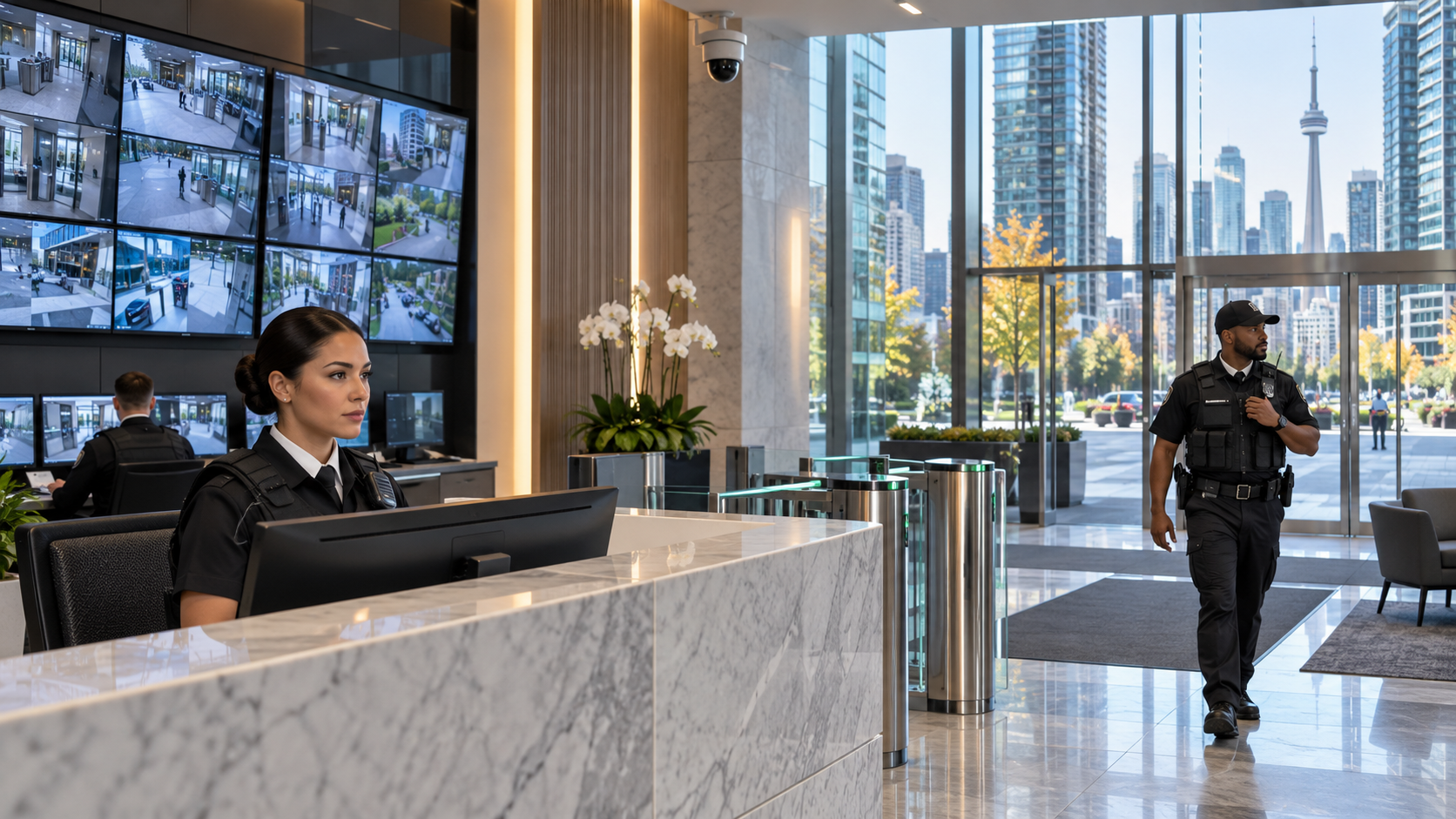
• Concierge security
• Access control
• Event security
• Construction site security
• Retail security
• Commercial building security
• Residential security
• Condominium security
• Parking enforcement support
• Loss prevention
• Alarm response
• CCTV monitoring
• Fire watch
• Incident reporting
• Emergency support
Not every company provides every service.
Some firms specialize in residential and condominium environments.
Others focus on industrial sites, events, corporate buildings, or construction.
The right provider should understand the environment it is protecting.
Are Security Companies in Toronto Required to Be Licensed?
Ontario regulates private security agencies and individual security guards.
A company selling security guard services must hold the appropriate agency licence.
The guards working for an agency must also maintain valid individual licences.
This helps create a minimum legal framework for the private security industry.
Licensing Is Only the Starting Point
A licence does not automatically prove that a company will deliver excellent service.
Businesses should also evaluate:
• Training
• Supervision
• Experience
• Insurance
• Staffing
• Communication
• Technology
• References
• Incident procedures
• Quality control
A strong provider should be able to explain how it maintains professional standards after licensing requirements have been met.
7 Proven Tips for Choosing Security Companies in Toronto
A structured selection process can make it easier to compare providers fairly.
1. Verify Licensing Before Hiring Security Companies in Toronto
Licensing should be one of the first checks.
Ask the company to confirm its current agency licensing status.
Security guards assigned to the property should also meet Ontario licensing requirements.
Why Licensing Matters
Licensed personnel are expected to operate within provincial rules governing private security work.
This includes professional conduct and limits on how guards represent themselves.
Private security personnel are not police officers.
A professional company should train its guards to understand the difference between security responsibilities and law enforcement powers.
Verify Rather Than Assume
Do not assume that an attractive website or professional uniform means every legal requirement has been met.
Businesses can verify agency and individual licence status through the appropriate Ontario licensing system.
This simple step can prevent avoidable problems.
2. Choose a Provider With Experience in Your Property Type
Security is not identical across industries.
A guard working in a luxury condominium needs different skills from one assigned to a remote construction project.
Condominium Security
Condominium guards may handle:
• Residents
• Visitors
• Deliveries
• Contractors
• Parking issues
• Access control
• Amenity areas
• Noise complaints
• Emergencies
Customer service is particularly important.
The guard may be the first person visitors see when entering the building.
Construction Security
Construction sites may need greater focus on:
• Theft prevention
• Equipment protection
• Perimeter checks
• Trespassing
• After-hours patrols
• Fire watch
• Contractor access
• Incident documentation
Retail Security
Retail security can involve:
• Loss prevention
• Customer safety
• De-escalation
• Suspicious activity
• Emergency response
• Store closing procedures
Corporate Office Security
Office environments may prioritize:
• Reception
• Visitor registration
• Employee access
• Emergency procedures
• Confidential areas
• Executive support
Relevant experience can reduce the learning curve.
3. Security Companies in Toronto Should Provide Proper Training
A licensed guard still needs site-specific preparation.
The company should explain how personnel are trained before beginning work.
Training may include:
• Site procedures
• Emergency response
• Access control
• Customer service
• Incident reporting
• Radio communication
• De-escalation
• Patrol procedures
• Fire response
• Health and safety
• Privacy
Site Training Is Essential
A guard can have years of general experience but still be ineffective if they do not understand the site.
They should know:
• Emergency exits
• Restricted areas
• Key contacts
• Alarm procedures
• Patrol routes
• Visitor rules
• Incident escalation
• Building systems relevant to the role
Site orientation should occur before independent duty.
De-Escalation Skills Matter
Security personnel often deal with people who are upset, confused, intoxicated, frustrated, or emotionally distressed.
Professional communication can prevent many situations from becoming more serious.
Good training should emphasize calm, lawful, proportionate responses.
4. Look at Supervision and Quality Control
The quality of a security service depends heavily on supervision.
Even experienced guards need support.
Ask how the company monitors performance.
Supervisory Systems May Include
• Site visits
• Mobile supervisors
• Attendance verification
• Electronic patrol logs
• Incident reviews
• Client meetings
• Guard evaluations
• Shift audits
A company that rarely checks its personnel may not notice declining service until a major incident occurs.
Ask Who Manages the Account
Clients should know who to contact when problems arise.
A clear structure may include:
Site supervisor
Account manager
Operations manager
Emergency contact
Knowing the escalation path can save time during urgent situations.
5. Review Reporting and Documentation
Security guards observe and respond to events.
Those actions need to be documented clearly.
Common records can include:
• Daily activity reports
• Incident reports
• Patrol logs
• Visitor records
• Alarm reports
• Maintenance observations
• Emergency records
Good Incident Reports Are Specific
A professional report should explain:
• What happened
• When it happened
• Where it happened
• Who was involved
• What the guard observed
• What actions were taken
• Who was contacted
• What happened afterward
Reports should distinguish observed facts from assumptions.
Digital Reporting Can Improve Visibility
Modern security companies may use digital systems for:
• Guard check-ins
• Patrol verification
• Incident reporting
• Photographs
• Time stamps
• Client dashboards
• Supervisor review
Technology can make reporting faster and easier to audit.
However, technology does not replace good judgment.
6. Security Companies in Toronto Should Use Technology Appropriately
Physical guards and security technology can complement one another.
Useful systems may include:
• CCTV
• Access control
• Alarm systems
• Intercoms
• Visitor management
• Patrol verification
• Remote monitoring
• Mobile reporting
Combine People and Technology
A camera can record activity.
A trained security professional can interpret the situation and respond.
An access control system can restrict entry.
A guard can manage exceptions, visitors, contractors, and emergencies.
The strongest security plans often combine both.
Avoid Technology for Technology’s Sake
Businesses should not purchase expensive systems simply because they appear sophisticated.
Every security tool should solve a clear problem.
For example:
If unauthorized entry is a concern, stronger access control may be valuable.
If repeated property damage occurs in a parking area, improved patrols and camera placement may help.
Security investments should be based on risk.
7. Compare Total Value, Not Just Hourly Security Rates
Price matters, but the cheapest quote may not provide the best protection.
Very low rates can create questions about:
• Guard pay
• Training
• Supervision
• Staff turnover
• Reliability
• Management support
• Technology
• Insurance
Security is labour-intensive.
Consistent service requires qualified personnel and effective operations.
Ask What the Quote Includes
A proposal should clearly explain:
• Number of guards
• Hours
• Supervisor coverage
• Uniforms
• Equipment
• Reporting
• Holiday rates
• Additional charges
• Mobile patrols
• Emergency coverage
• Technology fees
This allows proper comparison between providers.
Security Companies in Toronto for Condominiums
Toronto has a large condominium market.
Security personnel in these buildings often perform a combination of protection and customer service.
Typical responsibilities can include:
• Monitoring entrances
• Registering visitors
• Receiving deliveries
• Controlling keys
• Watching CCTV
• Managing contractors
• Responding to complaints
• Conducting patrols
• Supporting emergencies
Concierge Security Requires Strong Communication
Residents expect professionalism.
The guard may interact with hundreds of people during a shift.
Useful qualities include:
• Patience
• Professional appearance
• Clear communication
• Good judgment
• Familiarity with building policies
• Calm emergency response
A condominium board or property manager should consider both security capability and service quality.
Security Companies in Toronto for Construction Sites
Construction sites often contain valuable equipment, tools, copper, machinery, and building materials.
They may also present safety concerns when unauthorized people enter.
Security measures can include:
• Gate control
• Vehicle checks
• Patrols
• Contractor verification
• Camera monitoring
• After-hours presence
• Alarm response
• Fire watch where appropriate
Patrol Frequency Should Match Risk
A low-risk site may not need a permanent guard.
A high-value project in an exposed area may need continuous coverage.
The company should help evaluate the risk rather than automatically recommending maximum staffing.
Commercial Security Services
Commercial properties can include:
• Office towers
• Shopping centres
• Warehouses
• Industrial facilities
• Business parks
• Distribution centres
Security planning should consider:
• Operating hours
• Employee volume
• Public access
• Parking
• Deliveries
• High-value assets
• Emergency procedures
• Neighbouring properties
A risk assessment helps determine the appropriate mix of guards and technology.
Mobile Patrol Security
Mobile patrols can provide visible security without placing a permanent guard at every location.
A patrol officer may check:
• Doors
• Windows
• Gates
• Parking areas
• Perimeter conditions
• Alarm status
• Suspicious activity
• Lighting
Mobile Patrols Can Suit Multiple Properties
Property managers responsible for several smaller locations may find patrol services more economical than permanent guards at every site.
However, patrol frequency should reflect actual risk.
A patrol every several hours is not equivalent to continuous on-site security.
Event Security
Toronto hosts conferences, festivals, concerts, corporate events, community gatherings, sporting events, and private functions.
Event security can help with:
• Entry control
• Crowd management
• Restricted areas
• Emergency exits
• Bag policies
• Queue management
• Incident response
• VIP areas
Event Planning Should Start Early
Security providers should understand:
• Attendance
• Venue
• Alcohol service
• Event schedule
• Entry points
• Emergency plans
• High-profile guests
• Expected risks
Staffing should be based on event conditions rather than a generic formula.
Retail Security
Retail businesses may face theft, vandalism, customer disputes, and safety issues.
Security personnel can provide:
• Visible deterrence
• Loss prevention support
• Floor patrols
• Entrance monitoring
• Incident reporting
• Emergency response
Retail guards need strong communication skills because aggressive responses can create unnecessary risk.
Warehouse and Industrial Security
Warehouses can contain significant inventory and equipment.
Security plans may include:
• Gatehouse control
• Vehicle records
• Trailer checks
• Perimeter patrols
• CCTV
• Employee access
• Delivery verification
• Alarm response
Industrial environments may also require specific safety training.
Healthcare Security
Healthcare facilities present unique challenges.
Security personnel may encounter:
• Distressed patients
• Family conflict
• Restricted areas
• Emergency situations
• Sensitive information
• Staff safety concerns
Communication and de-escalation skills are particularly important.
Personnel assigned to healthcare environments should receive suitable site-specific training.
Residential Security
Residential communities may use security for:
• Gatehouses
• Patrols
• Visitor management
• Parking
• Emergency assistance
• Common areas
• Property checks
The goal is usually to improve safety without creating an unnecessarily hostile environment for residents and guests.
Alarm Response Services
Some businesses use security companies to respond to alarms.
A trained responder may inspect the property and follow predetermined procedures.
The service should define:
• Response process
• Contact list
• Escalation procedure
• Police notification where appropriate
• Documentation
Alarm response can reduce the need for managers to attend sites personally after hours.
Fire Watch Security
Fire watch may be required in certain situations when normal fire protection systems are unavailable or under specific site conditions.
Personnel performing fire watch should understand:
• Patrol frequency
• Documentation
• Emergency notification
• Hazard identification
• Site-specific requirements
Fire watch should follow applicable building, fire safety, and organizational procedures.
Security Risk Assessments
A professional security company should be able to help clients identify vulnerabilities.
A risk assessment may examine:
• Access points
• Lighting
• Cameras
• Locks
• Perimeter
• Parking
• Visitor procedures
• Delivery areas
• Previous incidents
• Staff concerns
• Emergency procedures
The purpose is to prioritize resources.
Not every vulnerability requires the same solution.
Questions to Ask Security Companies in Toronto
Before signing a contract, ask:
• Is the agency properly licensed?
• Are assigned guards individually licensed?
• What experience do you have with similar properties?
• How are guards trained?
• Who supervises them?
• How are absences covered?
• What reporting system is used?
• How quickly can management respond?
• Is liability insurance maintained?
• What equipment is included?
• How are incidents escalated?
• Can we review sample reports?
• How are complaints handled?
Clear answers can reveal how professionally the company operates.
How Security Companies Handle Guard Absences
Staffing reliability is an important issue.
Guards can become sick or unavailable like any employee.
The provider should have a process for replacement.
Ask whether the company maintains:
• Spare personnel
• Mobile supervisors
• On-call guards
• Scheduling systems
• Emergency coverage
A client should not discover at the beginning of a shift that no guard is available.
Security Guard Appearance and Professionalism
Uniformed security personnel represent both the agency and the client.
Professional standards can include:
• Clean uniform
• Visible identification
• Appropriate communication
• Punctuality
• Alertness
• Respectful behaviour
• Proper documentation
Appearance alone does not create good security, but professionalism affects trust.
Security Technology and Privacy
Security systems may collect:
• Video
• Visitor information
• Vehicle details
• Access records
Businesses should handle such information responsibly.
Access to security data should be limited to people who need it.
Retention should follow appropriate organizational and legal requirements.
Security should protect privacy as well as property.
Contract Length and Service Reviews
Before signing a long-term agreement, businesses should understand:
• Contract period
• Renewal terms
• Cancellation
• Rate adjustments
• Performance standards
• Scope changes
• Complaint procedures
Regular service reviews can help identify problems early.
Meetings may cover:
• Incidents
• Guard performance
• Staffing
• New risks
• Technology issues
• Training needs
• Client feedback
Security requirements change over time.
The contract should be flexible enough to respond.
Common Mistakes When Hiring Security Companies in Toronto
Choosing Only by Price
Low cost does not guarantee dependable coverage.
Failing to Verify Licensing
Always confirm legal eligibility.
Ignoring Site Training
Generic guard experience is not enough.
Accepting Poor Reporting
Documentation should be clear and useful.
Not Meeting the Account Manager
Know who controls the service.
Ignoring Technology
Guards and security systems can work together.
Never Reviewing Performance
Security should be monitored like any other professional service.
Frequently Asked Questions
What services do security companies in Toronto provide?
Security companies in Toronto may provide licensed guards, mobile patrols, condominium concierge security, event security, construction security, retail protection, access control, alarm response, and related services.
Do security companies in Toronto need a licence?
Yes. Ontario requires businesses selling security guard services to maintain the appropriate agency licence, while individual guards must also maintain valid licences.
How should I choose security companies in Toronto?
Compare licensing, experience, training, supervision, reporting, staffing reliability, technology, insurance, communication, service scope, and overall value rather than relying on price alone.
Are mobile security patrols suitable for commercial properties?
Yes. Mobile patrols can be useful for businesses that need periodic property checks without permanent on-site security, although patrol frequency should be matched to the site’s risk.
Can security companies in Toronto provide condominium concierge guards?
Many companies provide condominium security and concierge personnel who support access control, visitor management, patrols, CCTV monitoring, resident assistance, and emergency procedures.
What should be included in a Toronto security contract?
The contract should clearly define staffing, hours, duties, supervision, reporting, equipment, pricing, escalation procedures, insurance, additional charges, and performance expectations.
Conclusion
Security companies in Toronto can provide valuable protection for businesses, condominiums, construction sites, events, warehouses, healthcare facilities, and residential communities when services are properly matched to actual risks. Choosing a reliable provider requires more than comparing hourly rates, with licensing, guard training, supervision, reporting, technology, staffing reliability, and industry experience all playing important roles. Businesses should verify credentials, define clear expectations, and review security performance regularly. A well-managed security partnership can help create safer environments while giving property owners and managers greater confidence in how incidents and everyday risks are handled.