Swimming Pool Maintenance: How to Keep Your Pool Clean, Safe and Efficient
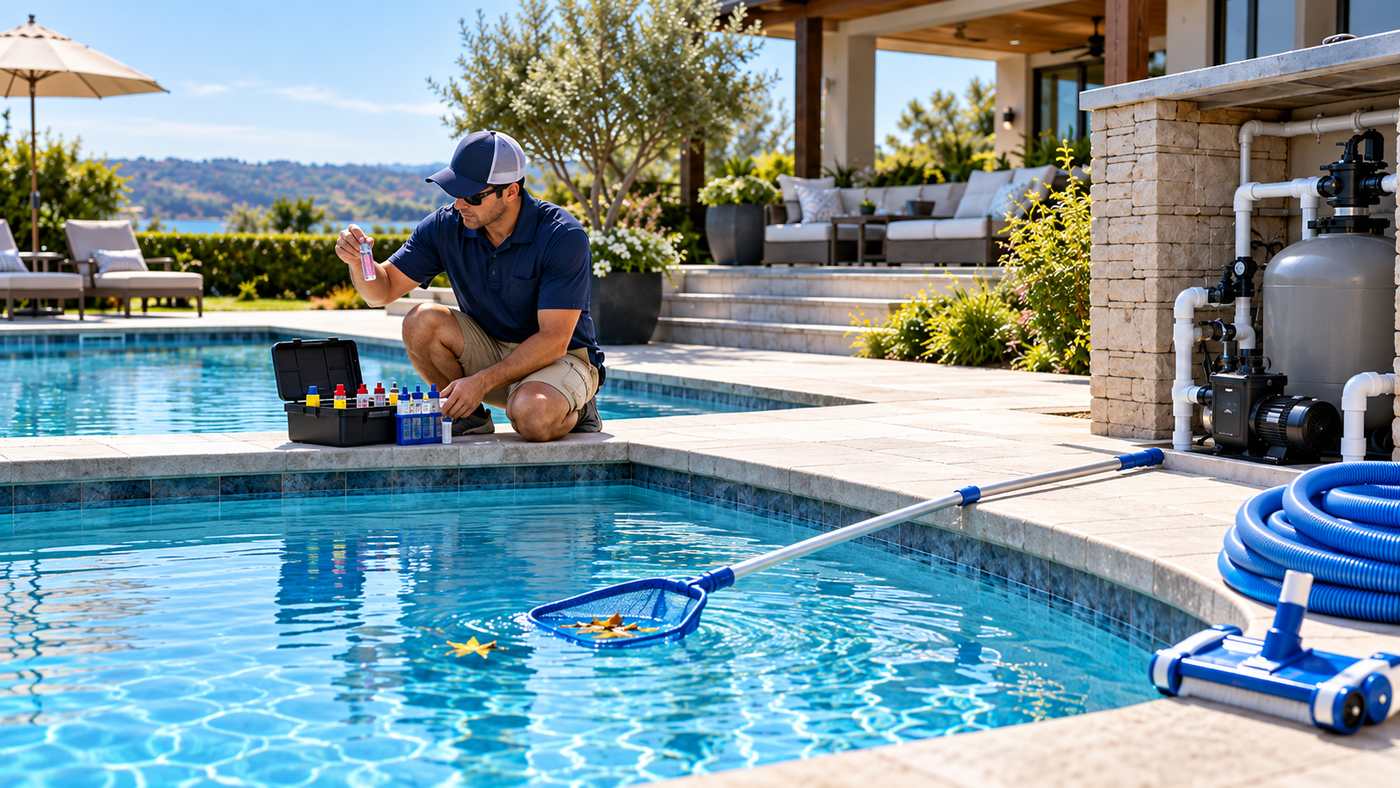
swimming pool maintenance is about much more than keeping the water visually clear. A healthy residential pool requires balanced water chemistry, effective filtration, routine surface cleaning, equipment inspections and early attention to leaks or algae. A pool can look sparkling while still having incorrect chlorine or pH levels, which is why regular testing should be part of every maintenance routine.
The U.S. Centers for Disease Control and Prevention recommends maintaining residential pool pH between 7.0 and 7.8 and at least 1 ppm free chlorine. If cyanuric acid or stabilized chlorine products containing cyanuric acid are used, the CDC recommends at least 2 ppm chlorine.
Proper maintenance can also reduce operating costs.
The U.S. Environmental Protection Agency notes that pools lose water through evaporation, cleaning, leaks and splashing. Measures such as using a pool cover, monitoring leaks and cleaning filtration equipment only when necessary can save water and energy.
A practical maintenance program should therefore address:
- Water chemistry
- Debris removal
- Brushing and vacuuming
- Filtration
- Algae prevention
- Equipment inspection
- Seasonal protection
The following seven steps provide a useful framework for residential pool owners.
What Is Swimming Pool Maintenance?
Swimming pool maintenance is the routine process of keeping pool water, surfaces and mechanical equipment in proper operating condition.
It usually includes:
- Testing water chemistry
- Adjusting sanitizer
- Balancing pH
- Skimming debris
- Brushing walls
- Vacuuming the floor
- Cleaning baskets
- Monitoring the filter
- Inspecting pumps
- Checking for leaks
The exact schedule depends on:
- Pool size
- Climate
- Swimmer load
- Weather
- Surrounding trees
- Filtration system
- Type of sanitizer
A heavily used outdoor pool in a hot climate may require substantially more attention than a lightly used covered pool.
1. Test Chlorine and pH Regularly
Water testing is one of the most important parts of swimming pool maintenance.
Clear water does not guarantee safe water.
The CDC identifies chlorine and pH as the first line of defense against many germs that can make swimmers sick.
Free Chlorine
Chlorine helps disinfect pool water.
The CDC currently recommends:
At least 1 ppm free chlorine in pools
If cyanuric acid or stabilized chlorine is used:
At least 2 ppm free chlorine
Always follow the chemical manufacturer’s directions and do not exceed recommended limits simply because you want stronger disinfection.
Why Chlorine Levels Drop
Chlorine can be consumed by:
- Sunlight
- Dirt
- Sweat
- Organic debris
- Heavy swimmer use
The CDC notes that contamination from swimmers and sunlight can reduce available chlorine in pool water.
This is why chlorine must be monitored rather than added once and forgotten.
Pool pH
The CDC recommends keeping pool pH between:
7.0 and 7.8
If pH Is Too High
High pH can reduce chlorine’s ability to kill germs effectively.
It may also contribute to:
- Cloudiness
- Scale
- Mineral deposits
If pH Is Too Low
Low pH can contribute to:
- Corrosion
- Equipment damage
- Surface deterioration
- Swimmer discomfort
CDC specifically notes that water below pH 7.0 can increase corrosion risks, while very high pH reduces chlorine effectiveness.
How Often Should You Test?
For public pools, CDC guidance recommends checking disinfectant and pH at least twice per day and more frequently during heavy use.
Residential pools may have different operating requirements, but owners should test routinely and especially after:
- Heavy swimming
- Rain
- Extreme heat
- Chemical additions
- Visible water changes
Consistent testing is more useful than reacting only when the pool turns cloudy.
2. Skim, Brush and Vacuum the Pool
Chemicals cannot remove leaves, insects, sand and dirt.
Physical cleaning remains essential.
Skim the Surface
Use a pool skimmer to remove:
- Leaves
- Insects
- Grass
- Flower petals
- Floating debris
Removing debris before it sinks can reduce the burden on the filtration system.
EPA specifically recommends regular skimming and vacuuming to reduce filtration demand.
Clean the Skimmer Basket
Debris captured by the skimmer eventually reaches the basket.
If the basket becomes blocked, circulation may decrease.
Check baskets regularly, particularly during:
- Windy weather
- Autumn leaf fall
- Storms
Always shut equipment down when required by the manufacturer’s safety instructions before accessing pump-related components.
Brush Pool Walls
Brushing helps prevent buildup on:
- Walls
- Steps
- Ladders
- Corners
- Waterline tile
These areas can develop:
- Algae
- Biofilm
- Mineral deposits
- Dirt
CDC operating guidance for public aquatic facilities recommends scrubbing pool surfaces to remove slime layers.
Residential pools also benefit from routine brushing.
Use the Correct Brush
Pool surfaces vary.
A brush suitable for concrete may not be appropriate for:
- Vinyl
- Fiberglass
- Delicate tile
Check the pool finish manufacturer’s recommendations before using aggressive brushes.
Vacuum the Floor
Debris that sinks should be removed.
Options include:
- Manual vacuum
- Suction-side cleaner
- Pressure-side cleaner
- Robotic cleaner
Robotic cleaners can reduce manual effort, but they do not eliminate the need to monitor chemistry and filtration.
3. Maintain Proper Pool Filtration
The filter continuously removes suspended particles from the water.
Common filter types include:
- Cartridge
- Sand
- Diatomaceous earth
Each operates differently.
Cartridge Filters
Cartridge filters use replaceable filter elements.
They are typically cleaned by removing the cartridge and rinsing it according to manufacturer instructions.
Sand Filters
Sand filters pass water through specialized filter media.
Cleaning often involves backwashing.
Diatomaceous Earth Filters
DE filters use fine filtration media and can provide very effective particle removal.
They require specific cleaning and recharge procedures.
Do Not Clean Filters Unnecessarily
A common assumption is that filters should be cleaned according to a rigid calendar.
EPA recommends using pressure gauges or other indicators to determine when cleaning is necessary instead of automatically cleaning on a fixed schedule.
Why?
Because excessive backwashing can waste water.
Watch the Pressure Gauge
Record the normal filter pressure after cleaning.
If the pressure increases significantly above the normal operating range, the filter may require cleaning.
Follow the equipment manufacturer’s threshold rather than relying on a universal number.
Check Water Flow
Reduced flow can result from:
- Clogged skimmer basket
- Blocked pump basket
- Dirty filter
- Low water level
- Air leak
- Pump problem
Investigate unusual changes before they become larger mechanical issues.
4. Prevent Algae Before It Starts
Algae can make water:
- Green
- Cloudy
- Slippery
Once an algae bloom becomes established, treatment can require considerably more work than prevention.
Common Causes of Algae Problems
Algae growth can be encouraged by:
- Inadequate sanitizer
- Poor circulation
- High nutrient levels
- Missed brushing
- Warm weather
The most effective prevention strategy is generally consistent sanitation and circulation rather than repeatedly adding specialty products.
Brush Low-Circulation Areas
Pay special attention to:
- Steps
- Corners
- Behind ladders
- Under accessories
- Shaded areas
These locations may experience weaker circulation.
Should You Shock a Pool?
“Shocking” generally means temporarily raising sanitizer levels to oxidize contaminants or respond to particular water-quality problems.
It should not be treated as a one-size-fits-all weekly ritual.
CDC guidance for public pools notes that shock treatment frequency depends on water quality and operating conditions.
For residential pools, follow:
- Test results
- Product instructions
- Pool professional recommendations
Do not swim until chemical levels have returned to the safe range specified by the product manufacturer.
5. Maintain the Pump and Circulation System
The pump moves water through:
- Skimmers
- Drains
- Filter
- Heater
- Sanitizing equipment
- Return jets
Poor circulation makes chemical management more difficult.
Clean the Pump Basket
Leaves and debris can accumulate in the pump strainer basket.
A blocked basket may reduce flow and strain equipment.
Inspect it regularly.
Follow manufacturer safety procedures before opening the pump.
Inspect Return Jets
Pool return jets should help distribute filtered water throughout the pool.
If one area repeatedly develops algae or debris, circulation may be weak there.
Jet direction can sometimes be adjusted to improve water movement.
Listen for Unusual Pump Noise
Changes in sound can indicate:
- Air entering the system
- Bearing problems
- Debris
- Cavitation
- Low water level
Ignoring unusual noise can result in more expensive repairs later.
Check Water Level
Water that falls below the skimmer opening can allow air into the circulation system.
Excessively high water can also reduce skimming efficiency.
Maintain the level recommended for your specific pool design.
6. Watch for Pool Leaks and Water Loss
Outdoor pools naturally lose some water to:
- Evaporation
- Splashing
- Backwashing
Persistent or unusual water loss may indicate a leak.
EPA specifically advises pool owners to monitor automatic refill systems, fill valves and the pool itself for leakage.
Signs of a Possible Leak
Possible clues include:
- Frequent refilling
- Wet ground near equipment
- Falling water level
- Air in circulation lines
- Cracks
- Unexpected water bills
Not every water-level change means a leak.
Hot, dry and windy weather can increase evaporation.
Pool Covers Reduce Evaporation
EPA states that properly used pool covers can prevent up to 95% of evaporation from swimming pools.
Covers may also help reduce:
- Debris
- Chemical consumption
- Heat loss
- Cleaning requirements
Pool Covers and Safety
A pool cover designed only for evaporation reduction is not automatically a certified safety cover.
If child or pet safety is a priority, use products specifically designed and rated for that purpose.
Never rely on a lightweight floating cover as a drowning-prevention system.
7. Inspect Equipment and Plan Seasonal Maintenance
Preventive maintenance is usually cheaper than waiting for equipment failure.
Inspect:
- Pump
- Filter
- Heater
- Valves
- Plumbing
- Sanitizing equipment
- Automation system
Look for:
- Leaks
- Corrosion
- Cracks
- Unusual noise
- Damaged wiring
Electrical repairs around pools should be performed by qualified professionals.
Winter Pool Maintenance
Pools in freezing climates require winterization.
EPA recommends:
- Cleaning the pool water
- Balancing chemistry
- Adding winterization chemicals if appropriate
- Removing water from vulnerable filters, pumps, heaters and piping before freezing weather
Improper winterization can allow freezing water to damage:
- Pipes
- Pump housing
- Filter components
- Heaters
Warm-Climate Pools
Pools that remain open year-round still need seasonal adjustment.
Cooler weather may reduce:
- Swimmer load
- Chlorine demand
- Evaporation
Maintenance schedules should reflect actual conditions rather than following summer settings all year.
Swimming Pool Maintenance Schedule
A useful maintenance routine can be divided into several frequencies.
Frequent Tasks
Check:
- Water appearance
- Debris
- Water level
- Sanitizer
- pH
Remove visible leaves before they sink.
Weekly Tasks
Depending on use and climate:
- Brush walls
- Vacuum floor
- Clean baskets
- Inspect equipment
- Review chemistry
Periodic Tasks
As needed:
- Clean filter
- Inspect seals
- Check heater
- Check automatic cleaner
- Inspect for leaks
The exact schedule should be adjusted using test results and equipment performance.
Seasonal Tasks
These may include:
- Opening
- Winterization
- Cover inspection
- Equipment servicing
- Deep cleaning
Total Alkalinity and Calcium Hardness
Chlorine and pH receive the most attention, but other water-balance factors also matter.
Total Alkalinity
Total alkalinity helps buffer pH.
If alkalinity is poorly controlled, pH may fluctuate more easily.
Calcium Hardness
Calcium hardness can affect pool surfaces and equipment.
Too little calcium in certain pool types may contribute to corrosive water.
Too much can contribute to scale.
Recommended ranges vary according to:
- Pool finish
- Sanitizer system
- Manufacturer specifications
Use a reliable test kit and follow guidance appropriate to the specific pool surface and equipment.
What Is Cyanuric Acid?
Cyanuric acid is commonly used to protect chlorine from rapid breakdown by sunlight.
Some chlorine products already contain stabilizer.
However, excessive stabilizer can change the amount of free chlorine required for effective sanitation.
CDC recommends at least 2 ppm free chlorine in pools when cyanuric acid or stabilized chlorine is being used.
Do not continuously add stabilized chlorine without testing stabilizer levels.
Saltwater Pool Maintenance
Saltwater pools still require maintenance.
A saltwater chlorine generator converts dissolved salt into chlorine.
It does not eliminate the need to monitor:
- Chlorine
- pH
- Salt concentration
- Cell condition
- Water balance
Inspect the Salt Cell
Mineral buildup can form on the cell.
Follow manufacturer instructions for inspection and cleaning.
Avoid unnecessary acid cleaning, which may shorten cell life.
Salt Pools Still Need Chlorine
A common misconception is that saltwater pools are chlorine-free.
They are not.
They simply generate chlorine from salt rather than requiring all chlorine to be added manually.
Swimming Pool Maintenance After Heavy Rain
Heavy rain can change pool conditions quickly.
Rain may:
- Dilute sanitizer
- Change pH
- Introduce debris
- Raise water level
After major storms:
- Remove debris
- Check water level
- Test chemistry
- Inspect equipment
- Restore circulation
Do not automatically add large amounts of chemicals without testing first.
Swimming Pool Maintenance During Hot Weather
Heat and strong sunlight can increase chlorine demand and evaporation.
The CDC notes that sunlight reduces chlorine concentration.
During heat waves:
- Test more frequently
- Monitor water level
- Use a cover when appropriate
- Watch for algae
Heavily used pools may require additional attention.
How to Reduce Pool Maintenance Costs
Maintenance costs can be reduced without neglecting water quality.
Use a Pool Cover
EPA highlights pool covers as one of the strongest ways to reduce evaporation and associated water loss.
Fix Leaks Quickly
A small leak can waste substantial water over time.
Clean Filters Only When Necessary
EPA recommends using pressure or visual indicators instead of unnecessary scheduled cleaning.
Maintain Chemistry
Poor chemistry can damage:
- Surfaces
- Heaters
- Pumps
- Plumbing
Preventing damage is usually less expensive than replacing equipment.
Use Efficient Equipment
When major components eventually require replacement, compare:
- Energy efficiency
- Water efficiency
- Operating cost
rather than selecting only by purchase price.
Common Swimming Pool Maintenance Mistakes
Adding Chemicals Without Testing
More chemical is not automatically better.
Over-treatment can damage equipment and irritate swimmers.
Ignoring pH
Maintaining chlorine while ignoring pH can reduce disinfection performance.
Running the Pool With Low Water
This can allow the pump to draw air.
Cleaning the Filter Too Often
Unnecessary cleaning can waste water, especially with backwash-type systems.
Neglecting the Walls
Good chemistry does not replace brushing.
Letting Leaves Sit
Organic debris increases sanitizer demand and may stain surfaces.
Mixing Pool Chemicals
Never mix different pool chemicals together.
Follow all product labels.
Certain chemical combinations can generate dangerous heat or gases.
Store chemicals separately in a dry, ventilated area according to manufacturer instructions.
DIY Pool Maintenance vs Professional Service
Many homeowners can perform routine maintenance themselves.
DIY tasks can include:
- Testing water
- Skimming
- Brushing
- Cleaning baskets
- Monitoring filter pressure
Professional help may be useful for:
- Equipment repairs
- Persistent algae
- Major leaks
- Heater problems
- Electrical issues
- Complex chemistry problems
For commercial pools, EPA recommends considering maintenance companies with recognized professional certifications.
For residential service, compare training, insurance, references and the exact maintenance scope before hiring.
Questions to Ask a Pool Maintenance Company
Before hiring a service provider, ask:
- How often will you visit?
- Is chemical testing included?
- Are chemicals included in the price?
- Do you brush and vacuum?
- Do you clean baskets?
- Is filter cleaning included?
- Do you inspect equipment?
- Are repairs extra?
- Are you insured?
- Will you provide service records?
Written service details make it easier to compare companies.
Frequently Asked Questions
How often should swimming pool maintenance be done?
Basic pool monitoring should be frequent, with regular chemistry testing, skimming and equipment checks. Brushing and vacuuming are commonly performed weekly or as conditions require, while filter cleaning should be based on pressure and manufacturer guidance.
What chlorine level should a swimming pool have?
CDC recommends at least 1 ppm free chlorine in residential pools. If cyanuric acid or stabilized chlorine is used, CDC recommends at least 2 ppm.
What is the correct pH for pool water?
CDC recommends maintaining pool pH between 7.0 and 7.8 to support effective disinfection, swimmer comfort and equipment protection.
Should I clean my pool filter every week?
Not necessarily. EPA recommends using filter pressure or other indicators to determine when cleaning is required rather than cleaning automatically on a fixed schedule.
Does a pool cover reduce maintenance?
Yes. Pool covers can reduce evaporation, debris entry, chemical consumption and heat loss. EPA says properly used covers can prevent up to 95% of pool-water evaporation.
Is a saltwater pool maintenance-free?
No. Saltwater pools still require chlorine and pH monitoring, equipment inspection, filtration, surface cleaning and salt-cell maintenance.
Conclusion
Swimming pool maintenance is most effective when chemistry, cleaning, filtration and equipment care are handled as one system. Keep chlorine and pH within appropriate ranges, remove debris before it reaches the filter, brush and vacuum surfaces, monitor circulation and address unusual water loss quickly. Pool covers and preventive equipment checks can also reduce water, energy and repair costs. A consistent maintenance routine keeps the water cleaner, protects expensive equipment and makes the pool more enjoyable throughout the swimming season