Toupee for Men: How to Choose a Natural Looking Hair System
Choosing a toupee for men today is very different from buying the obvious, rigid hairpieces commonly associated with the term in the past. Modern men’s hair systems can use fine lace, thin polyurethane bases, human or synthetic hair, graduated hairlines and custom colour matching to blend with existing hair and scalp. The best result depends on selecting an appropriate base, density, hair texture, colour, attachment method and maintenance routine rather than simply purchasing the most expensive system available. A professional fitting can also make a substantial difference when achieving a realistic hairline and natural transition is the priority.
Hair loss affects men for many reasons, ranging from androgenetic alopecia, commonly called male pattern hair loss, to medical conditions and treatment related changes.
A hair system does not treat the underlying cause of hair loss. Instead, it provides an immediate cosmetic option that does not require hair transplantation or waiting for medication to produce possible results.
That distinction is important. Someone experiencing new, sudden, patchy or unexplained hair loss should consider medical evaluation before assuming the cause is hereditary.
This guide covers modern toupee construction, hair types, bases, fitting, attachment, care, lifespan, costs and the practical details worth checking before buying.
What Is a Toupee for Men?
A men’s toupee is a partial hairpiece designed to cover an area of hair loss while blending into the wearer’s existing hair.
The term hair system is now frequently used for modern products of this type.
Unlike a full wig, a partial system commonly covers areas such as the top, crown or frontal scalp while natural hair remains around other areas of the head.
Toupee Versus Men’s Hair System
In ordinary use, these terms can refer to similar products.
Toupee is an older and widely recognized term. Hair system is commonly used by modern hair replacement salons and manufacturers to describe customized or advanced partial hairpieces.
A new name does not automatically indicate better quality.
Materials, construction, fit and styling matter more than terminology.
Toupee Versus Wig
A wig generally covers most or all of the scalp.
A partial men’s hairpiece is designed specifically for localized hair loss and needs to blend with surrounding natural hair.
The better option depends on the extent and pattern of hair loss.
How a Toupee for Men Creates a Natural Appearance
Realism comes from several design decisions working together.
A fine front base can reduce visible transition at the hairline. Correct density avoids an unnaturally thick appearance. Appropriate colour and texture help the system merge with surrounding hair.
Professional cutting and blending complete the effect.
7 Powerful Benefits of a Modern Toupee for Men
Hair systems appeal to some men because they provide cosmetic flexibility without surgical treatment.
1. Immediate Visual Coverage
A hair system provides visible coverage as soon as it is fitted.
There is no waiting period for hair growth.
This distinguishes it from medical hair loss treatments or transplantation, where results can take time and are not guaranteed.
2. Nonsurgical Hair Replacement
Fitting a conventional hair system does not require transplant surgery.
This can appeal to people who do not want surgery or are not suitable candidates for it.
Hair systems and medical hair restoration serve different purposes and should not be presented as interchangeable treatments.
3. Customizable Hairstyle
Modern systems are available in different lengths, textures and densities.
A wearer can choose shorter styles, longer styles, curls or other appropriate textures.
The design should complement remaining natural hair and facial characteristics.
4. Realistic Hairlines
Fine lace and certain thin skin bases can create subtle front edges when appropriately fitted.
Hair ventilation and graduated density can further improve appearance.
The most delicate bases can involve durability tradeoffs.
5. Choice of Human or Synthetic Hair
Consumers can choose between different fibre types.
Human hair can provide natural movement and broad styling possibilities, while quality synthetic fibre can offer consistent shape and easier routine styling for some users.
Each has different care requirements.
6. Adjustable Coverage
A partial system can be designed around the actual area of hair loss.
This avoids covering healthy surrounding hair unnecessarily when a full wig is not needed.
Correct template dimensions are essential.
7. Reversible Cosmetic Option
Unlike surgery, a removable hair system does not permanently alter the scalp through transplantation.
The wearer can change styles or stop using the system.
Attachment methods still need appropriate scalp and skin care.
Types of Toupee for Men
Modern systems are often categorized by their base construction.
Lace Hair Systems
Lace uses fine mesh material designed to provide ventilation and a subtle appearance against the scalp.
French lace and Swiss lace are commonly used commercial terms.
Specifications can vary between manufacturers, so request actual samples instead of assuming the same named material is identical everywhere.
Thin Skin Hair Systems
Thin skin systems use a polyurethane based material.
When sufficiently thin and carefully fitted, the edge can create a close scalp appearance.
Different polyurethane thicknesses influence durability, handling and appearance.
Monofilament Systems
Monofilament bases can provide greater structure and durability in some constructions.
They may be suitable for wearers prioritizing robustness.
Visual characteristics differ from very fine lace.
Hybrid Hair Systems
Hybrid systems combine materials.
For example, a unit might use lace in areas where ventilation is prioritized and polyurethane around sections where adhesive cleanup is easier.
Choosing the Best Toupee for Men Base
Base choice should reflect:
• Desired hairline
• Scalp sensitivity
• Climate
• Activity level
• Attachment method
• Maintenance ability
• Desired lifespan
• Hair density
No base provides maximum realism, breathability and durability simultaneously.
Tradeoffs are normal.
Lace Versus Thin Skin Toupees
This comparison is especially important for first time buyers.
Advantages of Lace
Lace can provide excellent ventilation.
Fine lace can also create a natural looking hairline when colour, density and fitting are appropriate.
Adhesive cleanup can require patience depending on attachment.
Advantages of Thin Skin
Polyurethane can provide a smooth attachment surface.
It can also resemble scalp effectively when the material is thin.
Certain units can be easier to clean around taped or adhesive areas than fine mesh.
Which Looks More Natural?
Either can look realistic.
Base thickness, colour, knot treatment, hair density and application technique all influence visibility.
The base category alone does not guarantee an undetectable result.
Best Toupee for Men in Hot Weather
Breathable lace can appeal in warm climates, but personal comfort varies.
Frequent perspiration can also influence attachment durability and maintenance.
Discuss your activity level and climate with the supplier before selecting a base.
Human Hair Toupee for Men
Human hair systems remain popular for their appearance and styling flexibility.
Remy Human Hair
Remy generally refers to human hair collected or processed so the cuticles remain aligned in a consistent direction.
Correct cuticle alignment can help reduce tangling.
Quality can still differ among suppliers.
Processed Human Hair
Hair may undergo colouring or other chemical treatment to achieve desired shades and textures.
More processing can influence condition and longevity.
Grey Hair Options
Systems can incorporate grey hair to match natural ageing patterns.
Grey content can be distributed rather than added uniformly, creating a more natural blend.
Is Human Hair Always Better?
No.
Human hair can provide natural movement but requires maintenance and gradually experiences oxidation, fading and wear.
High quality synthetic products can be practical for certain users.
Choice should reflect appearance preferences, styling habits and maintenance expectations.
Synthetic Hair Systems
Synthetic fibres are engineered to imitate human hair.
Advantages of Synthetic Hair
Some fibres retain their intended shape with relatively little styling.
Colour can also remain consistent in ways that appeal to particular users.
Limitations
Heat styling can damage fibres that are not designed for high temperatures.
Synthetic hair also behaves differently from human hair under close observation and touch.
Follow manufacturer instructions carefully.
Choosing the Correct Hair Density
Excessive density is one of the easiest ways to make a hair system look unnatural.
What Is Hair Density?
Density describes how much hair is attached across the base.
Manufacturers commonly offer categories ranging from lighter to heavier density.
There is no perfectly standardized density scale across the industry.
Match Age and Natural Hair
The system should normally integrate with remaining hair.
Extremely dense top hair combined with thin sides can create an obvious contrast.
Graduated Hairlines
A natural hairline generally does not begin with maximum density in a perfectly straight line.
Gradual density near the front can improve realism.
Density for a Natural Toupee for Men
When uncertain, discuss photographs of your current side and back hair with a specialist.
A skilled stylist can blend the system through cutting and texture.
More hair is not necessarily better.
Hair Colour Matching
Colour needs to match in multiple lighting conditions.
Use Physical Colour Samples
Screens can display colours inaccurately.
Physical swatches or samples generally provide better matching information.
Consider Different Areas
Hair around the sides can vary from the back or temples.
Grey percentages may also differ.
Sunlight Matters
A colour that looks perfect under indoor lighting may appear different in daylight.
Evaluate a sample under several lighting conditions where possible.
Custom Colour for a Toupee for Men
Custom systems can combine multiple shades and grey percentages.
This can be useful when existing hair has substantial natural variation.
Provide accurate samples or follow the supplier’s colour matching process carefully.
Choosing Hair Texture and Curl
Texture affects how naturally the system blends and how easy it is to style.
Straight Hair
Straight systems can suit wearers whose remaining hair has minimal wave.
Wavy Hair
Moderate wave can provide natural movement and volume.
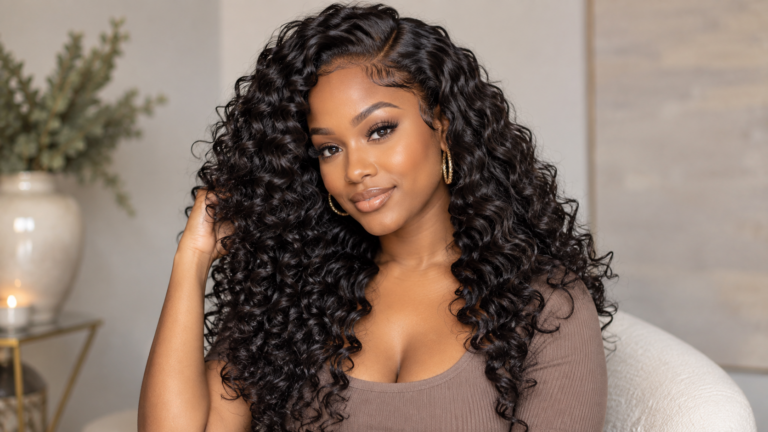
Curly Hair
Curl patterns need particularly careful matching.
The manufacturer may use curl measurements or categories.
Matching a Toupee to Existing Hair Texture
Compare the system with hair around the sides and back in its normal state.
Remember that natural hair can change texture with length.
A professional stylist can help blend differences, but severe mismatch remains difficult to hide.
Measuring for a Men’s Hair System
Correct dimensions are essential.
Identify the Hair Loss Area
Determine which scalp region needs coverage.
Do not automatically order the largest standard system.
Use a Template
Custom systems can use a template representing scalp shape and coverage.
Follow the manufacturer’s instructions carefully.
Measure More Than Once
Confirm dimensions before ordering.
Small differences can influence fit, particularly at the front hairline.
Stock Versus Custom Toupee for Men
Stock units come in predefined dimensions and specifications and can often be delivered more quickly.
Custom systems can accommodate specific base shapes, densities, colours and hair characteristics.
A stock unit can still work very well when its specifications match the wearer.
Toupee Attachment Methods
Attachment should balance security, scalp comfort and maintenance.
Hair System Tape
Specialized tapes are designed for hair system attachment.
Different tapes vary in hold, thickness and cleanup characteristics.
Only use products intended for appropriate skin contact and follow their instructions.
Liquid Adhesive
Hair system adhesives can provide close attachment around selected areas.
Application requires careful preparation.
People with sensitive skin should consider product ingredients and professional guidance.
Clips
Some removable systems use clips attached to existing hair.
Clips avoid adhesive on the scalp but require sufficient surrounding hair and can place tension on attached hair.
Safe Attachment of a Toupee for Men
Patch testing may be appropriate for some adhesive products according to manufacturer guidance.
Stop use if significant irritation develops.
Persistent redness, blistering, swelling or skin damage deserves professional healthcare advice rather than repeated application of adhesive over affected skin.
Can You Sleep in a Toupee?
Some attachment systems are designed for extended wear, while other hairpieces are removed daily.
Sleeping in a bonded system can increase friction and tangling.
It may also affect attachment and maintenance frequency.
Follow the specific system and adhesive manufacturer’s instructions.
A smooth pillowcase and appropriate hair care may reduce friction, but no method completely prevents wear.
Can You Shower With a Hair System?
Some securely attached systems can be washed while worn.
Adhesive curing time and product instructions need to be considered.
Water Temperature
Very hot water can be unnecessarily harsh on hair and certain attachment products.
Follow supplier guidance.
Shampoo
Use products suitable for the system’s hair and base.
Aggressive cleansing can dry processed human hair.
Washing Frequency
Overwashing can increase wear, while insufficient cleaning can allow oils and residue to accumulate.
Find a schedule suited to your scalp, activity level and attachment method.
Washing a Toupee for Men Correctly
Handle wet hair gently.
Avoid aggressive rubbing or twisting.
Detangle according to the hair supplier’s recommended method and support the base during maintenance.
Styling a Men’s Toupee
The initial haircut can determine how convincing the entire system appears.
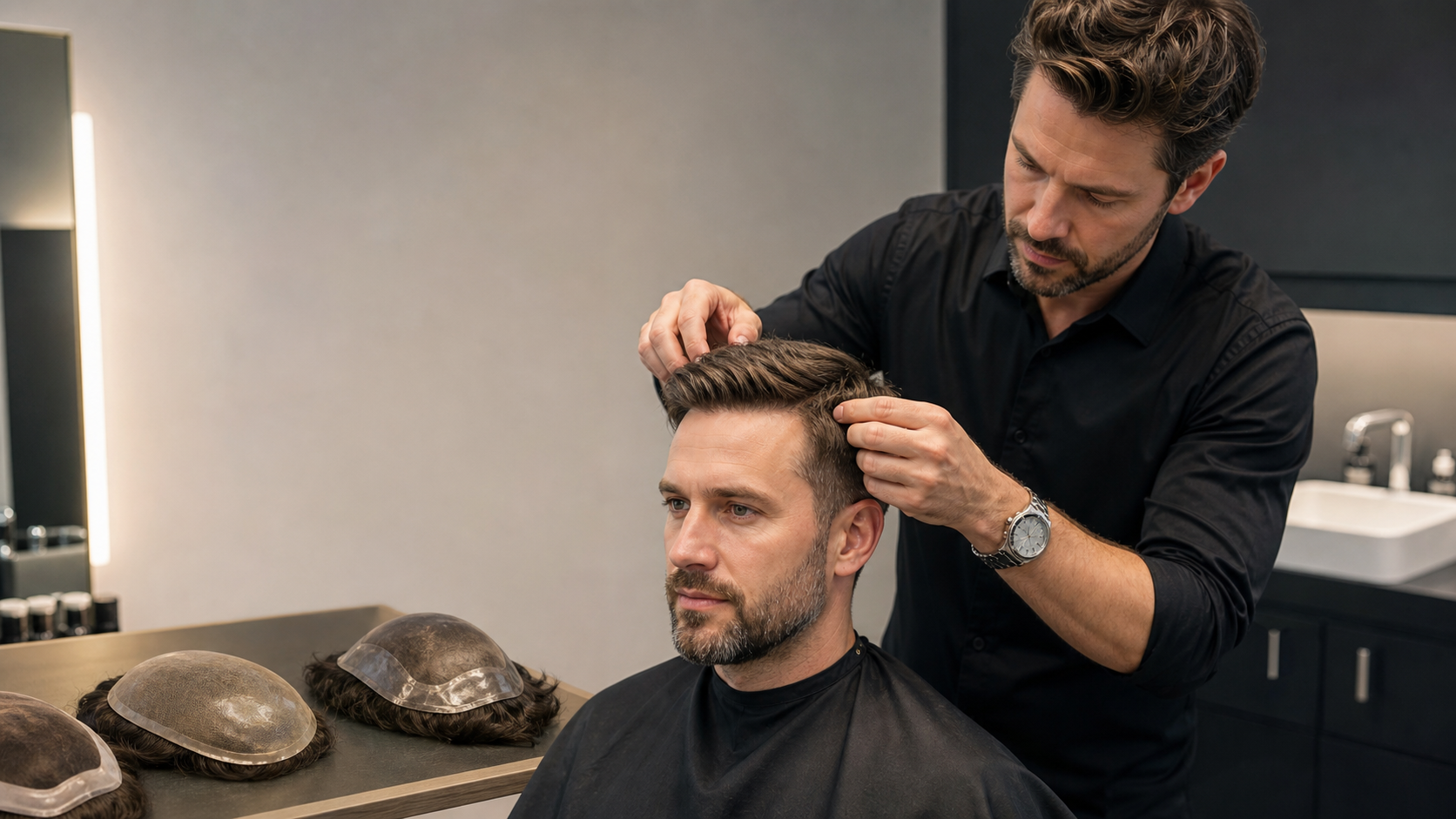
Professional Cut In
A cut in shapes the supplied hair and blends it with remaining natural hair.
A stylist experienced with hair systems understands how to work around the base and hair direction.
Heat Styling
Human hair can often tolerate suitable heat styling, but processed hair can still be damaged.
Use temperatures and products appropriate to the system.
Synthetic hair should only be exposed to heat if the manufacturer confirms it is heat resistant.
Styling Products
Heavy waxes and oils can build up on hair and base materials.
Use appropriate products sparingly.
Avoid applying oily products near adhesive areas unless specifically compatible.
Hair System Maintenance
A realistic appearance requires routine care.
Clean the Base
Adhesive and skin oils can accumulate.
Removal technique depends on lace, polyurethane and the attachment product.
Follow manufacturer instructions rather than aggressively scraping delicate materials.
Condition the Hair
Hair attached to a system does not receive natural scalp oils in the same way growing hair does.
Conditioning can therefore be important for human hair units.
Avoid applying unsuitable conditioner directly to attachment points where it can loosen knots or adhesive.
Prevent Tangling
Detangle gently using suitable tools.
Start at the ends and work upward while supporting the hair.
Professional Toupee for Men Maintenance
Salons can provide removal, cleaning, attachment and styling services.
This can be particularly useful for new users.
Ask how frequently maintenance is likely to be needed before agreeing to an ongoing service package.
How Long Does a Toupee Last?
There is no universal lifespan.
Durability depends on base construction, hair type, processing, attachment, activity, maintenance and frequency of wear.
Thin Bases
Very delicate systems prioritize realism and may require replacement sooner than heavier designs.
Durable Bases
More substantial lace, monofilament or reinforced constructions can provide greater durability at the potential expense of some delicacy.
User Care
Aggressive washing, pulling and excessive heat can shorten usable life.
Toupee for Men Lifespan Claims
Be cautious of guaranteed lifespan claims that ignore how the system is used.
Ask whether the supplier’s warranty covers manufacturing defects or ordinary wear.
These are different issues.
How Much Does a Toupee for Men Cost?
Pricing ranges considerably.
Stock Hair Systems
Stock systems can cost less than bespoke options because they use predefined specifications.
Additional cutting and fitting may be charged separately.
Custom Hair Systems
Customization can include base dimensions, density, colour, texture and hairline design.
This requires additional manufacturing.
Salon Programs
Some studios offer subscriptions or annual packages containing several systems and maintenance services.
Calculate the complete yearly cost before signing a contract.
Total Cost of Wearing a Toupee for Men
Budget for more than the hairpiece.
Potential ongoing costs include:
• Adhesive or tape
• Solvents
• Shampoo and conditioner
• Professional fitting
• Haircuts
• Maintenance appointments
• Replacement systems
Comparing total annual expenditure gives a more useful picture than the first purchase price.
Toupee for Men Versus Hair Transplant
These options work in fundamentally different ways.
Hair System
A hairpiece creates immediate cosmetic coverage without transplant surgery.
It requires ongoing maintenance and eventual replacement.
Hair Transplant
Hair transplantation surgically relocates a person’s existing follicles from donor areas to areas of hair loss.
Suitability depends on diagnosis, donor hair and other medical factors.
Results develop over time and vary between patients.
Which Is Better?
There is no universally better option.
A dermatologist or appropriately qualified hair restoration physician can assess medical hair loss options, while a hair system specialist can explain cosmetic replacement.
Toupee Versus Hair Loss Medication
Medication aims to influence certain biological causes of hair loss, whereas a hair system covers the appearance immediately.
Evidence based medications exist for some types of hair loss, but they can have contraindications and potential adverse effects.
Discuss medical treatment with a qualified healthcare professional.
A commercial hairpiece retailer should not diagnose the cause of unexplained hair loss.
When Hair Loss Needs Medical Assessment
Hair systems are cosmetic products, but hair loss can sometimes indicate a health problem.
Seek professional assessment for:
• Sudden hair loss
• Rapid shedding
• Patchy loss
• Scalp pain
• Significant itching
• Scarring
• Redness or scaling
• Hair loss after new medication
• Hair loss accompanied by other unexplained symptoms
A dermatologist can help determine the cause.
Toupee for Men After Medical Hair Loss
People experiencing hair loss associated with medical treatment or diagnosed conditions may still consider cosmetic hair systems.
Scalp sensitivity and treatment requirements should be discussed with the healthcare team.
Comfort and skin health take priority over extended attachment.
How to Choose a Hair System Supplier
Supplier transparency matters.
Request Samples
Base and hair samples can help buyers understand material quality.
Ask About Hair Origin and Processing
Descriptions such as premium human hair are broad.
Ask for more specific information about hair type and processing.
Review Customization
Confirm which density, colour, grey percentage, base and texture options are genuinely available.
Understand Returns
Hair systems may have restricted returns after cutting, adhesive use or customization.
Read policies before altering the product.
Questions Before Buying a Toupee for Men
Ask:
• Which base suits my lifestyle?
• Is the hair human or synthetic?
• What processing has the hair undergone?
• Which density should match my existing hair?
• Can grey percentages be customized?
• How are measurements taken?
• Which attachment methods are compatible?
• How should the system be cleaned?
• What warranty applies?
• Can the unit be returned before alteration?
• What ongoing maintenance will it require?
Clear answers reduce first time buying mistakes.
Common Men’s Hair System Mistakes
Most unnatural results come from specification or fitting problems rather than the simple fact that a hair system is being worn.
Choosing Excessive Density
Too much hair can create an abrupt contrast with natural hair.
Poor Colour Matching
Even a small colour difference can become obvious in sunlight.
Incorrect Hairline Placement
A hairline positioned unnaturally can undermine an otherwise good system.
Professional guidance can help.
Neglecting Maintenance
Oil, adhesive residue and tangled hair gradually affect appearance.
Routine maintenance is part of ownership.
Making a Toupee for Men Look Natural
Prioritize moderate density, accurate colour, realistic texture and professional blending.
Avoid treating maximum thickness as the definition of good hair.
Subtle customization usually produces a more convincing result.
Frequently Asked Questions
What is a toupee for men?
A toupee for men is a partial hairpiece or hair system designed to cover localized scalp hair loss while blending with remaining natural hair.
Can a men’s toupee look natural?
Yes, a well matched and professionally fitted system can look highly natural, although results depend on base, density, colour, texture, hairline and styling.
How long does a toupee for men last?
Lifespan varies significantly with base type, hair quality, attachment method, maintenance, activity and frequency of wear. Delicate systems may prioritize realism over durability.
Can you shower with a toupee?
Some attached systems can be washed while worn after appropriate adhesive curing, but users should follow the instructions for their specific base and attachment products.
Is human hair better for a men’s hair system?
Human hair provides natural movement and styling flexibility, while synthetic hair can offer easy maintenance and consistent shape. Neither is best for every user.
How much does a toupee for men cost?
Cost depends on stock versus custom construction, base material, hair type, salon services and ongoing maintenance. Total annual cost is more useful than purchase price alone.
Conclusion
A toupee for men can provide immediate, nonsurgical hair coverage with far more realistic materials and customization than traditional stereotypes suggest. Natural results depend on choosing the correct base, density, colour, texture and hairline and then having the system fitted and blended carefully. Buyers should also consider ongoing attachment, cleaning, maintenance and replacement costs before deciding which system suits their lifestyle. For sudden or unexplained hair loss, medical assessment should come first, while a quality hair system can remain a flexible cosmetic option for those who want immediate control over their hairstyle.