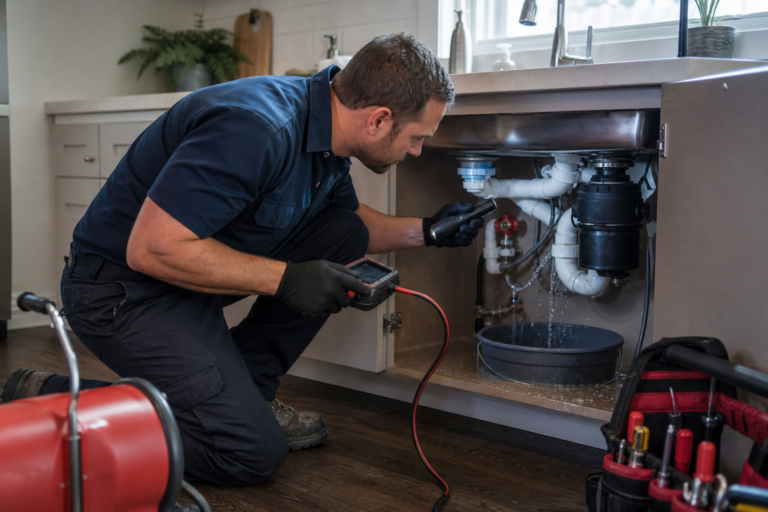
Water Leak Detection Explained: How to Find Hidden Leaks Before Damage Spreads
Effective water leak detection helps homeowners identify plumbing problems that may otherwise remain hidden behind walls, beneath floors, above ceilings, or underground. Some leaks produce obvious dripping or standing water, while slow concealed leaks may first appear as unexplained meter activity, staining, damp materials, musty odors, or changes in water use. Finding the source accurately matters because visible moisture is not always located directly beside the failed pipe. A systematic approach combining observation, meter checks, moisture measurement, plumbing isolation, and specialized diagnostic equipment can help locate leaks while minimizing unnecessary demolition.
What Is Water Leak Detection?
Water leak detection is the process of determining whether unintended water loss is occurring and identifying its source or likely location.
It can involve simple visual inspection or advanced diagnostic equipment depending on where the suspected leak is located.
Residential leak investigations may involve:
• Water supply piping
• Toilets
• Faucets
• Water heaters
• Appliances
• Shower and bathtub plumbing
• Irrigation systems
• Underground service lines
• Drain piping
• HVAC condensate systems
• Building envelope water intrusion
Not every wet area is caused by pressurized plumbing, which is why diagnosis should begin before repairs.
Why Water Leak Detection Matters
A concealed leak can wet drywall, insulation, flooring, cabinets, framing, and other building materials.
Detecting water early may reduce the extent of damage and help limit unnecessary water consumption.
Leaks should also be addressed because persistent dampness can create conditions that support microbial growth and material deterioration.
Does a High Water Bill Always Mean a Leak?
No.
Water consumption can increase because of irrigation, additional occupants, seasonal activities, appliance use, pool filling, or other legitimate changes.
An unusual increase is a useful clue, not proof of leakage.
Reviewing consumption history and checking the property systematically can help determine whether further investigation is necessary.
7 Powerful Water Leak Detection Tips for Homeowners
Leak diagnosis should progress from simple observations to more specialized testing. These seven methods can help narrow the source without randomly opening walls.
1. Start Water Leak Detection With a Visual Inspection
Many supposedly hidden leaks leave subtle visible evidence.
Walk through the property and inspect areas containing plumbing fixtures or water using equipment.
Look for Common Leak Warning Signs
Possible indicators include:
• Water stains
• Damp drywall
• Peeling paint
• Swollen baseboards
• Warped flooring
• Damp cabinets
• Unexplained puddles
• Ceiling discoloration
• Musty odors
• Visible corrosion
• Persistent moisture around fixtures
• Unusual sounds of flowing water
None of these symptoms identifies the source by itself.
Inspect Beneath Sinks
Use a flashlight to examine supply valves, flexible connectors, faucet connections, traps, and drain piping.
Dry the area if necessary and observe whether moisture returns.
Check Around Toilets
Water around a toilet can result from several conditions, including supply connection leakage, tank components, condensation, a failed seal, or another nearby source.
Do not assume every wet toilet base requires the same repair.
Inspect Water Using Appliances
Washing machines, dishwashers, refrigerators, water treatment equipment, and water heaters can all develop leaks.
Check accessible hoses, valves, connections, and surrounding flooring.
Disconnecting or servicing appliances should follow manufacturer instructions and appropriate electrical safety precautions.
2. Use the Water Meter for Water Leak Detection
A household water meter can provide useful evidence that water is flowing when no intentional water use should be occurring.
Meter designs vary, so consult the water provider when necessary.
How to Perform a Basic Meter Check
Where appropriate:
• Stop intentional water use
• Turn off faucets
• Ensure appliances are not filling
• Verify irrigation is not operating
• Record the meter reading
• Observe the meter according to utility guidance
Unexpected continued consumption may indicate water use somewhere on the property.
Automatic Equipment Can Affect the Test
Water softeners, ice makers, humidifiers, irrigation systems, toilets, and other automatic equipment can operate without someone opening a faucet.
Account for these devices before concluding that meter movement proves a concealed leak.
What if the Meter Still Moves?
A meter indicating unexpected flow can justify additional isolation testing.
If a building has an accessible interior main shutoff, a plumber may use strategic valve isolation to determine whether water loss appears to be inside the building or on the supply line between the meter and house.
Valve arrangements differ, so avoid forcing old or damaged valves.
3. Check Toilets During Water Leak Detection
Toilet leaks can remain unnoticed because water may flow directly from the tank into the bowl without creating a puddle.
A malfunctioning toilet can therefore contribute to unnecessary water consumption.
Listen for Unexpected Refilling
A toilet that periodically refills when nobody has used it may deserve investigation.
Possible causes include problems with the flush valve seal, fill valve, overflow configuration, or other internal components.
Use a Dye Test When Appropriate
Some water utilities recommend placing a small amount of appropriate coloring in the toilet tank and waiting without flushing to determine whether colored water appears in the bowl.
Follow utility or fixture guidance and avoid products that could stain components.
Color reaching the bowl can indicate leakage between the tank and bowl.
Inspect the Supply Connection
A toilet can also leak externally around the supply valve, connector, tank, or other components.
External leakage deserves prompt attention because it can damage nearby flooring and subflooring.
4. Use Moisture Measurement for Hidden Water Leak Detection
Visual inspection cannot reliably determine how far water has traveled inside a building assembly.
Moisture meters can provide additional information.
How Moisture Meters Help
Depending on the instrument and material, readings can help compare suspicious areas with known dry locations.
They can be useful around:
• Walls
• Ceilings
• Wood trim
• Flooring
• Cabinets
• Framing
• Other compatible building materials
The instrument does not necessarily identify what caused the moisture.
Pin and Pinless Moisture Meters
Pin type meters measure using probes inserted into suitable materials.
Pinless meters use electromagnetic sensing and can scan without making probe holes, although depth and interpretation vary among instruments.
Both types have limitations.
Interpret Results Carefully
Different materials produce different readings, and metal behind a wall can influence some instruments.
A high reading is evidence requiring interpretation, not an automatic map of a leaking pipe.
Experienced professionals combine measurements with building knowledge and additional testing.
5. Thermal Imaging Can Support Water Leak Detection
Infrared cameras display patterns of surface temperature rather than directly seeing water through walls.
Under suitable conditions, moisture can create temperature differences that help identify areas requiring closer investigation.
What Thermal Imaging Can Reveal
Potentially useful patterns can occur around:
• Ceilings
• Walls
• Plumbing routes
• Floors
• Mechanical equipment
• Areas affected by evaporation
However, many non leak conditions can create similar thermal patterns.
Thermal Cameras Do Not See Through Walls
This misconception is important.
Thermal imaging measures infrared energy emitted from visible surfaces. It does not provide an X ray image of pipes and water inside walls.
Insulation differences, air leakage, sunlight, HVAC operation, framing, and electrical equipment can all affect surface temperature.
Confirm Thermal Findings
A suspicious infrared image should usually be compared with moisture readings, physical inspection, plumbing tests, or other evidence.
Using multiple diagnostic methods reduces the chance of opening the wrong section of a wall.
6. Use Specialized Water Leak Detection for Underground Pipes
Leaks in buried water service lines can be difficult to locate because water can travel through soil before appearing at the surface.
Specialized methods can narrow the search.
Signs of an Underground Water Leak
Potential clues include:
• Unexplained meter consumption
• Persistent wet soil
• Water surfacing in dry weather
• Unusual erosion
• Reduced water pressure or flow
• Changes in water bills
• Damp areas along a suspected pipe route
These signs can also have other causes.
Acoustic Leak Detection
Pressurized pipe leaks can create sound or vibration.
Professional acoustic equipment may use sensitive microphones, listening devices, or correlators to help identify where leak generated noise is strongest.
Results depend on pipe material, soil, leak characteristics, pressure, background noise, and other conditions.
Tracer Gas and Other Techniques
In some situations, professionals may use tracer gas or additional specialized methods to investigate difficult leaks.
Technique selection depends on the plumbing system and site.
No detection method can guarantee perfect localization under every condition.
7. Add Smart Water Leak Detection for Early Warning
Connected water sensors can help homeowners discover water sooner.
Systems range from small battery powered sensors to whole home monitoring devices.
Point of Use Leak Sensors
Small sensors can be installed in vulnerable locations such as:
• Beneath sinks
• Near water heaters
• Behind washing machines
• Near dishwashers
• In basements
• Around water treatment equipment
• Beneath refrigerators with water connections
These devices typically provide an alarm or connected notification when moisture reaches the sensor.
Whole Home Water Monitoring
Some systems monitor water flow through a main supply line and use algorithms or programmed thresholds to identify unusual patterns.
Certain models can automatically close a compatible shutoff valve when abnormal use is detected.
Smart Systems Have Limitations
Automatic detection is not infallible.
A system may not identify every slow leak, and normal water use can sometimes resemble abnormal consumption.
Sensors also require appropriate installation, power or batteries, network connectivity where applicable, and periodic testing.
Technology should supplement routine maintenance rather than replace it.
How Professional Water Leak Detection Works
Professional leak detection normally begins by gathering information before sophisticated equipment is used.
The history of the problem can help narrow the search significantly.
Initial Leak Assessment
A plumber or leak detection specialist may ask:
• When was the problem first noticed?
• Is moisture constant or intermittent?
• Does it appear after using a particular fixture?
• Does meter consumption continue when fixtures are off?
• Is the water hot or cold?
• Has the property recently experienced rain?
• Are there known underground pipes in the area?
• Have plumbing repairs been completed recently?
Patterns can help distinguish plumbing leakage from drainage, roofing, or building envelope problems.
Plumbing Isolation Tests
Valves may be used strategically to isolate portions of a plumbing system.
This can help identify whether a leak is associated with hot water, cold water, irrigation, fixtures, or another branch.
Pressure Testing
Certain plumbing systems can be pressure tested using procedures appropriate to the pipe and application.
Pressure loss can indicate a system problem, but testing should be interpreted correctly.
Professional procedures are preferable when improper pressurization could damage equipment or piping.
Water Leak Detection Behind Walls
Leaks behind finished walls require careful diagnosis because unnecessary demolition increases repair costs.
Several clues can guide the investigation.
Wall Leak Warning Signs
Look for:
• Discoloration
• Soft drywall
• Swelling
• Peeling finishes
• Moisture meter changes
• Dripping sounds
• Damp baseboards
• Mold growth
A wet wall does not prove the supply pipe inside that wall has failed.
Other Sources Can Wet Walls
Possible sources include:
• Roof leaks
• Window leakage
• Shower enclosure problems
• Exterior flashing defects
• HVAC condensation
• Plumbing drains
• Supply pipes
• Condensation within assemblies
Accurate diagnosis prevents the wrong trade from repairing the wrong component.
Water Leak Detection Under Floors
Moisture beneath flooring can damage finishes and may remain hidden until materials swell, discolor, or detach.
Source identification is especially important with concrete slabs.
Slab Leak Detection
The term slab leak commonly describes leakage from water piping located beneath or within a concrete slab.
Possible symptoms can include unexpected water consumption, warm floor areas in certain hot water leak situations, visible moisture, or other changes.
Warm Flooring Is Only a Clue
Sunlight, heating systems, mechanical equipment, and insulation differences can also create warm floor areas.
Thermal patterns should be verified through other testing.
Avoid Random Floor Demolition
A specialist can use meter analysis, acoustic methods, pressure tests, thermal imaging, and other tools to narrow a suspected location.
The final repair strategy depends on pipe layout, material, accessibility, and overall system condition.
Water Leak Detection in Ceilings
Ceiling water stains often prompt immediate assumptions about roofing.
Roof leakage is one possibility, but plumbing and HVAC systems located above the area also need consideration.
Match the Leak to Building Use
If the stain appears only after a shower is used upstairs, plumbing is a stronger possibility than if the stain appears only after heavy rain.
Timing is valuable diagnostic information.
Water Can Travel
Water may move along framing or piping before reaching the ceiling surface.
The visible stain can therefore be some distance from the original leak.
Opening the ceiling directly beneath a stain without further diagnosis may miss the source.
Water Leak Detection in Bathrooms
Bathrooms contain numerous water supply, drainage, and waterproofing components in a small area.
Leaks can therefore have overlapping symptoms.
Shower Leaks
A shower leak can involve:
• Supply plumbing
• Faucet components
• Shower arms
• Drain connections
• Enclosures
• Sealant joints
• Waterproofing systems
• Plumbing penetrations
Different tests may be required to isolate the source.
Do Not Assume New Caulk Will Solve It
Sealant is appropriate for specified joints, but it cannot repair a failed drain connection, leaking supply pipe, or defective waterproofing system.
Repeated caulking without diagnosis can delay proper repair.
Bathtub Leaks
Tub drains, overflow assemblies, faucets, supply lines, and surrounding finishes can all allow water into adjacent construction.
Testing individual components separately can help identify the source.
Kitchen Water Leak Detection
Kitchen cabinets can conceal slow plumbing and appliance leaks for extended periods.
Inspect beneath the sink periodically rather than waiting for water to reach visible flooring.
Sink Plumbing
Look around:
• Faucet connections
• Supply valves
• Flexible lines
• Drain fittings
• Garbage disposal connections
• Dishwasher hoses
• Water filter systems
Dry connections before testing to make fresh moisture easier to identify.
Dishwasher Leaks
Dishwashers can leak intermittently during particular parts of a cycle.
A dry floor when the appliance is idle does not exclude a problem.
Electrical and appliance safety should be considered before removing access panels.
Water Heater Leak Detection
Water near a water heater does not automatically mean the storage tank has failed.
Several components can produce moisture in the same area.
Possible Water Heater Leak Sources
These can include:
• Water connections
• Drain valves
• Relief valve discharge
• Nearby plumbing
• Condensate from applicable equipment
• The storage tank
Accurate identification matters because repairs differ significantly.
Never Disable a Relief Valve
A temperature and pressure relief valve is a safety device.
If it is discharging, determine why rather than plugging, capping, or disabling it.
A qualified plumber should assess unexplained or repeated discharge.
Water Leak Detection for Washing Machines
Washing machines combine pressurized supply connections with a high volume drain discharge.
Failure can release significant water quickly.
Inspect Supply Hoses
Look for visible deterioration, leakage, or damaged connections.
Use replacement hoses that meet appliance manufacturer recommendations.
Check Drainage
A leak occurring only during drain or spin portions of a cycle can involve drain hoses, standpipes, pumps, or other components.
Do not assume every washing machine puddle is caused by its water supply hoses.
Water Leak Detection in Irrigation Systems
Irrigation leaks can increase outdoor water use without affecting the home’s interior.
They may only appear when a particular irrigation zone operates.
Inspect Zones Separately
Run zones individually when permitted and observe sprinkler heads, valves, and wet areas.
Look for bubbling water, unusual spray patterns, or saturated soil.
Main Irrigation Line Leaks
A continuously pressurized irrigation supply line can leak even when scheduled watering is off.
Meter testing and valve isolation can help distinguish irrigation loss from interior plumbing leakage.
Water Leak Detection Versus Moisture Intrusion
Not every moisture problem involves a plumbing pipe.
Rainwater, groundwater, and condensation can create symptoms similar to plumbing leakage.
Roof and Exterior Leaks
Water entering through roofing, siding interfaces, windows, flashing, or exterior penetrations can travel through building cavities.
Consider weather patterns when investigating unexplained moisture.
Condensation
Condensation can form on cold piping, ducts, windows, and building surfaces when temperatures and humidity create the right conditions.
A damp cold water pipe is not necessarily leaking.
A professional can distinguish surface condensation from escaping water.
What to Do When Water Leak Detection Confirms a Leak
Once the source has been identified, control the water when appropriate and arrange a permanent repair.
The next steps depend on the failure.
Stop the Water Safely
A local fixture valve may isolate some problems.
Major supply leaks can require the building’s main water shutoff.
Do not force a damaged or corroded valve.
Consider Electrical Hazards
If water has reached outlets, appliances, wiring, electrical panels, or other electrical equipment, avoid the area until it has been evaluated appropriately.
Never stand in water to operate an electrical panel.
Begin Drying Affected Materials
Repairing a pipe does not dry wet drywall, insulation, cabinets, or flooring.
The U.S. Environmental Protection Agency generally recommends drying wet materials promptly, often within approximately 24 to 48 hours when practical, to reduce the potential for mold growth.
Contaminated water requires additional precautions.
Water Leak Detection and Mold
Leaks create moisture conditions that can support mold growth.
Finding and correcting the water source is therefore fundamental to remediation.
Does Every Leak Cause Mold?
No.
Mold growth depends on moisture duration, temperature, material, and other environmental factors.
Prompt detection and drying can reduce risk.
Mold Testing Is Not Always the First Step
When visible mold and a clear moisture problem are present, correcting the moisture source and addressing affected material may be more important than determining the precise mold species.
Large or complicated contamination can warrant professional remediation assessment.
How Much Does Water Leak Detection Cost?
There is no universal price because investigations vary substantially.
Finding an exposed leaking valve differs from locating a pressurized pipe leak underneath a concrete slab.
Water Leak Detection Cost Factors
Pricing can depend on:
• Leak location
• Property size
• Accessibility
• Plumbing configuration
• Diagnostic time
• Equipment required
• Underground piping
• Emergency scheduling
• Local labor rates
• Need for additional testing
Ask whether the diagnostic fee includes a written report or repair estimate.
Leak Detection and Repair May Be Separate
A company may charge separately for locating the problem and repairing it.
Specialized detection companies may locate leaks without performing plumbing repairs.
Confirm the service scope before scheduling.
DIY Versus Professional Water Leak Detection
Homeowners can perform useful preliminary checks involving fixtures, visible connections, toilets, and water meters.
Specialized help becomes valuable when the source remains concealed.
When to Call a Professional
Consider professional water leak detection for:
• Unexplained meter activity
• Underground service leaks
• Suspected slab leaks
• Recurring hidden moisture
• Significant ceiling or wall damage
• Leaks with no visible source
• Repeated plumbing failures
• Extensive water damage
• Situations requiring pressure or acoustic testing
A licensed plumber may be necessary for the actual repair depending on local requirements.
Choosing a Water Leak Detection Company
Diagnostic competence matters because an inaccurate location can result in unnecessary demolition.
Ask how the company plans to confirm its findings.
Questions to Ask
Consider asking:
• Which detection methods will you use?
• What evidence suggests a plumbing leak?
• Will you test the water meter?
• Can you isolate plumbing branches?
• Is repair included?
• Will you provide findings in writing?
• How accurate can the location reasonably be?
• What happens if additional leaks are discovered?
No responsible company should claim that a complex hidden leak can always be located to an exact point without uncertainty.
Preventing Future Water Damage
Leak detection is most valuable when combined with preventive maintenance.
Small changes can improve the chances of discovering problems early.
Inspect Plumbing Periodically
Check accessible plumbing around sinks, toilets, appliances, water heaters, basements, crawl spaces, and utility areas.
Pay attention to new corrosion, dampness, swelling, or staining.
Know the Main Shutoff
Household members should know the location of the main water shutoff and how it operates when appropriate.
A functional shutoff can significantly reduce damage during a major supply leak.
Install Sensors in High Risk Locations
Low cost moisture sensors can provide useful early warnings around equipment and fixtures.
Test them according to manufacturer instructions and replace batteries where necessary.
Frequently Asked Questions
What is water leak detection?
Water leak detection is the process of confirming unwanted water loss and locating its source using inspection, meter testing, moisture measurements, or specialized diagnostic equipment.
How can I tell if my home has a hidden water leak?
Warning signs include unexplained meter use, higher water consumption, damp materials, stains, musty odors, intermittent water sounds, or moisture with no obvious source.
Can a water meter detect a leak?
A meter can indicate unexpected water consumption when intentional use is stopped. It cannot by itself identify where the water is going.
Can thermal imaging find hidden water leaks?
Thermal imaging can reveal surface temperature patterns associated with moisture, but it does not see through walls. Findings generally require confirmation using other methods.
How much does professional water leak detection cost?
Cost depends on location, accessibility, diagnostic equipment, property size, and investigation complexity. A concealed slab or underground leak generally requires more work than a visible fixture leak.
Do smart water leak detection systems stop leaks automatically?
Some systems can close a compatible automatic shutoff valve when abnormal flow is detected. Others only provide alerts, and no system can detect every type of leak.
Conclusion
Reliable water leak detection combines careful observation with targeted testing rather than unnecessary demolition. Meter checks, fixture inspections, moisture meters, thermal imaging, acoustic equipment, and smart sensors each provide different pieces of diagnostic information. When unexplained moisture or water use persists, a qualified professional can help identify the source, complete the appropriate repair, and ensure affected building materials are properly dried.