Water Extraction: How to Remove Water and Restore a Property Safely
Fast, carefully planned water extraction is a critical early step after a burst pipe, appliance failure, roof leak, storm, sewer backup, basement flood, or other unwanted water event. Extraction removes standing or pooled water, but successful restoration does not end when the visible surface looks dry. Water can migrate into drywall, insulation, flooring, cabinets, framing, and concealed cavities, while contaminated water may introduce additional health hazards. A safe response begins with identifying electrical, structural, and contamination risks, controlling the source, removing water with suitable equipment, measuring hidden moisture, and drying affected materials before reconstruction begins.
What Is Water Extraction?
Water extraction is the physical removal of excess water from a building or other affected area.
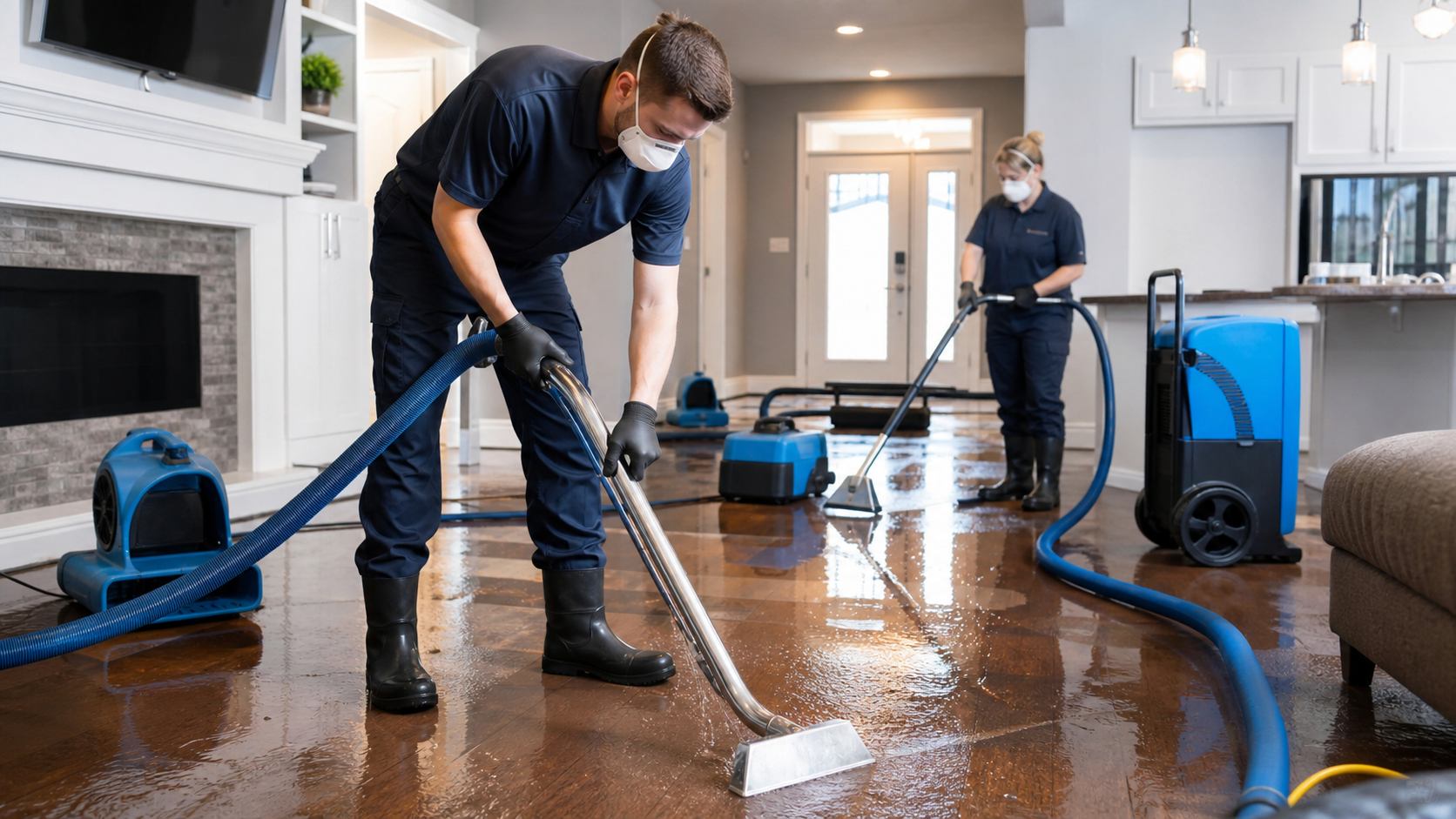
Restoration professionals may use pumps, truck mounted systems, portable extractors, wet recovery equipment, and specialized tools depending on water depth, materials, accessibility, and contamination.
Extraction is different from structural drying.
The extraction stage removes bulk liquid water. Drying addresses moisture that remains within materials and the indoor environment after standing water is gone.
Why Is Water Extraction Important?
Water can spread quickly through porous building materials.
Removing bulk water can help:
• Limit continued absorption into materials
• Reduce the amount of water that must evaporate later
• Make structural drying more manageable
• Improve access for damage assessment
• Reduce continued migration into unaffected areas
• Support cleaning and restoration
The outcome still depends on how quickly the water source is controlled and whether damaged materials can be safely dried.
Water Extraction Versus Water Damage Restoration
Water extraction is one part of a larger restoration process.
Full restoration may also include:
• Safety assessment
• Source control
• Content protection
• Water removal
• Material removal
• Cleaning
• Disinfection where appropriate
• Structural drying
• Moisture monitoring
• Mold remediation where necessary
• Repairs
• Reconstruction
A contractor offering extraction only may not include all subsequent restoration work.
7 Powerful Water Extraction Steps for Safer Recovery
The correct process varies by loss, but these seven principles provide a reliable framework for understanding professional water removal.
1. Make Safety the First Water Extraction Step
Do not enter a flooded room simply because water removal needs to begin quickly.
Water can interact with electrical systems, contaminants, damaged structures, gas appliances, and other hazards.
Check for Electrical Hazards
Water may reach:
• Electrical outlets
• Power strips
• Appliances
• Wiring
• Extension cords
• HVAC equipment
• Electrical panels
• Sump pump components
Do not stand in water to reach a breaker panel or electrical switch.
When Electrical Safety Is Uncertain
Stay outside the affected area and contact qualified electrical, restoration, utility, or emergency professionals as appropriate.
Equipment that has been submerged should not be energized merely to test whether it still works.
Dry appearance does not establish electrical safety.
Watch for Structural Damage
Major flooding can affect floors, walls, stairs, ceilings, foundations, and other building components.
Sagging ceilings, substantial cracking, movement, or visibly unstable surfaces require additional caution.
Do not enter an area that appears structurally unsafe.
Gas and Fuel Appliances
Floodwater can affect furnaces, boilers, water heaters, and other fuel burning appliances.
If gas is smelled, leave the property and follow the utility’s emergency procedures.
Do not operate switches or create ignition sources.
2. Stop the Source Before Water Extraction
Removing water while more water continues entering makes restoration less effective.
The first practical objective after safety is to control the source when possible.
Plumbing Failures
A burst supply pipe may require a fixture shutoff or the home’s main water valve to be closed.
Homeowners should identify their main shutoff before emergencies occur.
Appliance Leaks
Washing machines, dishwashers, water heaters, refrigerators, and water treatment equipment can release substantial water.
Approach electrically powered appliances cautiously when surrounding areas are wet.
Roof and Exterior Water Entry
Water entering during storms can require temporary weather protection before permanent repair is possible.
Roof access during storms is dangerous and should be left to qualified professionals.
Groundwater and Drainage
Basement or crawl space flooding can continue until groundwater or drainage conditions change.
Repeated extraction without correcting drainage or sump problems does not provide a permanent solution.
3. Identify Water Contamination Before Extraction
The water’s source affects protective equipment, material salvage, cleaning, disposal, and drying procedures.
Clear water is not automatically clean enough to handle without thought.
Lower Contamination Water Sources
Water originating from potable supply piping may initially present lower contamination concerns.
However, it can become contaminated after contacting soil, dirty surfaces, waste, or other materials.
Time and environmental exposure also matter.
Sewage and Contaminated Floodwater
Sewage backups and outdoor floodwater can contain disease causing microorganisms and other contaminants.
Keep children and pets away from these areas.
Professional restoration is often appropriate because cleanup can require containment, protective equipment, removal of contaminated porous materials, cleaning, and disinfection.
Wear Appropriate Protective Equipment
Protective requirements depend on contamination.
Possible equipment can include:
• Gloves
• Waterproof footwear
• Eye protection
• Protective clothing
• Respiratory protection where properly selected and required
A simple disposable mask should not be assumed to protect against every hazard.
4. Choose the Right Water Extraction Equipment
Different quantities and locations of water require different equipment.
A small appliance spill and a fully flooded basement should not be approached with the same tools.
Professional Extraction Equipment
Restoration contractors may use:
• Submersible pumps
• Truck mounted extraction systems
• Portable extractors
• Wet recovery vacuums
• Carpet extraction tools
• Hard surface extraction equipment
• Specialty floor tools
Equipment selection depends on the structure and loss.
Never Use a Standard Household Vacuum
Ordinary dry vacuums are not designed to collect water.
Using one for standing water can damage equipment and create electrical hazards.
Only wet recovery equipment specifically intended for liquid extraction should be used.
Deep Water Requires Additional Caution
Basements with substantial water depth can involve groundwater pressure and structural considerations.
In certain conditions, pumping water out too rapidly while exterior soil remains saturated can create pressure differences around below grade walls or floors.
Significant flooding deserves professional assessment before aggressive pumping.
5. Remove Unsalvageable Materials During Water Extraction
Some materials can be dried and cleaned. Others retain water or contamination so extensively that removal is more appropriate.
The source of water is an important factor.
Drywall
Drywall can wick moisture above the visible water line.
Whether it can remain depends on contamination, material condition, extent of wetting, and the ability to dry it effectively.
Insulation
Different insulation materials respond differently to water.
Some can retain moisture within walls or cavities long after exposed surfaces appear dry.
Wet or contaminated insulation may require removal.
Carpet and Padding
Water can remain underneath carpet even when the upper fibers appear nearly dry.
Padding can absorb substantial moisture.
Contaminated carpet systems require additional evaluation and may need removal rather than ordinary extraction.
Wood Flooring
Wood can absorb water and change dimension.
Fast extraction and controlled drying can sometimes improve salvage potential, depending on material and contamination.
Engineered wood, laminate, and solid hardwood respond differently.
6. Follow Water Extraction With Structural Drying
Extraction removes bulk water but cannot remove all moisture from porous materials.
Drying needs to continue until affected materials reach appropriate conditions.
Air Movers
Air movers increase airflow across surfaces and can support evaporation.
Placement should be planned rather than random.
Dehumidifiers
Dehumidifiers remove water vapor from the air.
Restoration professionals commonly combine dehumidification with controlled air movement.
The number and type of machines depend on room conditions and the amount of moisture.
Use Airflow Carefully With Contamination
Aggressive air movement can spread contaminants when mold or sewage is present.
Containment and remediation procedures may need to occur before unrestricted air movement is introduced.
Professional judgment is particularly useful in contaminated losses.
7. Verify Drying With Moisture Measurements
A surface can feel dry and still contain elevated moisture.
Objective measurements help determine whether drying is actually progressing.
Moisture Meters
Professionals may use pin or pinless meters to evaluate compatible building materials.
Readings can be compared across wet and unaffected areas.
Thermal Imaging
Infrared cameras can help identify temperature patterns that suggest areas requiring closer investigation.
They do not directly see moisture or look through walls.
Suspicious thermal patterns should be verified with other tools.
Establish Drying Goals
The objective is not to achieve an arbitrary universal moisture number.
Different materials naturally have different moisture characteristics depending on environment and construction.
Restoration professionals can compare affected materials with appropriate dry references and use material specific guidance.
Water Extraction After a Burst Pipe
Burst plumbing can release a large volume of water over a short period.
Shutting off the water supply is an immediate priority when it can be done safely.
Find the Pipe Failure
The damaged pipe must be permanently repaired before restoration is completed.
Possible causes include freezing, corrosion, excessive pressure, physical damage, or material failure.
Inspect Beyond the Visible Water
Supply water can travel into walls, floors, ceilings, and lower levels.
Moisture mapping helps determine the actual area requiring drying.
Water Extraction After a Basement Flood
Basements can flood from groundwater, rainfall, plumbing, sewer backup, sump failure, or drainage problems.
The water source influences both cleanup and prevention.
Assess Water Depth
Minor shallow water and deep basement flooding present different risks.
Deep flooding may affect electrical equipment, appliances, foundations, mechanical systems, and stored belongings.
Evaluate the Sump System
If a failed sump pump contributed to flooding, determine why.
Potential factors include electrical outages, pump malfunction, blocked discharge, inadequate capacity, or another drainage condition.
A new pump alone may not correct broader site water problems.
Water Extraction After a Sewer Backup
Sewage cleanup needs stricter contamination controls than a clean supply line loss.
Avoid direct contact.
Isolate the Affected Area
Prevent people and animals from walking through contaminated water and carrying material into clean portions of the building.
Protective procedures should reflect the extent of contamination.
Porous Materials
Some absorbent materials exposed to sewage cannot be reliably restored through surface cleaning alone.
Restoration professionals can determine appropriate disposal based on material, exposure, and applicable guidance.
Cleaning and Disinfection
Physical soil generally needs to be removed before an appropriate disinfectant can work as intended.
Use products according to their labels.
Never mix cleaning chemicals because dangerous gases can result.
Water Extraction After Storm Flooding
Outdoor floodwater can carry soil, microorganisms, fuel, chemicals, and other contaminants into buildings.
Visual clarity is not a reliable measure of cleanliness.
Consider Environmental Hazards
Flood events can also introduce sharp debris, displaced pests, damaged utilities, and structural risks.
Professional assistance is appropriate for extensive flooding.
Contact Relevant Authorities When Needed
Large disasters may involve guidance from public health departments, emergency management organizations, utilities, insurers, and other authorities.
Follow current local instructions for contaminated water and disposal.
Emergency Water Extraction
Emergency response services are designed for events where delay could allow substantial additional damage.
Not every small spill requires an emergency restoration crew.
When Immediate Help Is Appropriate
Consider urgent professional assistance for:
• Active major flooding
• Sewage backup
• Deep standing water
• Electrical exposure
• Significant contaminated water
• Structural concerns
• Large affected areas
• Water entering multiple floors
• Flooded mechanical equipment
• Situations where the source cannot be stopped
Safety remains more important than property recovery.
Water Extraction for Carpet
Carpet can retain large amounts of liquid in fibers and padding.
Surface appearance alone does not reveal the condition below.
Extraction Tools
Professional extractors can remove water from carpet more effectively than ordinary wet vacuuming.
The underlying pad and subfloor still need evaluation.
Can Wet Carpet Be Saved?
Sometimes.
Salvage depends on:
• Water source
• Exposure duration
• Carpet material
• Padding condition
• Subfloor condition
• Contamination
• Ability to dry rapidly
Sewage exposure substantially changes the decision.
Water Extraction From Hardwood Floors
Wood flooring requires controlled drying rather than simply heating the room as aggressively as possible.
Rapid or uneven drying can affect wood behavior.
Signs of Water Exposure
Potential changes include:
• Cupping
• Crowning
• Swelling
• Discoloration
• Raised edges
• Finish changes
Some changes can continue as moisture redistributes.
Avoid Immediate Cosmetic Repair
Sanding or refinishing before the floor’s moisture condition stabilizes can create undesirable results.
A flooring or restoration professional can determine when repair decisions should be made.
Water Extraction From Concrete
Concrete is porous and can absorb moisture.
Removing surface water does not necessarily dry the slab.
Drying Concrete
Dehumidification, airflow, environmental control, and time can contribute to drying.
The appropriate strategy depends on slab construction and flooring plans.
Test Before Installing New Flooring
Resilient flooring, coatings, wood products, and adhesives can have specific moisture limitations.
Installing new finishes before a slab reaches acceptable conditions can cause flooring failure.
Use the flooring manufacturer’s required test method where applicable.
Mold Prevention After Water Extraction
Removing water promptly helps reduce the conditions that support mold growth.
The U.S. Environmental Protection Agency generally recommends drying wet materials within approximately 24 to 48 hours when practical.
The 24 to 48 Hour Period Is Guidance
It should not be interpreted as a precise biological deadline.
Mold growth depends on temperature, moisture, material, contamination, and other factors.
The practical lesson is to begin source control, extraction, and drying promptly.
Existing Mold Needs Separate Evaluation
If substantial mold is already present, ordinary water removal procedures may need to be modified.
Air movement can distribute spores and contaminated dust.
Large or complicated areas may require professional mold remediation practices.
Water Extraction and Indoor Air Quality
A water loss can affect indoor conditions through elevated humidity, odors, contaminated materials, and microbial growth.
Drying equipment should be managed as part of a complete restoration plan.
Control Humidity
Excess indoor humidity slows drying and can affect unaffected materials.
Dehumidification helps manage moisture released into the air.
Ventilation Is Not Always the Answer
Opening windows can help when outdoor air is favorable.
In hot or humid conditions, outdoor ventilation may add more moisture to the building.
Restoration decisions should consider actual temperature and humidity.
Water Extraction and Homeowners Insurance
Insurance coverage depends on the cause of the water event and the policy.
A sudden plumbing leak may be treated differently from external flooding, groundwater, sewer backup, or long term deterioration.
Document Damage
When conditions are safe, take photographs or video before extensive cleanup changes the scene.
Keep damaged items when required for inspection unless health or safety concerns dictate otherwise.
Keep Restoration Records
Save:
• Emergency service invoices
• Extraction reports
• Drying logs
• Moisture readings
• Repair estimates
• Photographs
• Disposal documentation
• Communication with the insurer
These records can help establish what occurred and what mitigation was performed.
Contact the Insurer
Report the event according to policy requirements.
Ask whether the policy includes relevant water, flood, or sewer backup coverage.
Do not assume all forms of water damage are insured identically.
How Much Does Water Extraction Cost?
There is no universal price because the severity of water events varies enormously.
A small room with clean water is different from a large sewage contaminated basement.
Water Extraction Cost Factors
Pricing can depend on:
• Water depth
• Affected area
• Water source
• Contamination
• Extraction equipment
• Accessibility
• Material removal
• Drying equipment
• Drying duration
• Moisture monitoring
• Emergency response
• Local labor rates
• Content handling
Restoration and reconstruction may be priced separately.
Ask for an Itemized Scope
A detailed estimate should distinguish extraction from drying, demolition, cleaning, equipment rental, monitoring, and repairs when possible.
This makes service comparisons easier.
DIY Water Extraction Versus Professional Service
Small, recent, clean water spills may sometimes be handled safely by homeowners.
The situation changes when volume, contamination, or concealed moisture becomes substantial.
DIY Water Extraction May Be Appropriate When
The area is limited, the source is clean, electricity is safe, materials can be reached, and the homeowner has suitable wet recovery and drying equipment.
Even then, hidden moisture should not be ignored.
Hire Professionals for Complex Losses
Professional service is appropriate for:
• Sewage
• Outdoor floodwater
• Large volume water
• Deep basement flooding
• Electrical hazards
• Significant wall or floor saturation
• Multiple affected levels
• Structural concerns
• Existing mold
• Difficult hidden moisture
• Valuable materials requiring specialized restoration
Choosing a Water Extraction Company
A qualified restoration company should be able to explain both the initial water removal and the subsequent drying plan.
Fast arrival alone does not prove quality.
Questions to Ask
Consider asking:
• What is the water source?
• How will contamination be evaluated?
• How will standing water be removed?
• Which materials need removal?
• How will hidden moisture be measured?
• What drying equipment will be used?
• How will drying completion be verified?
• Is mold remediation included if needed?
• Is reconstruction part of the contract?
• What documentation will I receive?
Clear explanations help distinguish a structured restoration process from simple water pumping.
Preventing Future Water Extraction Emergencies
Not every flood can be prevented, but routine property maintenance can reduce certain risks.
Plumbing Maintenance
Inspect accessible supply connections, appliance hoses, water heaters, and plumbing for deterioration or leaks.
Know the location of the main water shutoff.
Water Leak Sensors
Moisture alarms can provide early warning near appliances and other vulnerable locations.
Some whole home devices monitor water flow and can automatically close a compatible shutoff valve.
No device can guarantee that water damage will never occur.
Drainage Maintenance
Maintain gutters, downspouts, sump systems, and site drainage according to the property’s design.
Persistent water near foundations should be investigated.
Common Water Extraction Mistakes
One common mistake is assuming the project is complete once standing water disappears.
Porous materials can remain wet for much longer.
Skipping Moisture Measurements
Touch alone is not a reliable drying assessment.
Use appropriate measurement methods before reconstruction.
Rebuilding Too Soon
Installing drywall, insulation, flooring, or cabinets over damp materials can trap moisture.
Verify drying first.
Using Excessive Heat
Adding heat without managing humidity and understanding material response is not a universal drying strategy.
Professional drying considers temperature, vapor pressure, airflow, and dehumidification together.
Ignoring the Original Source
Extraction treats the consequence rather than the cause.
Repair the failed plumbing, roof, drainage, appliance, or building component before restoration is considered complete.
Frequently Asked Questions
What is water extraction?
Water extraction is the process of removing standing or pooled water from a property after plumbing failures, flooding, appliance leaks, storms, or other water events.
How quickly should water extraction begin?
Begin safety assessment and source control immediately when practical, then remove water promptly. EPA guidance generally recommends drying wet materials within about 24 to 48 hours where possible.
Is water extraction the same as structural drying?
No. Extraction removes bulk liquid water, while structural drying addresses moisture remaining inside building materials and the indoor environment.
Can I perform water extraction myself?
Small clean water events may be manageable when there are no electrical, structural, or contamination hazards. Larger or contaminated losses generally require professional restoration.
How long does water extraction take?
Removal time depends on water volume, area, accessibility, equipment, and contamination. Structural drying and reconstruction can continue considerably longer than initial extraction.
Does homeowners insurance cover water extraction?
Coverage depends on the cause of loss and policy terms. Plumbing failures, external flooding, groundwater, sewage, and long term leaks may be treated differently.
Conclusion
Successful water extraction begins with safe source control and continues beyond the removal of visible standing water. Contamination assessment, appropriate extraction equipment, moisture mapping, material evaluation, dehumidification, and verified structural drying are all important parts of responsible recovery. For sewage, deep flooding, electrical hazards, extensive saturation, or hidden moisture, qualified restoration professionals can help reduce unnecessary damage while preparing the property for safe repair and reconstruction.