Mosquito Control Near Me: 7 Smart Ways to Choose an Effective Local Service
Searching for mosquito control near me usually means mosquitoes have already started making a yard, patio or outdoor living area uncomfortable. A professional service can help, but effective mosquito management should involve more than simply spraying the entire property on a schedule. The strongest programs identify breeding sites, reduce standing water, target larvae before they become biting adults and use properly selected adult mosquito treatments only where appropriate.
The U.S. Environmental Protection Agency and Centers for Disease Control and Prevention recommend an integrated approach to mosquito control. Integrated pest management combines prevention, monitoring, habitat reduction, larval control and, where necessary, adult mosquito treatment instead of relying on a single method.
That distinction is important when comparing local companies.
A good mosquito technician should be able to explain:
- Where mosquitoes are breeding
- Which areas are being treated
- What products are being used
- How long treatment is expected to last
- What homeowners should do between visits
- How people, pets and pollinators will be protected
Here are seven things to evaluate before selecting a local mosquito-control provider.
1. Choose Mosquito Control Near Me That Starts With an Inspection
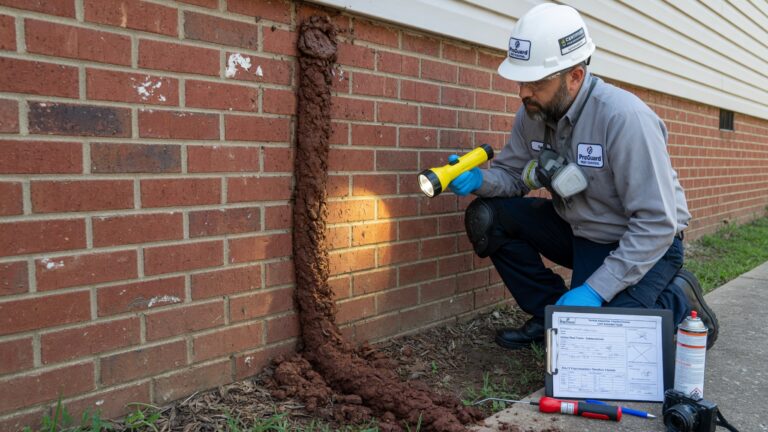
The first step should usually be a property inspection.
Mosquito activity can be influenced by surprisingly small sources of water.
The CDC recommends checking properties every week for water collected in items such as:
- Buckets
- Tires
- Planters
- Toys
- Birdbaths
- Pools
- Flowerpot saucers
- Trash containers
Mosquitoes can lay eggs in or near standing water, which means treating adult mosquitoes without addressing breeding locations may provide only temporary relief.
What a Technician Should Inspect
A professional may look around:
- Gutters
- Downspouts
- Drainage areas
- Patio furniture
- Dense landscaping
- Children’s toys
- Tarps
- Pool covers
- Rain barrels
- Ornamental water features
Some of these areas may seem insignificant, but small amounts of stagnant water can become mosquito habitat.
Standing Water Should Be Removed Where Possible
The CDC recommends emptying, scrubbing, turning over, covering or disposing of water-holding containers once a week.
This is often the most important part of mosquito prevention.
Spraying mosquitoes while leaving multiple breeding sites untouched can create an ongoing cycle in which new adults continuously emerge.
2. Ask Whether the Service Includes Larval Control
Adult mosquitoes are the insects homeowners notice.
However, controlling mosquitoes earlier in their lifecycle can be highly effective.
Larvicides are products specifically designed to kill mosquito larvae or pupae before they develop into adults.
The CDC states that homeowners and professionals can use larvicides in water that:
- Cannot be removed
- Cannot be covered
- Is not used for drinking
Licensed professionals may apply EPA-registered larvicides using appropriate equipment depending on the size and type of habitat.
Where Larvicides May Be Used
Depending on the product and local regulations, appropriate sites may include:
- Rain barrels
- Drainage areas
- Fountains
- Gutters
- Pool covers
- Non-chlorinated pools
- Tree holes
The exact product label determines where a pesticide may legally and safely be applied.
Why Larval Control Matters
Imagine a backyard where dozens of adult mosquitoes are treated today.
If untreated water nearby contains hundreds of larvae, new mosquitoes may soon appear.
Larval control targets the next generation.
That is why an integrated program may deliver better results than adult mosquito spraying alone.
3. Understand How Adult Mosquito Treatments Work
Adulticides are insecticides used to kill adult mosquitoes.
The CDC notes that these products may be applied by:
- Mosquito-control programs
- Licensed pest professionals
- Homeowners using approved consumer products
Some adulticides work quickly, while others can provide residual control for a longer period.
Where Adult Mosquitoes Rest
Mosquitoes often rest in:
- Dense shrubs
- Tall grass
- Shady vegetation
- Undersides of leaves
- Beneath decks
- Under porches
- Moist shaded areas
The CDC specifically identifies these types of locations as common adult mosquito resting sites.
A professional treatment should therefore be targeted rather than randomly applied everywhere.
Ask What Type of Treatment Is Being Used
Common service descriptions may include:
- Barrier treatment
- Residual treatment
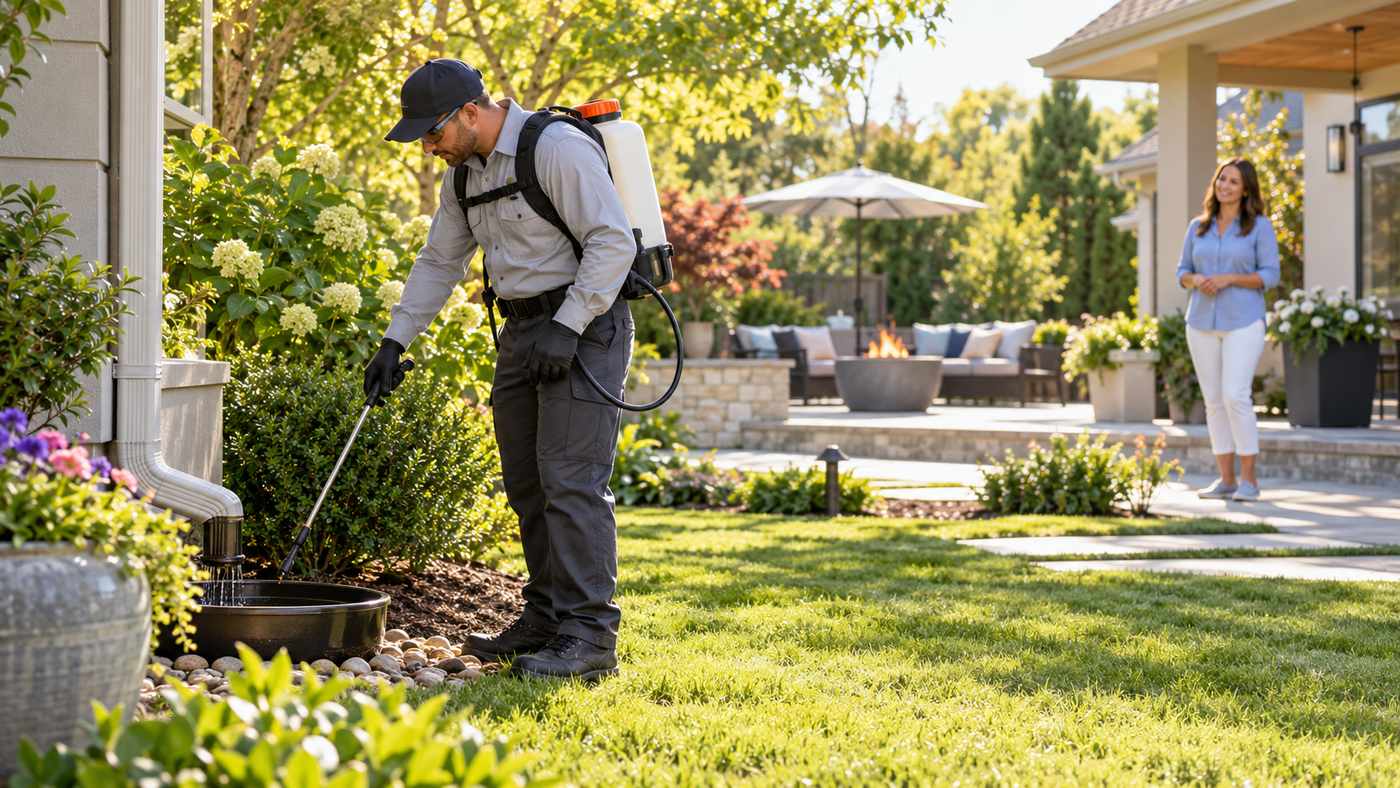
- Backpack spraying
- Misting
The terminology alone is less important than understanding:
- Active ingredient
- Application area
- Label restrictions
- Expected residual period
A reputable provider should be willing to explain those details.
4. Ask About People, Pets and Pollinator Safety
Pesticide treatment needs to be handled carefully.
The CDC states that EPA-registered adulticides, when used according to product-label directions, are intended to control mosquitoes without harming people, pets or the environment under those labeled conditions.
But the label still matters.
People and Pets
For certain outdoor adulticide applications, CDC guidance says people and pets should remain outside the treated area until the product has dried, typically around an hour, while emphasizing that the actual product instructions must be followed.
Your provider should tell you:
- Whether you need to leave the yard
- How long to remain out
- When pets can return
Protecting Pollinators
Mosquito control should also consider:
- Bees
- Butterflies
- Other beneficial insects
CDC guidance advises against applying outdoor adulticides directly to flowering plants or plants being actively visited by pollinators.
Ask the technician how the company minimizes unnecessary exposure.
A responsible mosquito program should control the target pest while avoiding careless blanket application.
5. Compare One-Time Treatments With Recurring Service
Local mosquito companies commonly offer both:
- One-time treatments
- Seasonal plans
The right option depends on the goal.
One-Time Mosquito Treatment
A single treatment may be useful before:
- Outdoor party
- Wedding
- Family gathering
- Backyard event
However, mosquito populations can return.
Rain, neighboring properties and newly developed standing water can all influence future activity.
Recurring Mosquito Control
Recurring programs may involve treatment every few weeks during mosquito season.
A seasonal plan can make sense for properties with:
- Heavy landscaping
- Pools
- Frequent outdoor use
- Persistent mosquito pressure
But recurring spraying should not replace source reduction.
The EPA’s integrated pest-management guidance emphasizes combining multiple control methods rather than relying exclusively on pesticides.
Ask What Happens Between Visits
A strong company should explain what homeowners can do to improve results.
This may include:
- Emptying standing water
- Cleaning gutters
- Managing vegetation
- Maintaining pools
Mosquito control works better as a partnership than as a spray-only service.
6. Compare Local Mosquito Companies Carefully
When searching mosquito control near me, the first company appearing in search results is not automatically the best provider.
Look beyond the advertisement.
Check Licensing Requirements
Pesticide licensing and certification requirements vary by location.
Ask whether the individual applying pesticides is properly licensed or certified under applicable local rules.
Ask for Insurance
A professional pest-control business should have appropriate business insurance.
Request the Treatment Plan
Before agreeing to service, ask:
- What will be treated?
- What will not be treated?
- Which products will be used?
- Is larval treatment included?
- How frequently will technicians return?
Ask About Guarantees
Some companies advertise:
- Free retreatments
- Satisfaction guarantees
Read the conditions.
A guarantee may require:
- Recurring service
- Specific time limits
Look for Realistic Claims
Be cautious if a company promises:
“100% mosquito elimination.”
Mosquito populations are influenced by surrounding properties and environmental conditions.
Even excellent mosquito management typically aims to reduce populations significantly rather than guarantee that no mosquito will ever enter the yard again.
7. Understand What Affects Mosquito Control Cost
There is no universal price for professional mosquito treatment.
Cost depends on multiple factors.
Property Size
A small suburban yard generally requires less:
- Product
- Labor
- Treatment time
than a large property.
Landscaping
Dense vegetation can increase inspection and treatment requirements.
Standing Water
Properties with:
- Ponds
- Drainage problems
- Water features
may require additional management.
Treatment Frequency
A one-time visit and a full seasonal program have very different overall costs.
Type of Treatment
A program combining:
- Inspection
- Larval control
- Adult mosquito treatment
may cost more than a simple spray but can address more of the mosquito lifecycle.
Local Market
Labor and licensing costs vary by city.
For accurate pricing, obtain a written local estimate.
Why Mosquito Control Is Important
Mosquitoes are not simply annoying insects.
Some species can transmit pathogens that cause disease.
The CDC notes that mosquitoes can spread diseases including:
- West Nile
- Dengue
- Zika
- Malaria
while other mosquito species primarily create nuisance biting.
Disease risk varies significantly by:
- Country
- Region
- Mosquito species
- Time of year
Local health departments and mosquito-control agencies may monitor mosquito populations and disease activity.
Local Government Mosquito Control vs Private Companies
Private residential mosquito treatment is only one part of mosquito management.
The CDC states that community mosquito-control programs may:
- Monitor mosquito populations
- Identify mosquito species
- Test for disease activity
- Treat larvae
- Treat adult mosquitoes
depending on local conditions.
When to Contact Local Authorities
Consider contacting a local health or mosquito-control program when you notice:
- Extremely high mosquito populations
- Abandoned swimming pools
- Large drainage problems
- Significant public standing water
The CDC recommends reporting serious mosquito issues to local or state health departments or mosquito-control programs where those services exist.
How to Reduce Mosquitoes Before the Technician Arrives
Homeowners can improve treatment results by preparing the property.
Empty Water-Holding Containers
Walk through the yard and inspect:
- Buckets
- Toys
- Planters
- Tarps
- Wheelbarrows
Empty unnecessary standing water.
Clean Birdbaths
CDC guidance recommends emptying and scrubbing water-holding containers weekly.
Simply topping off old water may leave mosquito eggs behind.
Maintain Gutters
Blocked gutters can retain water.
Keep drainage flowing properly.
Maintain Swimming Pools
Keep pools properly:
- Circulated
- Maintained
Unused pools can become significant mosquito habitat.
Trim Heavy Vegetation
Adult mosquitoes may rest in cool, shaded vegetation.
Reasonable landscaping maintenance can reduce some resting areas.
Mosquito Prevention Inside the Home
Outdoor treatment is only part of the strategy.
The CDC recommends using properly fitted screens on:
- Windows
- Doors
and repairing holes that allow mosquitoes inside.
Also avoid leaving exterior doors open unnecessarily.
Mosquitoes that enter homes may rest in:
- Closets
- Laundry rooms
- Beneath furniture
- Bathrooms
according to CDC guidance.
Personal Mosquito Protection Still Matters
Professional yard treatment cannot guarantee zero bites.
The CDC recommends EPA-registered insect repellents containing approved active ingredients such as:
- DEET
- Picaridin
when used according to label instructions.
Additional protection includes:
- Long sleeves
- Long pants
- Screened spaces
CDC guidance specifically warns that the effectiveness of unregistered “natural” repellents may not be established to the same standard as EPA-registered products.
Mosquito Larvae vs Adult Mosquitoes
Understanding the mosquito lifecycle makes professional treatment easier to evaluate.
Larvae
Larvae live in water.
Control methods may include:
- Removing water
- Larvicides
Adults
Adult mosquitoes fly and rest around vegetation and structures.
Adulticides target this stage.
EPA guidance emphasizes addressing multiple mosquito life stages as part of an integrated approach.
A service that asks about both breeding habitat and adult resting areas is generally using a more complete strategy.
Are Mosquito Yard Sprays Effective?
They can reduce adult mosquitoes when the correct product is applied to suitable areas.
However, the effect is not necessarily permanent.
New mosquitoes can enter from:
- Neighboring yards
- Nearby vegetation
- Untreated water
That is why source reduction remains essential.
CDC guidance states that adulticides can kill mosquitoes in outdoor resting areas but should be used according to the label and alongside household mosquito-management measures.
Does Rain Affect Mosquito Treatment?
Rain can affect treatment depending on:
- Product
- Drying time
- Amount of rain
- Application timing
Ask the company:
- What happens if it rains after service?
- Is retreatment included?
Do not assume every product behaves the same way.
The pesticide label is the authoritative application instruction.
Should Every Part of the Yard Be Sprayed?
Not necessarily.
Targeted treatment is generally preferable to unnecessary application.
Adult mosquitoes often rest in shaded vegetation and protected locations, while larvae occur in water.
A knowledgeable technician should identify likely mosquito habitat rather than treating every exposed surface indiscriminately.
Mosquito Misting Systems
Some homes use permanent outdoor misting systems.
EPA mosquito-control resources discuss residential misting systems separately from ordinary pest-management treatments.
Before installing one, consider:
- Product exposure
- Application frequency
- Maintenance
- Local regulations
A permanent pesticide-delivery system should not be treated as the default solution for every property.
Questions to Ask a Mosquito Control Company
Before scheduling service, ask:
- Do you inspect the property first?
- Do you identify standing-water sources?
- Is larval control included?
- Which adulticide do you use?
- Where will it be applied?
- How do you protect pollinators?
- When can people and pets re-enter?
- How often is service performed?
- Is retreatment included?
- What can I do between visits?
Clear answers help distinguish a structured mosquito-management program from a simple spray service.
Common Mosquito Control Mistakes
Treating Adults but Ignoring Standing Water
New mosquitoes can continue emerging.
Assuming More Pesticide Means Better Control
Products should be applied only at labeled rates.
CDC guidance explicitly advises against applying more adulticide than directed or reapplying more frequently than the product label permits.
Forgetting Neighboring Habitat
Mosquitoes do not recognize property boundaries.
Nearby standing water can influence your yard.
Ignoring Pollinators
Avoid unnecessary application to flowering plants actively visited by bees and butterflies.
Expecting Permanent Elimination
Mosquito control usually requires ongoing prevention and monitoring.
Frequently Asked Questions
How do I choose mosquito control near me?
Look for a properly licensed local pest professional who performs an inspection, identifies breeding areas, explains pesticide use clearly and combines source reduction with larval or adult control when appropriate.
How can I reduce mosquitoes around my home?
CDC recommends emptying and scrubbing, covering, turning over or disposing of water-holding items at least weekly and keeping rain barrels and other containers tightly covered.
What is the difference between larvicides and adulticides?
Larvicides target mosquito larvae and pupae in water before they become adults, while adulticides kill adult mosquitoes.
Is professional mosquito spraying safe for pets?
EPA-registered products should be used strictly according to their labels. CDC guidance for certain adulticide applications recommends keeping people and pets out until treated areas have dried, while the exact product instructions should always be followed.
How often should mosquito control be performed?
There is no universal schedule. Frequency depends on mosquito pressure, weather, property conditions and the product being used. Source reduction should continue throughout mosquito season.
Can mosquito control completely eliminate mosquitoes?
No residential treatment can reliably prevent every mosquito from entering a property. Integrated control can substantially reduce mosquito populations by combining standing-water management, larval control and targeted adult treatment.
Conclusion
Mosquito control near me should mean more than hiring the first company willing to spray a backyard. The best local mosquito-management programs inspect breeding areas, eliminate standing water, consider larval control and target adult resting sites with properly labeled products when treatment is needed. EPA and CDC guidance supports an integrated approach that combines prevention, monitoring and carefully selected control methods. Choosing a qualified provider and maintaining the property between visits can make outdoor spaces considerably more comfortable while reducing unnecessary pesticide use