Roof Replacement: How to Plan a Durable New Roof From Inspection to Installation
A successful Roof replacement is more than removing old shingles and attaching a new roof covering. The finished system needs to manage water, withstand applicable wind and weather conditions, integrate properly with walls and penetrations, and protect the underlying roof deck. Material selection matters, but so do flashing, underlayment, ventilation or roof assembly design, fasteners, drainage, workmanship, and local building requirements. Homeowners who understand these elements can compare roofing proposals more effectively, determine whether replacement is actually warranted, and focus their budget on a complete roofing system rather than appearance alone.
What Is Roof Replacement?
Roof replacement is the process of renewing an existing roof covering and addressing related components as required by the roof’s condition, selected material, manufacturer instructions, and applicable codes.
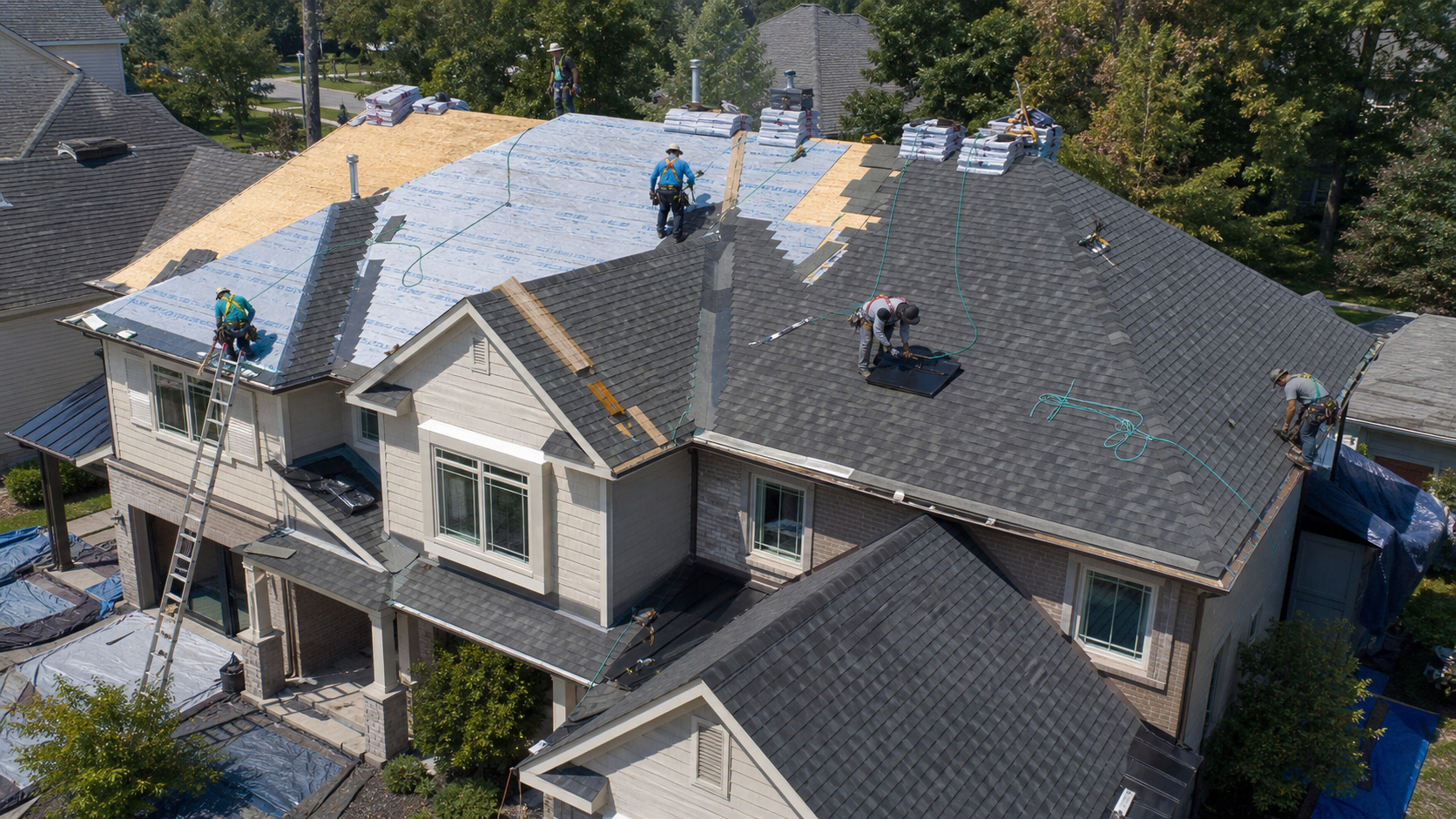
A typical steep slope residential project can involve:
• Removing existing roofing
• Inspecting the roof deck
• Replacing damaged decking
• Installing required underlayment
• Addressing flashing
• Installing drip edge or other edge components where applicable
• Installing new roofing
• Completing ridge and penetration details
• Inspecting drainage
• Cleaning the property
The exact scope varies by roof type.
Roof Replacement Versus Roof Repair
Roof repair addresses localized problems while preserving most of the existing roof.
For example, limited damage to flashing or a small group of shingles may sometimes be repairable.
Replacement addresses a substantially larger portion or all of the existing roof covering.
Does One Leak Mean a Roof Needs Replacement?
No.
A leak can originate from damaged flashing, a plumbing vent, skylight detail, displaced roofing material, or another localized condition.
A qualified inspection should determine the source before a complete replacement is recommended.
When Replacement Becomes More Practical
Replacement may make sense when deterioration is widespread, damage affects multiple areas, materials are failing broadly, or repair cannot provide a technically reasonable solution.
Roof condition is more informative than age alone.
7 Powerful Roof Replacement Tips for a Safer Home
Every project is different, but these seven principles can help homeowners avoid common mistakes and evaluate recommendations more confidently.
1. Confirm Roof Replacement Is Necessary
Before collecting replacement bids, understand the current roof’s condition.
Do not assume that an old roof automatically needs immediate replacement or that a relatively young roof cannot have serious defects.
Look for Visible Warning Signs
Conditions worth investigating include:
• Missing roofing
• Cracked or broken materials
• Displaced shingles
• Widespread deterioration
• Corrosion on metal components
• Repeated leaks
• Damaged flashing
• Storm related damage
• Visible deck deterioration
• Multiple previous repairs
The significance depends on extent and cause.
Inspect the Interior
Accessible attics can reveal information that is not obvious outside.
Potential warning signs include water staining, damp sheathing, wet insulation, unusual discoloration, or evidence of condensation.
Do Not Confuse Condensation With a Roof Leak
Attic moisture can result from air leakage, indoor humidity, insulation conditions, ventilation issues in applicable assemblies, or mechanical systems.
Replacing exterior roofing alone will not solve every attic moisture problem.
Accurate diagnosis matters.
Get a Second Opinion for Expensive Work
When the roof is stable enough to allow time for comparison, another qualified assessment can be useful.
Ask contractors to identify the specific conditions supporting their recommendations.
2. Choose Roof Replacement Materials for the Building
No roofing material is universally best.
The correct choice depends on slope, architecture, climate, structural capacity, local requirements, maintenance expectations, and budget.
Asphalt Shingles
Asphalt shingles remain widely used on residential steep slope roofs.
Products vary in design, appearance, wind related specifications, warranty terms, impact classifications where applicable, and installation requirements.
Architectural Shingles
Architectural or dimensional shingles use layered designs to create a more textured appearance than traditional three tab products.
Performance still depends on the specific product and complete roof installation.
Metal Roofing
Metal options can include standing seam panels, exposed fastener panels, metal shingles, and other systems.
Metal can provide strong service potential when correctly specified and installed.
Metal Requires Specialized Detailing
Thermal movement, fastener compatibility, seam design, coating protection, and flashing all deserve attention.
A contractor experienced primarily with asphalt roofing may not necessarily have equivalent expertise with standing seam systems.
Clay and Concrete Tile
Tile can provide distinctive appearance and durable weather protection.
It can also impose substantially greater structural loads than many lightweight roof coverings.
A structural evaluation may be necessary when switching to a heavier material.
Slate Roofing
Natural slate is another heavy premium roof covering.
It requires appropriate structural support and specialized installation.
Repairs should also be completed by people familiar with slate rather than using methods intended for asphalt shingles.
Synthetic Roofing
Manufactured products can imitate slate, wood shakes, or other roofing materials.
Review technical documentation for the exact product, including fire performance, wind testing, installation requirements, and warranty conditions.
3. Treat Roof Replacement as a Complete System
A roof is more than its visible outer material.
Focusing only on shingles can cause homeowners to overlook components essential to water management.
Roof Decking
The deck supports the roofing system.
A tear off gives contractors an opportunity to inspect accessible decking for rot, deterioration, damage, unsuitable gaps, or other deficiencies.
Hidden Deck Damage Affects Cost
The full condition of the deck may not be visible until existing roofing is removed.
Contracts should explain how additional decking repairs will be priced and authorized.
Roofing Underlayment
Underlayment provides a secondary protective layer below the primary roof covering.
Products can include synthetic materials, traditional asphalt based products, and self adhering membranes.
The appropriate choice depends on roof system, slope, climate, manufacturer requirements, and local code.
Ice Barrier Requirements
In climates where ice dams are expected, applicable building codes may require protective membrane at specified roof locations.
Requirements differ by jurisdiction.
Roof Flashing
Flashing protects vulnerable transitions where roofing meets another surface or penetration.
Important locations include:
• Chimneys
• Skylights
• Plumbing vents
• Valleys
• Dormers
• Sidewalls
• Roof to wall intersections
• Other penetrations
New roofing should integrate correctly with these details.
4. Evaluate Ventilation During Roof Replacement
Roof replacement provides an opportunity to evaluate attic ventilation where the home uses a vented roof assembly.
More ventilation is not automatically better.
Vented Attic Systems
Traditional vented attics commonly use lower intake ventilation and higher exhaust ventilation.
The design should provide an appropriate pathway between them.
Keep Insulation From Blocking Intake
Insulation can obstruct soffit or eave ventilation when installed carelessly.
Baffles or other details may be used where appropriate to maintain airflow.
Unvented Roof Assemblies
Some roofs are deliberately designed without conventional attic ventilation.
These systems rely on different insulation, air control, and moisture management strategies.
Do not add vents to a properly designed unvented assembly without understanding its construction.
Air Sealing Also Matters
Indoor air leaking into an attic can carry moisture.
Addressing ceiling penetrations and insulation conditions can be important when attic moisture problems are present.
5. Hire a Qualified Roof Replacement Contractor
A premium roofing product can perform poorly when installed incorrectly.
Contractor selection therefore deserves as much attention as material selection.
What to Look for in a Roofing Contractor
Consider:
• Required licensing or registration
• Appropriate insurance
• Local experience
• Experience with the selected roof type
• Detailed written estimates
• References
• Manufacturer qualifications where relevant
• Permit handling
• Workmanship warranty
• Site safety practices
• Cleanup procedures
Requirements vary by jurisdiction.
Compare the Scope, Not Just the Price
Two roofing bids can differ by thousands of dollars because they include different work.
One may include full tear off, new flashing, upgraded underlayment, permits, and cleanup while another excludes some of these items.
Ask for Exact Products
The proposal should identify the manufacturer and product line for significant roof components.
Avoid contracts that describe the material only as premium shingles or high quality roofing.
Specific products are easier to compare.
Verify Insurance
Ask for current documentation.
Roofing involves fall hazards and substantial work around the property, making appropriate insurance an important contractor consideration.
6. Understand Roof Replacement Costs
There is no dependable universal price per square foot for every roof.
Complexity can influence labor and material requirements substantially.
What Affects Roof Replacement Cost?
Key variables include:
• Roof area
• Roof slope
• Number of stories
• Material
• Valleys
• Dormers
• Penetrations
• Chimneys
• Skylights
• Tear off
• Existing roof layers
• Deck repairs
• Flashing
• Disposal
• Access
• Local labor
• Permit requirements
Regional market conditions also influence pricing.
Roof Area Is Not the Same as Floor Area
A home’s floor area does not directly equal its roof surface area.
Roof slope, overhangs, attached structures, and geometry affect material quantities.
Complex Roofs Cost More to Install
A simple roof with two broad slopes generally requires fewer cuts and transitions than one containing numerous valleys, dormers, walls, and penetrations.
Detailed roofs also require more flashing work.
Plan for Concealed Conditions
A professional contract should explain how unexpected damage discovered during tear off will be handled.
Unit pricing for decking replacement is one possible approach.
7. Understand Roof Replacement Warranties
Roofing warranties can sound straightforward in advertising while containing important details in the actual documents.
Homeowners should understand the difference between product and workmanship coverage.
Manufacturer Warranty
Manufacturer coverage can relate to qualifying material defects under defined conditions.
Review:
• Coverage duration
• Proration
• Registration
• Transferability
• Installation requirements
• Ventilation conditions where applicable
• Exclusions
• Labor coverage
• Claim procedures
The advertised number of years does not necessarily mean every roofing expense is fully covered throughout that period.
Contractor Workmanship Warranty
Workmanship coverage relates to installation.
Ask how long it lasts, what it covers, who pays labor, and how claims are submitted.
Keep Warranty Documentation
Save the contract, invoices, product labels or records, permits, inspection documents, and photographs.
Documentation can simplify a future claim.
How the Roof Replacement Process Works
Knowing the construction sequence helps homeowners prepare for installation and recognize why different stages matter.
Initial Roof Inspection and Measurements
The contractor assesses roof geometry, existing material, penetrations, flashing, access, and visible damage.
Measurements are used to calculate material needs.
Material Selection
The homeowner chooses roofing, colors, and appropriate system components.
Availability should be confirmed before the roof is opened.
Scheduling
Weather can affect roofing schedules.
A responsible contractor should have procedures for protecting an exposed roof if conditions change unexpectedly.
Preparing the Property
Roof replacement generates debris and creates work zones around the house.
Homeowners should follow contractor instructions for moving vehicles, furniture, or fragile belongings.
Protect Landscaping
Contractors may use tarps, boards, or other protective methods around appropriate areas.
Plants close to the building can still experience temporary disturbance.
Keep Children and Pets Away
Falling debris, tools, ladders, and nails can create hazards.
Restrict access to work zones.
Removing Existing Roofing
During complete tear off, old roofing is removed to expose the deck.
This stage is important because concealed problems become visible.
Deck Inspection
Unsound or incompatible decking should be repaired as required before new materials are installed.
Photographs can document unexpected conditions.
Avoid Covering Wet Decking
Roofing should not be installed over wet or unsuitable decking contrary to product requirements.
Trapping moisture can create additional problems.
Installing Underlayment and Flashing
Once the deck is ready, underlayment and required protective membranes are installed.
Roof edge and flashing details are coordinated with the system.
Sequence Matters
Water management depends on overlapping components correctly so water flows outward.
Sealant should not be used as a substitute for sound flashing design.
Installing the Roof Covering
The contractor installs shingles, panels, tile, or another roofing product according to system requirements.
Fastener type, placement, and spacing matter.
Ridge and Hip Details
Roof ridges and hips receive compatible finishing components.
Where ridge ventilation is used, it must integrate with the attic ventilation design.
Cleanup and Final Inspection
The contractor removes debris and evaluates completed work.
Ground cleanup commonly includes searching for discarded fasteners.
Municipal Inspection
Where required, local officials may inspect completed work or particular stages.
Permit closure documentation should be retained.
Roof Replacement Permits and Codes
Roofing requirements vary substantially by jurisdiction.
Many areas require permits for reroofing, although scope and processes differ.
Building Code Considerations
Applicable requirements can address:
• Existing layers
• Underlayment
• Roof slope
• Ice barriers
• Fire classification
• Wind resistance
• Flashing
• Ventilation
• Attachment
Use local code requirements rather than generic assumptions.
Regional Hazards
Hurricane, wildfire, snow, hail, and coastal regions can impose different design demands.
The roof system should match those conditions.
Roof Replacement After Storm Damage
Wind and hail can damage roofing even when water has not yet appeared inside the home.
A post storm inspection can identify visible concerns.
Document Damage Safely
Photograph conditions from the ground when possible.
Do not climb onto a storm damaged roof solely to obtain insurance photographs.
Contact the Insurer
Insurance coverage depends on the policy and cause of damage.
A roofer can assess roofing conditions and provide estimates, but the insurer determines coverage under the policy.
Avoid Guaranteed Claim Promises
Be cautious when contractors guarantee that insurance will pay for an entire replacement.
Coverage decisions belong to the insurer under the policy terms.
Roof Replacement and Homeowners Insurance
Routine age related deterioration is not the same as sudden covered damage.
Policies differ significantly.
Review Your Policy
Coverage can depend on:
• Cause of damage
• Policy exclusions
• Deductible
• Roof settlement provisions
• Material
• Age
• Prior damage
Only the insurer can confirm coverage for a particular claim.
Roof Replacement and Energy Efficiency
A roof can influence thermal performance, but replacement alone does not guarantee lower utility bills.
Cool Roofing
Certain roofing products are designed to reflect more solar energy and emit absorbed heat efficiently.
Potential benefits vary by climate and building.
Insulation and Air Sealing
Attic insulation and air leakage can strongly influence heating and cooling loads.
Replacement can be a useful time to evaluate accessible attic conditions.
Avoid Unsupported Savings Claims
No universal percentage reduction in energy bills can be promised from installing a particular roof.
Building performance depends on multiple interacting systems.
Roof Replacement and Gutters
Gutters do not always need replacement with the roof.
Their condition should still be inspected.
Coordinate Roof Edge Details
Roofing, drip edge, fascia, and gutters need compatible arrangements to manage runoff.
If gutters are being replaced, coordinate sequencing between trades.
Roof Replacement and Skylights
Skylight flashing integrates directly with roofing.
Replacement is therefore a useful time to evaluate existing skylights.
Replace or Reuse?
A serviceable compatible skylight may not require replacement.
An older, damaged, or problematic unit may be easier to address while surrounding roofing is already removed.
Use Compatible Flashing
Follow skylight manufacturer requirements for flashing and roof material.
Improvised details can increase leak risk.
Roof Replacement and Solar Panels
Existing photovoltaic panels generally need planning before reroofing beneath them.
A qualified solar professional may need to remove and reinstall equipment.
Coordinate Roofing and Solar Contractors
Roof penetrations, mounting hardware, electrical equipment, and waterproofing details should be managed carefully.
Consider Roof Condition Before New Solar
Installing a long lived solar array over a roof likely to require near term replacement can create avoidable future labor.
A roof assessment should precede solar installation.
Best Time for Roof Replacement
The ideal season varies by climate, roofing product, contractor availability, and weather.
Manufacturer application limits are more important than calendar labels.
Temperature Matters
Some roofing materials have temperature related installation considerations.
Contractors should follow manufacturer instructions.
Rain and Wind Matter
Wet, icy, or high wind conditions can create installation and safety problems.
Scheduling should retain flexibility for unsuitable weather.
How Long Does Roof Replacement Take?
There is no universal project duration.
A simple roof may progress much faster than a large, steep, complex roof with extensive deck repairs.
Factors Affecting the Schedule
These include:
• Roof size
• Complexity
• Crew size
• Material
• Weather
• Deck condition
• Permits
• Inspections
• Specialty details
Ask contractors for a project specific estimate rather than assuming all homes can be completed in one day.
Roof Replacement Safety
Roofing presents serious fall hazards.
Professional crews should use safety practices appropriate to the work and applicable occupational requirements.
Homeowner Safety
Homeowners should avoid entering active work zones unnecessarily.
Do not walk beneath workers or ladders.
Nails and Debris
Even thorough cleanup can miss occasional fasteners.
Use care around driveways, lawns, and landscaping immediately after construction.
Common Roof Replacement Mistakes
Many roofing problems result from shortcuts that are not visible from the ground.
Ignoring Flashing
Reusing deteriorated or poorly designed flashing can compromise a new roof.
Evaluate each critical transition.
Focusing Only on Shingle Brand
Shingles cannot compensate for deficient decking, underlayment, flashing, ventilation, or workmanship.
Compare complete systems.
Choosing Solely by Price
A low bid may exclude important components.
Read the scope carefully before signing.
Paying Without Clear Documentation
The contract should establish products, scope, payment terms, change procedures, warranties, and cleanup expectations.
Avoid relying entirely on verbal agreements.
How to Prepare for Roof Replacement
A little preparation can reduce disruption.
Follow the contractor’s site instructions before work begins.
Move Vehicles
Roofing debris can fall near garages and driveways.
Move vehicles to the recommended location.
Protect Interior Items
Construction vibration can affect loosely hung or fragile objects.
Secure vulnerable belongings where appropriate.
Provide Access
Contractors may need driveway, yard, electrical, attic, or other access depending on the project.
Clarify requirements before installation day.
Frequently Asked Questions
How do I know if Roof replacement is necessary?
Widespread deterioration, repeated leaks, extensive storm damage, or systemic failure can justify replacement. An inspection should determine whether localized repair remains practical.
How much does Roof replacement cost?
Cost depends on roof size, slope, material, tear off, deck repairs, flashing, labor, disposal, permits, and location. Detailed local estimates provide the best pricing.
How long does Roof replacement take?
Project duration varies with size, complexity, material, crew, weather, inspections, and concealed repairs. There is no universal timeline.
Can Roof replacement be completed over existing shingles?
Sometimes, when codes, manufacturer requirements, structural conditions, and existing roof condition allow it. Tear off provides better access for deck inspection.
Does Roof replacement require a permit?
Many jurisdictions require a roofing permit, but rules vary. Confirm current requirements with the local building authority and contractor.
Does homeowners insurance cover Roof replacement?
Coverage depends on the cause of loss and policy. Certain sudden covered events may qualify, while ordinary deterioration or maintenance typically receives different treatment.
Conclusion
A reliable Roof replacement depends on the complete roofing assembly rather than the visible surface alone. Accurate diagnosis, compatible materials, sound decking, underlayment, flashing, ventilation strategy, correct fastening, and qualified installation all contribute to long term performance. Comparing detailed proposals and keeping permits, warranties, inspection records, and product information can help homeowners make a more informed roofing investment.