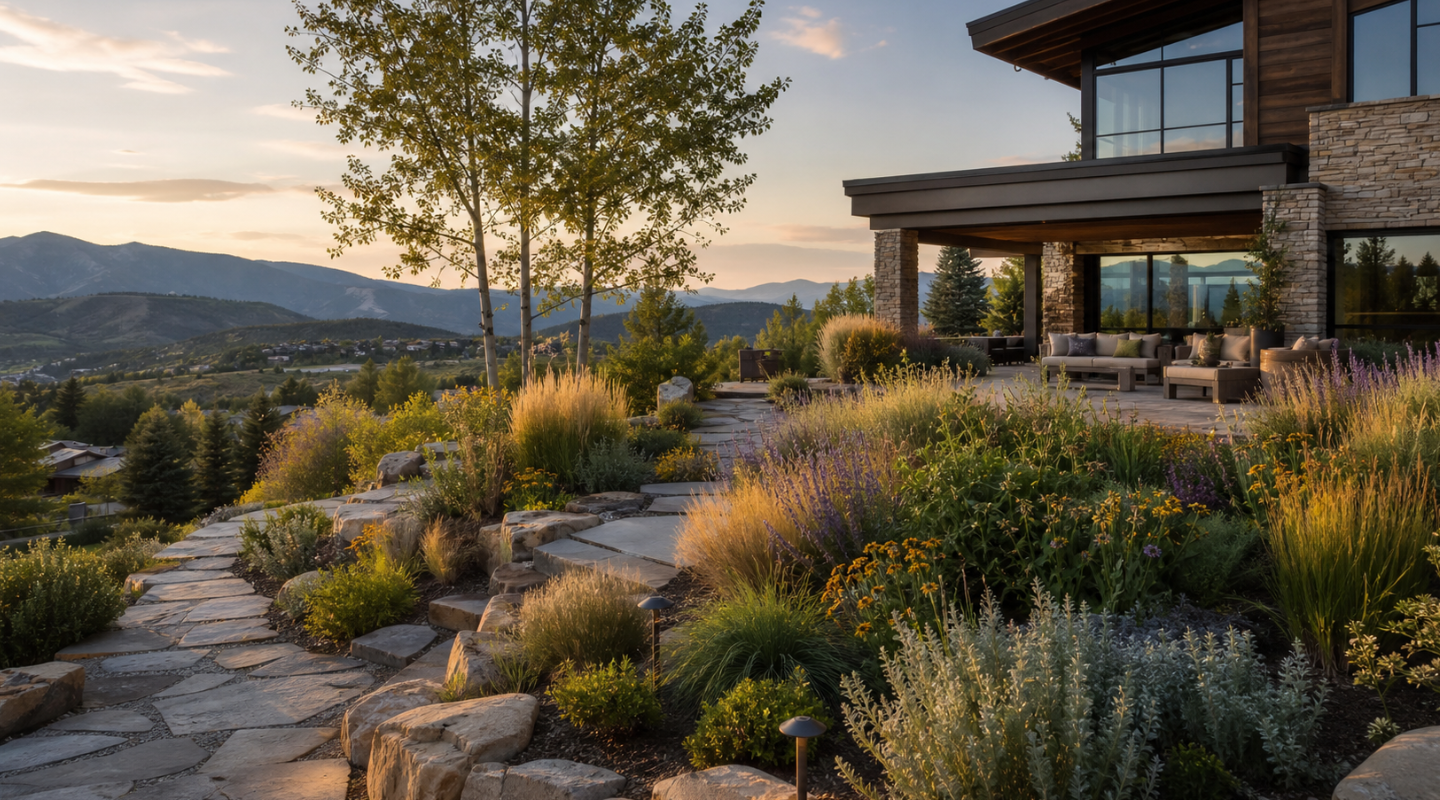
Landscape Design in Park City: How to Create a Beautiful Four Season Mountain Yard
Successful landscape design in Park City needs to respond to conditions that are very different from those of a mild, low elevation garden. Park City’s mountain environment brings cold winters, substantial snow, a relatively short growing season, strong sunlight, elevation related exposure, variable slopes, wildlife, and seasonal water management challenges. A well designed property therefore combines aesthetics with careful plant selection, irrigation planning, drainage, grading, snow storage, hardscape durability, wildfire awareness where relevant, and usable outdoor living. Designing around these realities from the beginning can create a landscape that complements Utah’s mountain setting while reducing avoidable maintenance and helping plants establish successfully.
What Makes Landscape Design in Park City Different?
Park City sits in Utah’s Wasatch Back, where mountain terrain strongly influences landscape planning.
Properties can range from relatively level residential lots to steep hillside sites surrounded by natural vegetation. Elevation, exposure, soil, wind, shade, and drainage can differ significantly even within the same neighborhood.
For that reason, successful design should be based on conditions at the individual site rather than a generic mountain planting plan.
High Elevation Conditions
Higher elevations can expose plants to intense sunlight, cold temperatures, temperature swings, wind, and shorter growing seasons.
Species that thrive elsewhere in Utah may not necessarily perform the same way on a particular Park City property.
Snow Changes the Landscape
Winter snow is not merely a seasonal visual feature. It affects practical design.
Snow can:
• Cover plants for extended periods
• Accumulate beside driveways
• Slide from roofs
• Load branches
• Affect pathways
• Delay spring growth
• Introduce deicing salts
• Change drainage during snowmelt
These conditions should influence both planting and hardscape placement.
7 Stunning Landscape Design in Park City Ideas
A resilient mountain landscape combines attractive design with realistic responses to climate and site conditions. The following seven approaches can help property owners create a more functional outdoor environment.
1. Use Climate Appropriate Plants in Landscape Design in Park City
Plant selection should begin with the actual property’s elevation, exposure, soil, moisture, and microclimates.
Cold hardiness is important, but it is not the only factor.
Choose Adapted Plant Material
A designer may consider appropriately selected:
• Native plants
• Regionally adapted perennials
• Ornamental grasses
• Shrubs
• Evergreen trees
• Deciduous trees
• Ground covers
• Drought tolerant plants
Plant suitability should be verified for the specific site.
Native Plants Can Support Mountain Landscapes
Utah native plants are adapted to regional environmental conditions, although not every Utah native species is suitable for every Park City yard.
Some may provide habitat and seasonal interest while requiring less supplemental water after successful establishment than high water landscape choices.
Native Does Not Mean Maintenance Free
New plants still require establishment care.
They can also need pruning, weed management, appropriate irrigation, and protection from site specific problems.
Design should account for mature plant size and growth habit.
Design for Four Seasons
Park City landscapes spend a substantial part of the year outside the conventional summer gardening season.
Use combinations that provide interest through:
• Evergreen foliage
• Branch structure
• Bark
• Seed heads
• Stone
• Snow patterns
• Architectural grasses
• Winter lighting
A landscape designed only around summer flowers can appear visually empty through much of the year.
2. Make Water Wise Landscaping a Priority
Utah’s water resources make efficient landscape irrigation an important consideration.
A water wise design does not need to mean a barren yard.
Group Plants by Water Needs
Hydrozoning places plants with similar water requirements together.
This can make irrigation more efficient because one zone is not simultaneously serving high and low water plants.
Reduce Unnecessary Turf
Lawn can be useful for children, pets, games, and recreation, but large areas of decorative turf can require substantial irrigation and maintenance.
Keep Turf Where It Has a Purpose
Use lawn strategically in areas where a durable recreational surface is genuinely valuable.
Other spaces can use planting beds, native or adapted vegetation, ground covers, patios, pathways, or other landscape treatments.
Check Current Utah Water Guidance
Water restrictions, conservation programs, rebates, and landscape requirements can change.
Property owners should review current information from the relevant Park City, water district, homeowners association, and Utah authorities before finalizing irrigation plans.
3. Design Irrigation Around Park City Conditions
A good planting design can still struggle when irrigation is poorly planned.
Different plant types and exposures require different watering approaches.
Drip Irrigation
Drip systems can deliver water close to the root areas of shrubs, perennials, and other suitable plantings.
They can reduce unnecessary spray onto pavement and building surfaces when correctly designed.
Turf Irrigation
Where lawn remains, sprinkler heads should provide appropriate coverage without watering sidewalks, driveways, or walls.
Avoid One Schedule for the Entire Property
Sunny slopes, shaded beds, lawn, trees, and newly installed plants can require different watering patterns.
Irrigation zones should reflect these differences.
Smart Irrigation Controllers
Weather responsive controllers can adjust schedules based on environmental information when properly configured.
They still require seasonal review.
Automation should not be treated as an excuse to ignore broken emitters, leaking valves, or inappropriate programming.
4. Plan Snow Management Into Landscape Design in Park City
A driveway that looks spacious in July can become a very different environment after repeated winter plowing.
Snow needs somewhere to go.
Create Snow Storage Areas
Landscape plans should identify suitable areas for snow removed from:
• Driveways
• Walkways
• Entry areas
• Parking spaces
• Patios where necessary
Avoid placing delicate shrubs or structures where heavy plowed snow will routinely accumulate.
Consider Roof Snow
Snow and ice can slide from smooth or steep roofs.
Protect High Risk Areas
Avoid positioning fragile plants, outdoor furniture, or frequently occupied spaces directly below known snow shedding areas unless appropriate building and snow retention strategies address the hazard.
A roofing professional can evaluate roof specific snow retention needs.
Deicing Salts Affect Plants
Salt and other deicing materials can damage some vegetation and alter surrounding soil.
Select robust plants near heavily treated surfaces and use winter maintenance practices appropriate to the property.
5. Address Slopes and Drainage Early
Many Park City properties include natural slopes.
Working with topography can produce attractive landscapes, but improper grading can create erosion and water problems.
Follow Existing Drainage Patterns Carefully
Before changing grades, understand how water currently moves through the site.
Consider:
• Roof runoff
• Snowmelt
• Driveways
• Neighboring properties
• Retaining walls
• Natural drainage
• Irrigation
• Foundation areas
Changes should not simply redirect unwanted water toward another property.
Retaining Walls
Walls can create usable terraces and control grade changes when appropriately designed.
Structural Design Matters
Retaining walls can be subject to soil pressure, surcharge loads, freeze and thaw conditions, and water pressure.
Depending on wall height and conditions, engineering and permits may be required.
Drainage behind walls is also important.
Erosion Control
Vegetation, grading, drainage measures, stone, erosion control products, or other techniques can stabilize exposed soil depending on site conditions.
A steep disturbed hillside deserves professional planning rather than relying solely on mulch.
6. Create Outdoor Living for Park City’s Climate
Outdoor rooms can make a mountain home more functional during suitable seasons.
Design should reflect temperature changes, snow, sun, wind, and views.
Patio Placement
An outdoor seating area can be positioned to take advantage of:
• Mountain views
• Sunlight
• Afternoon shade
• Wind protection
• Kitchen access
• Indoor circulation
• Privacy
• Existing vegetation
Observe the site at different times of day before committing to a location.
Fire Features
Outdoor fireplaces and fire pits can create a focal point and extend seasonal use where permitted.
Fire Safety Comes First
Fuel type, appliance clearances, wildfire conditions, local fire restrictions, building requirements, and nearby combustible materials all require consideration.
Current local restrictions should be checked before installation and use.
Outdoor Kitchens
An outdoor kitchen can incorporate grills, refrigeration, sinks, storage, and seating.
Mountain climates require planning for freezing temperatures.
Winterization
Water lines and equipment need appropriate cold weather strategies.
Manufacturer instructions and plumbing requirements should guide winter preparation.
7. Combine Landscape Design in Park City With Wildfire Awareness
Some mountain properties are located near wildland vegetation or in areas where wildfire exposure deserves consideration.
Landscape design can influence the fuels immediately surrounding a home.
Defensible Space
Defensible space strategies can involve vegetation management, spacing, removal of accumulated debris, and thoughtful placement of combustible materials.
Requirements and recommendations depend on site conditions and local authorities.
Plants Are Only One Part of Wildfire Resilience
No plant should be described as completely fireproof.
Plant moisture, maintenance, dead material, spacing, weather, and surrounding fuels affect fire behavior.
Buildings Matter Too
Roofing, vents, decks, siding, gutters, fencing, and other building components also influence wildfire vulnerability.
Landscape planning works best as one part of a broader property strategy.
Landscape Design in Park City for New Homes
New construction provides an opportunity to coordinate architecture, drainage, grading, utilities, irrigation, hardscape, and planting from the beginning.
This can reduce conflicts later.
Start Before Construction Ends
Landscape planning can identify locations for:
• Patios
• Retaining walls
• Irrigation sleeves
• Utility routes
• Outdoor lighting
• Trees
• Drainage
• Snow storage
• Driveway edges
• Walkways
Early planning can prevent completed construction from blocking efficient installation.
Protect Existing Vegetation
Where desirable mature trees or natural vegetation will remain, protection needs to begin before heavy equipment compacts root zones.
Construction Disturbance Matters
Soil compaction, grading, trenching, and material storage can damage plants that were technically left standing.
Tree protection zones should be coordinated with the construction team.
Landscape Design in Park City for Existing Homes
An existing landscape does not necessarily need complete removal.
A professional can determine which elements are worth keeping.
Evaluate Existing Plants
Mature healthy trees and shrubs can provide considerable value.
Assess their condition, location, irrigation needs, and compatibility with the proposed design.
Phase the Project
Large landscape renovations can be completed in stages when the overall master plan is developed first.
Build the Infrastructure First
Drainage, grading, irrigation, retaining walls, major trees, and hardscapes should generally be coordinated before decorative planting.
This reduces the chance that later construction damages finished beds.
Native Plants for Park City Landscape Design
Native species can strengthen the connection between a home and the surrounding mountain environment.
Selection should still be site specific.
Consider Microclimates
A south facing slope can be much hotter and drier than a protected north facing area at the same property.
Wind exposure and reflected heat from walls also influence plant performance.
Use Local Expertise
Utah State University Extension and knowledgeable regional horticultural professionals can provide useful plant information for Utah conditions.
Avoid Invasive Species
Plants that spread aggressively can disrupt natural ecosystems.
Review current Utah and local guidance when selecting species near open land.
Trees in Landscape Design in Park City
Trees create shade, screening, wildlife value, and vertical structure.
They also represent a long term investment.
Plant for Mature Size
A small nursery tree can become a large landscape feature.
Avoid planting trees too close to buildings, overhead utilities, drainage infrastructure, or spaces unable to accommodate mature growth.
Snow and Wind
Branch structure and species characteristics matter in areas exposed to heavy snow or wind.
Professional Tree Care
Large trees should be evaluated or pruned by qualified arborists when structural concerns exist.
Improper topping or severe pruning can damage tree health and form.
Landscape Design Around Wildlife
Mountain communities share habitat with wildlife.
Landscapes should account for browsing and human wildlife interactions.
Deer and Other Browsers
Some plants are less attractive to deer than others, but no plant is guaranteed never to be browsed.
Food availability and wildlife pressure change.
Do Not Design Around Attracting Large Wildlife
Food, unsecured waste, and certain landscape choices can create unwanted wildlife interactions.
Follow Local Guidance
Park City and Utah wildlife authorities can provide current recommendations regarding wildlife attractants and property management.
Hardscape for Landscape Design in Park City
Hardscape includes patios, pathways, steps, walls, edging, and other nonplant features.
Materials need to tolerate mountain weather.
Freeze and Thaw Conditions
Water entering porous materials can contribute to deterioration as temperatures cycle.
Material selection, base preparation, drainage, and installation therefore matter.
Natural Stone
Stone can connect visually with Park City’s mountain setting.
Different stones have different freeze resistance, slip characteristics, and maintenance needs.
Pavers
Concrete or stone pavers can provide flexible hardscape surfaces when an appropriate base is installed.
Correct drainage remains essential.
Walkways and Steps
Winter conditions make circulation especially important.
Pathways should be designed around snow removal as well as summer use.
Surface Texture
Highly polished exterior surfaces can become slippery when wet or icy.
Select products intended for outdoor walking applications.
Step Geometry
Outdoor stairs should comply with applicable building requirements where relevant.
Lighting
Path and step lighting can improve nighttime visibility.
Outdoor electrical systems should be installed with products and methods suitable for the environment.
Landscape Lighting in Park City
Lighting can emphasize architecture, improve navigation, and extend outdoor enjoyment after dark.
A subtle design often works particularly well in mountain settings.
Useful Applications
Lighting can serve:
• Walkways
• Steps
• Entrances
• Outdoor kitchens
• Patios
• Selected trees
• Architectural elements
Avoid excessive brightness and glare.
Dark Sky Considerations
Mountain communities often value dark skies.
Check Local Lighting Requirements
Park City and nearby communities may have exterior lighting standards intended to control glare and light pollution.
Confirm current requirements before selecting fixtures.
Drainage in Landscape Design in Park City
Drainage should be considered before irrigation and planting.
Snowmelt can create seasonal water movement that is not obvious during summer.
Keep Water Away From Foundations
Grading and drainage should direct surface water appropriately.
Do not create planting beds that consistently trap water against building walls.
Downspouts
Roof runoff should discharge according to the property’s drainage design.
Dry Creek Features
Decorative drainage features can sometimes integrate stormwater movement into landscape design.
They need adequate capacity and a suitable discharge strategy.
A decorative channel should not simply move a drainage problem somewhere else.
Irrigation Winterization
Park City’s freezing winters require seasonal planning for irrigation systems.
The correct winterization method depends on equipment and system design.
Compressed Air Blowout
Some systems use compressed air to remove water from vulnerable irrigation lines.
This procedure can be hazardous when performed incorrectly.
Hire Qualified Professionals When Necessary
Excessive air pressure can damage irrigation components or cause injury.
Use appropriate equipment and follow manufacturer procedures.
Landscape Design in Park City and Soil
Mountain soils can vary widely.
Imported fill and construction disturbance can make neighboring properties behave differently.
Soil Testing
Testing can provide information about pH, nutrients, organic matter, and other characteristics depending on the test.
Do Not Add Amendments Blindly
More fertilizer or organic matter is not automatically better.
Match Amendments to Actual Conditions
Plant requirements, drainage, and soil test results should guide soil preparation.
Sustainable Landscape Design in Park City
Sustainability involves balancing water, plant health, biodiversity, maintenance, materials, and long term resilience.
A lower maintenance landscape is not necessarily a zero maintenance landscape.
Reduce Inputs
A well matched planting design can potentially reduce unnecessary irrigation, fertilizer, and repeated plant replacement.
Build Healthy Soil
Appropriate soil management supports root development and water retention.
Design for Mature Landscapes
Crowding plants for an immediately full appearance can increase pruning needs and competition later.
Space plants with mature size in mind.
How Much Does Landscape Design in Park City Cost?
There is no useful universal price because projects range from planting consultations to extensive estate landscapes with retaining walls, kitchens, lighting, and irrigation.
Cost Factors
Project costs can depend on:
• Property size
• Site slope
• Design scope
• Plant quantities
• Plant sizes
• Irrigation
• Drainage
• Soil work
• Retaining walls
• Patios
• Outdoor kitchens
• Lighting
• Fire features
• Site access
• Snow management
• Local labor
Obtain estimates based on a developed scope.
Design Fees Versus Installation Costs
Some landscape professionals charge separately for design, while design build companies may structure fees differently.
Ask What the Design Includes
Deliverables can include:
• Concept plans
• Planting plans
• Hardscape plans
• Irrigation concepts
• Lighting plans
• Construction details
• 3D visualizations
• Material specifications
• Cost estimates
• Construction observation
Compare equivalent deliverables.
How Long Does Landscape Installation Take?
Project duration depends on complexity, weather, permits, material availability, and contractor scheduling.
Park City’s seasonal conditions can limit certain construction and planting periods.
Plan Early
Design development and permitting can begin before installation season.
Material Lead Times
Specialty stone, outdoor appliances, lighting, and other products can require advance ordering.
Planting Season
The best planting period depends on plant material, weather, irrigation availability, and site conditions.
Local horticultural guidance should inform scheduling.
Permits for Landscape Design in Park City
Landscape work can require approvals depending on scope.
A simple planting bed may have different requirements from a tall retaining wall or permanent outdoor structure.
Projects That May Need Review
Depending on jurisdiction:
• Retaining walls
• Grading
• Drainage work
• Outdoor structures
• Electrical work
• Gas lines
• Fire features
• Fences
• Significant tree work
• Work near sensitive areas
Always verify current local requirements.
Homeowners Associations
Many Park City area developments have architectural or landscape design guidelines.
Obtain Approval Before Construction
HOA approval does not necessarily replace government permits, and government approval does not automatically satisfy private HOA rules.
Both may apply.
Choosing a Landscape Designer in Park City
Mountain landscape experience is particularly valuable.
A designer should understand climate, irrigation, snow, grading, local plants, and construction.
Questions to Ask
Consider asking:
• How much Park City area experience do you have?
• How do you approach water wise design?
• Which plants do you recommend for this exposure?
• How will snow storage be handled?
• How will drainage be managed?
• Do retaining walls need engineering?
• Are irrigation plans included?
• How do you address wildfire conditions?
• Do you manage permits?
• Can I see comparable completed projects?
The answers should relate directly to the site.
Landscape Designer Versus Landscape Architect
These titles can have different legal meanings.
Landscape architecture is a regulated profession in many jurisdictions.
Landscape Architects
Licensed landscape architects can provide professional services within their legally defined scope and often work on complex grading, site planning, commercial landscapes, and public projects.
Landscape Designers
Landscape designers can provide valuable residential planting and design services depending on qualifications and local regulations.
Choose Based on Project Complexity
A simple planting refresh and a steep site requiring engineered walls and extensive drainage are fundamentally different projects.
Bring in the appropriate professionals.
Common Landscape Design in Park City Mistakes
Mountain landscapes can fail when designs ignore local conditions.
Selecting Plants for Summer Appearance Only
Consider winter hardiness, mature form, snow, exposure, and water requirements.
Ignoring Snow Storage
A beautiful planting bed can be destroyed when it becomes the only available location for driveway snow.
Overwatering
Watering every plant with the same schedule wastes water and can damage species that prefer drier conditions.
Underestimating Slopes
Steep terrain affects access, erosion, drainage, construction, and maintenance.
Forgetting Wildlife
Select planting with realistic expectations about regional browsing.
Ignoring Maintenance
Every landscape requires some care.
Design around the amount of maintenance the owner is actually willing to provide.
Frequently Asked Questions
What makes landscape design in Park City unique?
Park City’s elevation, cold winters, snow, slopes, strong sunlight, water considerations, wildlife, and mountain microclimates require site specific planting and construction strategies.
What plants work best for landscape design in Park City?
Native and climate adapted plants can perform well when matched to the site’s elevation, soil, sun, wind, moisture, and microclimate. No single plant list suits every property.
How much does landscape design in Park City cost?
Costs depend on property size, slope, plants, irrigation, drainage, retaining walls, patios, lighting, outdoor living features, site access, and design scope.
Is water wise landscape design practical in Park City?
Yes. Hydrozoning, efficient irrigation, climate appropriate planting, and strategically limiting turf can reduce unnecessary water demand while maintaining an attractive landscape.
Do landscape projects in Park City require permits?
Some projects do, particularly those involving grading, retaining walls, structures, utilities, drainage, or other regulated work. Confirm current local and HOA requirements.
How should landscape design in Park City handle snow?
Plans should reserve snow storage, protect vulnerable plants, account for roof snow shedding and deicing salts, and keep important pathways and service areas usable during winter.
Conclusion
Landscape design in Park City works best when mountain conditions shape the plan from the beginning. Climate appropriate plants, efficient irrigation, deliberate snow storage, reliable drainage, durable hardscaping, wildfire awareness, and thoughtful outdoor living spaces can create a landscape suited to both summer and winter. By coordinating design with local site conditions, regulations, and long term maintenance needs, homeowners can create outdoor spaces that complement Park City’s distinctive high elevation environment.