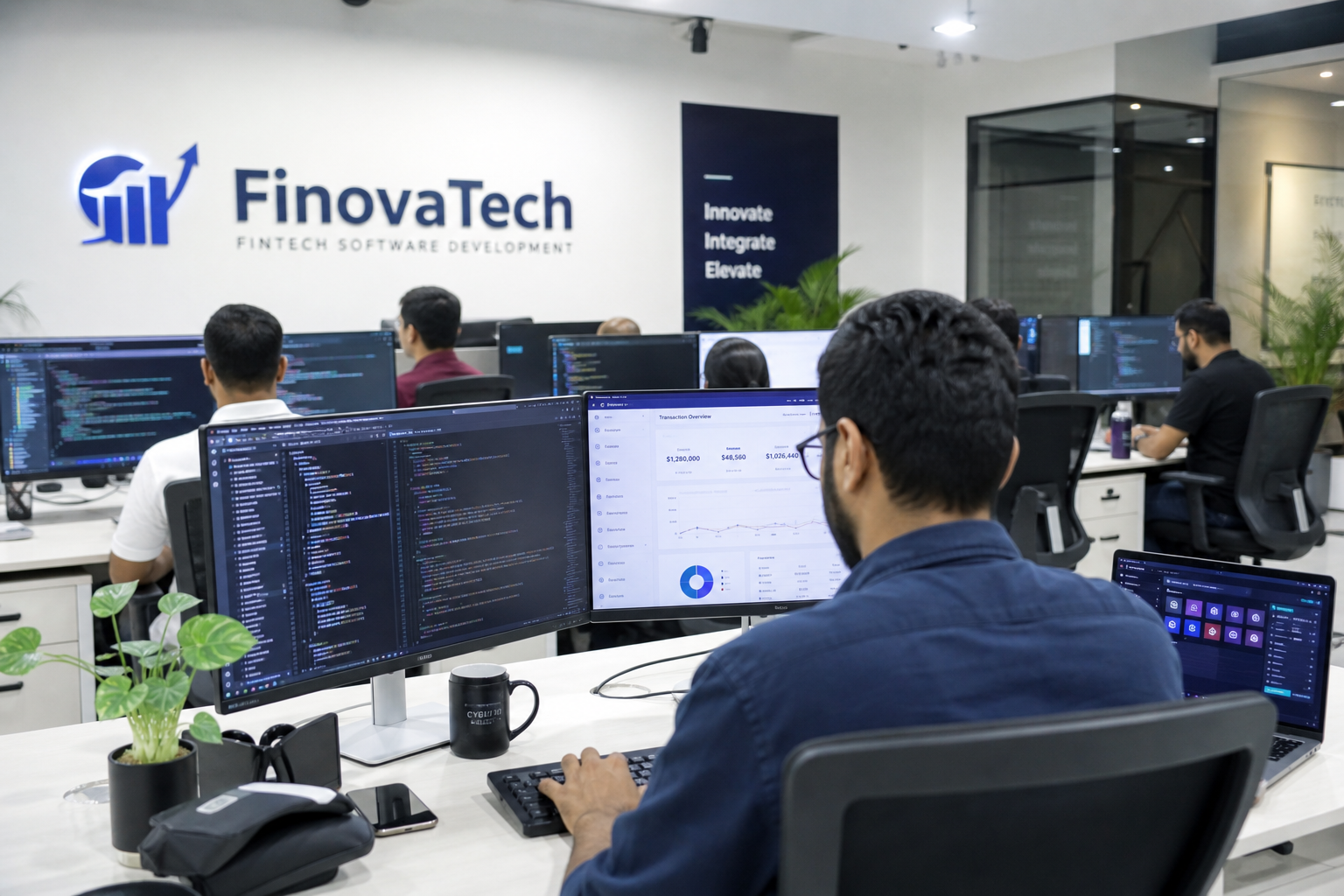
Fintech Software Development Company: 7 Powerful Tips to Choose the Best One
Selecting the right fintech software development company is one of the most consequential decisions a financial business, startup, or enterprise can make in today’s technology-driven economy. The financial technology sector demands a rare combination of deep technical expertise, regulatory awareness, ironclad security standards, and the ability to build scalable systems that perform flawlessly under real-world pressure. With thousands of development firms claiming fintech expertise, knowing how to identify a genuinely capable and trustworthy partner is critical to the success of your product, your business, and ultimately your customers. This guide provides a comprehensive, expert-level framework for evaluating and selecting the fintech software development company best suited to your specific goals.
What Is a Fintech Software Development Company
A fintech software development company is a specialized technology firm that designs, builds, and maintains software solutions for the financial services industry. These companies serve a broad range of clients including banks, insurance providers, investment platforms, payment processors, lending institutions, cryptocurrency exchanges, and financial startups. Their work spans mobile banking applications, payment gateway integration, blockchain development, robo-advisory platforms, regulatory compliance tools, and enterprise financial management systems.
The Scope of Fintech Software Development Services
Fintech development is not a single service but an extensive portfolio of technical capabilities. A well-rounded fintech software development company typically offers services across several domains including custom financial application development, API integration with banking and payment systems, data analytics and reporting platforms, cybersecurity solutions tailored for financial environments, and cloud infrastructure management for financial data.
Core Technical Disciplines in Fintech Development
The most capable fintech development firms bring together expertise across multiple technical disciplines. These include backend and frontend development, mobile application engineering for iOS and Android, blockchain and distributed ledger technology, artificial intelligence and machine learning for financial modeling, and DevSecOps practices that embed security into every stage of the development process.
Why Choosing the Right Fintech Development Partner Matters
The stakes in financial technology are exceptionally high. A poorly built payment system can expose millions of users to fraud. A non-compliant lending platform can result in regulatory penalties that cripple a business. A poorly architected trading application can fail at peak demand, causing significant financial losses. The consequences of choosing the wrong development partner in fintech are not merely inconvenient but potentially catastrophic.
The Impact of Poor Development on Financial Products
Substandard fintech development manifests in multiple damaging ways. Security vulnerabilities put user data and financial assets at risk. Performance bottlenecks cause system failures during high-volume transactions. Poor user experience drives customer abandonment at critical conversion points. Non-compliance with financial regulations results in audits, fines, and reputational damage that can take years to overcome.
How the Right Partner Accelerates Growth
Conversely, a skilled and experienced fintech software development company acts as a strategic growth accelerator. They bring proven architecture patterns, pre-built compliance frameworks, established security protocols, and domain-specific expertise that dramatically reduces time to market while increasing the reliability and scalability of the final product. The right partner does not simply write code but contributes meaningfully to your product strategy and long-term technical roadmap.
7 Powerful Tips to Choose the Best Fintech Software Development Company
The following seven tips represent a structured, expert-informed approach to evaluating and selecting a fintech development partner that will deliver genuine long-term value.
Tip 1: Evaluate Domain-Specific Fintech Experience
General software development experience is not sufficient when building financial technology products. Look specifically for a company with a proven track record in your segment of fintech, whether that is payments, lending, wealth management, insurance technology, or banking infrastructure. Ask to see case studies, client testimonials, and live products they have built in your specific domain.
What to Look for in a Fintech Portfolio
A strong fintech portfolio demonstrates experience with real-world financial products that have been deployed at scale. Look for evidence of complex integrations with banking APIs, payment rails such as ACH or SWIFT, third-party financial data providers, or regulatory reporting systems. Products that have passed security audits and compliance reviews are particularly strong indicators of a firm’s true capability level.
Tip 2: Assess Regulatory Compliance Knowledge
Financial technology operates within one of the most heavily regulated industries in the world. A competent fintech software development company must have deep familiarity with the regulatory frameworks that govern your market. Depending on your geography and product type, these may include PCI DSS for payment security, GDPR and CCPA for data privacy, SOC 2 for service organization controls, AML and KYC requirements for identity verification, and PSD2 for open banking compliance in European markets.
Tip 3: Scrutinize Their Security Architecture and Practices
Security is not a feature to be added after development is complete. It must be embedded into every layer of the system from the very beginning. Evaluate whether a prospective fintech development partner follows a DevSecOps methodology, conducts regular penetration testing, implements end-to-end encryption, uses secure coding standards such as OWASP guidelines, and has experience building systems that meet financial-grade security requirements.
Tip 4: Review Their Technology Stack and Scalability Approach
The technology choices a development firm makes have long-term consequences for your product’s performance, maintainability, and scalability. Ask detailed questions about their preferred programming languages, frameworks, cloud infrastructure providers, database architecture, and approach to microservices or monolithic system design. A forward-thinking fintech software development company will recommend a stack that meets your current needs while remaining adaptable as your business grows.
Cloud Infrastructure and Financial System Scalability
Cloud-native architecture is increasingly the standard for modern fintech products. Leading development firms leverage platforms such as AWS, Microsoft Azure, and Google Cloud to build financial systems that scale dynamically in response to demand. This approach reduces infrastructure costs, improves system resilience, and enables rapid deployment of new features without service interruption.
Tip 5: Evaluate Communication, Transparency, and Project Management
Technical capability alone does not determine the success of a software development engagement. The ability of a development partner to communicate clearly, report progress honestly, manage timelines responsibly, and adapt to evolving requirements is equally critical. Look for firms that use established project management methodologies such as Agile or Scrum, provide regular sprint updates, maintain transparent documentation, and assign a dedicated project manager or technical lead as your primary point of contact.
Tip 6: Understand Their Quality Assurance and Testing Processes
In financial software, defects are not merely inconvenient but potentially costly in ways that extend far beyond the development budget. A rigorous quality assurance process is non-negotiable. Evaluate whether the firm conducts automated and manual testing, performs load and stress testing to simulate peak transaction volumes, carries out user acceptance testing before deployment, and maintains comprehensive regression testing protocols to ensure new updates do not compromise existing functionality.
Tip 7: Consider Long-Term Support, Maintenance, and Partnership Potential
Building a fintech product is not a one-time project but an ongoing commitment to continuous improvement, security updates, regulatory adaptation, and feature expansion. Choose a fintech software development company that demonstrates genuine interest in a long-term partnership rather than simply delivering a project and moving on. Firms that offer structured post-launch support contracts, proactive monitoring, and a roadmap-oriented approach to ongoing development are significantly more valuable than those focused solely on initial delivery.
Key Technologies Driving Modern Fintech Development
Understanding the technologies that power today’s most successful financial products helps you evaluate whether a prospective development partner is working with current, industry-relevant tools and approaches.
Artificial Intelligence and Machine Learning in Fintech
AI and machine learning are transforming financial services across multiple dimensions. Fraud detection systems use machine learning models to identify suspicious transaction patterns in real time. Credit scoring algorithms leverage alternative data sources to assess borrower risk more accurately than traditional methods. Robo-advisory platforms use AI to deliver personalized investment recommendations at scale. A fintech development firm with genuine AI expertise can help you build smarter, more adaptive financial products.
Blockchain and Distributed Ledger Technology
Blockchain technology continues to gain meaningful adoption in financial services beyond cryptocurrency applications. Smart contracts are being used to automate complex financial agreements. Distributed ledger systems are improving the transparency and efficiency of cross-border payments. Tokenization platforms are enabling new models of asset ownership and investment. A fintech software development company with blockchain expertise can help you evaluate and implement these technologies where they genuinely add value to your product.
Open Banking and API-First Development
The open banking movement, driven by regulatory mandates in many markets and competitive pressure in others, has created a significant demand for API-first fintech development. Modern financial products are built to connect seamlessly with banking systems, payment networks, financial data aggregators, and third-party service providers through well-designed, secure APIs. Development firms that specialize in API architecture and integration bring a critical capability to any fintech engagement.
Red Flags to Watch for When Evaluating Fintech Development Firms
Not every company that claims fintech expertise delivers on that promise. Recognizing warning signs early protects your investment and your timeline.
Common Warning Signs in Fintech Development Proposals
Be cautious of firms that cannot clearly explain their approach to regulatory compliance, offer unusually low pricing without a detailed technical justification, lack verifiable case studies or client references in the fintech sector, are unable to discuss security architecture in specific and knowledgeable terms, or propose timelines that appear unrealistically compressed for the scope of work described.
Questions That Reveal True Fintech Capability
Asking targeted technical and compliance-related questions during the evaluation process reveals the true depth of a firm’s fintech expertise. Ask how they have handled PCI DSS compliance in past projects, what their approach is to securing sensitive financial data at rest and in transit, how they manage third-party dependency risks in financial systems, and what their process is for keeping pace with evolving financial regulations in key markets.
Building a Successful Long-Term Fintech Development Partnership
The most successful fintech products are built through sustained, collaborative partnerships between technology firms and their clients. Establishing the right foundation from the beginning determines the quality of everything that follows.
Setting Clear Goals, KPIs, and Technical Requirements
Before development begins, invest adequate time in defining precise product requirements, measurable success metrics, and clear technical specifications. A capable fintech software development company will facilitate this process through structured discovery workshops, technical requirement documentation, and product roadmap planning sessions that align development priorities with business objectives.
Maintaining Alignment Through Agile Development Cycles
Agile development methodologies are particularly well suited to fintech projects because they allow for iterative progress, regular reassessment of priorities, and rapid adaptation to regulatory or market changes. Regular sprint reviews, backlog grooming sessions, and transparent progress reporting keep both parties aligned and ensure that the product evolves in a direction that consistently serves the end user and the business.
Frequently Asked Questions
What does a fintech software development company specialize in?
It specializes in designing and building technology solutions for financial services including payment systems, banking applications, lending platforms, investment tools, and regulatory compliance software.
How do I verify a fintech development company’s regulatory compliance expertise?
Ask for specific examples of compliance frameworks they have implemented such as PCI DSS, GDPR, or AML, and request references from clients who have successfully passed regulatory audits using their systems.
What is the average cost of hiring a fintech software development company?
Costs vary widely based on project scope, complexity, and the firm’s location, but enterprise-grade fintech products typically require significant investment reflecting the technical and compliance demands of financial software.
How long does it take to develop a fintech application?
Development timelines range from three to six months for simpler products to twelve months or more for complex, multi-feature financial platforms requiring extensive compliance integration and security architecture.
Why is security so critical in fintech software development?
Financial applications handle sensitive personal and monetary data, making them high-value targets for cyberattacks, and any breach can result in financial loss, regulatory penalties, and severe reputational damage.
What technology stack is best for fintech software development?
The best stack depends on your specific product needs, but leading fintech firms commonly use cloud-native infrastructure, microservices architecture, and languages such as Python, Java, or Node.js combined with robust security frameworks.
Conclusion
Choosing the right fintech software development company is a decision that will shape the trajectory of your financial product for years to come. By applying the seven tips outlined in this guide, rigorously evaluating domain expertise, regulatory knowledge, security practices, technology choices, communication standards, quality assurance processes, and long-term partnership commitment, you position your business to build a financial technology product that is secure, scalable, compliant, and genuinely competitive in a demanding market. Take the time to choose wisely, and your development partner will become one of your most valuable strategic assets.