Private Aircraft Catering: How to Deliver Exceptional Dining at 40,000 Feet
Private aircraft catering transforms an ordinary inflight meal into a carefully planned hospitality experience designed around passenger preferences, aircraft limitations, flight duration and destination. Unlike standard airline food service, business aviation catering often requires personalised menus, exact portion sizes, dietary accommodation, precise delivery timing and packaging that works within a compact aircraft galley. The best results come from combining culinary quality with food safety, careful communication and an understanding of how meals behave once they leave the catering kitchen.
Passengers using private aviation may expect restaurant quality food, but producing that experience in an aircraft requires much more planning than simply ordering from a nearby restaurant. Food can spend time in transport, refrigeration and reheating before it reaches the passenger, which means menus must be selected with both quality and safety in mind.
For flight departments, charter operators and cabin crews, choosing the right catering process can improve passenger satisfaction while reducing waste, delays and food handling risks.
What Is Private Aircraft Catering?
Private aircraft catering is a specialised food service designed for private jets, corporate aircraft and other forms of business aviation.
The service typically involves preparing, packaging and delivering meals directly to an airport, fixed base operator or aircraft.
Unlike traditional restaurant catering, aviation catering must account for the unique environment of an aircraft.
This may include limited refrigeration, compact ovens, restricted preparation space and the need to serve food while the aircraft is moving.
A typical order may include:
- Breakfast
- Lunch
- Dinner
- Snacks
- Desserts
- Fresh fruit
- Crew meals
- Children’s meals
- Dietary specific meals
- Beverages
- Pantry supplies
The level of customisation can range from simple sandwiches and fruit to multi course fine dining.
Why Private Aircraft Catering Requires Specialist Planning
Food prepared for an aircraft travels through several stages before it reaches the passenger.
It may move from the catering kitchen to a delivery vehicle, then through an airport facility, onto the aircraft and into refrigeration before being reheated and served.
Each stage can affect food quality.
NBAA guidance on international catering highlights the importance of using reputable catering providers, proper packaging, safe transportation and correct onboard storage.
This means the catering provider should understand not only food preparation but also the operational realities of aviation.
7 Brilliant Tips for Better Private Aircraft Catering
Successful inflight dining starts well before the aircraft door closes.
These seven areas can make catering more reliable, safer and better suited to the passenger experience.
1. Choose an Experienced Aviation Caterer
The first decision is who prepares the food.
A restaurant may produce excellent meals, but that does not automatically mean it understands aviation requirements.
A specialist aviation caterer is generally more familiar with:
- Airport delivery procedures
- Aircraft packaging requirements
- Cold food storage
- Reheating instructions
- Galley limitations
- Security procedures
- Delivery timing
- Crew communication
NBAA has repeatedly emphasised the value of using reputable aviation caterers and properly vetting third party service providers. Its 2026 security guidance also identifies caterers as vendors that operators should evaluate carefully as part of business aviation security and quality management.
What to Ask a Private Aircraft Catering Provider
Before placing an important order, ask about:
- Food safety procedures
- Kitchen inspections
- Delivery vehicles
- Packaging methods
- Airport access
- Allergen procedures
- Lead times
- Menu customisation
- International experience
- Emergency contact options
A strong catering relationship is particularly valuable for flight departments that regularly operate from the same airports.
Verify Food Handling Standards
Food quality is only one part of supplier selection.
Ask whether the caterer has trained food handlers, appropriate refrigeration and reliable transport procedures.
FDA’s Interstate Travel Program oversees passenger carrying conveyances and supporting facilities such as caterers and commissaries involved in interstate transportation.
For operators, this reinforces the importance of understanding where the food comes from and how it is handled before reaching the aircraft.
2. Provide Clear Passenger Preferences
Private aviation is built around personalisation.
Catering should reflect that same standard.
A passenger may prefer a certain brand of water, a particular preparation of eggs or a specific style of salad.
Others may have strict dietary requirements.
Useful information can include:
- Favourite meals
- Preferred ingredients
- Food allergies
- Religious dietary requirements
- Vegetarian preferences
- Vegan requirements
- Gluten related restrictions
- Low sodium preferences
- Preferred beverages
- Portion size
- Children travelling onboard
The more accurately these preferences are recorded, the easier it becomes to provide consistent service.
Avoid Vague Private Aircraft Catering Orders
Instructions such as healthy lunch or light breakfast can mean different things to different people.
Specific instructions reduce mistakes.
Instead of ordering fruit, specify the preferred fruits.
Instead of ordering sandwiches, identify the bread, filling, condiments and portion requirements.
This becomes even more important on international trips where culinary terminology may vary.
NBAA notes that language and cultural differences can create misunderstandings in aviation catering, particularly around food terminology and preparation.
3. Select Foods That Travel Well
Not every restaurant dish is suitable for an aircraft.
A meal may look excellent when served immediately in a restaurant but lose its quality after transport, refrigeration and reheating.
Good aviation catering considers the entire journey of the food.
Meals should maintain reasonable texture, appearance and flavour after delivery.
Foods That Often Work Well Onboard
Depending on passenger preferences, practical options can include:
- Grilled proteins
- Pasta dishes
- Rice based meals
- Salads with dressing packed separately
- Fresh fruit
- Wraps
- Sandwiches
- Cold platters
- Breakfast items
- Cakes and pastries
Foods that become soggy, separate easily or require highly precise cooking may be more difficult to serve successfully.
Consider Reheating Before Ordering
Cabin crew should know how the meal needs to be reheated.
Some private aircraft have convection ovens.
Others have microwave style equipment or very limited galley capability.
A dish requiring equipment that is not available onboard creates an avoidable problem.
Before ordering hot food, confirm:
- Oven type
- Container dimensions
- Heating time
- Suitable packaging
- Number of portions
- Service sequence
Catering should match the aircraft as closely as it matches the passenger.
4. Make Food Safety a Priority
Food safety is one of the most important parts of private aircraft catering.
Prepared food may spend several hours between the kitchen and final service.
During that period, temperature control becomes critical.
NBAA catering guidance has repeatedly highlighted the importance of keeping food properly chilled during delivery and onboard storage.
Maintain the Cold Chain
Cold foods should remain properly refrigerated until required.
Aviation catering providers may use insulated containers, refrigerated vehicles, cooling packs or other temperature control methods.
Once food arrives at the aircraft, it should be transferred into appropriate onboard refrigeration as soon as practical.
Crew members should also know how long food has been outside temperature controlled storage.
Treat Water and Ice Carefully
International operations create additional considerations.
Food may be washed or prepared using local water.
Ice may also become a source of concern if its origin is uncertain.
NBAA international catering guidance recommends paying attention to water quality when operating in unfamiliar regions because food safety standards and local conditions vary.
For some destinations, bottled beverages and carefully sourced food may provide additional reassurance.
5. Order the Correct Portion Sizes
Private aircraft cabins have limited storage.
Ordering far more food than passengers need can create unnecessary waste and make galley organisation more difficult.
However, ordering too little can also reduce the quality of the passenger experience.
The goal is balance.
Consider:
- Number of passengers
- Number of crew
- Flight duration
- Departure time
- Expected meal period
- Passenger appetite
- Connecting flights
- Additional snacks
A two hour morning flight may require a very different catering plan from a twelve hour international journey.
Separate Crew and Passenger Requirements
Crew members also need appropriate meals, particularly on longer missions.
Crew food should be planned as part of the catering order rather than added at the last moment.
Where practical, different meal choices for pilots can also help reduce the chance that both flight deck crew members are affected by the same food related problem.
Individual operators should follow their own operational policies and food safety procedures.
6. Plan Private Aircraft Catering Around Flight Time
Timing affects both menu selection and delivery.
An early morning departure may require catering to be prepared overnight or delivered before normal business hours.
A late evening departure may create different availability challenges.
International locations may also require more lead time.
NBAA notes that some overseas caterers may require at least 24 hours notice, especially in destinations with limited supply options.
Confirm Catering Cutoff Times
Before promising a passenger a particular menu, check when the catering order must be submitted.
Late requests may reduce available options.
High demand events can also affect availability.
Examples include:
- Major sporting events
- International conferences
- Holidays
- Festivals
- Air shows
- Peak charter periods
Planning early provides more flexibility.
Reconfirm Before Departure
For important flights, verify the order before departure day.
Confirm:
- Delivery time
- Airport
- FBO
- Aircraft details
- Number of meals
- Dietary notes
- Packaging requirements
- Contact person
A small confirmation step can prevent a significant operational problem.
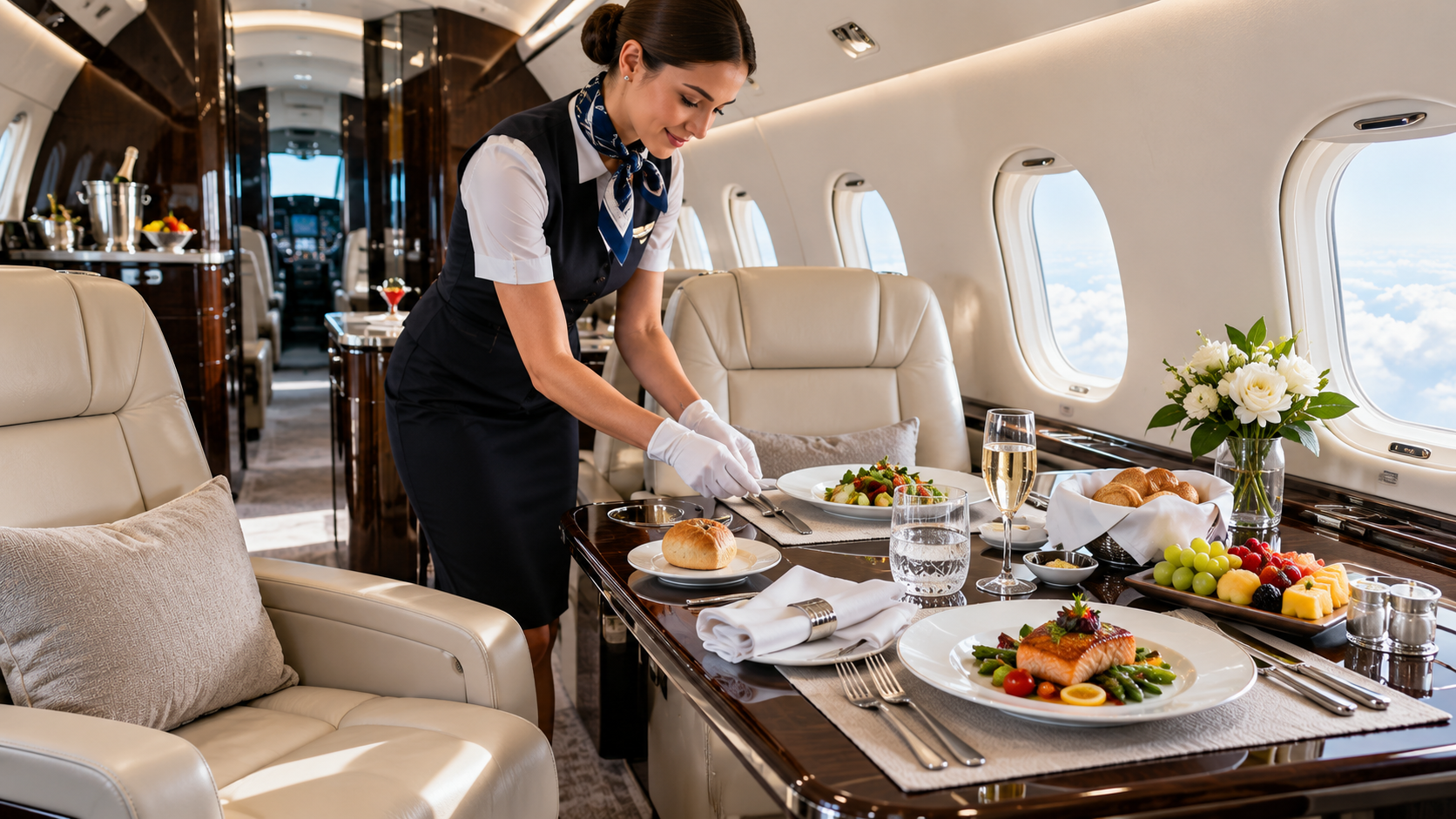
7. Make Presentation Part of the Experience
Private aviation passengers often expect service that feels more personal than commercial travel.
Presentation plays an important role.
Even a relatively simple meal can feel premium when it is served thoughtfully.
Consider:
- Quality tableware
- Clean plating
- Garnishes
- Proper glassware
- Napkins
- Cutlery
- Portion arrangement
- Beverage pairing
The cabin crew may need to replate food after removing it from delivery containers.
For this reason, packaging should support presentation rather than make service more difficult.
How Private Aircraft Catering Differs From Airline Catering
Commercial airlines prepare large numbers of meals using standardised menus and tightly controlled logistics.
Private aviation works differently.
Orders may be made for only one or two passengers.
Menus can change completely from one flight to another.
A passenger may request a particular restaurant dish, regional cuisine or custom meal.
Greater Personalisation
Private aircraft passengers may expect individual preferences to be remembered.
This can include:
- Favourite tea
- Preferred bottled water
- Specific breakfast
- Favourite dessert
- Coffee preparation
- Preferred snacks
Maintaining an accurate passenger profile can improve consistency across multiple flights.
Smaller Quantities
Private jet catering often involves small order quantities.
This can increase the cost per meal because preparation and airport delivery expenses are spread across fewer portions.
More Complex Delivery
Delivering food to an aircraft can require airport access, security coordination and communication with the FBO or flight crew.
This makes logistics an important part of the final price.
Private Aircraft Catering for International Flights
International missions introduce more complexity.
Certain foods may be difficult to source.
Local regulations and cultural practices may affect ingredients.
Some countries may also restrict what food can remain onboard after arrival.
Operators should verify destination requirements rather than assuming that food can freely cross borders.
Local Availability Can Affect the Menu
A preferred ingredient may not be readily available at every destination.
NBAA advises operators to consider cultural and regional limitations when planning international catering.
A good international caterer can usually suggest suitable local alternatives.
Language Can Create Ordering Problems
Specific descriptions are useful.
Instead of relying on expressions that may have different meanings internationally, describe the food precisely.
Specify:
- Portion weight
- Cooking method
- Sauce
- Side dishes
- Allergens
- Packaging
Clear communication reduces surprises.
Dietary Requirements in Private Aircraft Catering
Dietary requirements should be treated carefully.
An allergy is different from a food preference.
The caterer should be told clearly when a passenger has a medically significant allergy.
Common Dietary Requests
These may include:
- Vegetarian meals
- Vegan meals
- Gluten free meals
- Dairy free meals
- Nut free requests
- Low sodium meals
- Halal meals
- Kosher meals
Do not assume that a kitchen can guarantee complete allergen separation simply because it can remove one ingredient.
Ask about cross contact procedures when allergies are involved.
Keep Passenger Information Private
Only necessary information should be shared with vendors.
NBAA catering and security guidance recommends limiting unnecessary passenger information when placing orders, particularly on international trips.
The caterer generally needs to understand the dietary requirement, not the passenger’s full identity.
Packaging for Private Aircraft Catering
Packaging is a practical part of inflight service.
Food should fit inside aircraft storage and heating equipment.
Containers should also protect presentation during transport.
Label Every Item Clearly
Useful labels can include:
- Meal name
- Passenger number
- Dietary requirement
- Heating instructions
- Preparation date
- Contents
Clear labels make service easier when the aircraft carries several different meals.
Avoid Oversized Containers
Commercial restaurant packaging may not fit inside aircraft refrigerators or ovens.
Provide oven and storage dimensions when ordering from unfamiliar providers.
A specialist aviation caterer may already understand common galley limitations.
How to Reduce Private Aircraft Catering Waste
Luxury service does not require unnecessary waste.
Accurate passenger counts and realistic portion planning can reduce excess food.
Avoid ordering large quantities simply as insurance.
Instead, keep suitable backup snacks and shelf stable items onboard.
Stock a Practical Aircraft Pantry
Useful pantry items may include:
- Crackers
- Nuts where appropriate
- Snack bars
- Tea
- Coffee
- Bottled water
- Shelf stable snacks
- Individual condiments
A well stocked pantry can support unexpected schedule changes without requiring a completely new catering order.
Common Private Aircraft Catering Mistakes
Several mistakes can reduce catering quality.
Ordering Too Late
Last minute orders may restrict menu choice and increase delivery challenges.
Ignoring Galley Equipment
Food should be compatible with the aircraft’s storage and heating capability.
Giving Vague Instructions
Detailed orders reduce mistakes.
Overordering
Excess food creates storage problems and unnecessary waste.
Choosing Food That Does Not Travel Well
Some meals deteriorate quickly after preparation.
Forgetting Dietary Restrictions
Passenger requirements should be confirmed before ordering.
Poor Temperature Control
Safe storage should remain a priority from kitchen to cabin.
How to Build a Reliable Private Aircraft Catering Checklist
A repeatable process can improve consistency.
Before every catering order, confirm:
- Passenger count
- Crew count
- Flight duration
- Meal timing
- Passenger preferences
- Dietary restrictions
- Aircraft galley equipment
- Refrigerator capacity
- Delivery address
- FBO contact
- Delivery time
- International restrictions
Keeping these details in an operational checklist can reduce dependence on memory.
Choosing Private Aircraft Catering for Long Flights
Long haul flights require additional planning.
Passengers may need more than one meal service.
Snacks and beverages should also be available between meals.
Instead of serving several heavy meals, consider a balanced sequence.
This may include a main meal, light snack and breakfast depending on departure time and destination.
Sleep schedules should also influence meal service.
A passenger who intends to sleep shortly after departure may prefer a lighter meal.
Private Aircraft Catering Costs
There is no universal price for aviation catering.
Costs depend on:
- Airport
- Delivery distance
- Menu
- Ingredient quality
- Portion size
- Special requests
- Delivery time
- International location
- Airport access
- Order quantity
A simple sandwich delivered to an airport can cost substantially more than the same item purchased directly from a restaurant because the price may include specialised preparation and aviation delivery logistics.
For operators, the best approach is to evaluate total service quality rather than comparing food cost alone.
Why Private Aircraft Catering Matters to Passenger Experience
Passengers often remember details.
A favourite snack being available without asking can create a stronger impression than an extravagant meal that does not match their preferences.
Good catering is therefore partly about food and partly about understanding the passenger.
The most successful service tends to be:
- Consistent
- Personal
- Safe
- Well timed
- Simple to serve
- Appropriate for the flight
Attention to these areas can make private aviation feel genuinely personalised rather than merely expensive.
Frequently Asked Questions
What is Private aircraft catering?
Private aircraft catering is a specialised service that prepares, packages and delivers food and beverages for private jets, corporate aircraft and business aviation flights.
How far in advance should Private aircraft catering be ordered?
Lead times vary by airport and provider. Ordering at least a day in advance can improve menu availability, while remote or international destinations may require additional notice.
Can Private aircraft catering accommodate food allergies?
Many specialist caterers can handle dietary requests, but serious allergies should be communicated clearly and cross contact procedures should be confirmed directly with the provider.
Why is Private aircraft catering more expensive than restaurant food?
Pricing may include customised preparation, specialised packaging, airport delivery, security access, small order quantities and precise timing in addition to the food itself.
What foods work best for private jet catering?
Foods that retain quality during transport, refrigeration and reheating generally work best. Grilled proteins, pasta, salads, cold platters, sandwiches, fruit and baked items are common choices.
Is food safety important in Private aircraft catering?
Yes. Safe preparation, transport, refrigeration and onboard handling are essential because food may spend considerable time between the catering kitchen and final passenger service.
Conclusion
Private aircraft catering combines hospitality, aviation logistics and food safety to create a dining experience suited to business aviation. Choosing an experienced provider, communicating passenger preferences clearly and matching meals to the aircraft’s galley capabilities can significantly improve service quality. Careful timing, safe storage and thoughtful presentation help ensure that inflight dining feels personal, professional and appropriate for the journey.