Industrial Shorts: 7 Essential Features for Durable, Comfortable Workwear
Finding comfortable clothing for demanding work environments can be challenging, especially when temperatures rise and daily activities involve constant movement. Choosing the right industrial shorts can help workers stay comfortable, carry essential tools, and move more freely throughout their workday. Designed with practical features such as reinforced stitching, durable fabrics, and functional pockets, these garments offer an alternative to traditional work pants in environments where shorts are appropriate.
Across the United States, workwear needs vary between construction trades, warehouses, maintenance services, landscaping businesses, and manufacturing facilities. Some jobs demand specialized protective clothing, while others allow lightweight work shorts that provide comfort and flexibility.
Understanding fabric quality, design features, workplace safety requirements, and proper sizing can help buyers make informed decisions. This guide explores seven important features to consider when selecting work shorts for professional use.
What Are Industrial Shorts?
Industrial shorts are durable workwear garments designed for people performing physically active tasks in suitable working environments.
Unlike ordinary casual shorts, they often feature stronger fabrics, reinforced seams, practical storage pockets, and construction details intended to withstand repeated movement and everyday wear.
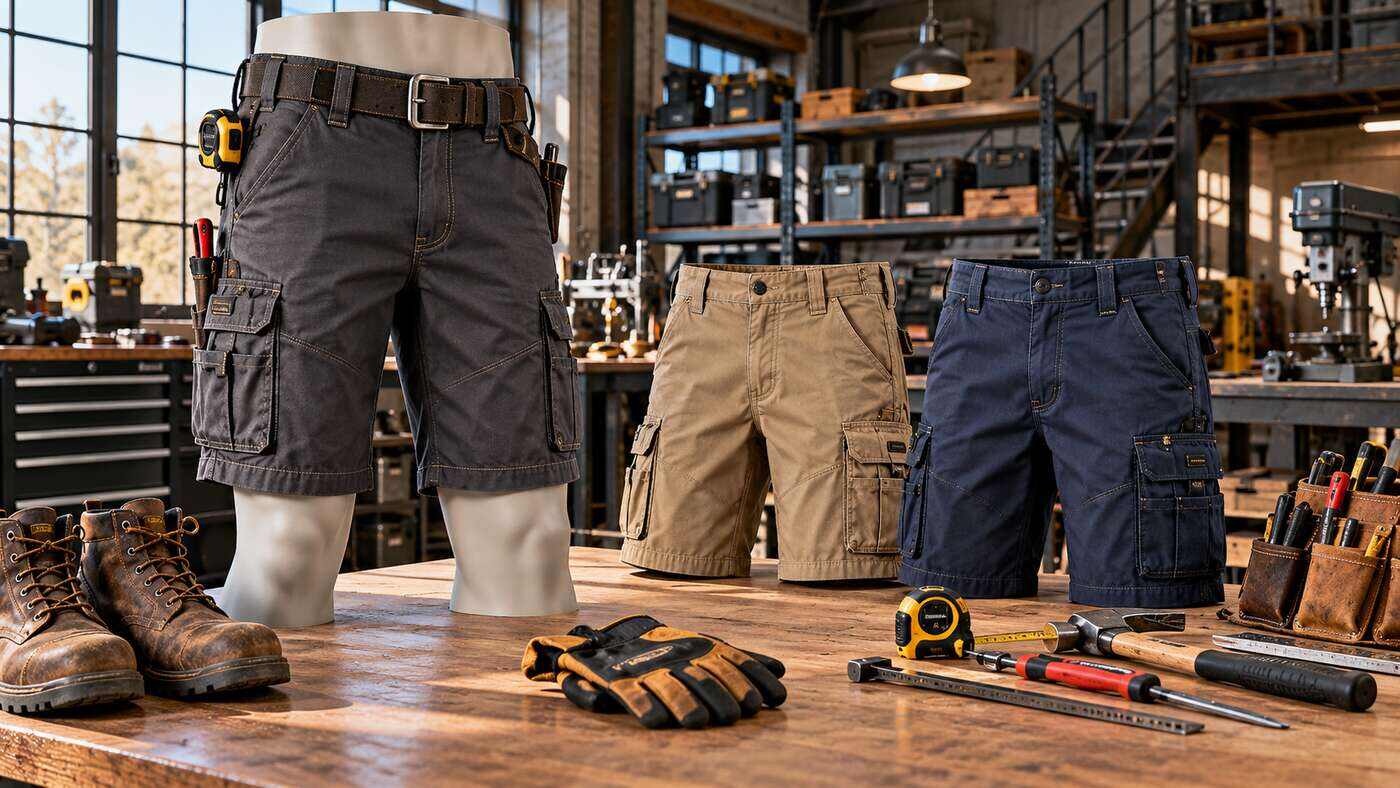
These garments are available in several styles, including cargo shorts, utility shorts, stretch work shorts, and lightweight ripstop designs.
The term industrial shorts describes a workwear category rather than a specific safety certification.
Their suitability depends on the workplace, job responsibilities, potential hazards, and employer clothing requirements.
How Industrial Shorts Differ From Regular Shorts
Regular shorts are often designed primarily for leisure, recreation, or casual everyday wear.
Industrial work shorts place greater emphasis on functionality.
They may include reinforced belt loops, additional stitching around high stress areas, and pockets specifically positioned for tools or small equipment.
Some designs also incorporate flexible waistbands and durable stretch materials to improve movement.
However, not every product advertised as heavy duty provides better durability.
Buyers should examine construction details and fabric specifications rather than relying entirely on marketing descriptions.
7 Important Features to Look for in Industrial Shorts
Selecting suitable workwear involves balancing comfort, durability, convenience, and workplace requirements.
The following seven features can help you identify shorts that match your daily responsibilities.
1. Durable Fabric That Handles Everyday Wear
Fabric quality is one of the most important factors when selecting industrial shorts.
Workers may regularly kneel, bend, climb, walk, and carry equipment throughout the day.
These activities place repeated stress on clothing, particularly around pockets, seams, and areas that experience friction.
Well constructed work shorts often use durable cotton blends, polyester blends, ripstop textiles, or stretch fabrics.
Each material offers different advantages depending on the working environment.
Understanding Ripstop Fabric
Ripstop fabric uses a reinforced weave designed to help resist tearing.
It is commonly used in workwear because it can provide useful durability without requiring excessively heavy material.
However, ripstop construction does not make ordinary work shorts cut resistant or suitable for dangerous machinery.
Fabric strength and protective performance are separate considerations.
When comparing products, examine material composition, fabric weight, and the manufacturer’s intended use.
A lightweight fabric may be comfortable in warm conditions, while a heavier material may offer better abrasion resistance in certain applications.
The best choice depends on the actual work being performed.
2. Comfortable Fit and Freedom of Movement
Comfort affects how easily workers perform repeated physical movements.
Shorts that are too tight may restrict bending, squatting, or climbing.
Excessively loose clothing can also create problems by catching on objects or shifting during movement.
Industrial shorts should provide enough room around the waist, hips, seat, and thighs without interfering with work activities.
Why Stretch Fabric Matters
Some modern work shorts contain small percentages of elastane or other stretch fibers.
These materials allow the fabric to move more easily with the wearer.
Stretch construction can be useful for workers who frequently change positions or move between standing, crouching, and walking.
However, elasticity alone does not determine comfort.
The overall cut, waistband design, seam placement, and fabric breathability also influence how clothing feels throughout the day.
Choosing the Right Inseam
Inseam length affects coverage and mobility.
Shorter inseams may provide greater freedom around the knees, while longer designs offer more coverage around the upper legs.
Common workwear options include different lengths to suit individual preferences and manufacturer sizing systems.
Try on work shorts or review detailed measurements before buying.
A comfortable pair should remain secure while standing, bending, and performing ordinary work movements.
3. Functional Pockets for Tools and Accessories
Storage is an important feature of industrial shorts.
Many workers need convenient access to measuring tapes, pencils, small tools, phones, or other frequently used items.
Cargo pockets, utility compartments, and reinforced pocket openings can improve organization.
However, more pockets do not automatically make a garment more practical.
The position, size, and accessibility of each pocket matter.
Useful Pocket Features
Practical industrial work shorts may include:
- Deep front pockets for everyday essentials
- Secure cargo pockets for small accessories
- Reinforced utility pockets
- Dedicated measuring tape compartments
- Zippered pockets for valuable personal items
- Strong belt loops for compatible work belts
- Convenient rear pockets
Consider what you actually carry during the workday.
A warehouse employee may prefer simple pockets and a lightweight design, while a maintenance technician may need additional storage for frequently used accessories.
Avoid placing heavy or sharp tools in pockets that are not designed for them.
Tools should be secured appropriately and must not create injury or entanglement hazards.
4. Reinforced Stitching and Quality Construction
Stitching helps determine how well clothing withstands repeated use.
High stress areas such as pocket corners, belt loops, seams, and the seat can experience significant pulling during physical work.
Manufacturers may reinforce these areas using additional stitching or specialized construction techniques.
Check Critical Stress Points
When examining industrial shorts, pay attention to pocket openings, the crotch seam, waistband attachment, and belt loops.
Look for consistent stitching without obvious loose threads, missed seams, or damaged fabric.
Reinforced seams may help improve durability, particularly when the shorts are used regularly.
However, the presence of double stitching does not automatically establish superior construction.
Thread quality, fabric strength, seam design, and workmanship all affect overall performance.
A carefully made garment should remain comfortable and structurally sound during normal intended use.
5. Breathable Materials for Warm Working Conditions
Comfort becomes especially important during summer and in environments where temperatures are elevated.
Lightweight fabrics and appropriate garment ventilation can help workers feel more comfortable.
Some industrial shorts are designed using breathable textiles that allow air movement.
Others incorporate moisture management treatments intended to help fabric dry more quickly.
Cotton vs. Synthetic Fabrics
Cotton is often appreciated for its soft feel and breathability.
However, it can retain moisture longer than some synthetic materials.
Polyester and nylon blends may offer quicker drying performance depending on the fabric construction and finish.
Blended fabrics can combine several characteristics, such as durability, flexibility, and comfort.
No single fabric is ideal for every occupation.
Workers should consider temperature, humidity, physical activity, and possible workplace hazards.
Clothing Is Only One Part of Heat Safety
Lightweight work shorts may improve personal comfort in suitable settings, but they do not prevent heat illness on their own.
Workers exposed to high temperatures also need appropriate hydration, rest breaks, shade or cooling, and workplace heat protection measures.
The Occupational Safety and Health Administration emphasizes these precautions when addressing occupational heat risks.
Where protective clothing is required, workers must follow safety requirements even when temperatures are uncomfortable.
6. A Secure and Adjustable Waistband
The waistband plays an important role in everyday comfort.
A poorly fitted waistband may dig into the skin, shift during physical activity, or require frequent adjustment.
Industrial shorts often feature sturdy belt loops, flexible waist sections, or reinforced closures.
Some designs use partial elastic panels to accommodate movement.
Others provide conventional waistbands suitable for compatible belts.
Choosing a Comfortable Waist Fit
The waistband should remain secure without excessive pressure.
When trying on shorts, check how the garment feels while bending and sitting.
If you regularly carry tools using a belt, consider whether the waistband and belt loops are designed for that purpose.
Do not assume standard clothing belt loops are suitable for supporting heavy equipment.
Specialized tool belts and carrying systems may be necessary depending on the task.
7. Practical Appearance and Long Term Value
Professional appearance can matter in occupations involving customer visits, maintenance appointments, or workplace uniforms.
Many industrial shorts are available in neutral colors such as black, navy, gray, khaki, and brown.
These colors are easy to coordinate with work shirts and other approved uniform items.
However, workplace dress codes differ.
Some employers require long pants or specific protective garments regardless of personal clothing preferences.
Evaluate Value Beyond the Purchase Price
A less expensive pair of shorts may offer good value for occasional use.
Workers who wear the same type of clothing frequently may benefit from investing in better fabric quality and construction.
Consider durability, comfort, washing requirements, pocket functionality, and replacement costs.
The most valuable garment is one that performs reliably for its intended tasks without creating safety problems.
Popular Types of Industrial Shorts
Different workwear designs support different working conditions and personal preferences.
Heavy Duty Cargo Shorts
Cargo shorts generally feature additional thigh pockets and practical storage compartments.
They can be useful for suitable maintenance, landscaping, and general utility activities.
Look for secure pocket closures and comfortable fabric construction.
Bulky pockets can become uncomfortable when overloaded, so choose a design that matches your everyday needs.
Stretch Work Shorts
Stretch work shorts are designed to provide greater flexibility during movement.
They often combine synthetic fibers with elastane or use stretch fabric construction.
These garments can be appealing for people who spend considerable time walking, climbing, or changing positions.
Fit remains important because stretchy material cannot compensate for an unsuitable garment shape.
Lightweight Utility Shorts
Lightweight utility designs emphasize comfort and mobility.
They may be suitable for approved warm weather tasks that do not require extensive lower leg protection.
Check fabric durability carefully if the work involves frequent contact with abrasive surfaces.
Lightweight clothing should not be selected at the expense of necessary safety coverage.
Ripstop Industrial Shorts
Ripstop work shorts combine reinforced woven fabric with utility styling.
Depending on the product, they may include cargo pockets, reinforced stitching, and flexible waistbands.
These features make ripstop shorts worth considering for demanding everyday activities.
However, durability claims should be evaluated through manufacturer specifications rather than assumptions about the fabric name.
Are Industrial Shorts Appropriate for Every Workplace?
No. Industrial shorts are not appropriate for every job or workplace.
Their use depends on site rules, the actual hazards present, and any required protective clothing.
Employers are responsible for evaluating workplace hazards and selecting suitable personal protective equipment where necessary.
Ordinary work shorts should not be mistaken for protective clothing.
Work Environments Where Shorts May Be Suitable
Depending on workplace policies and hazard assessments, shorts may be appropriate for selected activities such as:
- Indoor warehouse duties with limited leg exposure hazards
- Landscaping tasks where shorts are permitted
- General property maintenance
- Certain delivery and logistics activities
- Light assembly work in approved environments
- Outdoor work without hazards requiring lower leg coverage
These are examples, not universal safety approvals.
Workers should confirm their employer’s requirements before choosing shorts.
When Long Pants or Protective Clothing Are Necessary
Some work involves exposure to sparks, hot materials, chemicals, sharp objects, rotating equipment, or other hazards.
Exposed legs may increase the risk of injury in these environments.
For tasks involving welding, certain electrical hazards, molten materials, or hazardous chemicals, specialized protective clothing may be required.
A durable pair of work shorts cannot replace properly selected personal protective equipment.
Construction site requirements also vary depending on the activities and applicable regulations.
If a workplace requires long trousers, ordinary shorts should not be worn simply because they feel more comfortable.
How to Choose Industrial Shorts for Different Jobs
The best workwear depends on the employee’s daily tasks and the conditions in which those tasks are performed.
Industrial Shorts for Warehouse Workers
Warehouse employees may prioritize lightweight construction, comfort, and freedom of movement.
Repeated walking and bending can make flexible fabric especially useful.
Pockets should be positioned so that stored items do not interfere with movement or equipment.
Workers must still follow site rules concerning leg coverage and protective clothing.
Industrial Shorts for Maintenance Technicians
Maintenance professionals may prefer stronger fabric, secure pockets, and reliable belt loops.
Practical storage can help keep frequently used accessories accessible.
However, the type of maintenance performed matters.
Electrical work, chemical handling, hot work, and certain mechanical tasks may require protective garments that provide greater coverage.
Industrial Shorts for Landscaping
Landscaping work may involve heat, moisture, vegetation, tools, and uneven outdoor surfaces.
Breathable materials can support comfort, but shorts may leave legs exposed to sunlight, insects, vegetation, and debris.
Certain activities, including chainsaw operation and work involving particular cutting equipment, require task appropriate protective clothing.
Choose garments based on the actual activity rather than assuming all landscaping duties have identical requirements.
Industrial Shorts for General Workshop Activities
Some workshops permit utility shorts for selected light duties.
Flexible fabric and reinforced pockets may be practical for approved tasks.
However, workshops containing hot surfaces, sharp materials, chemicals, or dangerous moving machinery may require additional coverage.
Clothing must never create an entanglement hazard.
How to Find the Right Size and Fit
Correct sizing helps improve comfort and reduce unnecessary garment movement.
Begin by measuring your waist and comparing the result with the manufacturer’s size chart.
Because sizing varies between brands, do not assume the same labeled size will fit identically across different products.
Check the Waist, Seat, and Thighs
The waistband should remain secure without excessive tightness.
The seat and thigh areas should allow normal movement.
Try sitting, squatting, and bending while wearing the shorts.
If the fabric pulls uncomfortably or restricts movement, consider a different size or fit.
Check Pocket Placement
A cargo pocket positioned too low may interfere with movement.
Deep pockets can be helpful, but they should not cause discomfort when filled with normal work accessories.
If you frequently kneel, check whether stored items create pressure against the legs.
Consider Length and Coverage
The appropriate inseam depends on comfort preferences, job activities, and workplace requirements.
A garment that looks suitable while standing may feel different while climbing stairs or crouching.
Check coverage in the positions you commonly use at work.
Industrial Shorts vs. Traditional Work Pants
Both industrial shorts and full length work pants have useful applications.
Shorts may offer greater ventilation and reduced fabric bulk in appropriate warm weather conditions.
Work pants provide more coverage of the legs and may help protect against minor incidental contact with ordinary surfaces.
However, full length pants are not automatically certified protective clothing either.
Certain hazards require garments designed and tested for a specific purpose.
Which Option Offers Better Comfort?
Comfort depends on climate, fabric construction, fit, and individual preference.
Lightweight work pants may feel comfortable in some warm conditions, while breathable shorts can feel preferable in other environments.
Consider the entire clothing system, including footwear and any required protective equipment.
Which Option Is More Practical?
Shorts can be convenient for tasks where mobility and lightweight clothing are priorities.
Pants may be more appropriate when additional coverage is necessary.
The correct choice is the one that satisfies safety requirements while supporting comfortable movement.
How Much Do Industrial Shorts Cost in the USA?
Industrial shorts are available across several price categories.
The purchase price depends on fabric quality, manufacturing details, brand positioning, pocket design, and additional features.
Basic utility shorts may cost less than specialized stretch ripstop workwear with reinforced construction.
Higher pricing does not always guarantee better performance.
Factors That Affect Work Shorts Pricing
Important considerations include fabric composition, seam construction, stretch properties, hardware quality, and number of reinforced areas.
Products with more elaborate storage arrangements may also cost more.
Shipping, taxes, and uniform customization can influence the final expense.
For businesses purchasing workwear for multiple employees, sizing availability and consistent supply may be just as important as the individual garment price.
How to Compare Value
Review the manufacturer’s material specifications and care instructions.
Look for clear product photographs showing stitching, pocket placement, and fabric texture.
Consider customer feedback related to fit and durability, but remember that individual experiences vary.
If possible, test a small quantity before purchasing an entire workplace uniform order.
How to Wash and Maintain Industrial Shorts
Proper garment care can help maintain comfort and appearance.
Always begin with the manufacturer’s care label because different fabrics require different washing methods.
Remove Dirt and Debris Promptly
Workwear may collect dust, soil, and other ordinary debris during daily use.
Remove loose dirt before washing where practical.
Empty all pockets and check for tools or sharp objects that could damage the garment or washing machine.
If shorts become contaminated by hazardous substances, follow workplace procedures rather than treating them as ordinary laundry.
Follow Recommended Washing Temperatures
Some durable fabrics tolerate regular machine washing, while certain stretch materials or finishes require gentler treatment.
Excessive heat can affect elastic fibers, coatings, or fabric appearance.
Use suitable detergent and follow the recommended drying method.
Do not assume every heavy duty garment can withstand high temperature washing.
Inspect High Wear Areas
Check pocket corners, seams, belt loops, and fasteners after repeated use.
Minor stitching problems may be repairable before they become extensive.
Replace shorts when wear, damaged fabric, or failing closures make them unsuitable for their intended work.
Common Mistakes to Avoid When Buying Industrial Shorts
The first common mistake is choosing shorts based only on appearance.
A garment may look rugged while lacking the construction needed for regular physical use.
Another mistake is purchasing without checking workplace clothing requirements.
Even comfortable, durable shorts may be unsuitable where specific protective garments are required.
Buyers should also avoid selecting the wrong size.
Poor fit can affect comfort, mobility, and the usefulness of storage pockets.
Finally, do not overlook garment care instructions.
A product that requires specialized maintenance may not suit a workplace where uniforms need frequent laundering.
How to Choose Industrial Shorts for Long Term Use
Before purchasing, identify the activities the shorts will support.
Evaluate whether the fabric, fit, pocket arrangement, and level of coverage match the job.
Check the garment’s construction details and confirm the manufacturer’s washing instructions.
Most importantly, determine whether shorts are appropriate under the employer’s hazard assessment and dress code.
A practical workwear choice balances comfort, durability, convenience, and compliance with workplace requirements.
Frequently Asked Questions
1. What are industrial shorts used for?
Industrial shorts are durable workwear garments designed for suitable jobs requiring flexibility, comfort, and practical storage. Their use depends on workplace safety requirements.
2. Are industrial shorts suitable for construction workers?
They may be permitted for certain tasks, but not every construction environment. Workers must follow employer rules, hazard assessments, and applicable protective clothing requirements.
3. What fabric is best for industrial shorts?
Ripstop fabrics, durable cotton blends, and stretch synthetic materials are common choices. The best option depends on comfort, job demands, and necessary protection.
4. Do industrial shorts have tool pockets?
Many designs include cargo pockets, utility compartments, and reinforced storage areas. Pocket configurations vary by manufacturer and garment style.
5. Can industrial shorts be worn in hot weather?
Yes, where workplace rules and hazards permit. Lightweight, breathable fabrics may improve comfort, but workers still need appropriate heat safety precautions.
6. How long do industrial shorts last?
Their lifespan depends on material quality, work intensity, washing practices, and general maintenance. Regular inspections help determine when replacement is necessary.
Conclusion
Industrial shorts can provide a practical combination of comfort, durability, and convenient storage for workers in appropriate environments. Selecting quality fabrics, reinforced construction, comfortable sizing, and useful pockets can improve everyday workwear performance. However, workplace safety requirements must always take priority over personal clothing preferences. By comparing materials, understanding job demands, and following proper maintenance practices, American workers can choose industrial shorts that deliver dependable value and comfort