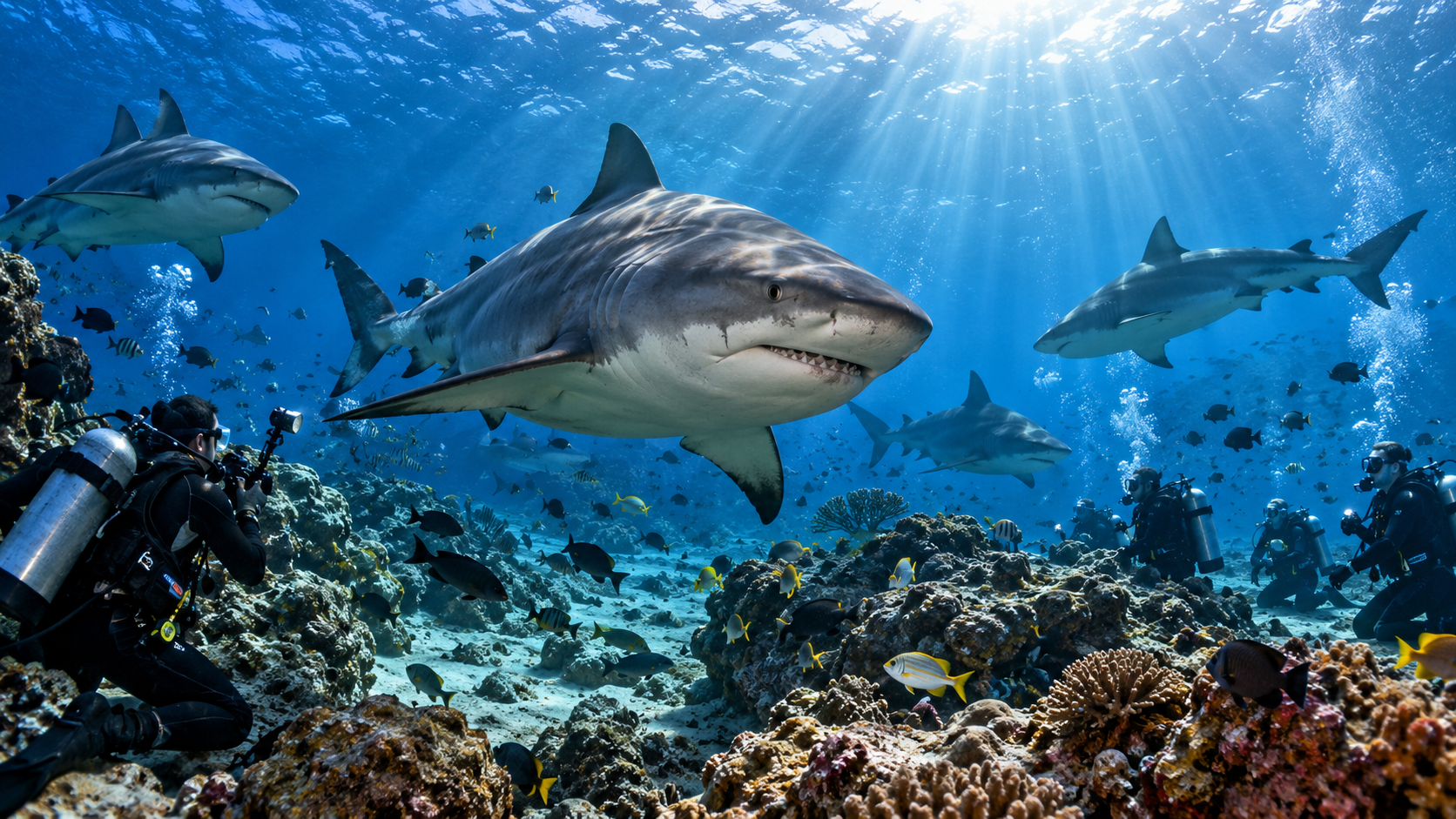
Bull Shark Dive in Fiji: Planning an Extraordinary Beqa Lagoon Shark Encounter
A bull shark dive in Fiji can be one of the most intense and memorable experiences available to experienced recreational scuba divers, particularly around Pacific Harbour and Beqa Lagoon on the southern side of Viti Levu. Fiji has developed a global reputation for shark encounters where trained dive professionals manage structured dives that may bring divers close to bull sharks along with several other shark species and large schools of tropical fish. Unlike an ordinary reef dive, however, a shark-focused dive requires excellent attention to briefings, positioning, depth, buoyancy, air supply, and guide instructions. The goal should never be to chase a shark or create the closest possible encounter. The objective is to experience these powerful predators within a controlled dive plan while respecting both the animals and the marine environment.
Bull sharks attract attention because of their size, muscular appearance, and reputation.
Seeing one underwater is very different from seeing dramatic footage on a screen.
The animal may appear almost effortless as it moves through the water.
Several sharks can pass through the same area while reef fish fill the surrounding scene.
For divers who are properly prepared, the result can be an extraordinary wildlife experience.
Preparation is what makes the difference.
Why Is a Bull Shark Dive in Fiji So Famous?
Fiji offers excellent diving in many regions, but Beqa Lagoon has become especially associated with sharks.
Shark Reef Marine Reserve lies off the southern coast of Viti Levu near Pacific Harbour.
The protected site is known for shark-focused dives involving species that can include:
• Bull sharks
• Grey reef sharks
• Whitetip reef sharks
• Blacktip reef sharks
• Tawny nurse sharks
• Sicklefin lemon sharks
• Silvertip sharks
• Tiger sharks on some occasions
Not every species appears on every dive.
Wildlife encounters always depend on natural conditions.
Bull sharks, however, are a major reason experienced divers travel to the area.
7 Powerful Tips for a Bull Shark Dive in Fiji
A shark dive should be treated as a serious scuba activity rather than simply an underwater attraction.
1. Bull Shark Dive in Fiji Trips Require Appropriate Scuba Experience
Certification is only the starting point.
Some shark dives around Beqa Lagoon reach depths beyond 18 metres.
Divers should be comfortable with:
• Descents
• Controlled buoyancy
• Depth monitoring
• Air management
• Boat diving
• Mask clearing
• Regulator recovery
• Buddy procedures
• Following a group underwater
A diver who becomes stressed easily in deep water should gain more experience before choosing a demanding shark dive.
Be Honest About Your Dive History
When booking, provide accurate information about:
• Certification level
• Total logged dives
• Recent diving activity
• Deep-diving experience
• Current comfort level
Do not exaggerate experience simply because the trip is exciting.
Dive operators need accurate information to determine whether a particular dive is appropriate.
Consider a Refresher
Someone who has not dived for an extended period may benefit from a refresher before joining a shark dive.
It is much better to rebuild skills in a calm environment than to rediscover them while several large sharks are nearby.
2. Listen Carefully to the Shark Dive Briefing
The pre-dive briefing is particularly important.
Experienced shark-dive operators may use specific:
• Entry procedures
• Descent routes
• Observation positions
• Depth limits
• Hand signals
• Photography rules
• Emergency procedures
• Ascent procedures
These instructions are designed around the site.
Do not assume the rules will be identical to another shark dive you completed elsewhere.
Positioning Matters
At structured feeding dives, guides may place divers within defined observation areas.
Stay where instructed.
Moving independently toward sharks can interfere with established procedures.
It can also place the diver in an area where guides are actively managing shark movement.
Follow the Guide, Not the Camera
If a guide signals that divers need to move, ascend, remain still, or change position, follow that direction immediately.
A photograph can wait.
3. Maintain Excellent Buoyancy During a Bull Shark Dive in Fiji
Buoyancy control affects both safety and enjoyment.
An experienced diver should be able to maintain position without:
• Rapid ascents
• Unplanned descents
• Excessive finning
• Contact with the bottom
• Colliding with other divers
Shark dives can already create strong excitement.
Poor buoyancy adds an unnecessary problem.
Control Your Breathing
Excitement can increase breathing rate.
This can lead to faster air consumption.
Before entering the main observation area:
Relax.
Check your depth.
Check your pressure gauge.
Slow your breathing.
Maintain awareness.
A bull shark passing nearby should not make you forget basic diving procedures.
4. Do Not Chase, Touch, or Attempt to Interact With Sharks
A shark dive is an observation experience.
It is not an opportunity to touch wildlife.
Do not:
• Swim after sharks
• Grab fins
• Attempt to touch their backs
• Block their route
• Leave the group for photographs
• Carry food unless you are an authorized guide following the operator’s procedure
Bull sharks are large wild predators.
Respectful distance and disciplined positioning are essential.
Let Sharks Control Their Movement
A shark may choose to swim relatively close.
Remain calm.
Avoid sudden unnecessary movement.
Let the animal pass.
The best wildlife encounters often happen because the diver remains patient rather than chasing the subject.
5. Choose the Season Based on Your Priorities
Fiji supports diving throughout the year.
However, seasonal conditions influence water temperature, rainfall, visibility, currents, and marine activity.
The cooler and generally drier period is often considered particularly attractive for shark diving.
June through September is commonly highlighted for favorable shark-diving conditions.
Cooler Season Advantages
Potential advantages can include:
• Clearer water
• Strong pelagic activity
• Reduced rainfall compared with wetter months
• Excellent underwater photography conditions
However, conditions vary from day to day.
Warmer Season Diving
The warmer and wetter part of the year can still provide rewarding diving.
Higher plankton levels may sometimes reduce visibility but can contribute to active marine ecosystems.
Do not assume that a trip outside the traditionally preferred months will produce poor shark diving.
6. Select a Responsible Shark-Diving Operator
Operator quality matters significantly.
A responsible operation should provide:
• Clear certification requirements
• Thorough briefings
• Experienced guides
• Appropriate emergency procedures
• Well-maintained equipment
• Responsible shark-interaction rules
• Conservation awareness
• Appropriate diver-to-guide management
Ask questions before booking.
Useful Questions to Ask
Consider asking:
• How deep are the dives?
• What certification level is recommended?
• How many divers are in each group?
• How is the shark encounter managed?
• Are the dives feeding dives?
• What happens if conditions deteriorate?
• What safety equipment is carried on the boat?
• What experience do the guides have at the site?
• What equipment is available for rental?
Professional operators should answer clearly.
7. Make Conservation Part of Your Bull Shark Dive in Fiji
One of the most interesting aspects of Fiji shark diving is its connection with marine conservation.
Shark Reef Marine Reserve was created through collaboration involving the dive community, fisheries authorities, and traditional reef owners.
Divers visiting protected areas can contribute economically to marine conservation and local communities through properly managed tourism.
Sharks Have Greater Value Alive
Sustainable shark tourism can demonstrate that healthy shark populations have continuing economic and ecological value.
A living shark can support:
• Tourism
• Local employment
• Marine research
• Education
• Community conservation
for many years.
That creates incentives for protecting marine ecosystems rather than exploiting them only once.
Understanding Bull Sharks
Bull sharks are powerful members of the requiem shark family.
Their body shape is generally:
• Stocky
• Muscular
• Broad-headed
They occupy tropical and subtropical waters in many parts of the world.
One unusual characteristic is their ability to tolerate a wide range of salinity conditions.
They can enter:
• Coastal waters
• Estuaries
• River systems
This adaptability has contributed to their widespread reputation.
Are Bull Sharks Dangerous?
Bull sharks are large predatory wild animals and should be treated seriously.
It would be inappropriate to describe a close bull shark encounter as risk-free.
However, professionally managed shark diving is very different from randomly entering waters where sharks are present.
Structured dives attempt to manage risk through:
• Experienced guides
• Defined procedures
• Controlled diver positioning
• Specific sites
• Careful briefings
• Group supervision
Divers must still accept that wildlife and scuba diving both involve inherent risk.
Bull Shark Dive in Fiji and Feeding Practices
Some famous Beqa Lagoon shark encounters involve controlled feeding.
This can attract sharks reliably to a particular site and allow divers to observe them at relatively close range.
Feeding also means the dive has specialized procedures.
Divers should never imitate the guides.
Only Authorized Personnel Should Handle Food
Do not carry food into the water independently.
Do not attempt to attract sharks.
Do not pick up food or fish pieces underwater.
Follow the operation’s instructions precisely.
Why Feeding Dives Are Different
Food changes the context of animal behavior.
That is one reason disciplined diver positioning is so important.
The activity should be managed by teams with extensive site-specific experience.
Other Sharks You May See
Bull sharks may be the main attraction, but Beqa Lagoon can offer a much wider shark experience.
Grey Reef Sharks
Grey reef sharks are streamlined reef-associated predators often seen around reef slopes and channels.
Whitetip Reef Sharks
Whitetip reef sharks commonly spend time close to reef structures.
They are typically smaller than bull sharks.
Blacktip Reef Sharks
Blacktip reef sharks are easily recognized by dark markings on their fins.
Tawny Nurse Sharks
Tawny nurse sharks have a very different body shape and behavior from the faster-moving reef sharks.
Lemon Sharks
Large lemon sharks may also appear at shark-diving sites in the region.
Tiger Sharks
Tiger sharks can occasionally appear and can be considerably larger than many reef species.
Their presence is not guaranteed.
Beqa Lagoon Beyond the Sharks
A trip to Beqa Lagoon does not need to revolve entirely around bull sharks.
The region is also known for:
• Soft corals
• Reef fish
• Wreck diving
• Coral formations
• Tropical underwater scenery
This makes Pacific Harbour a useful base for divers who want variety.
A trip can combine shark-focused dives with more traditional reef exploration.
Bull Shark Dive in Fiji for Underwater Photographers
Bull sharks make dramatic photography subjects.
Their large body shape can work particularly well with wide-angle equipment.
Potential compositions include:
• Shark against open blue water
• Shark with schooling fish
• Shark passing above the reef
• Shark with diver for scale
• Multiple sharks in one frame
Stay Behind the Camera Responsibly
Photography creates several common risks.
A diver staring through a viewfinder may forget to monitor:
• Depth
• Air
• Buddy position
• Other sharks
• Guide signals
• Bottom contact
Regularly look away from the camera and reassess your surroundings.
Camera Positioning
Do not leave the designated observation area to improve your angle.
A slightly less dramatic image is preferable to unsafe positioning.
Experienced wildlife photographers often succeed through patience.
Let the shark enter the frame naturally.
Visibility in Fiji
Visibility varies with:
• Rainfall
• Currents
• Plankton
• Season
• Local weather
During favorable periods, Fiji can provide excellent blue-water visibility.
This makes shark silhouettes particularly impressive.
However, a successful dive does not require perfect visibility.
Water Temperature
Fiji has warm tropical seas, but seasonal variation still exists.
Some divers are comfortable in light exposure protection.
Others become cold after several dives per day.
Choose a wetsuit according to:
• Current water temperature
• Personal cold tolerance
• Dive duration
• Number of daily dives
Being cold increases discomfort and may affect concentration.
Scuba Equipment for Bull Shark Diving
A typical setup may include:
• Mask
• Fins
• Regulator
• Buoyancy control device
• Dive computer
• Appropriate exposure protection
• Pressure gauge
• Weight system
• Surface signaling equipment
The operator may specify additional requirements.
Check Rental Gear Early
If renting equipment:
Check fit.
Check condition.
Confirm the regulator works properly.
Confirm the BCD inflates and dumps correctly.
Make sure the mask seals.
Do this before reaching the shark site.
Air Management Around Sharks
Large shark encounters are distracting.
Air management should remain routine.
Check pressure:
• Before descent
• During the observation period
• Before leaving the bottom
• During ascent
Never stay deep simply because sharks remain visible.
The dive plan takes priority.
Depth and No-Decompression Limits
Some Beqa shark dives reach depths where no-decompression time becomes an important consideration.
Monitor your computer.
Stay within:
• Planned maximum depth
• No-decompression limit
• Operator instructions
• Personal training limits
Do not follow a shark deeper.
Buddy Awareness
Even when everyone is looking at sharks, the buddy system still matters.
Know where your buddy is.
Maintain appropriate proximity.
Agree on:
• Low-air communication
• Separation procedure
• Photography expectations
before the dive.
Entry and Exit Procedures
Boat entries can vary.
Operators may use:
• Giant stride entries
• Backward rolls
• Other site-specific techniques
At the end of the dive, follow instructions regarding:
• Safety stops
• Surface approach
• Boat ladders
• Camera handling
• Current
Sharks should not distract from safe entry and exit.
Fitness for Shark Diving
Scuba diving can involve physical effort.
Strong currents, boat ladders, equipment handling, and deeper dives may increase demands.
Divers should consider:
• General fitness
• Recent illness
• Ear or sinus problems
• Medication
• Diving medical conditions
Anyone uncertain about medical fitness should seek appropriate diving medical advice before participating.
Travelling to Pacific Harbour
Pacific Harbour is on the southern coast of Viti Levu.
It is widely regarded as Fiji’s major shark-diving base.
Travellers commonly combine the area with other parts of Fiji.
A broader itinerary might include:
• Shark diving
• Coral reef diving
• Resort stays
• Cultural experiences
• Other islands
Allow enough time so the entire holiday does not depend on one scheduled dive day.
Weather or operational factors can sometimes affect boat activities.
How Many Shark Dives Should You Book?
If bull sharks are a major reason for travelling to Fiji, consider scheduling more than one opportunity.
Wildlife behavior and underwater conditions vary.
One day may provide:
• Larger shark numbers
• Better visibility
• More favorable photography
Another may offer different species.
Multiple dives provide a fuller experience.
Responsible Behavior Around Coral Reefs
Shark conservation and reef conservation belong together.
Do not:
• Stand on coral
• Grab living reef structures
• Kick coral with fins
• Leave rubbish
• Remove marine life
Good buoyancy protects the habitat that supports the entire food web.
Bull Sharks and the Marine Ecosystem
Sharks are predators within complex marine food webs.
Healthy shark populations are part of functioning ocean ecosystems.
Conservation should therefore consider more than one charismatic species.
Protecting shark habitat also supports:
• Reef fish
• Coral ecosystems
• Other predators
• Local fisheries surrounding protected areas
• Marine biodiversity
Why Shark Tourism Can Support Local Communities
Marine tourism can create employment through:
• Dive operations
• Boats
• Accommodation
• Restaurants
• Transportation
• Equipment services
• Local conservation initiatives
Community participation is particularly important in Fiji, where customary marine ownership and village relationships can play significant roles in conservation.
Responsible tourism should benefit both marine ecosystems and the people who help protect them.
Common Bull Shark Diving Mistakes
Ignoring the Briefing
Site rules are there for a reason.
Chasing Sharks
Stay in the designated position.
Poor Buoyancy
Practice before the trip.
Watching the Camera Instead of the Dive
Monitor depth, air, and your buddy.
Exaggerating Experience
Choose dives appropriate to your real skill level.
Expecting Guaranteed Wildlife
Sharks remain wild animals.
Treating a Feeding Dive Like an Ordinary Reef Dive
Follow specialized procedures.
What Makes a Great Bull Shark Dive?
A successful experience is not defined by how close you get.
A great dive combines:
• Professional supervision
• Calm diver behavior
• Good buoyancy
• Healthy shark activity
• Respectful positioning
• Strong reef conditions
• Good communication
• Conservation awareness
The most memorable moment may be a large bull shark swimming close by while the diver simply remains still and watches.
That requires no touching and no chasing.
Frequently Asked Questions
Where can I do a bull shark dive in Fiji?
Pacific Harbour and Beqa Lagoon on Viti Levu are particularly well known for organized shark dives where bull sharks can be among the major species encountered.
What is the best time for a bull shark dive in Fiji?
Shark diving is possible throughout the year, while the cooler period around June to September is often considered particularly favorable for shark encounters and underwater visibility.
Do I need scuba certification for a bull shark dive in Fiji?
Yes, organized Beqa shark dives require scuba certification, and some deeper experiences are intended for experienced divers with suitable skills and recent diving experience.
Is a bull shark dive in Fiji dangerous?
Bull sharks are large wild predators, and scuba diving has inherent risks. Professionally managed dives reduce risk through experienced guides, structured procedures, defined positioning, and detailed briefings, but they cannot make wildlife encounters completely risk-free.
Are Fiji bull shark dives cage dives?
The famous Beqa Lagoon shark experiences are scuba dives rather than traditional shark-cage experiences. Divers follow specific underwater positioning and operator procedures.
What other sharks can I see during a Fiji shark dive?
Depending on the site and natural conditions, divers may encounter grey reef, whitetip reef, blacktip reef, tawny nurse, lemon, silvertip, tiger, and bull sharks.
Conclusion
A bull shark dive in Fiji can be a remarkable experience for certified divers who have the skills and confidence required for a structured shark encounter. Beqa Lagoon’s combination of large bull sharks, diverse reef life, established dive operations, and marine conservation has made the region internationally recognized among shark enthusiasts. The experience should always be approached with respect for the animals, strict attention to guide instructions, strong buoyancy, and normal scuba safety practices. When those principles come first, diving with Fiji’s bull sharks can become much more than an adrenaline experience—it can create a deeper appreciation for sharks and the marine ecosystems that depend on them.