Manta Ray Scuba Diving: How to Experience These Ocean Giants Responsibly
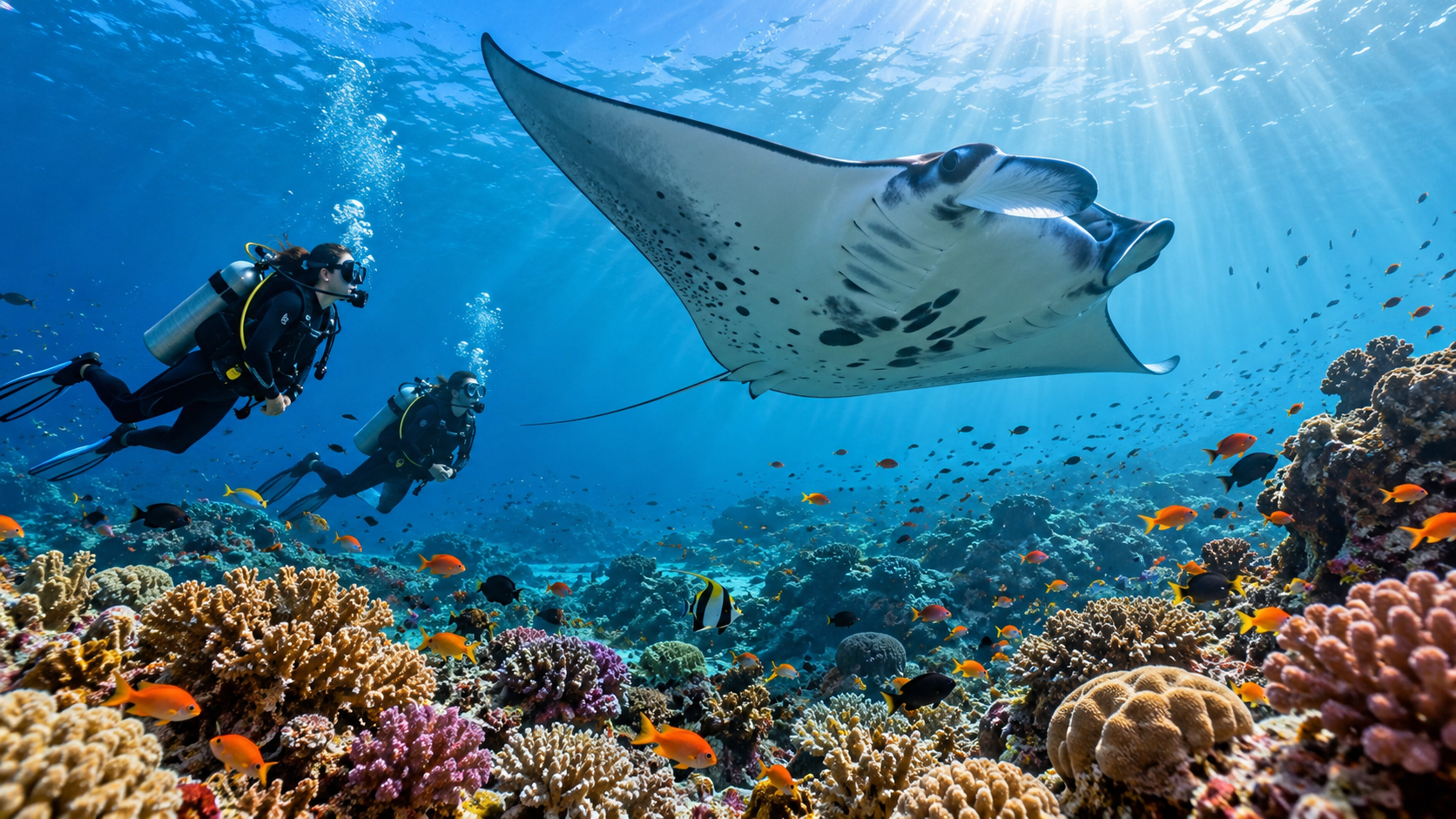
Manta ray scuba diving can deliver one of the most memorable wildlife encounters available to recreational divers, combining the quiet movement of large marine animals with clear tropical water, dramatic underwater landscapes, and the anticipation of never knowing exactly when a manta will appear. Unlike a controlled aquarium experience, encountering manta rays in the ocean depends on natural feeding patterns, cleaning stations, currents, plankton availability, weather, season, and simple luck. The best manta dives therefore combine careful planning with realistic expectations and responsible underwater behavior that allows these remarkable animals to continue moving naturally.
Manta rays are graceful rather than aggressive.
Their broad pectoral fins allow them to glide through the water with surprisingly little apparent effort.
Watching one pass above a reef can make even an experienced diver stop and simply observe.
However, the quality of a manta encounter should never be judged by how closely a diver can approach.
A successful encounter is one in which both the diver and the animal remain comfortable.
That principle should shape every stage of planning.
What Makes Manta Ray Scuba Diving So Special?
Many marine encounters involve animals that quickly disappear after noticing divers.
Manta rays can behave differently at established feeding and cleaning areas.
At certain sites, they may repeatedly circle through the same part of the reef while feeding or allowing small cleaner fish to remove parasites.
This can create extended observation opportunities.
The experience is particularly impressive because manta rays combine:
• Large body size
• Slow, elegant movement
• Distinctive markings
• Curious behavior in some encounters
• Powerful underwater presence
Yet manta rays are filter feeders.
They primarily consume small organisms such as zooplankton rather than hunting scuba divers or large fish.
Mantas Are Not Stingrays With Dangerous Stingers
People unfamiliar with rays sometimes assume manta rays possess the same defensive tail structures associated with some stingrays.
Mantas do not have a functional venomous stinger.
That does not mean divers should touch them.
Wild animals should still be given space and treated with respect.
7 Powerful Tips for Better Manta Ray Scuba Diving
A great encounter depends as much on diver behavior and planning as on the presence of the animals.
1. Manta Ray Scuba Diving Starts With the Right Destination
Manta rays are found in tropical and subtropical waters across different parts of the world.
Some regions have become especially well known because mantas regularly gather at feeding areas or cleaning stations.
Popular manta diving regions can include areas around:
• Maldives
• Indonesia
• Hawaii
• Palau
• Mexico
• Ecuador and the Galápagos region
• Micronesia
• Other tropical Indo-Pacific destinations
The right destination depends on:
• Travel season
• Diving experience
• Budget
• Desired water temperature
• Current conditions
• Type of manta encounter
Reef Mantas and Oceanic Mantas
Divers may encounter different manta species depending on the region.
Reef mantas are commonly associated with particular reef systems and coastal habitats.
Oceanic mantas can travel across much larger areas of open ocean.
The distinction matters because encounter style can differ by destination.
Some dive areas are known for relatively predictable reef manta cleaning stations.
Others offer opportunities to see much larger pelagic mantas moving through offshore environments.
2. Choose the Season Carefully
Seeing manta rays is never guaranteed.
However, some locations have periods when encounters are more likely.
Seasonal changes can affect:
• Plankton concentration
• Currents
• Water temperature
• Visibility
• Feeding activity
• Cleaning-station use
• Weather
• Boat access
This creates an important tradeoff.
Conditions that attract feeding manta rays may not always produce the clearest water.
Plankton Can Mean More Mantas but Lower Visibility
Mantas gather where food is available.
When plankton concentrations increase, water visibility may decrease.
A diver therefore should not automatically reject a day because visibility is less than perfect.
The same plankton reducing visibility may be helping create the manta activity everyone came to see.
Ask About Historical Patterns
A good dive operator should explain:
• Typical manta season
• Current sightings
• Water conditions
• Expected currents
• Suitable certification level
• Alternative dive sites
No responsible operator should guarantee a wild manta encounter.
3. Maintain Proper Distance During Manta Ray Scuba Diving
Giving manta rays space is one of the most important rules.
Avoid swimming directly toward a manta.
Instead, allow the animal to determine whether it comes closer.
A calm diver is usually much less disruptive than someone aggressively chasing the animal with a camera.
Do Not Block the Manta’s Direction
Never position yourself directly in the animal’s path simply to get a better photograph.
If a manta is approaching:
Remain calm.
Maintain position when safe.
Allow an escape route.
Let the manta choose its direction.
Avoid Surrounding an Animal
A large group of divers can unintentionally form a wall around a manta.
Follow the dive guide’s positioning instructions and remain aware of other divers.
Responsible observation is especially important at heavily visited sites.
4. Never Touch or Ride a Manta Ray
Touching marine wildlife may seem harmless, particularly when an animal approaches voluntarily.
It is still inappropriate.
Manta rays have a protective surface layer that helps protect their skin.
Physical contact can also alter natural behavior.
Let the Animal Control the Encounter
Sometimes a manta may pass very close to a stationary diver.
That can produce a spectacular encounter without the diver moving toward it.
Keep hands to yourself.
Maintain buoyancy.
Enjoy the moment.
Do Not Grab or Hold
Never:
• Grab a manta
• Hold its fins
• Attempt to ride it
• Pull its tail
• Obstruct its feeding
Wildlife interaction should remain observational.
5. Excellent Buoyancy Makes Manta Diving Better
Good buoyancy is important on every scuba dive.
It becomes particularly valuable around mantas because divers may need to remain stable in one area while observing animals overhead.
Poor buoyancy can lead to:
• Accidental reef contact
• Rapid depth changes
• Excessive fin movement
• Collisions with other divers
• Uncontrolled approaches toward wildlife
Practice Before the Trip
If buoyancy is still developing, consider gaining additional experience before booking a challenging manta dive.
Useful skills include:
• Neutral buoyancy
• Controlled ascent and descent
• Comfortable hovering
• Efficient finning
• Awareness of depth
• Calm breathing
These abilities improve both safety and wildlife etiquette.
6. Select a Responsible Dive Operator
A good manta experience begins before entering the water.
The operator should provide a detailed briefing.
Topics should include:
• Manta behavior
• Entry and exit procedures
• Current
• Maximum depth
• Group positioning
• Wildlife interaction rules
• Emergency procedures
• Reef protection
Look for Conservation Awareness
A responsible operator should discourage:
• Touching mantas
• Chasing wildlife
• Crowding cleaning stations
• Standing on coral
• Ignoring site rules for photographs
The best operators understand that protecting the manta population protects the long-term value of the dive site as well.
7. Prepare Your Camera Without Letting It Control the Dive
Manta rays are exceptional photography subjects.
Their large silhouettes work well against:
• Open blue water
• Sunlight
• Coral reefs
• Divers
• Cleaning stations
However, photographers can become so focused on getting the shot that they lose awareness of:
• Depth
• Air supply
• Other divers
• Reef position
• Current
• The animal’s movement
Set Up Before the Manta Arrives
Configure important camera settings before entering the encounter area.
This reduces the need to stare continuously at camera controls.
Avoid Chasing for the Perfect Shot
A natural close pass usually creates a stronger image than chasing an animal from behind.
Patience often produces the best underwater photographs.
Understanding Manta Ray Behavior
Learning basic behavior makes encounters more interesting.
Rather than simply seeing a large ray, divers can begin to understand what it may be doing.
Feeding Behavior
Manta rays feed by directing water containing small organisms through their mouths.
Their cephalic lobes near the front of the head help channel food-rich water.
Divers may observe mantas:
• Swimming through plankton-rich water
• Making repeated passes
• Turning while feeding
• Gathering where food concentrates
Feeding Areas Need Space
Avoid placing yourself directly in the path of feeding animals.
Repeated interruption may cause them to leave.
Cleaning Stations
A cleaning station is an area where smaller fish remove parasites and dead tissue from larger animals.
Mantas may visit specific reef areas repeatedly for this purpose.
This can create relatively predictable viewing opportunities.
Stay Away From the Cleaning Area
Dive guides may instruct divers to remain around the edges of a cleaning station.
Do not swim into the middle simply because the manta is there.
The objective is to allow the animal to continue its natural behavior.
Manta Identification
Individual manta rays often have distinctive markings.
Researchers can use these patterns to help identify particular animals.
This allows scientists to study:
• Movement
• Site use
• Population patterns
• Individual histories
• Long-term behavior
Citizen-science programs in some destinations may allow useful photographs to contribute to research.
Daytime Manta Ray Scuba Diving
Day dives can occur around:
• Cleaning stations
• Feeding areas
• Reef channels
• Offshore sites
Good daylight provides excellent visibility for observing the full body shape of the manta.
Cleaning-Station Dives
These dives often involve positioning near a particular reef feature and waiting.
Patience is important.
Constantly swimming around can reduce both enjoyment and encounter quality.
Night Manta Ray Diving
Some destinations offer manta encounters after sunset where lights attract plankton.
The plankton can then attract feeding mantas.
This creates a very different experience.
Divers may watch mantas glide through beams of artificial light while feeding.
Night Diving Requires Additional Comfort
Divers should already be comfortable with:
• Darkness
• Dive lights
• Buddy awareness
• Depth monitoring
• Entry and exit procedures
• Night navigation
A manta dive should not distract from basic scuba safety.
Manta Ray Scuba Diving for Beginners
Not every manta dive is technically difficult.
Some sites can be suitable for relatively new certified divers.
Others may involve:
• Strong current
• Deep water
• Open ocean
• Negative entries
• Drift diving
• Night conditions
• Difficult boat entries
Certification alone does not guarantee readiness for every site.
Tell the Operator Your Real Experience
Provide accurate information about:
• Number of logged dives
• Last dive date
• Current experience
• Night diving experience
• Comfort in open water
• Buoyancy skills
Operators can then recommend an appropriate site.
Current and Manta Diving
Currents play a major role in many manta habitats.
They can bring plankton into feeding areas.
However, they can also increase the difficulty of a dive.
Do Not Fight Strong Current Unnecessarily
Follow the dive plan.
Depending on the site, guides may use:
• Drift techniques
• Protected reef positions
• Defined entry points
• Specific exit locations
Proper planning conserves air and energy.
Water Visibility
Visibility varies by:
• Season
• Plankton
• Weather
• Tides
• Current
• Location
Clear water is excellent for photography, but lower visibility does not necessarily mean poor manta activity.
Manage expectations according to local conditions.
Water Temperature and Exposure Protection
Tropical destinations can still have varying water temperatures.
Choose exposure protection based on:
• Current water temperature
• Dive duration
• Number of dives per day
• Personal cold tolerance
A diver who becomes cold will enjoy the encounter less and may consume air more rapidly.
Scuba Gear for Manta Diving
Standard recreational equipment is usually sufficient when appropriate for local conditions.
This may include:
• Mask
• Fins
• Regulator
• Buoyancy control device
• Exposure suit
• Dive computer
• Surface signalling equipment
• Appropriate dive light for night diving
Rental gear is widely available in many dive destinations.
Always inspect unfamiliar equipment before entering the water.
Safety During Manta Ray Scuba Diving
The presence of a manta does not change normal scuba rules.
Divers still need to monitor:
• Air supply
• Depth
• No-decompression limits
• Buddy position
• Current
• Ascent rate
• Boat traffic
Do Not Follow a Manta Beyond the Dive Plan
An animal may swim deeper or away from the reef.
Do not automatically follow it.
A manta encounter is never more important than safe diving.
Are Manta Rays Dangerous to Divers?
Mantas are generally considered peaceful filter feeders rather than aggressive predators.
They do not hunt divers.
Their large size should still be respected.
A diver should never intentionally provoke, restrain, or physically interact with any large wild animal.
The greater risks during many manta dives are usually related to normal diving factors such as:
• Current
• Depth
• Boats
• Poor buoyancy
• Low air
• Night conditions
• Separation from the group
Strong basic scuba skills therefore remain essential.
Responsible Manta Tourism
Wildlife tourism can provide economic reasons to protect living manta rays and their habitat.
It can also create pressure when encounters are poorly managed.
Responsible tourism should prioritize:
• Small or controlled groups where practical
• Proper briefings
• No touching
• No chasing
• Respectful distance
• Reef protection
• Experienced guides
Avoid Enticing Wildlife
Mantas should be observed engaging in natural behavior rather than manipulated for entertainment.
The most meaningful encounters happen because divers enter the manta’s environment respectfully.
Choosing the Best Manta Diving Destination
There is no single best destination for every diver.
Consider the whole trip.
For Warm Tropical Diving
Destinations across the Maldives and Indonesia can combine manta encounters with coral reef diving.
For Large Pelagic Encounters
Offshore destinations in the eastern Pacific can provide dramatic open-ocean diving.
For Convenience and Established Tourism
Some destinations provide highly developed manta tourism with established dive operations and relatively straightforward travel infrastructure.
For Multiple Marine Species
Divers may prefer locations where manta encounters can be combined with:
• Sharks
• Turtles
• Reef fish
• Macro life
• Coral reefs
• Pelagic species
A destination offering varied diving can reduce disappointment if mantas are not seen every day.
Planning a Manta Diving Holiday
Allow enough time.
Booking only one manta dive creates a high dependence on conditions that particular day.
A longer trip may provide multiple opportunities.
Consider:
• Seasonal weather
• Flight schedules
• Transfer times
• Dive days
• No-fly intervals after scuba diving
• Marine park rules
• Equipment requirements
• Travel insurance
Liveaboard Versus Resort-Based Manta Diving
Both approaches can work well.
Resort-Based Diving
Advantages may include:
• Comfortable accommodation
• Flexible non-diving activities
• Easier access for mixed diving and non-diving groups
Liveaboards
Liveaboards can reach remote sites and allow several dives each day.
Potential advantages include:
• More dive time
• Remote locations
• Flexible site selection
• Multiple manta opportunities
The right choice depends on experience, budget, travel style, and destination.
Photographing Manta Rays
Wide-angle photography is generally well suited to large animals.
Composition can include:
• Entire manta silhouette
• Reef foreground
• Sun rays
• Diver for scale
• Open blue water
Avoid Flashing Animals Excessively
Follow local guidance regarding underwater lighting and strobes.
Responsible photography should never take priority over animal welfare.
Maintain Buoyancy While Framing
Do not kneel on living coral to stabilize a camera.
Good buoyancy is part of good underwater photography.
Common Manta Diving Mistakes
Chasing the Manta
Allow it to approach naturally.
Blocking Its Path
Maintain an open route.
Touching the Animal
Observe without physical contact.
Ignoring the Guide
Local guides understand site-specific conditions.
Forgetting Air While Taking Photos
Check gauges regularly.
Entering a Cleaning Station
Remain in designated observation areas.
Expecting Guaranteed Sightings
Mantas are wild animals.
What to Do if a Manta Approaches Very Closely
Remain calm.
Do not suddenly swim toward or away from it unless safety requires movement.
Maintain good buoyancy and let the animal choose its path.
Some of the most memorable encounters happen when a diver remains still and a manta passes overhead naturally.
That experience requires no touching and no chasing.
Why Manta Conservation Matters
Manta rays reproduce slowly compared with many smaller marine species.
This can make populations vulnerable to fishing pressure and other human impacts.
Threats can include:
• Targeted fishing
• Accidental bycatch
• Entanglement
• Marine debris
• Vessel interactions
• Habitat disturbance
• Poorly managed tourism
Responsible dive tourism can help create economic value around protecting living animals.
Manta Ray Scuba Diving and Marine Conservation
Divers can support better manta tourism by:
• Following local codes of conduct
• Choosing responsible operators
• Avoiding wildlife harassment
• Reducing marine waste
• Respecting protected areas
• Participating in legitimate citizen science where available
Even simple behavioral choices underwater can make a difference.
Frequently Asked Questions
Is Manta ray scuba diving safe?
Manta rays are generally peaceful filter feeders, but normal scuba risks such as currents, depth, boat traffic, night conditions, and air management still require careful planning.
What is the best season for Manta ray scuba diving?
The best season varies by destination because manta activity depends on currents, plankton, cleaning behavior, and regional weather patterns. Check local seasonal information before booking.
Can beginners go Manta ray scuba diving?
Some manta sites are suitable for newer certified divers, while others involve strong currents, deep water, night diving, or open-ocean conditions requiring greater experience.
Can scuba divers touch manta rays?
Divers should not touch, chase, ride, or block manta rays. Passive observation with appropriate distance allows the animal to control the encounter.
Where can divers see manta rays?
Well-known manta diving regions include parts of the Maldives, Indonesia, Hawaii, Palau, Mexico, Ecuador, Micronesia, and other tropical marine destinations.
What equipment is needed for Manta ray scuba diving?
Most dives use standard scuba equipment appropriate to the local water conditions, with additional equipment such as dive lights required for certain night encounters.
Conclusion
Manta ray scuba diving offers an extraordinary opportunity to observe one of the ocean’s most graceful large animals in its natural environment. The best encounters come from choosing an appropriate destination and season, maintaining excellent buoyancy, following local guides, and allowing mantas to determine the distance between themselves and divers. Photography, close passes, and dramatic sightings can make the experience unforgettable, but wildlife welfare and basic scuba safety should always come first. By diving responsibly, travellers can enjoy remarkable manta encounters while helping protect the behavior and habitats that make them possible.