Analysis of the New Orleans Pelicans’ Puzzling Offseason: 7 Critical Secrets Behind Roster Chaos, Cap Constraints, and Playoff Hopes
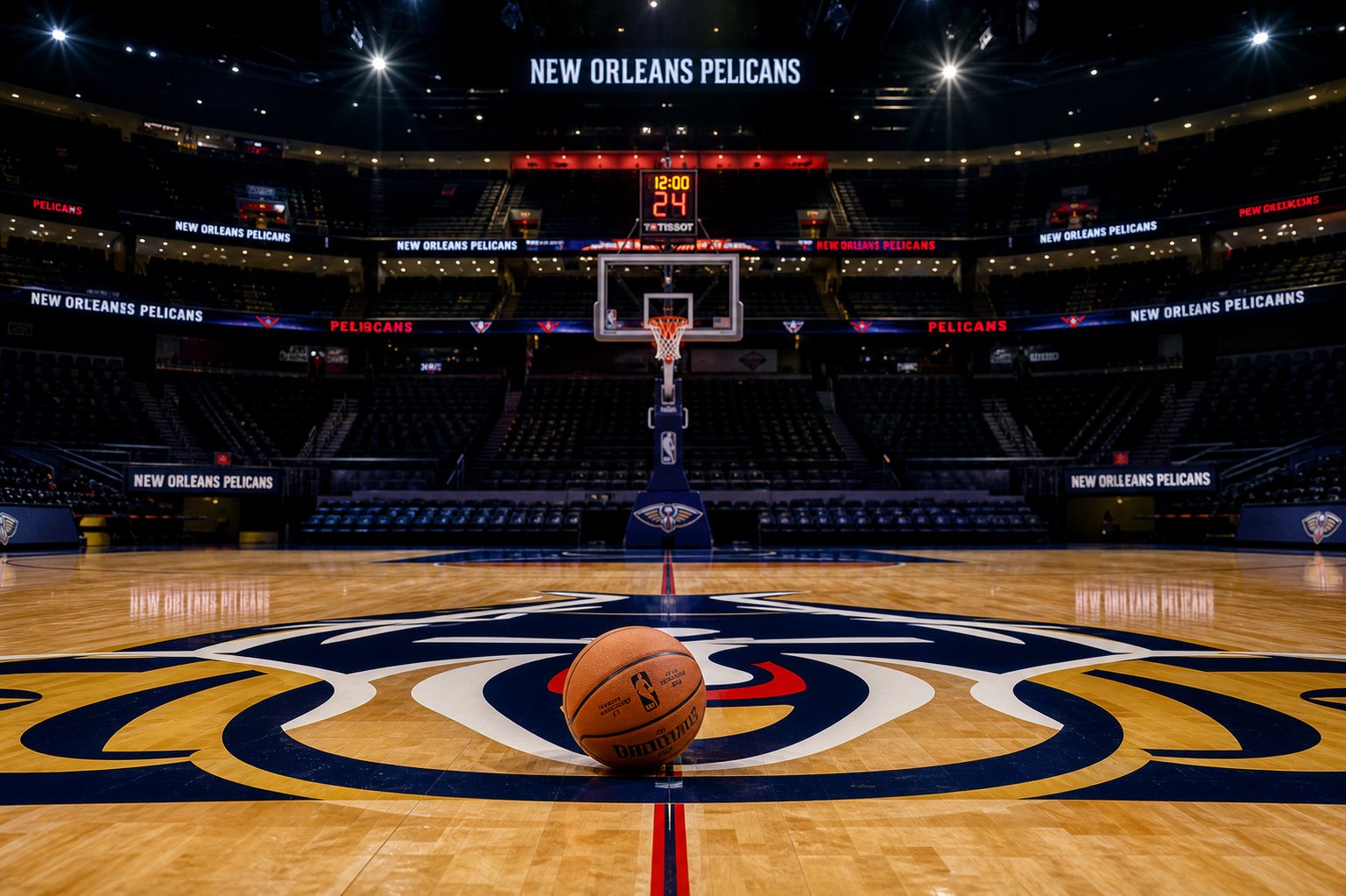
The modern NBA landscape demands strategic roster symmetry, perimeter floor-spacing, frontcourt defensive rim protection, and disciplined salary cap gymnastics under the restrictive Collective Bargaining Agreement (CBA). Conducting a thorough analysis of the New Orleans Pelicans’ puzzling offseason reveals an ambitious Western Conference franchise operating at a turbulent strategic crossroads. While the front office executed an aggressive blockbuster trade to acquire former All-Star two-way playmaker Dejounte Murray from the Atlanta Hawks, the corresponding roster maneuvers left analysts, league executives, and loyal Crescent City fans puzzled. By failing to secure a starting-caliber center following the free-agency departure of Jonas Valančiūnas, and entering training camp with an unresolved, high-stakes contract impasse surrounding former All-Star forward Brandon Ingram, executive leadership created a roster with exceptional backcourt talent alongside glaring structural frontcourt deficiencies that could derail their playoff ambitions.
The Strategic Conundrum: Upgrading the Backcourt While Depleting the Frontcourt
The central paradox of the Pelicans’ offseason strategy lies in the stark asymmetry between their guard rotation and their frontcourt personnel. While adding a dynamic, lead ball-handling guard had been an organizational priority for years, the execution stripped the roster of its physical interior foundation.
The Acquisition of Dejounte Murray: Playmaking Power vs. Spacing Mechanics
Acquiring Dejounte Murray addressed a primary weakness that plagued New Orleans during fourth-quarter crunch time: the absence of a reliable, floor-general playmaker capable of organizing half-court sets:
- Alleviating the “Point Zion” Burden: For multiple seasons, head coach Willie Green relied on Zion Williamson to handle primary ball-handling duties (“Point Zion”). While devastating in transition, running an entire offense through an interior power forward generated defensive load fatigue and made end-of-game sets predictable. Murray brings proven pick-and-roll orchestration, mid-range shot creation, and clutch decision-making.
- The Spacing Puzzle: Murray is a rhythm-dependent shooter rather than a knockdown catch-and-shoot perimeter spacer. Pairing Murray with CJ McCollum and Zion Williamson introduces spacing friction; Williamson requires clear, uncluttered paint lanes to attack the rim, while Murray operates most effectively with the ball in his hands inside the arc.
The Frontcourt Evacuation: The Departure of Jonas Valančiūnas and Larry Nance Jr.
To acquire Murray, executive vice president David Griffin surrendered essential frontcourt assets—sending Larry Nance Jr., Dyson Daniels, and two future first-round draft picks to Atlanta. Simultaneously, starting center Jonas Valančiūnas was permitted to leave via a sign-and-trade to the Washington Wizards:
- The Rebounding and Interior Deficit: Valančiūnas provided reliable interior bulk, averaging nearly a double-double per game while absorbing contact against Western Conference centers like Nikola Jokić, Anthony Davis, and Rudy Gobert.
- An Unresolved Center Vacuum: Following these moves, the Pelicans failed to sign or trade for an established starting center, leaving rookie first-round draft pick Yves Missi (a raw, nineteen-year-old rim-runner out of Baylor) and journeyman backup Daniel Theis as the primary traditional big men on the depth chart.
The Brandon Ingram Impasse: Contract Clashes and Trade Market Freezes
No issue has contributed more to the perception of a puzzling offseason than the unresolved future of Brandon Ingram.
The Max-Extension Collision Course
Ingram entered the final year of his five-year, $158 million contract, seeking a lucrative four-year, $208 million maximum contract extension:
- Front Office Reluctance: Under the punitive rules of the new CBA’s first and second aprons, committing over fifty million dollars annually to Ingram—a high-usage, mid-range-reliant wing with a history of missing twenty to thirty games per season due to injury—severely restricts financial flexibility.
- Disappointing Playoff Production: Ingram’s struggles during the 2024 first-round playoff sweep against the Oklahoma City Thunder (averaging just 14.3 points on 34.5% shooting while smothered by Lu Dort) diminished his leverage and cooled league-wide trade interest.
The Lukewarm External Trade Market
When the front office quietly explored trade avenues for Ingram over the summer, they encountered a cold market:
- Collective Bargaining Chilling Effect: Rival contenders facing apron penalties were unwilling to surrender premium young assets or draft capital for an expiring contract demanding a massive extension.
- The Risk of an Unsettled Locker Room: Entering the regular season with an unsigned, frustrated star creates locker room friction, trade distraction narratives, and the looming risk of losing a former All-Star for zero return in unrestricted free agency next summer.
Roster Turnover and Asset Allocation Matrix
| Transaction / Player Move | Outgoing Capital / Player | Incoming Asset / Player | Strategic Roster Impact | Overall Grade |
|---|---|---|---|---|
| Dejounte Murray Trade | Daniels, Nance Jr., 2 Firsts | Dejounte Murray | Adds premier playmaker; loses perimeter defense & bench big | B+ |
| Jonas Valančiūnas Sign-&-Trade | Starting center (Valančiūnas) | 2027 2nd-round pick | Frees up cap room; creates critical frontcourt vacuum | D |
| 2024 Draft Selection (#21) | 21st Overall Pick | Yves Missi (Center) | High athletic upside; lacks offensive polish & strength | C+ |
| Daniel Theis Free Agent Signing | Minimal cap exception | Daniel Theis (Backup C) | Reliable veteran depth; lacks size against elite Western bigs | C |
| Brandon Ingram Contract Talks | Unresolved $208M demand | No extension finalized | Lingering locker room tension & looming free agency asset loss | F |
The Small-Ball Experiment: Can Zion Williamson Play Center?
Faced with a center vacuum, whispers out of New Orleans suggest the coaching staff will lean heavily into small-ball lineups, deploying Zion Williamson as a nominal center alongside versatile forward Herb Jones:
The Offensive Potential of Small-Ball Lineups
Offensively, sliding Williamson to the center spot surrounded by CJ McCollum, Dejounte Murray, Brandon Ingram (or Trey Murphy III), and Herb Jones creates a dynamic, high-scoring transition attack:
- Devastating Pick-and-Roll Space: Opposing traditional centers cannot stay in front of Williamson in open space. Surrounding him with four perimeter shooters pulls rim protectors out of the paint, turning every drive into a layup, dunk, or open corner three.
- Pushing the Pace: A smaller, agile lineup can turn defensive rebounds into immediate fast-break points, outrunning traditional lineups before half-court defenses set up.
The Defensive and Physical Breakdown Reality
However, relying on Zion Williamson at the five spot over an eighty-two-game regular season carries immense physical risks:
- Physical Wear and Tear: Williamson’s injury history is well documented (having missed substantial time with foot fractures, knee strains, and hamstring tears). Forcing his six-foot-six frame to bang against seven-footers like Nikola Jokić, Domantas Sabonis, and Victor Wembanyama for thirty minutes a night drastically increases injury vulnerability.
- Rebounding and Rim Protection Collapse: Williamson has never been an elite rim protector or defensive anchor (averaging under one block per game). Without a shot-blocking big man behind them, perimeter defenders like Herb Jones cannot gamble on steals, leaving the paint exposed to opposing cutters and second-chance putbacks.
The Trey Murphy III Dilemma and Roster Redundancy
The presence of rising star Trey Murphy III further complicates the Pelicans’ positional logjam on the wing.
The Ascension of Trey Murphy III
Murphy represents the prototype modern NBA wing: a six-foot-eight sniper who shoots nearly forty percent from three-point range on high volume, runs the floor in transition, and possesses the length to defend multiple positions:
- The Starting Lineup Squeeze: If Willie Green starts Murray, McCollum, Ingram, and Williamson, Murphy is relegated to the bench, capping the minutes of one of the team’s most efficient floor spacers.
- Upcoming Financial Commitments: Murphy is eligible for a lucrative rookie contract extension. The front office knows it cannot pay maximum salaries to Zion, Ingram, Murray, and Murphy simultaneously without sailing deep into luxury tax apron penalties that ownership has historically avoided. Prioritizing Murphy’s future makes retaining Ingram redundant and financially unsustainable.
Evaluating Front Office Leadership: Win-Now Ambition vs. Roster Cohesion
Executive vice president David Griffin entered the offseason under pressure to deliver a roster capable of advancing beyond the Play-In Tournament and first round of the playoffs.
Balancing Aggressiveness with Roster Gaps
The decision to acquire Dejounte Murray demonstrated aggressive win-now ambition; however, stopping halfway by failing to address the center position and allowing the Ingram situation to fester leaves the team caught between two timelines:
- Contention or Stagnation? In a loaded Western Conference featuring Oklahoma City, Minnesota, Dallas, Denver, and an ascending Memphis squad, teams with obvious positional weaknesses are exposed quickly over seven-game playoff series.
- Mid-Season Trade Pressure: The Pelicans may be forced to make another major trade before the February trade deadline—likely moving Brandon Ingram or CJ McCollum to acquire a defensive center and balance their depth chart.
Frequently Asked Questions About the New Orleans Pelicans’ Offseason
Why did the Pelicans trade for Dejounte Murray if they already had CJ McCollum?
They needed an authentic, high-level floor general to organize half-court sets, run late-game pick-and-rolls, and take pressure off Zion Williamson, while allowing McCollum to play off-ball as a spot-up shooter.
Who is expected to be the starting center for the Pelicans this season?
Unless a trade occurs, the Pelicans will likely start veteran Daniel Theis, experiment with Zion Williamson or Herb Jones in small-ball lineups, and develop rookie Yves Missi off the bench.
Why haven’t the Pelicans signed Brandon Ingram to a contract extension?
The front office is hesitant to commit a four-year, $208 million maximum extension to Ingram due to luxury tax apron penalties, injury concerns, and fit redundancies with Trey Murphy III.
What draft assets did the Pelicans give up to acquire Dejounte Murray?
The Pelicans traded Dyson Daniels, Larry Nance Jr., Cody Zeller, a 2025 first-round pick (via the Los Angeles Lakers), and a 2027 least-favorable first-round pick between Milwaukee and New Orleans.
Can Zion Williamson realistically play center in the Western Conference?
While offensively devastating in short stretches, relying on Zion at center over an entire season exposes the team to defensive rebounding deficits and elevates his injury risk against seven-foot centers.
Will the Pelicans trade Brandon Ingram before the trade deadline?
If contract negotiations remain stalled, trading Ingram before the February deadline is likely to prevent losing an All-Star asset for zero return in free agency.
Conclusion
A comprehensive analysis of the New Orleans Pelicans’ puzzling offseason underscores a franchise caught between elite individual talent and glaring structural imbalance. Sourcing an All-Star two-way guard in Dejounte Murray undeniably elevated the backcourt’s playmaking ceiling, but leaving the center position vacant and permitting the Brandon Ingram contract dispute to cloud training camp creates significant tactical vulnerabilities. In a fiercely competitive Western Conference where every seed is separated by razor-thin margins, small-ball experiments and mismatched wing rotations face immediate pressure. Whether the front office executes a corrective mid-season trade to acquire rim protection or head coach Willie Green unlocks an innovative small-ball offense, the Pelicans enter the season as one of the NBA’s most fascinating, high-stakes experiments—a team with undeniable All-NBA upside, but a fragile margin for error.